
Students blog

Explore the latest trends, tips, and experiences in college life in this blog written by fellow students.

Explore posts in other areas.

PreK-12Higher EducationProfessional

  • An orange rectangle with the text: ‘Thanksgiving Dishes That Bring Back the Spark’ alongside a photo of a layered dessert dish in a large glass bowl.

    Fresh Ideas for Your Thanksgiving Meal

    Saige O’Rourke

    Many families’ Thanksgiving menus feature the same thing every year: turkey, potatoes, mac & cheese, green bean casserole, and stuffing. Right? Not in my house. Every year my Aunt Megan creates a new dish or adds a twist to make something different. With such a passion for food, she does this to keep the spark and excitement alive. These are my top 3 dishes that Megan has cooked for our family which might inspire yours for the future.

    Appetizer

    To hold off the hungry family, maple green beans in a bacon bundle were provided as an appetizer. Personally, I’m not a huge fan of green beans, but I continued to fill my plate with these bites. They acted as a perfect bite size snack that could be made any day and encouraged the entire guest list to indulge.

    Main Side

    As a main course side, white cheddar rosemary garlic mashed potatoes were created. Mashed potatoes are a staple Thanksgiving side item, but adding extras caught everyone’s eye. This dish was filling and tasty, yet it did not take away from the natural goodness of mashed potatoes. Instead, this dish enhanced the already perfect side and grew the tables' excitement for what was to come next.

    Dessert

    To close out the meal, Megan produced a pound cake trifle with brown butter crème anglaise topped with berries and whipped cream. Naturally, this was my favorite dish served for the entire meal, and it is pictured above. This dish was like something I had never seen before, and it was layered inside of a large bowl to spread the flavor. This dessert was airy, light, and healthy; it supplied necessary comfort to the family preparing for their food comas.

    Every year we are all excited to see what Megan plans to bring, and her thoughts are usually a surprise to all including herself. She uses her experience, the internet, and other restaurants to inspire her dishes. That said, I encourage you to try creating a new dish for your Thanksgiving dinner! Although deliciousness is preferred, it is not needed! Take the risk, experiment in the kitchen, and bring something new to your Thanksgiving table.

    Do you have a compelling story or student success tips you’d like to see published on the Pearson Students blog?  If you are a college student and interested in writing for us – click here to pitch your idea and get started! 

     

  • A photo collage featuring the text: Finance Hacks: College Edition, and 5 photos highlighting locations mentioned in the blog including campus events and dining locations on campus.

    Finance Hacks: College Students’ Edition

    Lexie Harris

    From tuition and housing to food and entertainment, college is expensive! It seems like everywhere you look is somewhere you have to spend money. To help with expenses, many full-time college students have jobs, which can make it difficult to manage your schedule and maintain academic success. Sometimes you may feel like you’re putting too much time toward one, and not enough time on the other. No matter your situation, we could all benefit from some cost-saving tips. Here are three tips to help save money while in college!

    Attend Events on Campus

    At the beginning of each semester, a lot of colleges hold free on-campus events! These types of events aim to help new freshmen become more comfortable in a new environment. It helps the new students meet other people, get to know the campus, and learn about on-campus groups (i.e. sororities/fraternities and clubs). These events are not only for new students but are often open to returning students. While these events are a great way to get involved with your campus community, there are often free giveaways and swag items up for grabs. From t-shirts to bags to notepads to mechanical pencils, there is a lot of free stuff being given away. As the semester goes on, keep a lookout for more free events on campus. Get involved with on campus events and enjoy the freebies which can help you save money, too!

    Take advantage of the Meal Plan

    Many colleges require students who live on-campus to select a meal plan. Even if you live off-campus, you can take advantage of this! Especially if you are required to pay for it, you might as well use it! This saves you from having to spend extra money on groceries and having to go out to eat. Most colleges also have multiple meal plan options for students to pick from. Starting out it may be difficult to know what meal plan will work best for you, but you will quickly learn how to maximize your plan and can always adjust the next semester. This way you save money and eat the food you want to eat, whether it be on campus restaurants, in the cafeteria, or at home.

    Borrow or Rent Textbooks

    In my experience, many teachers use presentations to teach instead of closely following the textbook. That being said, this doesn’t mean textbooks are useless and never required. There are professors who still rely heavily on their textbooks, and even if the professor doesn’t really use the textbook, it can be a great resource for studying and learning more about a topic. The one drawback to physical textbooks, however, is that they are pretty expensive. Instead of buying all new textbooks, try renting them or using a digital eTextbook format. I have found that eTextbooks are available for less than half what the textbooks cost and have other great features such as audiobooks, study tools, and video for on-the-go learning.

    From tuition and housing to food and entertainment, college is expensive! It may seem like everywhere you look is somewhere you have to spend money. By using these three tips, you can save some money and still get the full college experience!

    Do you have a compelling story or student success tips you’d like to see published on the Pearson Students blog?  If you are a college student and interested in writing for us – click here to pitch your idea and get started! 


  • A computer generated graphic of a map featuring a school surrounded by neighborhoods with silly-sounding names.

    Survival Guide to Off-Campus Living

    A’Georre Williams

    Are you a college student preparing to live off-campus? From managing finances to creating a conducive living environment, this guide offers valuable insights to help you thrive off-campus. Discover tips on budgeting, finding the right housing, handling utilities, maintaining a healthy lifestyle, building a supportive community, and much more. Here are 20 essential things you should know to navigate this new chapter successfully.

    1. Budgeting

    Create a budget to manage your finances effectively and cover your expenses. Consider making an Excel sheet to track your monthly spending and identify areas where you can make changes.

    2. Rent and utilities

    Understand the terms of your lease, including rent, utilities, and any additional costs.

    3. Location

    Consider proximity to your college campus, public transportation, and amenities like grocery stores and libraries.

    4. Commute

    Plan your transportation method and factor in commuting time to campus, plus potential associated costs.

    5. Roommates

    Choose your roommates carefully and establish clear expectations regarding responsibilities, bills, and shared spaces.

    6. Furniture and essentials

    If you decide not to live with your school’s partner apartments, determine what furniture and essential items you need and budget accordingly.

    7. Safety

    Research the neighborhood's safety and take necessary precautions to secure your living space.

    8. Renter's insurance

    Consider getting renter's insurance to protect your belongings in case of theft, damage, or accidents.

    9. Maintenance and repairs

    Know your responsibilities for maintenance and repairs and communicate promptly with your landlord.

    10. Understanding FOMO

    Knowing that you won’t be on campus anymore, consider that you won’t be in close proximity to campus events.

    11. Grocery shopping

    Plan your meals and shop smartly to stay within your budget for the month.

    12. Cooking

    If you don’t have a meal plan, consider developing basic cooking skills to save money and maintain a healthier lifestyle.

    13. Cleaning

    Establish a cleaning schedule with your roommates to keep your living space tidy and comfortable.

    14. Laundry

    Find out if there are laundry facilities in your building or nearby and learn how to use them.

    15. Personal safety

    Take precautions when coming home late at night and keep emergency numbers handy.

    16. Socializing

    Engage with your neighbors and join community events to make the most of your off-campus experience.

    17. Time management

    Balance your academic commitments, social life, and household responsibilities effectively.

    18. Read Your School’s Scholarship Contract

    Certain schools require that you live on campus to maintain your scholarship, reviewing it would benefit your decision, as well.

    19. Parking

    Ask if you have to pay for parking, if a certain number of spots are included in the lease, or if you can purchase a reserved spot, if you plan to take your car to campus.

    20. Understanding the Cost

    Sometimes living off campus can be way more expensive. Understand if you can truly afford the cost and ensure that you have a good-work life balance. Take into account that payment plans may not be as lenient as those offered by your school.

    Remember, living off-campus can be a valuable learning experience. Stay organized, be proactive, and embrace the independence that comes with it. With this knowledge in hand, you'll be well-prepared to embrace the independence and responsibilities that come with living off-campus.

    Do you have a compelling story or student success tips you’d like to see published on the Pearson Students blog?  If you are a college student and interested in writing for us – click here to pitch your idea and get started! 

     

  • A computer generated image with the blog title within the shape of an old-fashioned television with an antenna. Multiple TV show names are embedded in the tv shape.

    World Television Day: Pros and Cons of Watching TV

    Lexie Harris

    If you ever look at one of those websites that catalog annual holidays and awareness days, you’ll find that nearly every day there is something to celebrate, and I mean this literally! November 21st, for example, is World Television Day! So, in celebration, let's talk about the pros and cons of watching television.

    Overly Stereotyped

    Watching TV is occasionally stereotyped as lazy and unproductive and shows can often be described as too violent/graphic. To this point, let me ask you a question: How often are the shows you watch in English? Probably most of the time for the majority of the United States. However, television can go beyond those stereotypes if you let it. After all, television reflects the culture of its creation. If you allow yourself to go beyond the comfortable and known, you can venture into a world full of new experiences, knowledge, and skills.

    TV from Different Cultures

    Culture doesn't vary by plots of land but depends on the groups of people living there. Culture, by definition, is a group's shared practices, beliefs, and values. For this reason, it only makes sense that a society's culture becomes embedded in the television shows it creates. When watching a show/drama from South Korea, for example, the viewer gets a small glimpse of the culture in South Korea. This example holds for any television show from any country on Earth. Using South Korea as an example again, K-dramas (South Korean television shows) show what daily life might look like for someone living in South Korea. It shows what foods they might eat, what clothes they wear, what they do for fun/entertainment, what religious traditions are most standard, etc. Sometimes this might be overlooked, however, because it is all in the small details of the shows.

    Multicultural Understanding

    Again, each country's television programming will show parts of the culture unique to that country. One exception is that because these television shows are for entertainment, there is bound to be some exaggeration. On the contrary, this holds for some points in the storyline, not the setting and background information. If someone watches television from multiple countries, they will have a better general understanding of the people and cultures in those countries.

    Subtitles and Reading Comprehension

    Watching television shows in another language requires reading subtitles to understand what is happening. Subtitles demand that the viewer to be able to read through and quickly comprehend the words appearing and disappearing on screen. Rewinding to re-read can go from mildly aggravating to very frustrating. However, by watching shows with subtitles, they can tremendously increase their reading speed. This skill is helpful not only when trying to watch a show in another language but also helps with general reading skills, including reading for work, school, or enjoyment.

    While watching TV for entertainment does come with a few negative stereotypes, there are more positives to consider. Watching television shows from non-English speaking countries can introduce people to new cultures, expand a person's knowledge and experiences, and increase their reading and comprehension speed. In conclusion, to celebrate World Television Day, try watching a show from a different and new genre or a different culture/country!

    Do you have a compelling story or student success tips you’d like to see published on the Pearson Students blog?  If you are a college student and interested in writing for us – click here to pitch your idea and get started! 

     

  • A computer graphic featuring three icons on a pink background – a school building, a location icon, and a set of keys.

    Five Things to Know Before Living Off-Campus

    Saige O’Rourke

    Living off-campus compared to on-campus housing has been an extremely unique experience. When living on-campus, you walk almost everywhere, and if it isn’t within walking distance then you question whether it is worth visiting. Living off-campus you drive EVERYWHERE, but the opportunities are ENDLESS; you now live in a completely different city on your own with so much freedom at your disposal. Here are 5 things I wish someone would have told me before living off-campus.

    Wider Radius of Exploration

    Starting out, you don’t need to go to campus for everything known to man. Although this is what you’re used to, there are other areas to visit or shop in besides the ones that are supplied for on-campus students. You are used to living on campus, and more than likely you haven’t explored what’s available in the area. Students are introduced to a sanctuary inside of a big city, so living off-campus gives you the ability to EXPLORE. I promise you there are other spots to study around town besides the library, find them!

    Roommates Don’t Have to Be Your BFF

    Finding people to live with can be stressful, but it’s important to know that you don’t need to be best friends with your roommates. At the end of the day, everyone just needs a place to lay their head at night. Although living with people you are already friends with makes the process easier, it isn’t necessary! We all have our own lives, and living with people you aren’t entirely acquainted with allows you to preserve your alone time.

    Take Advantage of Easier Parking

    Now that parking isn’t an issue, I recommend that you take your weekends to explore the city! There are beautiful places in all areas that the world offers us, and they are just a Google search away. Take the extra time you might have in your schedule and learn about where you live. You might find a new awesome spot to spend your time instead of a campus bench.

    Don’t Forget about Gas Money

    Although parking isn’t a worry anymore, gas will be. You will be driving a lot more regularly than you did when you lived on-campus. When I lived on-campus, I never used my car unless I was going home, so gas wasn’t as much of an issue. Now, gas is back to haunt my bank account. Get used to filling your tank more but enjoy the fact that you have the freedom to explore.

    Friendships Take More Effort

    This one is often overlooked, but after you don’t live on-campus anymore you need to make more of an effort with your friends. Since your friends are no longer just down the hall or a 5-minute walk across campus, plans need to be made and efforts need to be shown. These people are the most important part of college! Don’t take them for granted and make it a point to have fun.

    Living on and off campus are both vital parts of the college experience. All of it does not have to be entirely overwhelming. Make note of these tips and take a deep breath before freaking out about a new living experience! Enjoy these moments!

    Do you have a compelling story or student success tips you’d like to see published on the Pearson Students blog?  If you are a college student and interested in writing for us – click here to pitch your idea and get started! 
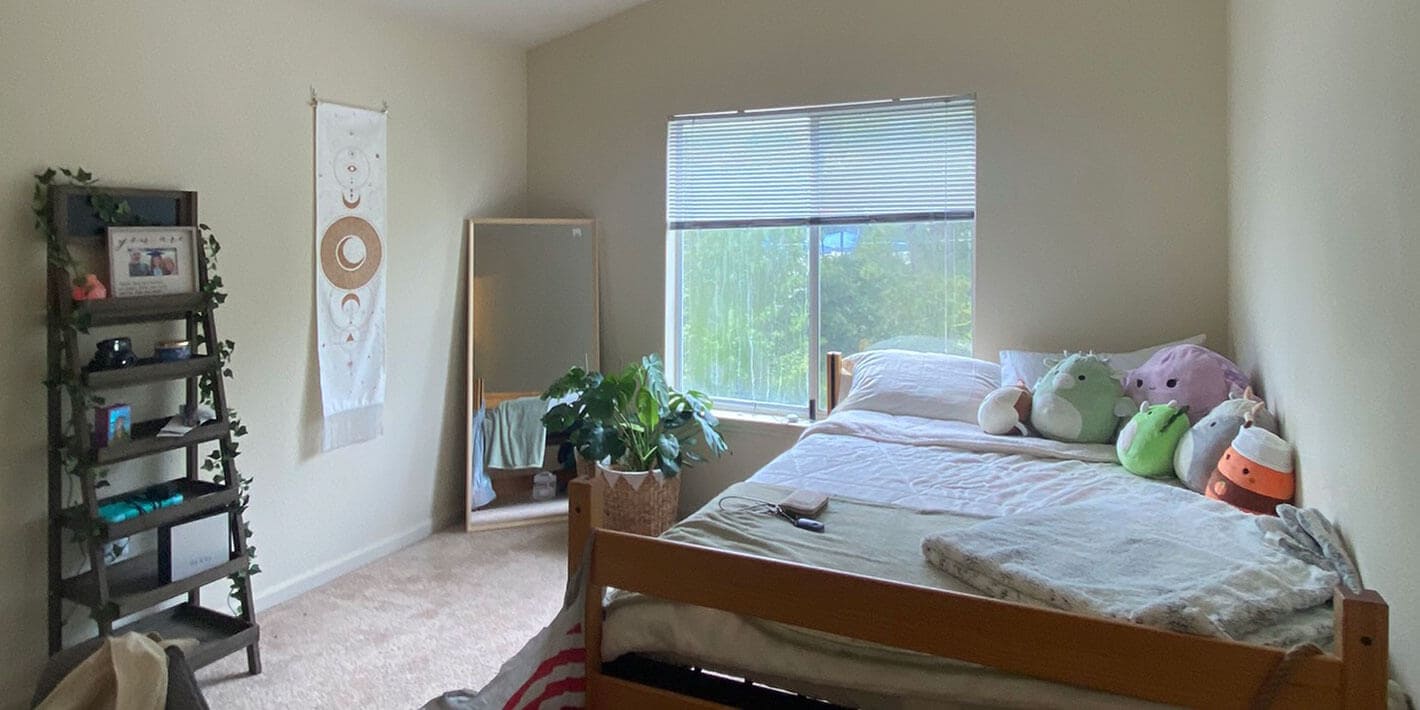
     

  • A college dorm room with wall décor, a standing mirror, and plushie pillows on the bed.

    College Dorm to Second Home

    Jen Fiengo

    College living can be hard, especially when you move far from home. While being away from your parents may seem like an amazing idea to most of us college students, no one prepares you for how it feels to be on your own so suddenly. College dorms can be bland, boring, and even smell weird. Living somewhere that makes you unhappy or feel unsafe can drastically harm your mental and physical health as well as interfere with your studies at college. The best way to avoid this living situation is to make your college dorm feel like a second home.

    Bring Belongings from Home

    One way I made my college dorm feel like home was to bring something unique to my life from home. I own a lot of plants (it’s becoming a problem) and that is what I think of when I think of my room at home. When I moved to college in my first year, I brought none of my plants with me. I felt sad in my living space as it didn’t feel like my own. I went home and returned with a few of my plants, big and small, and filled my space with them. I instantly felt better, and my room felt more like my home. Bringing something, whether it’s big or small, into your space that is unique to your life at home can add a personal touch to your space, helping the transition from college dorm to second home.

    You Can Hang Things on The Walls

    Another thing I did when I moved to college was deciding to bring NOTHING to put on the walls. I was told no tacks, sticky stuff, or tape could go on the walls, so I brought nothing to put up as I knew it wouldn’t work out. However, that made my room look like an actual prison. Everything was boring and eggshell paint colored. I tested putting wall-safe strip hooks on the walls and peeling them off, and there was no damage! I immediately went to my local dollar store and bought posters, small mirrors, cute lanterns, and much more to hang on the walls. Once they were filled up, the walls no longer felt like a prison, but more like my space. Filling up the walls with motivational posters and cute decorations helped me make my room more like a second home.

    Keep It Clean

    Finally, the best advice I could give to any on-campus student is to keep your space clean. College is stressful, challenging, and time consuming, but so is cleaning your space if it gets too out of control. I set aside time each night to put things back where they belong, reorganize my desk space, and clear trash off of any surface it didn’t belong on. Then, once a week, I would go through and wipe down surfaces, vacuum, and wash my towels and sheets. Cleaning my room made me feel like a new person and made my space feel more livable. I would also buy wall scent plug-ins to keep my space smelling fresh if candles were prohibited. Keeping your space clean can make it feel safer and healthier while also making it feel more like home.

    College living is crazy, but it can also be fun. Be creative when decorating to make your space feel personalized. Bring something unique from home, load up your walls with motivation, and keep everything tidy, and your dorm will start feeling more like a second home.

    Do you have a compelling story or student success tips you’d like to see published on the Pearson Students blog?  If you are a college student and interested in writing for us – click here to pitch your idea and get started! 

     

  • A computer generated graphic with a red background and three symbols: a plate of food, a to-do list, and a dumbbell.

    Three Ways to Have a More Productive Day

    Saige O’Rourke

    As a college student fresh on your own, it’s difficult to learn how to get things done without the structure that high school provided. Since we are all on different class schedules and learning different things, not everything works the same for each student. With the culture shock that college comes with, here are three things I have learned that work for me to be productive throughout my days at the University of Tennessee.

    Start With Breakfast

    I always start my school days with a good breakfast that I can look forward to. I try to keep this item consistent to limit the stress of “what am I going to eat?” This item becomes something I get excited about when I wake up in the morning and provides me with motivation to get out of bed. Usually, I’ll make waffles or drink a protein shake; these are quick items that keep me moving and take little amounts of time to make.

    Tackle Your To-Do List After Class

    I have morning classes, so usually when I have a chance to sit down after class, I plan the rest of my day. In my plan, I will create two different lists detailing what must be completed and what I would like to complete. I do this after class because there isn’t anything I can finish during class that needs to be done throughout the day, so to avoid added stress I wait to create a list. This relieves a lot of my anxiety throughout the day as I cross off things, and it promotes productivity as I know exactly what I need to carry out.

    Get Some Exercise

    Either at the middle or end of my day, I will work out. Working out is so beneficial for your brain and your body. It is a good chance to step away from your computer and the overloading information to spend time with yourself. Any kind of workout is beneficial, but I personally hit the gym for about an hour. Working out makes me extremely productive because I completed work for school and for myself.

    Productivity isn’t based on how much you get done, but how accomplished you feel. You can complete 10 different assignments, but still feel like you didn’t do anything. Making lists, taking breaks, and rewarding yourself with a satisfying meal can help produce these feelings of productivity. Use these actions or brainstorm your own ideas of what you can start to incorporate in your routine. Waking up is an accomplishment, especially in college! Always make an excuse to celebrate!

    Do you have a compelling story or student success tips you’d like to see published on the Pearson Students blog?  If you are a college student and interested in writing for us – click here to pitch your idea and get started! 

  • A large group of college students surround large letters UAB.

    Finding Your College Work-Life Balance: Where to draw the line

    Rinn Mitchell

    As a college student, it is nearly impossible to juggle your majors and minors, organizations you’re involved in, stay connected to your family back home, any jobs you may have, and time for yourself. Arguably, these four years may be some of the busiest of your entire life. But it can also be the most fun, enjoyable, and memory filled time of your life, if you balance it correctly. So, it’s no surprise that one of the biggest concerns college students have impacting their college experience is how to manage their work-life balance. Here are three tips curated from current college students that can help you achieve that balance.

    Say It with Me: Google Calendar Is Your Best Friend

    Keeping yourself organized is not only helpful for the obvious reasons, but it can help you visualize where you’re spending your time. Whether it’s Google Calendar, Outlook’s calendar, or anywhere in between, having a calendar you can keep up with quickly and easily can be the biggest game changer to organizing your schedule.

    Even further is creating a calendar that you can color code. By color coding between work, class, organization, and social responsibilities, you can physically see where you are delegating most of your time. For me, I try to balance my weeks so that each of those groupings are about equal, including time I set aside for homework and studying. Seeing your time priorities to these different groups delegated by color can help you begin the process of better balancing your time.

    Find Organizations and Classes You Love

    It’s fair to say everyone’s goal in life is to make their job feel like anything but. Start exploring in college – from taking a variety of classes, joining organizations, and everywhere in between. You have more freedom than ever before in the classes that you take, organizations you’re involved in, and what you spend your days doing. Though that can be a dangerous line to tow, it’s an amazing opportunity to test out different things and find your “fit.” It allows you to get involved with jobs and organizations that are fun for you, and to do it with your friends so that “work” can feel more fun. In turn, this can help bridge the gap between work and stress, and social and fun opportunities.

    Set Firm Boundaries

    As many tips as I can give you, there is nothing that will ruin your work-life balance faster than if you don’t have firm boundaries. College is filled with so many opportunities, and people who want to hang out with you or get involved in this club or that organization or take that class. I encourage you to make the most out of your 4-year experience, and pack it with as many memories as possible. That being said, if you do not set firm boundaries for yourself, or firmly set aside time for yourself or what is most important to you, there is no “fixing” your work life balance. Even a schedule packed with the most fun activities and things that excite you will become mundane if you don’t protect your own priorities and reserve your own boundaries.

    These three tips – using a calendar, exploring different classes and clubs, as well as setting personal boundaries – will go a long way in helping you find that sought-after balance and make the most of your collegiate experience.

    Do you have a compelling story or student success tips you’d like to see published on the Pearson Students blog?  If you are a college student and interested in writing for us – click here to pitch your idea and get started! 

  • A laptop computer displaying the landing page for Pearson+.

    Finding Your Voice: Becoming an Effective Student Leader

    Namira Anjum

    Growing up we all learned about powerful leaders and the fearless work they accomplished throughout history. Sitting in that classroom, that type of impact maybe seemed quite distant and unreachable. However, there is no better opportunity for you to become a leader than while you’re in college! It is the perfect environment for students to cultivate their leadership skills and start a movement or initiative, no matter how small.

    With most large universities being home to hundreds of clubs and organizations, there are multiple ways for you to lead others while expressing your identity, values, and vision. And though becoming a leader is no doubt beneficial for reasons I’ll explain, the task of doing so alongside juggling school, work and other activities is no easy one. Here’s how to be an effective student leader all while balancing it with your busy college life.

    Leadership is defined as “the ability of an individual or a group of people to influence and guide followers or members of an organization, society or team1.” This skill will be invaluable for your time at college, career, and overall future. Therefore, it is important to start learning how to become a leader as soon as you can. To do so, start by finding the organizations on your campus that you are interested in and could develop a passion for. Most colleges have activities fairs each semester that exhibit the clubs that are available for you to join, which is perfect for finding your niche.

    In my case, I joined the Bengali Student Organization (BSO) at the University of Virginia to stay connected with my culture and be part of this community. My influence started small; I was the first-year representative during my freshman year. However, now two years later, I am vice president, and my responsibilities have grown much larger! I take part in all sorts of activities to help run this club such as planning events, managing finances, and overseeing others on the executive board. Furthermore, I’ve developed several skills, including effective communication and organization, that I not only apply to BSO, but also my classes, job interviews and other situations. I also feel proud knowing my work has had an impact on others and facilitated my club’s mission to showcase Bengali culture. The main takeaway is once you find a voice you are passionate about and want to amplify, the work you do to influence your community becomes ever meaningful and exciting to do.

    I won’t lie and tell you being a student leader is an easy role. It comes with many responsibilities that require a large part of your time and effort, depending on what kind of position you have. When you have multiple other time commitments such as classes and jobs, your plate can get quite full. To avoid becoming overloaded with work, I have a few key tips. Firstly, you most likely have to plan events or activities to execute your organization’s mission or purpose. For these reasons I recommend planning the details and logistics reasonably early. For example, BSO’s signature event of the year was our charity bash, and we began planning the bash around 3 months ahead of time. With an early approach, you can avoid unnecessary stress closer to the date of your event and be prepared for any sudden changes or complications.

    Additionally, if your organization does have an executive board, set a weekly meeting time to discuss what activities you will be doing and set a schedule. In doing so, you can also maintain thorough communication with your team, making the process of running your organization more effective. And by making your schedule more structured with these tips and eliminating time inefficiencies, the task of being a student leader alongside your other activities becomes less stressful and more manageable.

    With these pieces of advice, I hope you are inspired to become a student leader, steer others in a positive way, and use your voice to express whatever it is you are passionate about, whether its chess, soccer, or food inequality. Who knows, maybe one day you’ll be the next Nelson Mandela, Malala Yousafzai, or Martin Luther King!

    Endnotes

    1 Barney, Nick, and Mary K. Pratt. “What Is Leadership?: Definition by TechTarget.” CIO Strategy, TechTarget, 22 Mar. 2023, https://www.techtarget.com/searchcio/definition/leadership.

    Do you have a compelling story or student success tips you’d like to see published on the Pearson Students blog?  If you are a college student and interested in writing for us – click here to pitch your idea and get started!