
Students blog

Explore the latest trends, tips, and experiences in college life in this blog written by fellow students.

Explore posts in other areas.

PreK-12Higher EducationProfessional

  • A group of sorority sisters wearing pink shirts and either white skirts or pants gathered together in front of a sorority house.

    Rethinking the College Timeline

    McKenna Vallejo

    I came into college with half of a bachelor’s degree, planning to graduate in three years by taking twelve credit hours each semester. Sounds easy, right? In reality, I had a rough time adjusting to difficult courses, and I changed my major and path twice.

    The Weight of a Rigid Plan

    I had a concrete plan: stay for three years, take the Dental Admission Test after two years, and go to dental school in the fall after my graduation. It wasn’t until recently that I accepted I could not do it. This was the best decision of my college career so far.

    Like many college students, I believed that changing my goals was a sign of weakness or outright failure. The truth is that the goals I had set took a toll on me. I resented my course load and the thought of missing out on a year of what was supposed to be the greatest era of my life.

    My grades started slipping, which, for a former straight-A student, was hurtful and confusing. I had arranged my life around studying and was now falling short.

    Giving Myself Grace

    Eventually, I figured out the solution: I needed to push back my goals and give myself grace. I realized certain things were inhibiting my learning, and it is nearly impossible to be successful if you keep up the same habits that are hurting your happiness.

    Knowing I couldn’t maintain the pace, I decided to take a step back. I contacted my advisor, and together we planned to extend my degree by one more semester.

    I could finally look at my schedule with a smile instead of intense fear. I was able to tell my friends that I could stick around for another semester, be more involved in my sorority, and have time for things other than studying and work.

    Embracing a New Momentum

    I would be lying if I said this decision did not terrify me. Truthfully, adding a semester felt like a failure.

    However, no one around me made me feel bad about this decision; they pushed me in the direction that would benefit me mentally. This meant postponing everything I had worked so hard for in high school and allowing myself to build a new timeline.

    Your Life, Your Timeline

    All I have learned from this is that life is meant to be lived on your timeline. Just because there is a conventional path does not mean it is right for you. Do what makes you happy, and when you find yourself hurting, make a change that will benefit you.

    It is nearly impossible to feel successful when the pressure you put on yourself is suffocating. Take a deep breath and consider what you want. After all, the only person who can live your life is you.

    Do you have a compelling story or student success tips you’d like to see published on the Pearson Students blog?  If you are a college student and interested in writing for us – click here to pitch your idea and get started! 

     

  • A college campus on a sunny day with students walking and biking across campus in front of historic campus buildings.

    Build a College Schedule That Works for You

    Natalie Jacobs

    Even before my first day on campus, I felt like I’d already survived a whirlwind of tasks. I had chosen my dorm, set up my schedule, explored future opportunities, and so much more.

    College is an exciting new chapter and might be the first time you’ll be away from home for an extended period. Before diving into campus life, it’s helpful to recognize that your body clock, eating habits, personal goals, and commitments all shape your college experience.

    Ignoring these factors can lead to uncomfortable schedules, unhealthy habits, and, in the worst cases, unnecessary stress on your mind and body. The good news is that this is avoidable.

    As a college senior, I’ve learned that a little time and self-reflection go a long way. With them, you can set yourself up for academic success and emotional well-being throughout the school year. I’ll share how understanding your body rhythm can help you advocate for your needs and create a smoother, more enjoyable college experience.

    Know Your Rhythm

    One of the most important steps is recognizing your optimal working hours and learning to advocate for your body above all else. I learned that I couldn't be passive about my schedule or let others make decisions for me; I realized that no one understands my energy levels, habits, or limits better than I do. I felt less assertive when I first left home, especially since I was used to parents or teachers structuring my days, but I built confidence over time.

    Once you have the freedom to choose your own classes, capitalize on that control by building a schedule that supports your natural patterns. Think about when you’re most awake and ready to learn. Consider when you prefer to eat lunch, how long you can stay focused, and when your brain simply checks out for the day.

    Should you really schedule math after three back-to-back classes if it’s your hardest subject? Do you get hangry and zone out if you don’t eat by a certain time? Does the sunset make late evening classes feel twice as long? These questions matter more than you might think.

    Find Your Balance

    Once I learned to accommodate my needs, everything else began to flow more naturally. It helped me set myself up for academic success, and I also had the energy and mental space to explore extracurriculars. Outside your working hours, joining clubs, spending time with friends, or participating in campus events can feel like a well-earned reward after a productive day.

    Work during your prime hours and relax during your natural downtime. This can create a balanced “work hard, play hard” attitude that helps the school year feel fulfilling, not draining.

    A Skill for Life

    Discipline is key to consistency and reaching your goals. Staying firm in your decisions and choosing what makes you comfortable when it’s not the default can be challenging at first, but it becomes easier with practice.

    This may not be a skill you master in one semester, and maybe not even two. Still, if you commit to optimizing your college experience this way, I believe you can make these years some of the most rewarding of your life.

    Do you have a compelling story or student success tips you’d like to see published on the Pearson Students blog?  If you are a college student and interested in writing for us – click here to pitch your idea and get started! 

     

  • A laptop surrounded by papers, a notebook, a tablet, and pens lit by blue light suggesting a late-night study session.

    The "Perfect Student" Trap

    Cameron Spence

    For as long as I can remember, I believed that being a “good student” meant being a perfect one. Straight A's weren’t just a goal but a rigid expectation I set for myself. Anything below an A felt like failure, no matter how much effort I put in.

    I felt pressure to be involved in everything from clubs to leadership roles—anything that would “look good” on my résumé. From the outside, it looked like I had everything together. In reality, I was overwhelmed and constantly afraid of falling short.

    My biggest fear wasn't something rational, like heights or spiders; it was failure.

    When Perfection Becomes Pressure

    Looking back, no one ever told me I had to be perfect. I put that pressure on myself. As an only child and a lifelong overachiever, I felt I had to keep that standard going no matter what. I thought I had to be the example for my family and for the future I was trying to build.

    That mindset stuck with me through high school and into my first year of college. It started to take a toll on me. I struggled with anxiety and depression because I tied so much of my worth to my grades.

    If I wasn’t doing well at everything, it felt like I wasn’t doing well at all.

    From Perfect to Purposeful

    The pursuit of perfection is never-ending. I found myself saying yes to every opportunity, not because I genuinely wanted to participate, but because I thought I had to. I believed that the more I did, regardless of my interests, the more successful I'd be.

    Instead, I spread myself too thin. I was involved in so many things that I couldn't fully dedicate my time to any of them.

    Over time, I realized that doing everything is not the same as doing everything well. Being part of one or two organizations you truly care about is more fulfilling. It’s far better than being part of ten organizations you don’t have time for.

    Success isn't about filling your calendar; it’s about how deeply you engage with what matters to you.

    Choosing Growth Over Perfection

    One of the most important lessons I’ve learned is that growth matters more than perfection ever will. Perfection leaves absolutely no room for mistakes, and without mistakes (and failure), there is no wisdom gained. When I started altering my mindset toward something more realistic, I allowed myself to see challenges differently.

    A grade below ninety did not mean I failed; it meant I had an opportunity to improve. Not being involved in everything did not mean I was falling behind, but rather that I was being more intentional with my time.

    A high school counselor once told me: “Everything will be okay in the end, and if it is not okay yet, then it is not the end.” That doesn’t mean you shouldn’t put effort into what you do, but it does mean that you should take a step back and breathe. It reminded me that my journey does not have to be perfect to be meaningful.

    Progress is not always linear, and that’s okay.

    Success Comes from Growth, Not Perfection

    Being the “perfect student” isn’t what leads to success. Growth and self-understanding do. It is okay to set high standards for yourself, but it is just as important to give yourself grace.

    You are allowed to make mistakes and to rest. In the long run, those who thrive are not the ones who chase perfection; they are the ones who learn to grow.

    Do you have a compelling story or student success tips you’d like to see published on the Pearson Students blog?  If you are a college student and interested in writing for us – click here to pitch your idea and get started! 
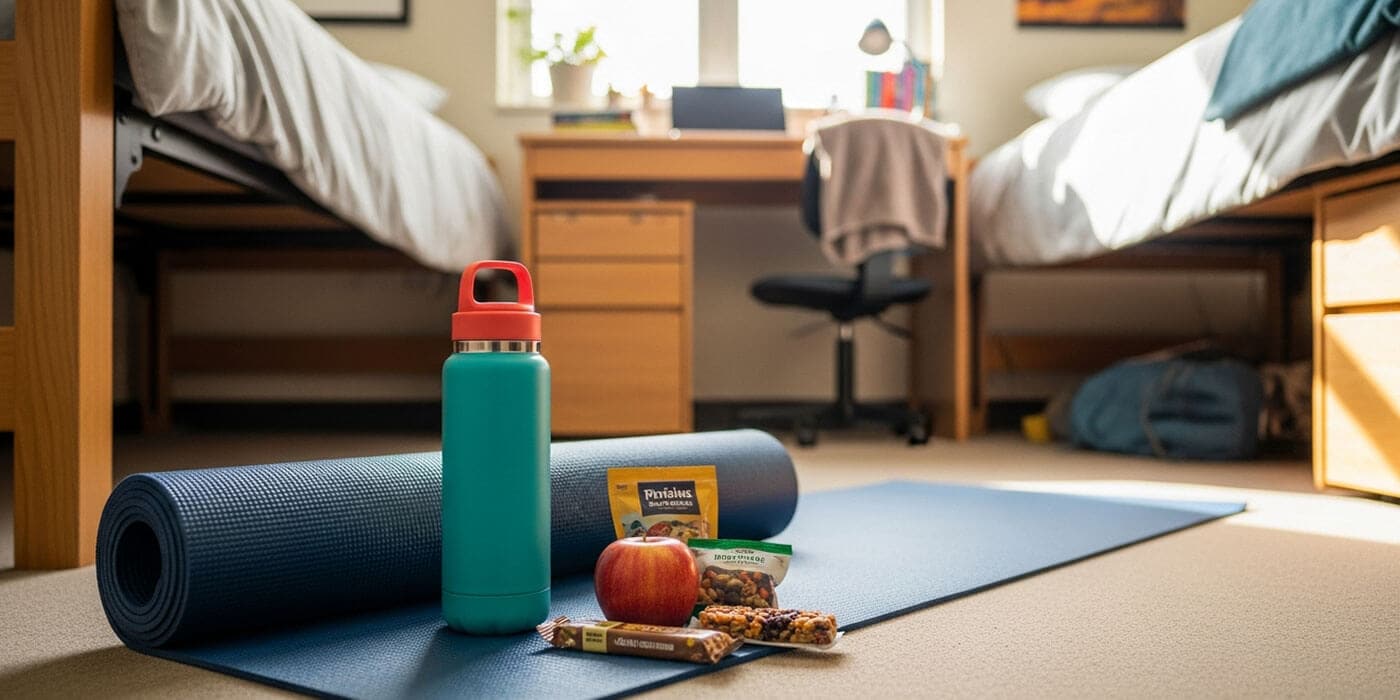
     

  • Healthy snacks and a water bottle on a yoga mat between two beds on the floor of a dorm room.

    Prioritize Yourself: A Guide to College Well-Being

    Amanda Strmac

    After the excitement of graduation, you transition to a new period of independence in college. While it’s an exciting time, staying on top of schoolwork, commitments, and clubs can be challenging. In the process, it’s easy to neglect your health and well-being.

    I learned this the hard way during my first semester. I prioritized assignments and social activities over my own self-care, which led to moments of intense stress when I felt there wasn’t enough time in the day.

    After winter break, I started to find ways to prioritize myself. When I began to move more slowly, I noticed I had more energy, which allowed me to contribute better to my schoolwork and activities. Here are a few things that helped clear my head.

    Log Off by 6 p.m.

    First, shut down your computer by 6 p.m. A typical workday ends around 5 p.m., so there’s no reason to keep working late into the night. Having this set time allows you to wind down and still have a few hours to yourself.

    This practice helps me manage my time because I know I need to have everything finished by then. It also reduces stress levels before bed. Your head won’t be spinning with everything you need to do; instead, it will be clear and ready for the next day.

    Nurture Key Relationships

    Next, make time for the relationships that matter. When I started college, I focused so much on school stress that my friendships began to suffer, and at times, it felt like I had few people in my corner.

    Eventually, I learned the importance of making time for friends and family. I now go out of my way to see my friends and call someone in my family every day. This not only helps me clear my head but also reminds me that many people care about me. You’ll see a burst of energy when you prioritize friendships and allow yourself to have fun.

    Make Time for Movement

    The last tactic is exercise. It may not be everyone’s favorite topic, but I have found it to be an outlet that can clear my head in an instant. My brain knows that the gym is my time and nobody else’s. I put my headphones on, listen to my favorite music, and get to be with myself for an hour or two.

    This is a great way to clear my head, get some movement in, and stay healthy. I switch up my exercises among running, lifting, Pilates, and walks, which keeps things new and exciting. Once I started prioritizing exercise, I saw a huge shift in my mental health and well-being, which has made my college transition smoother.

    Prioritize What Matters

    Starting a new college routine brings challenges that require effort and adaptability. However, with these tactics, you can make the transition a little easier.

    The most important thing is to do what you love. When you make time for the things that matter most, your well-being and the transition will automatically become easier. Remember to show up for yourself and your health because the next four years are for you!

    Do you have a compelling story or student success tips you’d like to see published on the Pearson Students blog?  If you are a college student and interested in writing for us – click here to pitch your idea and get started! 

     

  • A series of three pictures; one showing a Dachshund sleeping next to a person working on a laptop, one showing a Dachshund sitting on a pillow looking at the camera, and another showing a Dachshund sleeping next to a laptop.

    Nursing School and a Weenie Dog

    Frida Rodriguez

    The Brink of Burnout

    As if college was not overwhelming enough, I decided to major in nursing, which is college on steroids. I was stuck going to lectures, studying for quizzes and exams, cooking for myself in the dorms, and somehow still trying to have a social life. This cycle went on for two semesters until I finally said, "enough."

    I started searching for ways to deal with the built-up stress and anxiety. That is when I came across the term ESA, which stands for Emotional Support Animal, and my life completely changed.

    A Furry Solution

    One hundred dollars for an ESA certificate later, I was living with a three-month-old Dachshund named Luka. He probably wished his new mother were not an eighteen-year-old college student living in a small dorm. However, this did not mean he was less loved or taken care of; it was the opposite.

    I quickly gave up on crate training, and he became my sleeping buddy and, eventually, my everything buddy. Luka made getting out of class something I looked forward to, made grocery trips less dreadful, and became my own little de-stressor.

    The Chaos and the Cuddles

    Taking care of another living thing during midterms was a unique experience. It was a balance of cleaning up random messes while flipping through a massive pathophysiology book, but it was always worth it.

    It was especially worth it when I felt Luka cuddle up next to my leg at 2 a.m. He did not care that it was way past our bedtime, only that he was as close as possible.

    Since Luka was a puppy, he still needed all his puppy shots. Juggling his appointments with my class schedule also required some creativity. I remember telling my pathophysiology professor that I had a pressing family matter to attend to, so I could not stay for the entire class. In reality, my "family matter" was a weenie dog who had been sleeping all day and would trade me for a spoonful of peanut butter.

    A Lasting Bond

    I still loved every minute of it: carrying him like a baby, kissing him, and giving him his first piece of steak. We made many memories that I will cherish forever.

    To this day, he is my faithful companion who greets me with a wagging tail that could hit a home run and a bark that could intimidate a lion. I love you, Luka, and thank you for your unwavering love.

    Do you have a compelling story or student success tips you’d like to see published on the Pearson Students blog?  If you are a college student and interested in writing for us – click here to pitch your idea and get started! 

     

  • Graphic showing a woman meditating with a plant next to her and a clock, phone, paper airplane, envelope, calendar, and location point above her.

    Stress Less, Accomplish More

    Beanca Barcelon

    Midterm season is right around the corner. With several big events for clubs and organizations coming up, it’s easy to feel overwhelmed. Stress is a normal part of a college student’s life, but you can still handle it productively and even use it as motivation.

    During this busy season, it’s more important than ever to stay positive and take care of yourself. After all, a healthy mindset leads to better results and, overall, a happier you.

    Reframe Your Stress

    I’ve learned that the first step to turning stress into motivation is to understand that it’s inevitable. Even if you finish a semester with twenty credits, three clubs, and several job interviews, stress will never leave. That’s because stress is inherent to life, not just college.

    Recognizing this can turn a setback into an opportunity for growth. It’s like dipping your feet into cold water before fully submerging yourself; you’re preparing yourself for what’s to come. Instead of avoiding it, I’ve learned to approach my stress as a form of exposure.

    This mindset shift helps me stay calm in chaotic times. I know that by experiencing stress now, I’m learning how to adapt and handle it later on. By embracing this pressure, I’m building resilience for the future.

    Master Your Time

    Another way I’ve turned stress into productivity is by using it to improve my time management. College has taught me how important structure and priorities are. Between my classes, meetings, and assignments, I’ve developed skills that help me both in and out of class.

    I’ve started organizing larger projects into to-do lists with smaller, manageable tasks. This approach has introduced me to helpful platforms like Google Calendar, Notion, and GoodNotes to keep track of all my deadlines.

    I’ve also learned to manage my energy by tackling harder tasks when I’m most alert and saving easier ones for later. Although it can be tempting to tackle everything at once, I’ve found it’s more effective to match my tasks to my energy levels.

    In a way, stress has been my unofficial teacher, pushing me to improve my habits and stay focused.

    Prioritize Your Well-being

    Lastly, I’ve found that stress has encouraged me to adopt a healthier lifestyle. My college schedule and extracurriculars are completely different from my old routine, but that change (and stress) has forced me to grow. I’ve started valuing sleep, eating balanced meals, and setting aside time for self-care.

    I realized my productivity depended on more than just motivation from stress; it also depended on how I treated my body. As a result, I began prioritizing rest just as much. It’s funny how stress, something we usually try to avoid, can actually encourage beneficial habits.

    Ultimately, stress is an inevitable part of the college journey, but it doesn't have to be an entirely negative one. By reframing your mindset, mastering your time, and prioritizing your well-being, you can turn pressure into productivity. This midterm season, don’t just push through the stress; embrace it as an opportunity for growth.

    Do you have a compelling story or student success tips you’d like to see published on the Pearson Students blog?  If you are a college student and interested in writing for us – click here to pitch your idea and get started! 

     

  • An open journal filled with doodles of fall leaves and the word September and a black pen and an iced coffee drink on a wooden surface.

    Find Your Calm: A Student's Guide to Journaling

    Olivia Case

    I know that college can feel overwhelming at times. Between assignments, quizzes, and midterms, it’s easy to fall into a routine that feels repetitive and draining. I’ve definitely been there.

    Then I started journaling. What started as a simple way to organize my thoughts turned into something much more: a space for creativity, reflection, and inspiration. Journaling has not only helped me stay organized but also reminded me to slow down and reconnect with myself.

    Getting Started: Monthly Spreads

    Journaling can feel intimidating at first, especially if you’re new to it. A good place to start is by creating monthly spreads: a comprehensive overview of everything you have scheduled for the month. You can jot down due dates, midterms, projects, social events, and hangouts—whatever is on your plate.

    It’s a great way to stay organized and visually see what’s ahead. When I started doing this, it made such a difference. It gave me a sense of control and helped me mentally separate my academic life from my personal one.

    Making It Your Own

    Once you feel more comfortable, you can get as creative as you want. Depending on the month, try adding colors, doodles, or decorations that match the vibe.

    For example, my July spread was full of all things summer. October, on the other hand, was packed with cute Halloween doodles: ghosts, pumpkins, and candy everywhere. That’s what makes journaling so fun; you can customize it to your own style and personality.

    I’ve also found it helpful to create weekly spreads. These are perfect for writing down your day-to-day plans or smaller tasks that don’t quite fit on the monthly page. It’s a great way to stay on top of homework, chores, and other small tasks you might otherwise forget during a busy week.

    More than a Planner

    Now, journaling is something I look forward to. There’s something really satisfying about flipping through old pages and seeing all my plans, doodles, and deadlines come together. It makes me feel accomplished, like I’ve created something meaningful out of my busy schedule.

    Even though it’s technically “productive,” it doesn’t feel like homework. It’s more like a creative break where I get to organize my life in a way that feels calming and personal.

    Overall, journaling has been a simple yet powerful way to bring creativity and balance back into my routine. It helps me stay organized, but it also gives me a space to slow down and express myself without pressure.

    Whether you love to plan everything out or just need a moment to breathe between classes, journaling can be whatever you make it. It’s your own little world on paper.

    Do you have a compelling story or student success tips you’d like to see published on the Pearson Students blog?  If you are a college student and interested in writing for us – click here to pitch your idea and get started! 

     

  • A young man wearing sunglasses, a ball cap, a silver necklace, and a striped button-down shirt with a white t-shirt underneath standing in front of brick wall with a school logo on it.

    Stop and Smell the Roses in College

    Shalom McNeil

    Graduation: Incoming

    As I get closer to crossing the stage and entering uncharted territory, one question gets louder: “What’s next?”

    For my fellow seniors, thoughts about what’s next might be hitting a little harder as our collegiate chapter ends. Sometimes it feels like a million thoughts run through your head, ranging from hopeful and excited to nervous and doubtful.

    If you’ve felt that pressure, here’s a reminder to pause and be present as we figure it out.

    Football to Filmmaking

    I came to campus as an eager, hot-blooded teenager who couldn’t wait to get my fill of the “college experience.” I joined the football team, made friends, and went to events. But I didn’t expect my feelings toward football to change, and that led to my first real identity crisis.

    My passion for the sport was dwindling, and I was scared. Without football, I didn’t know what else I’d do.

    I tried to straddle the fence for a while, but a serious concussion made the choice for me. That was the first time I truly asked myself, “What’s next?” I was lost.

    Over time, uncertainty weighed on me, and my outlook grew darker. I questioned everything: Who am I? Who do I want to become? Did I make the wrong decision to quit? Should I even stay in college?

    Those thoughts ran heavy, but eventually I decided to take things one day at a time. After months of going through the motions without direction, I thought, “Why not give video a try?” I had no idea how to shoot, edit, or craft a story, yet I had always loved stories.

    That small step opened the door to what’s now my passion. Storytelling and filmmaking have become my lane. For me, picking up a camera became my way of learning to see the world in front of me.

    Senior Reflections

    Looking back, I realize I was so in my own head that I didn’t allow myself to enjoy the process. Even in moments of joy and triumph, I was focused on “what’s next.”

    My college experience forced me to confront something I’ve always known: I’m a chronic overthinker. That’s why I’m shifting my perspective this year.

    I’m in awe that I’m really here, still standing. My journey through college has prepared me and shaped me into who I am today.

    I am ready to take on what’s ahead, even if I have no idea what the future will look like. As I prepare to close one chapter and begin another, I like to remind myself that we’re still in the middle of writing our life story.

    Sure, sometimes I wish I could look into a crystal ball and make a list of all my future mistakes, so I can try to create a safe, smooth ride. But truthfully, what fun is that?

    Every experience, every rose, matters. Our mistakes, detours, and challenges—our stories—make us who we are. Even when you’re looking straight ahead, ready to take on what’s next, it’s always good to stop and smell the roses.

    Do you have a compelling story or student success tips you’d like to see published on the Pearson Students blog?  If you are a college student and interested in writing for us – click here to pitch your idea and get started! 

     

  • A pond with a large downed tree log stretching across from edge to edge.

    Reconnecting to Life by Reducing Screen Time

    Addie Rizzuto

    I realized I was spending too much time online when I started feeling ashamed of my phone’s screen time usage. Instagram? Three hours. TikTok? At least four hours. And that didn’t even include the time spent on my PC or laptop.

    Every single day, I was spending a minimum of seven hours aimlessly scrolling. The guilt of wasting so much time nudged me toward change.

    Aligning My Time with My Life

    I started with a self-imposed TikTok ban. While short-lived, I suddenly found myself with a hole in my day. My attention span was scattered. Instead of filling my life with tangible hobbies, I just scrolled on other platforms.

    I didn’t want my life to continue like that—just university, work, phone, and bed. I wanted a life full of new experiences and genuine enjoyment. I wanted to share those moments with others for the simple pleasure of connection.

    Committing to reducing my overall screen time helped me rediscover activities that bring me joy and allowed me to make better use of my time. It resulted in an improvement in my attention span and a deeper connection with loved ones.

    Improving My Focus

    When you suddenly have an extra seven hours a day, it feels weird. It took me a while to rediscover what I actually like to do. I tried a variety of new activities—everything from knitting to reading to jewelry making.

    One activity that stuck was reading. I finished three books during the first week of my digital detox.

    At first, I struggled to focus. I would read a page, and my mind would wander. My first impulse was to check my phone, and if I gave in, it would lead back to mindless scrolling.

    It was hard to sit with just one thing: reading a book. Even getting through a few pages felt challenging. But by keeping my phone out of reach, I found it easier to resist those impulses and stay focused.

    After just a week or two, I could read more than one hundred pages without even thinking about my phone. That improved focus began to trickle into other areas of my life as well.

    Connecting More Meaningfully

    An unexpected side effect of reducing screen time was reconnecting with loved ones. Social media can connect us, but I’ve realized those connections don't feel as deep.

    With less screen time and social media, I began to see which connections were truly meaningful. When connecting with me wasn’t as convenient, who still reached out? Who did I want to talk to or spend time with in the real world?

    I started calling people more often and having meaningful conversations. Using our actual voices allows us to connect on a deeper level. We can be more vulnerable and honest.

    It’s easier to feel seen and understood—even about small, mundane things. I could hear someone’s joy as they described their breakfast or their exhaustion after a long day at work. These moments of connection felt real and more fulfilling.

    Mindful Screen Time

    Screen use may be an inevitable part of life but cutting out my unnecessary and unproductive habits has been transformative.

    I’ve been able to focus more deeply on whatever I’m doing and be fully present. My significant increase in reading has been a tangible measurement of how much my focus has improved. I’ve also deepened my ability to connect with people on a more genuine level.

    Ultimately, phones should be tools—tools we use consciously and mindfully. They can be all-consuming, but I’ve learned they are only as disruptive as I allow them to be.

    Do you have a compelling story or student success tips you’d like to see published on the Pearson Students blog?  If you are a college student and interested in writing for us – click here to pitch your idea and get started!