Graphing linear equations in two variables involves understanding how ordered pair solutions relate to the equation and how these points can be represented visually on a coordinate plane. A linear equation in two variables typically takes the form ax + by = c, where a, b, and c are constants, and x and y are variables. To graph such an equation, the key is to find multiple ordered pairs (x, y) that satisfy the equation and then plot these points on a graph.
To find these ordered pairs, you start by selecting values for x and then solving for the corresponding y values. For example, consider the equation \(2x + y = 1\). If you substitute \(x = -1\), the equation becomes \(2(-1) + y = 1\), which simplifies to \(-2 + y = 1\). Solving for y gives \(y = 3\), so the ordered pair is \((-1, 3)\). Repeating this process for other values such as \(x = 0\), \(x = 1\), and \(x = 2\) yields the points \((0, 1)\), \((1, -1)\), and \((2, -3)\) respectively.
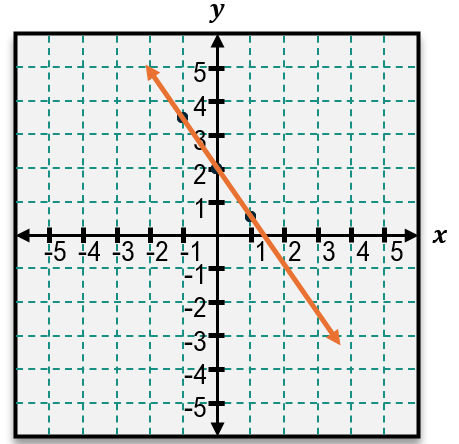
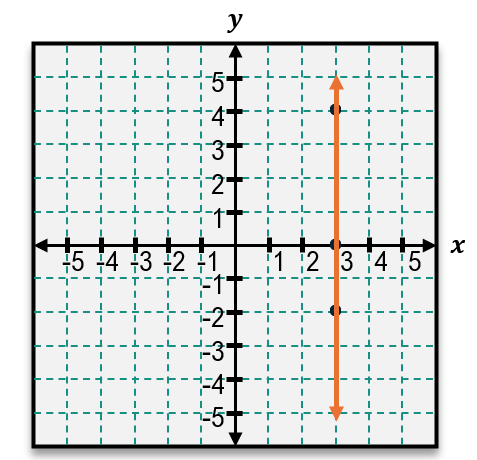
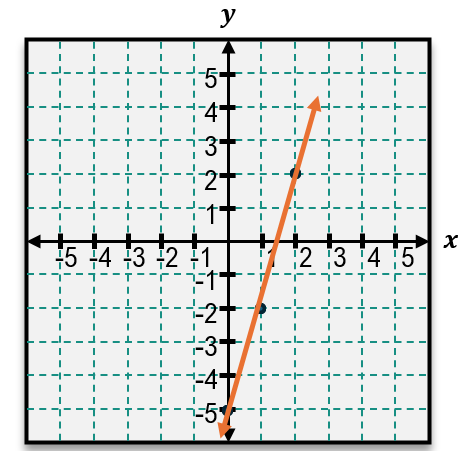
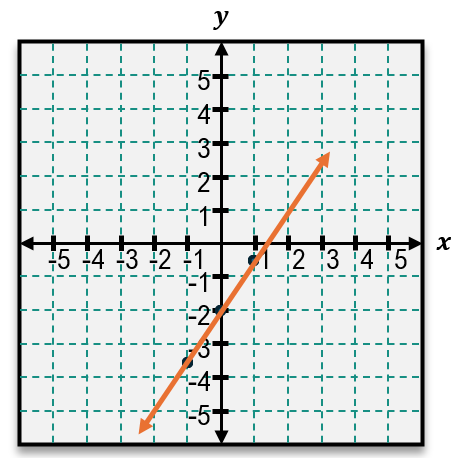
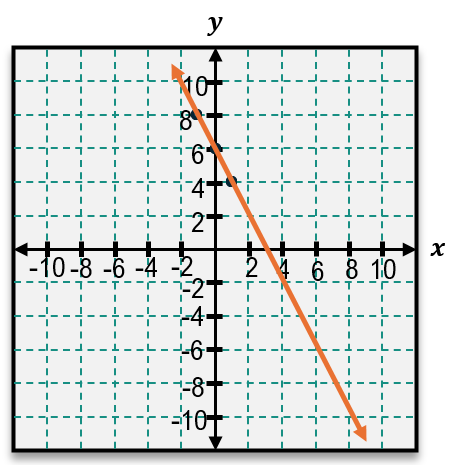
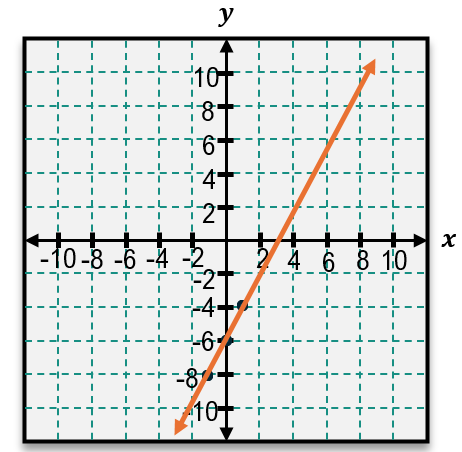
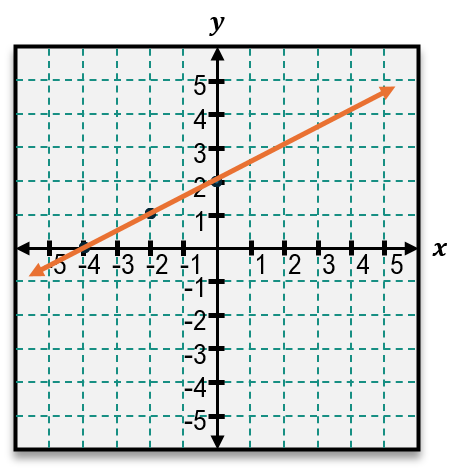
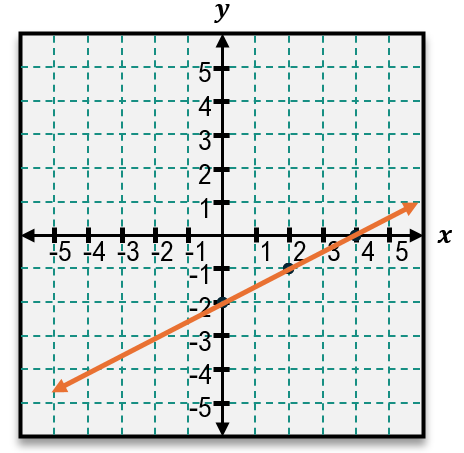
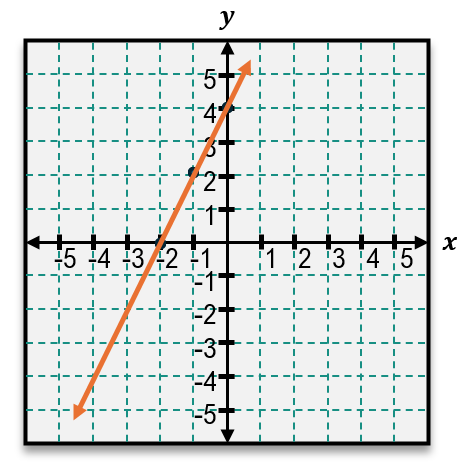
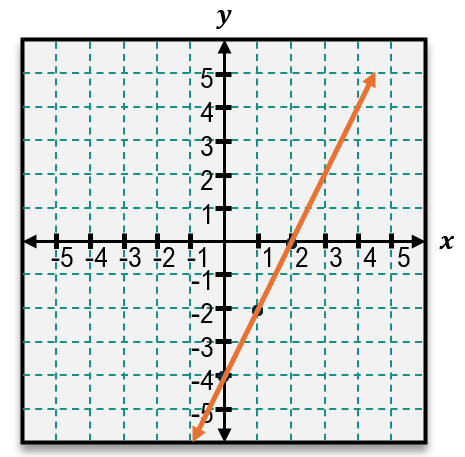
Once these points are plotted on the coordinate plane, connecting them with a straight line reveals the graph of the linear equation. This line represents all possible solutions to the equation, not just the points calculated. The line extends infinitely in both directions, indicating that every point on the line is a solution to the equation.
When choosing x values, it is often helpful to select values that are easy to compute and that cover a range of points to clearly define the line. Typically, selecting at least three points ensures accuracy in graphing. If specific x values are not provided, you can choose your own, such as \(-1\), \(0\), \(1\), and \(2\), to get a clear picture of the graph.
This method of graphing linear equations highlights the relationship between algebraic expressions and their geometric representations. By understanding how to find ordered pairs and plot them, you can visualize the solutions to two-variable linear equations effectively. This foundational skill is essential for exploring more complex topics in algebra and coordinate geometry.