Pearson+ LogoPearson+ Logo
Ch. 52 - Community Ecology
Freeman - Biological Science 8th Edition
Freeman8th EditionBiological ScienceISBN: 9780138276263Not the one you use?Change textbook
Chapter 52, Problem 2

The relationship between corals and the photosynthetic protists they harbor is an example of
a. Commensalism.
b. Competition.
c. Consumption.
d. Mutualism

Verified step by step guidance
1
Begin by understanding the concept of symbiotic relationships, which are interactions between two different organisms living in close physical proximity. These relationships can be classified into different types: mutualism, commensalism, competition, and consumption.
Define mutualism: It is a type of symbiotic relationship where both organisms involved benefit from the interaction. In the context of corals and photosynthetic protists, mutualism is observed as both parties gain advantages from their association.
Define commensalism: This is a relationship where one organism benefits while the other is neither helped nor harmed. Consider if this applies to corals and photosynthetic protists.
Define competition: This occurs when organisms vie for the same resources, potentially harming one another in the process. Evaluate if corals and photosynthetic protists are competing for resources.
Define consumption: This involves one organism consuming another, such as predation or herbivory. Assess if this is relevant to the relationship between corals and photosynthetic protists.

Verified video answer for a similar problem:

This video solution was recommended by our tutors as helpful for the problem above.
Video duration:
1m
Was this helpful?

Key Concepts

Here are the essential concepts you must grasp in order to answer the question correctly.

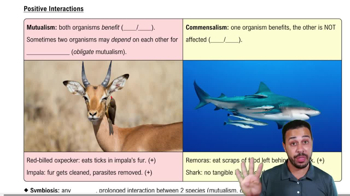
Mutualism

Mutualism is a type of symbiotic relationship where both organisms involved benefit from the interaction. In the case of corals and photosynthetic protists, the protists provide the corals with nutrients through photosynthesis, while the corals offer the protists a protected environment and access to sunlight, making this relationship mutually beneficial.
Recommended video:
Guided course
02:56
Positive Interactions

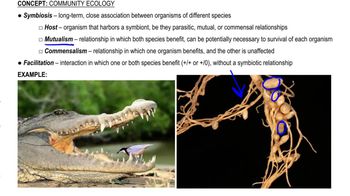
Symbiotic Relationships

Symbiotic relationships are interactions between two different organisms living in close physical proximity. These relationships can be classified into mutualism, commensalism, and parasitism, depending on the benefits or harms experienced by the organisms involved. Understanding these interactions is crucial for studying ecological dynamics and species interdependence.
Recommended video:

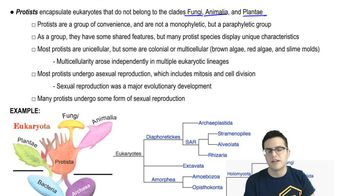
Photosynthetic Protists

Photosynthetic protists, such as zooxanthellae, are single-celled organisms capable of photosynthesis, similar to plants. They play a vital role in marine ecosystems by providing energy and nutrients to their hosts, like corals, through the conversion of sunlight into chemical energy, thus supporting the growth and survival of coral reefs.
Recommended video:
Guided course
06:55
Protist Cells 2