Pearson+ LogoPearson+ Logo
Ch. 11 - DNA Replication and Recombination
Klug - Concepts of Genetics  12th Edition
Klug12th EditionConcepts of Genetics ISBN: 9780135564776Not the one you use?Change textbook
Chapter 11, Problem 11

What was the significance of the polA1 mutation?

Verified step by step guidance
1
Understand that the polA1 mutation refers to a specific mutation in the gene encoding DNA polymerase I in bacteria, often studied in genetics to analyze DNA replication and repair mechanisms.
Recognize that DNA polymerase I has multiple functions, including DNA synthesis and exonuclease activities important for DNA repair and replication fidelity.
Identify that the polA1 mutation typically results in a defective or altered DNA polymerase I enzyme, which can affect the cell's ability to properly replicate or repair DNA.
Explore experimental evidence showing how the polA1 mutation impacts processes such as DNA repair pathways, mutagenesis rates, or sensitivity to DNA-damaging agents.
Conclude that the significance of the polA1 mutation lies in its use as a tool to understand the role of DNA polymerase I in maintaining genome integrity and its involvement in DNA replication and repair.

Verified video answer for a similar problem:

This video solution was recommended by our tutors as helpful for the problem above.
Video duration:
59s
Was this helpful?

Key Concepts

Here are the essential concepts you must grasp in order to answer the question correctly.

polA Gene and DNA Polymerase I

The polA gene encodes DNA polymerase I in bacteria, an enzyme crucial for DNA replication and repair. It has both polymerase and exonuclease activities, allowing it to synthesize DNA and remove RNA primers during replication.
Recommended video:
Guided course
02:43
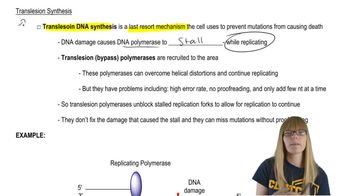
Translesion Synthesis

polA1 Mutation

The polA1 mutation is a specific alteration in the polA gene that typically results in a defective or inactive DNA polymerase I enzyme. This mutation helps researchers study the enzyme's role by observing the effects of its loss on DNA replication and repair.
Recommended video:
Guided course
10:48
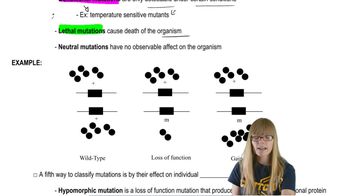
Mutations and Phenotypes

Significance in Genetic Research

Studying the polA1 mutation revealed the essential functions of DNA polymerase I in maintaining genome integrity. It demonstrated how defects in DNA replication enzymes can lead to increased mutation rates and sensitivity to DNA damage, highlighting the enzyme's role in cellular survival.
Recommended video:
Guided course
11:35
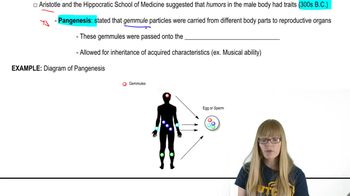
History of Genetics