Ch. 23 - Microbial Diseases of the Cardiovascular and Lymphatic Systems
Tortora - Microbiology: An Introduction 14th Edition
Tortora14th EditionMicrobiology: An IntroductionISBN: 9780138200398Not the one you use?Change textbook
Chapter 23, Problem 7

Compare and contrast cat-scratch disease and toxoplasmosis.

Verified step by step guidance
1
Identify the causative agents of each disease: Cat-scratch disease is caused by the bacterium Bartonella henselae, while toxoplasmosis is caused by the protozoan parasite Toxoplasma gondii.
Describe the mode of transmission: Cat-scratch disease is typically transmitted through scratches or bites from infected cats, whereas toxoplasmosis is commonly acquired by ingestion of oocysts from contaminated soil, water, or undercooked meat, or congenitally from mother to fetus.
Compare the clinical manifestations: Cat-scratch disease usually presents with localized lymphadenopathy near the site of the scratch or bite, sometimes accompanied by fever and malaise. Toxoplasmosis can be asymptomatic in healthy individuals but may cause flu-like symptoms, and in immunocompromised patients or fetuses, it can lead to severe neurological and systemic disease.
Contrast the diagnostic methods: Diagnosis of cat-scratch disease often involves serology for Bartonella antibodies or PCR, while toxoplasmosis diagnosis relies on serological tests detecting specific IgG and IgM antibodies, PCR, or histological examination.
Discuss treatment and prevention: Cat-scratch disease is generally self-limiting but may require antibiotics in severe cases; prevention includes avoiding cat scratches and bites. Toxoplasmosis treatment involves antiparasitic drugs like pyrimethamine and sulfadiazine, and prevention focuses on proper food handling, avoiding exposure to cat feces, and screening during pregnancy.

Verified video answer for a similar problem:

This video solution was recommended by our tutors as helpful for the problem above.
Video duration:
2m
Was this helpful?

Key Concepts

Here are the essential concepts you must grasp in order to answer the question correctly.

Etiology and Causative Agents

Cat-scratch disease is caused by the bacterium Bartonella henselae, transmitted primarily through scratches or bites from infected cats. Toxoplasmosis is caused by the protozoan parasite Toxoplasma gondii, typically acquired through ingestion of contaminated food, water, or contact with cat feces. Understanding the different pathogens is essential for diagnosis and treatment.
Recommended video:
Guided course
03:24
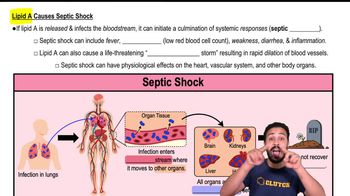
Lipid A Causes Septic Shock

Clinical Manifestations and Symptoms

Cat-scratch disease usually presents with localized lymphadenopathy near the site of injury, fever, and sometimes mild systemic symptoms. Toxoplasmosis can be asymptomatic or cause flu-like symptoms in healthy individuals but may lead to severe complications like encephalitis or congenital infections in immunocompromised patients and fetuses.
Recommended video:
Guided course
05:09
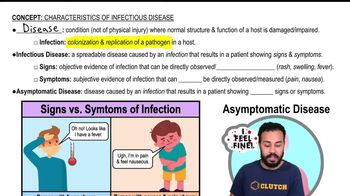
Intro to Characteristics of Infectious Disease

Transmission and Epidemiology

Cat-scratch disease is transmitted mainly through scratches or bites from infected cats, especially kittens, and is more common in children and young adults. Toxoplasmosis spreads through ingestion of oocysts from contaminated soil, water, or undercooked meat, and vertical transmission from mother to fetus. These differences affect prevention strategies.
Recommended video:
Guided course
04:23
Transmission Electron Microscope (TEM)