
Students blog

Explore the latest trends, tips, and experiences in college life in this blog written by fellow students.

Explore posts in other areas.

PreK-12Higher EducationProfessional

  • A peaceful scene of beach houses at sunset with tall grasses in the foreground.

    Finding Calm in College with Yoga

    Anna Landrum

    For many, college can be a very stressful time, leaving students feeling overwhelmed and burned out. When I first moved to college, I began experiencing mental health struggles due to the many associated life changes. Then, to fulfill my physical activity requirement, I signed up for a yoga class.

    Yoga is an ancient practice originating in India that combines breathing, physical poses, and meditation. I quickly fell in love with the practice, and as the semester progressed, I began to discover its benefits. Yoga is a helpful practice that can improve a college student's mental and physical health.

    A Tool for Mental Wellness

    Yoga can be a powerful tool to improve mental health. College students often juggle school, work, a social life, and so much more, which can cause stress and anxiety. Yoga’s components of mindfulness and controlled breathing help reduce these feelings.

    Research has found that yoga lowers cortisol, the body’s main stress hormone [1]. A 2020 study by researchers at NYU’s School of Medicine found that yoga can help reduce symptoms of generalized anxiety disorder [2].

    Studies using MRI scans show increased thickness in the hippocampus and cerebral cortex among regular yoga practitioners [3]. These brain areas are responsible for learning, memory, and information processing, and strengthening them may help students who struggle with focus.

    A Boost for Physical Health

    Yoga is also a great way for college students to look after their physical health. Through its physical poses, students can improve flexibility, build muscle strength, improve posture, and even gain better balance and coordination. Yoga can also help improve heart health by increasing blood circulation and lowering the risk of heart disease.

    Additionally, yoga can help college students who struggle with insomnia. A Harvard Health article reports that practicing yoga regularly may reduce symptoms of insomnia [4].

    How to Start Your Practice

    Starting a yoga practice may seem overwhelming. However, there are plenty of ways for college students to learn and begin.

    YouTube is a great resource for beginners. Students can find a variety of classes, from gentle to power yoga, taught by great teachers for free.

    Many university recreation centers offer yoga classes that are already included in tuition. Some universities even have yoga clubs where students can meet others interested in the practice. Students can also research local yoga centers in their area, as some offer student discounts or pay-what-you-can classes.

    Finding Your Balance

    While college can be a stressful time, yoga can help students take care of their mental and physical well-being. What begins as a simple class requirement can become a powerful tool for navigating the pressures of student life. Ultimately, yoga offers a way to find balance, not just on the mat, but in your academic and personal life as well.

    [1] https://lifestylemedicine.stanford.edu/how-exercise-balances-cortisol-levels/

    [2] https://www.sciencedaily.com/releases/2020/08/200812144124.htm

    [3] https://link.springer.com/chapter/10.1007/978-981-16-6913-2_13

    [4] https://www.health.harvard.edu/exercise-and-fitness/yoga-tai-chi-walking-and-running-may-help-with-insomnia

    Do you have a compelling story or student success tips you’d like to see published on the Pearson Students blog?  If you are a college student and interested in writing for us – click here to pitch your idea and get started! 

     

  • Graphic shows a woman wearing a yellow shirt and purple pants in reclined chair with her feet resting on an oversized clock.

    Why College Students Procrastinate and How to Stop

    Shaivi Ramisetti

    Procrastination is the brain’s way of delaying tasks to avoid discomfort. This is a common struggle, but it is not a sign of laziness or poor time management. Rather, the brain prioritizes short-term emotional relief over long-term goals. Overcoming this is not easy, but understanding why we procrastinate is the first step.

    Mental Exhaustion

    As college students, we often find that procrastination is one of our biggest struggles because we may feel exhausted daily. We might choose to watch reels for a full hour at 9 p.m. instead of finishing the assignment due at 11:59 p.m., telling ourselves we “still have time.”

    We are juggling the transition to adulthood while taking on responsibilities both inside and outside of school. Taking a full-time course load and working a part-time job is the reality for many college students. That’s not an easy task.

    Physical Fatigue

    We get less sleep and sometimes feel like we’re working like machines. Procrastination is an easy trap to fall into; delaying tasks for comfort often feels easier than getting them done, given the fatigue that comes with such busy schedules.

    As a student, I deal with this lifestyle daily. I overcome the feeling of exhaustion by doing yoga and going to the gym. They keep me grounded and relieve my stress, even if it’s only for a few minutes a day. This practice makes me feel more energized and helps me finish my pending tasks.

    The Anxiety Loop

    As a student, I find that my biggest weakness is overthinking. Even when I take a one-hour break from studying to avoid burnout, feelings of guilt creep in. I’ve realized that the more I worry about a certain task, the more I delay it. This only increases my stress and negative self-talk.

    To manage this, I have found that journaling helps me process my anxious thoughts. It also allows me to break down tasks in my schedule, making them feel more achievable.

    Self-Care and Balance

    Procrastination isn’t just about poor habits; it could be a response to burnout. Practicing self-care is crucial for maintaining a positive mental state and keeping the mind relaxed. Chronic delays can worsen feelings of guilt, shame, and stress, which impact mental well-being.

    I find self-care hard to incorporate into my schedule. However, setting aside one hour per day after completing all my tasks to watch my favorite show or learn how to crochet makes it all worth it.

    Finding that balance is important, especially during college. It’s easy to become so focused on your future that you forget to care for yourself in the present. The next time you find yourself procrastinating, acknowledge your stress, take a small step to care for yourself, and turn that delay into a productive pause.

    Do you have a compelling story or student success tips you’d like to see published on the Pearson Students blog?  If you are a college student and interested in writing for us – click here to pitch your idea and get started! 
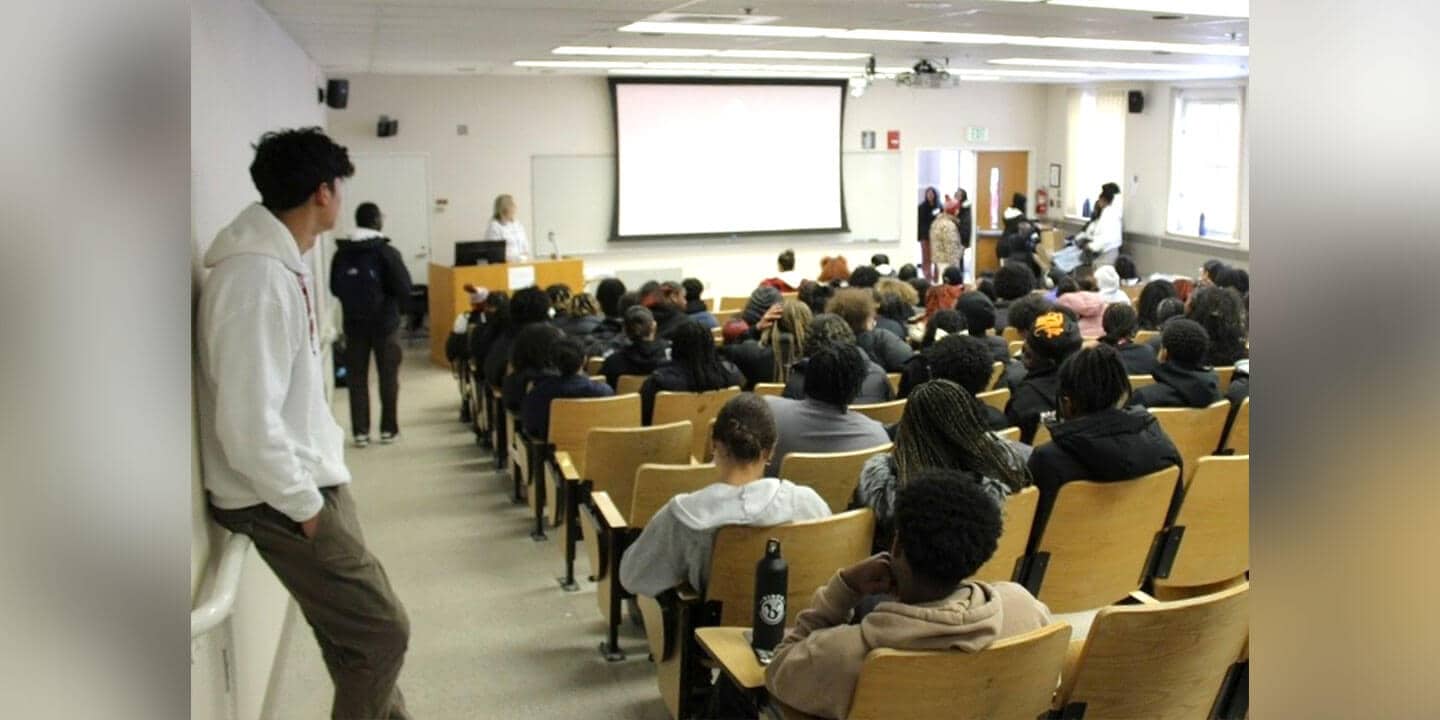
     

  • A classroom full of students and an instructor looking at a screen at the front of the room.

    Full-Time Student, Part-Time Chaos Manager

    Isa Jallow

    Running a one-person organization

    If there’s one thing college has taught me, it’s that I’m basically running a small organization. Between classes, work, volunteering, and trying to maintain a social life, my schedule looks like a Google Calendar that needs therapy.

    People ask, “How do you balance everything?” Honestly… I don’t. I stay prayed up, do my best, and hope for the best like everyone else.

    What I’m balancing

    I’m majoring in Accounting and Management Information Systems and minoring in Senior Living Management. I’m working, volunteering at senior homes, and serving on the BSU cabinet. Somehow, I’m still a supportive friend, daughter, and human being.

    On top of that, my Gambian grandma raised me to believe, “You must work twice as hard.” Quitting is not an option. Neither is resting, apparently.

    So yes, I’m busy, but it’s the kind of busy that builds your future, so you keep pushing.

    The system that saves me

    To survive, I rely on my checklists like they’re emotional support animals. If it’s not written down, it will not happen. I’ve learned that college isn’t about who’s the smartest; it’s about who can stay organized enough not to drown.

    My notes app is full of to-do lists, reminders, and random thoughts I’m too scared to lose, like “Buy rice” or “Send that email before they think I ghosted.” Crossing things off a list is my version of self-care.

    Community work that grounds me

    Being involved on campus comes with its own chaos. Between BSU meetings, volunteer shifts, and the friend who texts, “Are you free?”, the real answer is always no. But I show up anyway.

    I’m a people person, so I genuinely love the community work I do, especially with seniors. It reminds me why I want to own a senior living community one day. Helping people gives me purpose, even when I’m tired enough to fall asleep standing up.

    Choosing peace in the social circus

    Then there’s the social side of college: a circus of friendships, misunderstandings, and situationships that start and end faster than my break between classes. I’ve had to learn to choose peace over drama, even when drama tries to choose me.

    Sometimes the most mature thing you can do in college is say, “You know what? I’m going home,” and mean it.

    Tired, with a purpose

    For all the chaos, I wouldn’t trade the experience. Being this busy has made me resilient, disciplined, and more patient than I ever planned to be. I’ve grown into someone who can handle pressure, adapt quickly, and still laugh at the madness of it all.

    At the end of the day, I’m proud of the life I’m building. I may be tired, but I’m tired with a purpose.

    So no, I don’t have it all together. I’m a full-time student, part-time chaos manager, doing my best to get through each week without losing my mind. Honestly, that’s enough.

    Do you have a compelling story or student success tips you’d like to see published on the Pearson Students blog?  If you are a college student and interested in writing for us – click here to pitch your idea and get started! 

     

  • An upper-level indoor track at a fitness center.

    Balancing College Life with Fitness

    Jack Byrne

    College can be a difficult lifestyle adjustment. Living in campus housing and navigating a class schedule different from high school can be challenging. Add in extracurriculars such as clubs, sports, and social events, and it becomes even harder.

    Staying on top of my physical fitness is the most effective way I balance the hectic college lifestyle. Fitting the gym into one’s daily schedule seems hard, but many people overestimate how long physical activity takes.

    Simple Ways to Start Working Out

    You can spend hours at the gym, but many quick workouts require only minutes of your time. Anything that gets your heart rate up and brings you out of your comfort zone benefits your body and mind.

    For example, walking outside for twenty to thirty minutes every day is a simple way to start. Once you are comfortable with that, start jogging a mile every day. You can download various apps to track your progress and hold yourself accountable.

    I enjoy running at the gym’s track because the atmosphere motivates me. I can surround myself with others who are also trying to better themselves. This goes for weight training as well.

    Note the weight you start with. As you return to the gym, strive to increase your weight and watch your hard work pay off.

    Personally, I make an effort to go to the gym five days a week, typically Monday through Friday. I use the weekend to relax, spend time with friends, or finish any remaining work.

    This is just an example of a schedule that you can follow. Building one that works best for you will make it easier to stay consistent and form a long-term habit.

    Mental Health Benefits of Fitness

    I always worked out because I liked getting stronger and wanted to look good. However, college has really opened my eyes to how beneficial fitness is for my mental health.

    When I am very stressed about school, I do not feel bad about choosing to go to the gym instead of doing an assignment. It gives me time to take my mind off everything, work hard, and return refreshed to finish that assignment.

    There is a sign that hangs in our gym at school that says, “Nobody ever regrets going to the gym.” While this is cliché, it has proven true for me. No matter how badly I did not want to go or how overwhelmed I was, I always leave a workout feeling accomplished.

    College is the perfect time to start creating good physical fitness habits. Your life is ramping up toward the real world, yet you still have leeway to find what works for you.

    Working out is my way to stay on track and find peace. I encourage you to give it a shot and begin building a lifelong habit that will benefit you immensely.

    Do you have a compelling story or student success tips you’d like to see published on the Pearson Students blog?  If you are a college student and interested in writing for us – click here to pitch your idea and get started! 

     

  • A series of three pictures; one showing a Dachshund sleeping next to a person working on a laptop, one showing a Dachshund sitting on a pillow looking at the camera, and another showing a Dachshund sleeping next to a laptop.

    Nursing School and a Weenie Dog

    Frida Rodriguez

    The Brink of Burnout

    As if college was not overwhelming enough, I decided to major in nursing, which is college on steroids. I was stuck going to lectures, studying for quizzes and exams, cooking for myself in the dorms, and somehow still trying to have a social life. This cycle went on for two semesters until I finally said, "enough."

    I started searching for ways to deal with the built-up stress and anxiety. That is when I came across the term ESA, which stands for Emotional Support Animal, and my life completely changed.

    A Furry Solution

    One hundred dollars for an ESA certificate later, I was living with a three-month-old Dachshund named Luka. He probably wished his new mother were not an eighteen-year-old college student living in a small dorm. However, this did not mean he was less loved or taken care of; it was the opposite.

    I quickly gave up on crate training, and he became my sleeping buddy and, eventually, my everything buddy. Luka made getting out of class something I looked forward to, made grocery trips less dreadful, and became my own little de-stressor.

    The Chaos and the Cuddles

    Taking care of another living thing during midterms was a unique experience. It was a balance of cleaning up random messes while flipping through a massive pathophysiology book, but it was always worth it.

    It was especially worth it when I felt Luka cuddle up next to my leg at 2 a.m. He did not care that it was way past our bedtime, only that he was as close as possible.

    Since Luka was a puppy, he still needed all his puppy shots. Juggling his appointments with my class schedule also required some creativity. I remember telling my pathophysiology professor that I had a pressing family matter to attend to, so I could not stay for the entire class. In reality, my "family matter" was a weenie dog who had been sleeping all day and would trade me for a spoonful of peanut butter.

    A Lasting Bond

    I still loved every minute of it: carrying him like a baby, kissing him, and giving him his first piece of steak. We made many memories that I will cherish forever.

    To this day, he is my faithful companion who greets me with a wagging tail that could hit a home run and a bark that could intimidate a lion. I love you, Luka, and thank you for your unwavering love.

    Do you have a compelling story or student success tips you’d like to see published on the Pearson Students blog?  If you are a college student and interested in writing for us – click here to pitch your idea and get started! 

     

  • Graphic showing a woman meditating with a plant next to her and a clock, phone, paper airplane, envelope, calendar, and location point above her.

    Stress Less, Accomplish More

    Beanca Barcelon

    Midterm season is right around the corner. With several big events for clubs and organizations coming up, it’s easy to feel overwhelmed. Stress is a normal part of a college student’s life, but you can still handle it productively and even use it as motivation.

    During this busy season, it’s more important than ever to stay positive and take care of yourself. After all, a healthy mindset leads to better results and, overall, a happier you.

    Reframe Your Stress

    I’ve learned that the first step to turning stress into motivation is to understand that it’s inevitable. Even if you finish a semester with twenty credits, three clubs, and several job interviews, stress will never leave. That’s because stress is inherent to life, not just college.

    Recognizing this can turn a setback into an opportunity for growth. It’s like dipping your feet into cold water before fully submerging yourself; you’re preparing yourself for what’s to come. Instead of avoiding it, I’ve learned to approach my stress as a form of exposure.

    This mindset shift helps me stay calm in chaotic times. I know that by experiencing stress now, I’m learning how to adapt and handle it later on. By embracing this pressure, I’m building resilience for the future.

    Master Your Time

    Another way I’ve turned stress into productivity is by using it to improve my time management. College has taught me how important structure and priorities are. Between my classes, meetings, and assignments, I’ve developed skills that help me both in and out of class.

    I’ve started organizing larger projects into to-do lists with smaller, manageable tasks. This approach has introduced me to helpful platforms like Google Calendar, Notion, and GoodNotes to keep track of all my deadlines.

    I’ve also learned to manage my energy by tackling harder tasks when I’m most alert and saving easier ones for later. Although it can be tempting to tackle everything at once, I’ve found it’s more effective to match my tasks to my energy levels.

    In a way, stress has been my unofficial teacher, pushing me to improve my habits and stay focused.

    Prioritize Your Well-being

    Lastly, I’ve found that stress has encouraged me to adopt a healthier lifestyle. My college schedule and extracurriculars are completely different from my old routine, but that change (and stress) has forced me to grow. I’ve started valuing sleep, eating balanced meals, and setting aside time for self-care.

    I realized my productivity depended on more than just motivation from stress; it also depended on how I treated my body. As a result, I began prioritizing rest just as much. It’s funny how stress, something we usually try to avoid, can actually encourage beneficial habits.

    Ultimately, stress is an inevitable part of the college journey, but it doesn't have to be an entirely negative one. By reframing your mindset, mastering your time, and prioritizing your well-being, you can turn pressure into productivity. This midterm season, don’t just push through the stress; embrace it as an opportunity for growth.

    Do you have a compelling story or student success tips you’d like to see published on the Pearson Students blog?  If you are a college student and interested in writing for us – click here to pitch your idea and get started! 
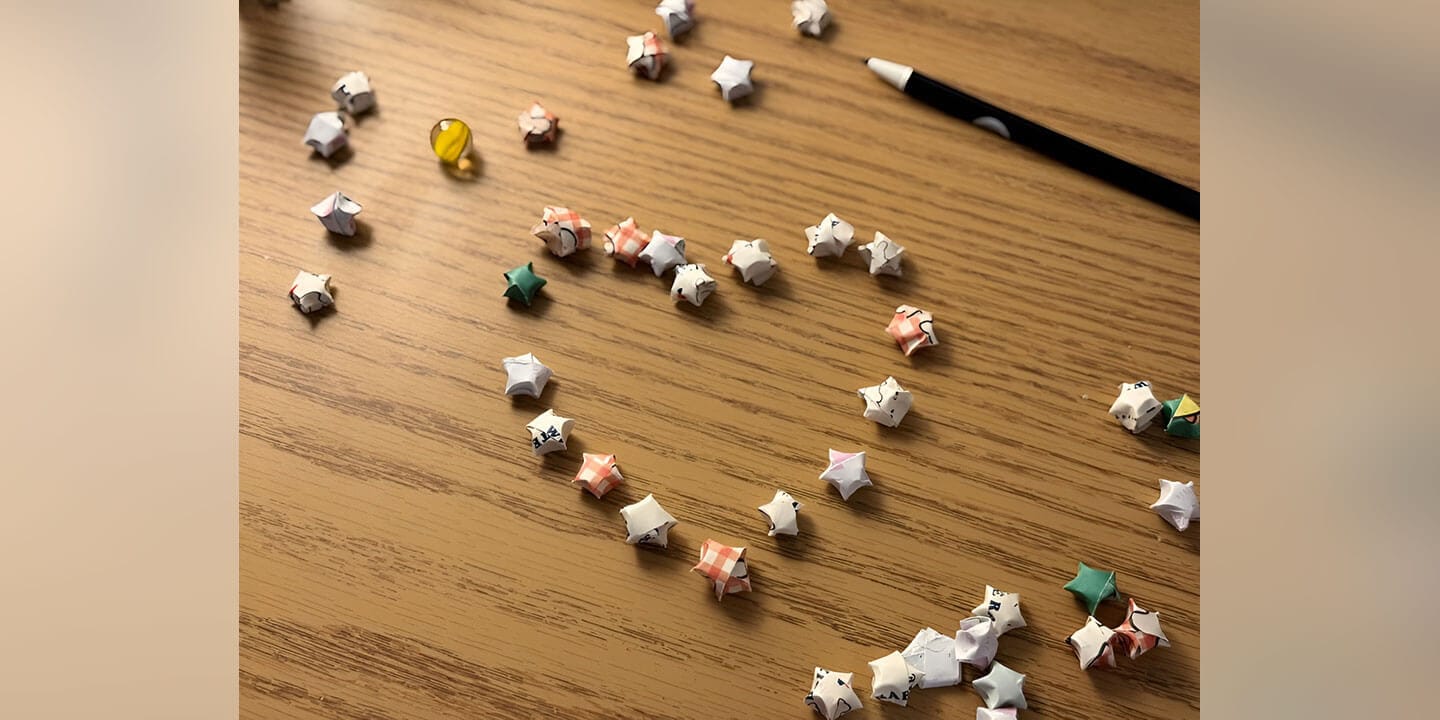
     

  • Origami paper stars arranged in a heart pattern.

    Crafts to Survive College Stress

    Denise Tan

    As the school year progresses, many college students find themselves toiling away at a computer and spending most of the week studying. But every now and then, it’s important to step away from the grind and just be a regular person!

    Everyone needs rest, especially during the stressful season of finals. Taking a break helps you be more productive afterwards and restores some of your focus for the rest of the week.

    So, how can you achieve this balance? Here are a few ideas to help you de-stress after a long day of work:

    Origami as a Reward

    Origami is a Japanese art form that involves creating 3D figures by folding a piece of paper. All you need is a couple of sheets of paper and a design you want to attempt. This makes the craft both affordable and easy to do anywhere.

    Need some ideas on what to fold? Beginners often start with lucky stars, cranes, or flowers. There are plenty of online resources to guide you through each step. Try folding a heart for yourself every time you complete a set of problems as a reward for your hard work.

    "Claying" Around with Friends

    Everyone deserves a break! Bring a small pack of clay to your next group study session or invite a friend to join you for some amateur sculpting. Sculpt silly shapes or new decor and share a laugh over your creations.

    Studying for long periods can lead to burnout. Working with something tactile like clay engages new areas of your brain, giving your mind a chance to relax and regroup before the next study session.

    Deep Art Sessions

    Sometimes, short breaks just don’t cut it. After hours of work, mental fatigue can feel inescapable. In moments like these, it’s essential to step away from the work completely.

    Art is a wonderful outlet for expressing emotions and promoting relaxation. Use an artistic activity as a way to engage in a longer, deeper break. Draw, paint, journal, or do any of the activities above; indulge in whatever creative activity helps you forget your to-do list for a while.

    Get Creative with Assignments

    College is all about working hard to build a better future, but that doesn’t mean you have to sacrifice your artistic side. If it’s professor-approved, you can also add artistic elements to your final projects. Use tools like Canva or PowerPoint for presentations, or write something creative with an artistic summary instead of an essay.

    For those in technical fields, decorating and organizing your notes can be a fun way to visually engage with complex information. Adding a bit of personality to your work is also a visual reminder that you’re creating something for yourself with your studies.

    Take a Break and Have Fun!

    Ultimately, how you choose to de-stress is up to you. While studies have shown that art can reduce stress, the best method is always the one that works for you.

    And if crafts aren’t your thing, there are plenty of other ways to unwind. Watching a movie, cooking a delicious meal, or exercising are all great alternatives.

    The most important thing is to be intentional about taking breaks to focus on something you enjoy. Your grades, your focus, and your well-being will thank you for it!

    Do you have a compelling story or student success tips you’d like to see published on the Pearson Students blog?  If you are a college student and interested in writing for us – click here to pitch your idea and get started! 
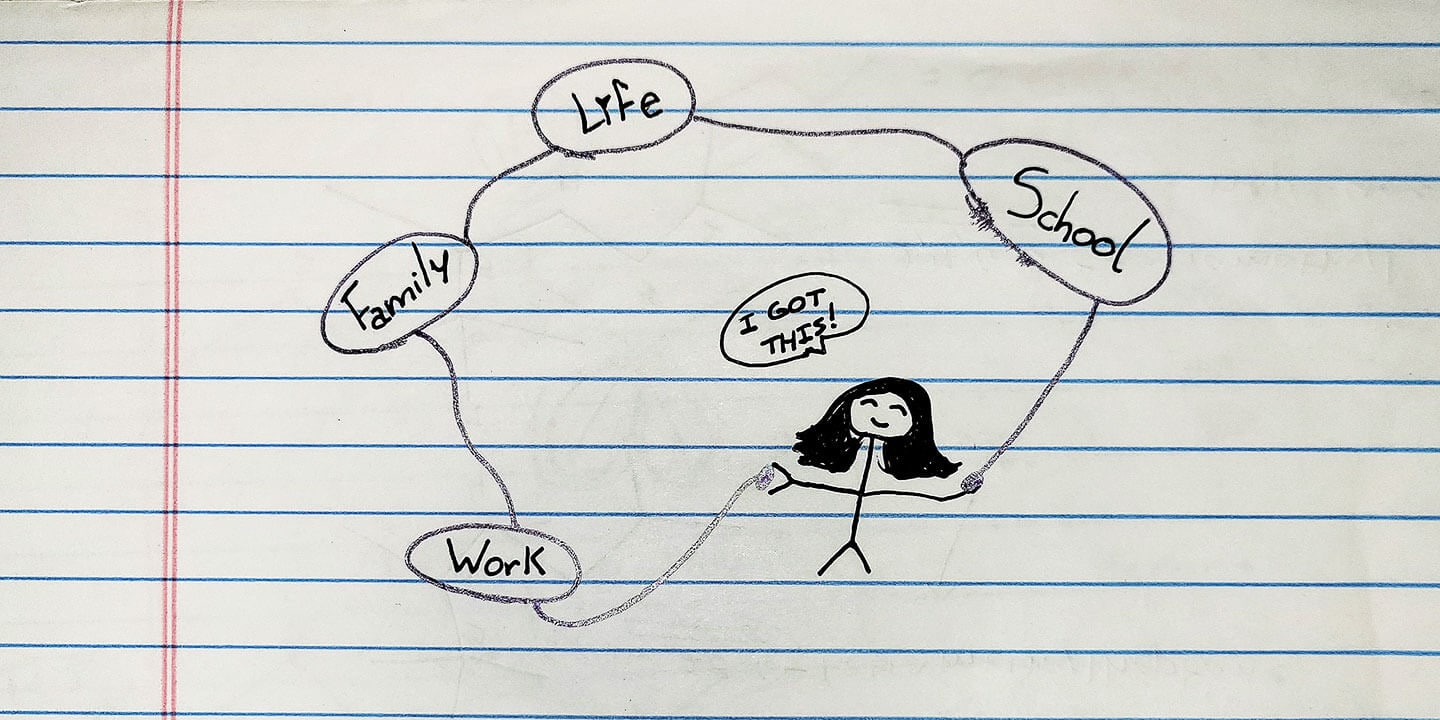
     

  • A hand-drawn doodle on lined notebook paper with a stick figure holding a string connecting the words School, Life, Family, Work and a dialogue bubble that says, ‘I GOT THIS!’

    Balancing Work and School: Lessons from My Journey

    Andrea Ramirez

    In high school, everyone talks about how challenging college academics can be, but no one really prepares us for the transition into adulthood that comes with it. I grew up in Venezuela until I was 15, when my family decided to move to the U.S. It was a drastic change, new country, new life, new education system and I had to adapt quickly to keep up. I researched everything about college life, academics, and tips for success, but nothing could fully prepare me for the reality. Because life isn’t just about academics; it also includes family, friends, work, and personal growth. At this age, we’re transitioning from young adults to fully independent adults, and learning to balance everything is key. 

    I got my first job as a freshman in college. Even though I was a multitasker in high school—playing volleyball and cross-country college was an entirely new level. My first semester went great; I finished with a 4.0 GPA and made the Dean’s List. Then, spring semester hit, and it wasn’t as easy. I failed my first class ever. I was shocked. I had never failed a class before. But instead of letting it get to me; I took it as a lesson. I reflected on what worked for me in the Fall semester and what I did differently in the Spring semester that led to my struggles. By the Summer semester, I had figured out a balance that allowed me to succeed academically while keeping up with work and personal life. Now, as I near graduation, I want to share the lessons I learned along the way and things I wish I had known when I first started: 

    1. Make a Schedule That Works for You 


    Everyone is different, and what works for your friends may not work for you. At first, I tried to go to class in the morning and work immediately afterward. But by the time I got home at night, I was too exhausted to study or even eat properly, for the next day to do the same and my academics suffered. I realized that I needed to change my approach. I rearranged my schedule so that I focused on school from Monday to Wednesday and worked from Wednesday afternoon to Friday. This way, I still had weekends off and could dedicate my first three days of the week solely to schoolwork. Find what works best for you and adjust accordingly. 

    2. Make a Priority List 


    What matters most to you? Family? School? Work? Once you identify your priorities, it becomes easier to create a schedule that allows you to enjoy those things. If spending time with family is important, then structure your week so that you can dedicate a day to them. Knowing your priorities helps you avoid burning out and ensures that you’re investing your time wisely. 

    3. It’s Okay to Say No 


    This was a hard lesson for me. My family was struggling financially, so I always took extra shifts at work. Before I knew it, I was covering for everyone, but my grades were slipping, and I was neglecting my health. I was just surviving, not living. Eventually, I realized I needed boundaries. It’s okay to say no to extra work, to a hangout, or to anything that drains you beyond your ability. 

    Protect yourself. 


    4. Speak Up for Yourself 


    There are doors that won’t open unless you push them yourself. Stay on top of your academic progress—regularly check in with your professors, meet with your counselor, and advocate for yourself. If you need help, ask for it. No one will fight for your success more than you. The dream is yours. 

    5. Use Tools That Will Help You Succeed 


    We live in time where technology is everywhere, take advantage. Many students have already gone through your major or university, and there are online resources that can save you time. For me, Pearson+ was a game changer, it allowed me to upload my syllabus, and it created a personalized study plan for me. Tools like YouTube tutorials, study apps, and tutoring can also be incredibly helpful. Use whatever resources you need to succeed. 
 

    I hope these tips help you navigate the balancing act of college and work. It’s not easy, but with the right approach, you can thrive in both areas. Remember, you’re not just getting a degree, you’re also learning how to manage life as an adult. Make the most of it and enjoy the process.

    Do you have a compelling story or student success tips you’d like to see published on the Pearson Students blog?  If you are a college student and interested in writing for us – click here to pitch your idea and get started! 

     

  • A small group of college students lie in the grass in front of an academic building.

    Balancing the Equation: Finding a Work-Life Balance

    Simran Nadig

    My mother has a photo album on her phone titled “Reading while...” The album contains photos of me reading a book during different activities: when I was sitting in the driver’s seat waiting for my mom to lock the door, when I was putting on my shoes, while I was brushing my teeth. My favorite is when a photo of me lying face down in a book I was reading because I fell asleep. These photos offer an insight into who I was as a child, a vivacious reader who refused to put a book down, no matter the situation.

    However, that all changed as I got into high school. As I started to take harder classes, my study time started to eat into my leisure reading time. And while at every icebreaker fun fact conversation, I would always say I loved to read, I slowly realized that I had not picked up a book in months. And while I tried to remedy this, I constantly found myself unable to find the time. And so, as I finished out high school, something that used to define me as a child disappeared from my life.

    This continued into my college career as well. And it was not just the reading time that took a hit, it was any hobby or activity. I became consumed with studying for my classes and doing well. And while I told myself that throwing myself into studying was worth it and I was doing better, I slowly realized I was not. I became extremely sleep deprived, anxious, and a whole lot of other things that did not help me succeed in my classes.

    To calm my nerves during an especially anxious episode, I started to read an orientation magazine I had gotten in the beginning of the year. After reading just a few pages, I felt much better. It felt so good to turn those pages and read the story out in front of me. That’s when I realized how important it is to find that work-life balance. Constantly working was not helping me at all.

    That’s when I decided to go to the library and check out a book I had wanted to read in high school. That weekend, I read the entire book and felt a part of my brain re-emerge. I felt at peace and truly happy for the first time in months. The next weekend, I checked out another book, but instead of finishing it all that weekend, I paced it throughout the week, reading a few chapters at a time.

    I saw a change in my studies. I started to stress less and started to sleep on time more often. It also was not just reading that made the difference. I started to pursue other hobbies and activities as well. I have picnics with my friends. I got good at pool and foosball. Now every Friday, my friends and I watch a movie. Every Sunday morning, we get brunch. I’ve learned how to crochet. Activities like these help me find peace it what is otherwise an extremely stressful major. Finding the balance is important.

    I try to read a book every two weeks or so. And every now and then, I send my mom a new photo for her to add to her photo “Reading while…” album.

    Do you have a compelling story or student success tips you’d like to see published on the Pearson Students blog?  If you are a college student and interested in writing for us – click here to pitch your idea and get started!