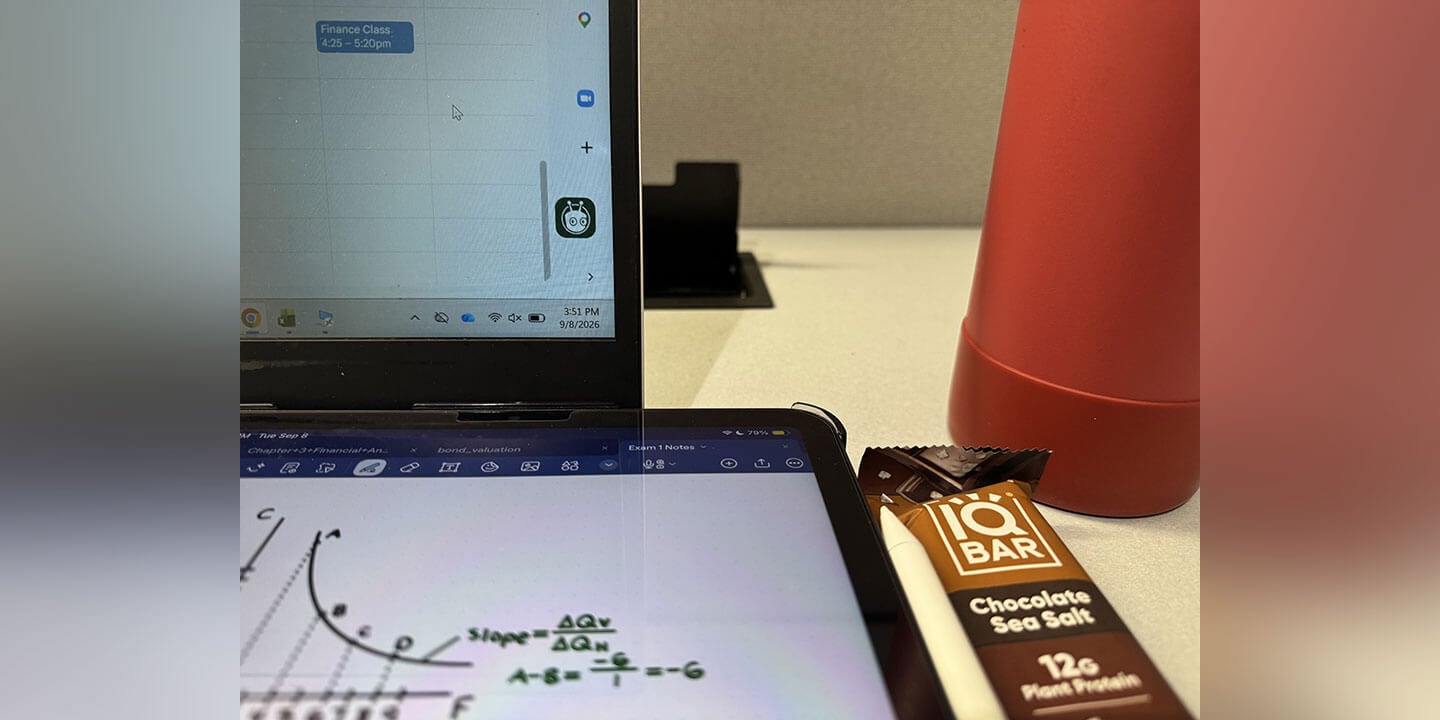
Study Zones: Improve Focus by Connecting Spaces to Subjects

Ever sit down to study and realize you’re spending more time trying to focus than actually learning? You’re not alone. I used to start study sessions with the best intentions, only to find myself distracted or doom-scrolling within minutes.
Over time, I discovered a surprisingly effective strategy for improving focus: linking specific subjects to specific places. Simply returning to the same physical location to work on the same subject helped me “get in the zone” faster.
Assign Your Study Zones
Pick a different place for each major subject. These spaces don’t have to be fancy or far apart. A corner of your room, a table in the library, or even a favorite café can work.
For example, I made the science building’s quiet corner my go-to spot for Calculus. I always chose the same section of the library for Chemistry. Physics? That became my Starbucks subject.
Over time, something clicked. Just walking into one of those spaces would cue my brain into the right mindset, and I’d dive straight into the work.
I first came across this idea during my sophomore year at Miami Dade College, before transferring to FIU. At the time, I was juggling Organic Chemistry, Physics, Calculus II, and a part-time job. My brain felt scattered, and switching between subjects drained more energy than the assignments themselves.
That’s when I started experimenting with what I now call “study zones,” assigning each subject its own home base. Over time, it improved both my focus while studying and my retention of the material.
How Your Brain Links Location to Learning
The more often you return to the same spot for the same subject, the stronger the connection becomes. This is thanks to the hippocampus, a part of the brain responsible for memory and navigation. It helps us create what neuroscientists call a cognitive map. It’s how we remember not just where we are, but also what we experienced in those places.
Spatial memory and learning are tightly linked, meaning environments can reinforce what we study (Weiler, 2024). When we consistently review one subject in the same location, our brains strengthen that association. This makes the information easier to recall later.
Study Blocks and Mini-Goals
I’ve found this method is most effective when I avoid long study marathons. Instead, I use shorter blocks of time.
One of the best uses of my study zones has been during my breaks between classes. I go straight to that subject's study spot and use the time to debrief. These shorter study sessions feel focused and productive without leaving me drained.
It’s also important to set small goals when you arrive at each zone. Before you start studying, tell yourself, “I’ll review two chapters while I’m here.” Clear, realistic goals help you maintain momentum while studying.
Get creative and think about how you can connect the spaces around you to your course subjects. By building this association, you help cue your brain to focus and make it easier to recall information. Creating study zones won’t give you instant laser focus, but it will remind you why you’re there: to study, not to scroll.
Reference
Weiler, Nicolas. “Space and Memory.” From Our Neurons to Yours, Wu Tsai Neurosciences Institute Stanford University, 22 Feb. 2024. https://neuroscience.stanford.edu/news/space-and-memory.
Do you have a compelling story or student success tips you’d like to see published on the Pearson Students blog? If you are a college student and interested in writing for us – click here to pitch your idea and get started!
About the author

Andrea Ramirez
Andrea Ramirez is a student at Florida International University, majoring in Biomedical Engineering with a strong interest in Neuroscience. Passionate about the intersection of healthcare and technology, she aims to develop life-improving medical innovations. She serves as a Pearson Campus Ambassador at FIU and is the Regional Coordinator for the East region, where she supports student engagement and leadership. Andrea enjoys running, knitting, and watching movies in her free time. Known for her dedication to academics, she maintains a strong academic record and is committed to using her education to make a meaningful impact in the field of biomedical science.