From Frustration to Innovation: How Brian Jones is reconnecting students to Physics
Picture this: You're standing in front of a classroom full of biology majors who need to understand physics, but their eyes glaze over the moment you mention velocity or force equations. They're scrolling through their phones, probably Googling "physics shortcuts" or watching questionable YouTube videos that oversimplify complex concepts. Sound familiar?
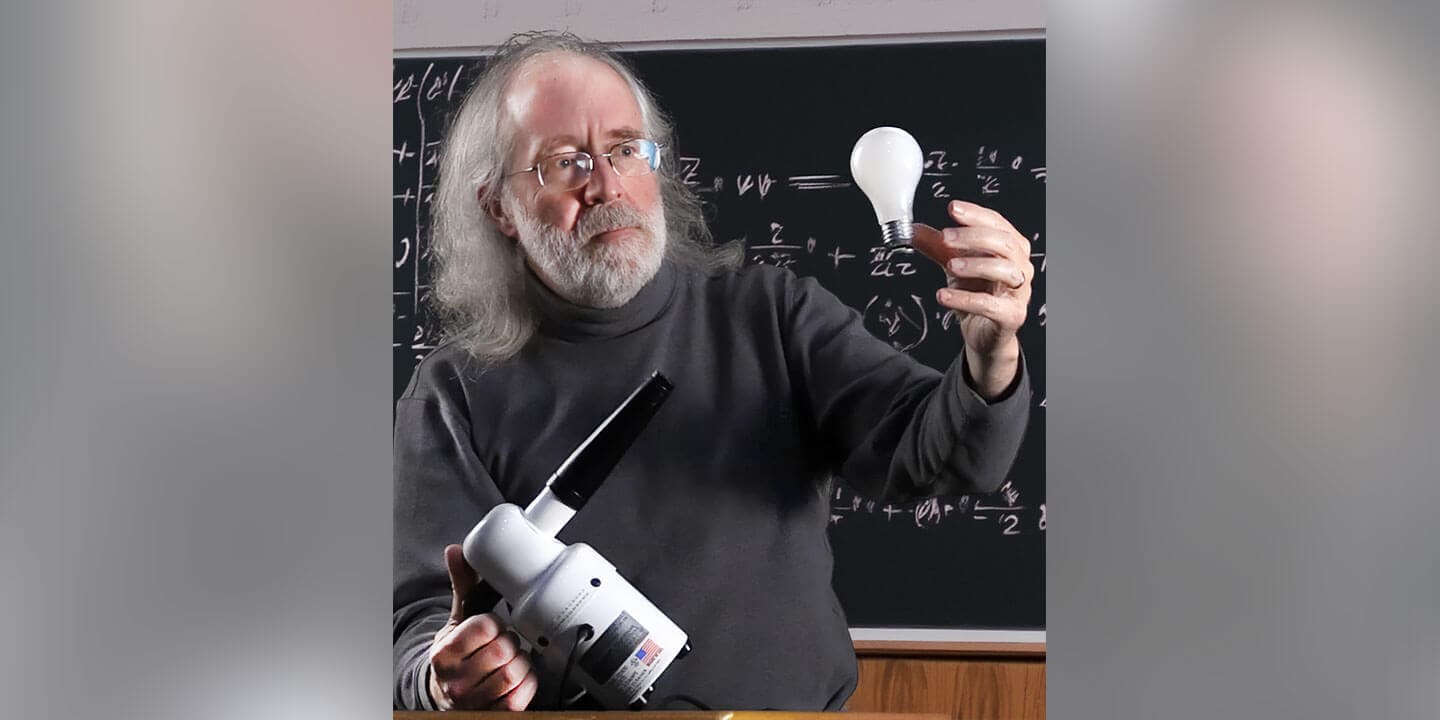
This all-too-common classroom challenge is what drove Brian Jones, a physics educator with over 40 years of experience, to revolutionize how we teach physics to life science students. His journey from classroom frustration to textbook innovation offers a roadmap for educators grappling with similar challenges in our increasingly digital world.
Making Physics Matter
Jones discovered early in his career that traditional physics education wasn't connecting with his students. "They aren't going to be physicists," he realized. "They're going to be in other fields, mostly the life sciences." This revelation became the cornerstone of his educational philosophy and the driving force behind his work as a co-author on College Physics: A Strategic Approach and University Physics for the Life Sciences.
The transformation wasn't immediate or easy. "When I first started teaching a college physics course and I realized I need to have examples from the living world to engage my biology students, that meant I had to go and learn a whole bunch of biology," Jones admits. "It was intimidating, and my students know a lot more about it than I did, so that was hard."
But this vulnerability became his strength. Instead of retreating to abstract physics problems, Jones embraced the challenge of making physics relevant to future healthcare professionals. The result? A curriculum filled with problems about jumping whales, blood flow dynamics, and neural conduction—real-world applications that suddenly made physics not just understandable, but essential.
"The students love that," Jones observes. "They're motivated to read the book because they understand the problems are realistic, the situations are realistic, and it's teaching them not just about physics, but why physics is important to their lives and careers."
Pedagogy Rooted in Innovation
Jones's approach goes beyond simply changing problem sets. His work represents a fundamental shift in how we think about disciplinary boundaries and educational resources. "We have a real strong emphasis on pedagogy, understanding how students think about the world and helping them understand how we talk about the world in physics," he explains.
This pedagogical foundation supports what Jones calls an "ecosystem" of learning resources built in Mastering Physics and the Pearson eTextbook. Rather than treating digital tools as add-ons to traditional textbooks, his team has created an integrated approach where every component—from pre-lecture videos to interactive tutorials—works together seamlessly.
"They're a cohesive whole. They all use the same terminology. They all use the same concepts. They're consistent. They're coherent," Jones emphasizes. This coherence addresses a critical challenge many educators face: how to maintain quality and consistency across multiple learning platforms.
The innovation extends to addressing modern classroom realities. Jones tackles head-on the question that many instructors ask themselves: "How do I keep my students from just going out and Googling things, or finding a video on YouTube that is of dubious quality?" His solution isn't to fight technology but to provide better alternatives—curated, accurate, and pedagogically sound resources within Mastering Physics that students actually want to use.
For instructors worried about venturing into unfamiliar territory, Jones offers reassurance: "You can trust that anything you find in the book is real and is realistic. You don't have to learn any biology. We've done the homework for you."
An Inspirational Mission
At the heart of Jones's work lies a deeply personal mission. "I define myself as a physics educator," he states. "I came to writing a textbook because I was frustrated about the quality of resources that were available and so I have made it my life's mission to create a book which will help support instructors."
This isn't just professional dedication—it's recognition of the profound impact educators have on their students' futures. His message to fellow instructors is both humble and empowering: "You know how your students learn. You know what they need, and we're just trying to provide you with the tools that you need to better do your job."
Perhaps most inspiring is Jones's commitment to continuous improvement. "Our next editions of these textbooks are still in production. The authors are still living and breathing and educating. We're still making stuff," he says. "The new versions of Mastering Physics and the eTextbook are allowing us to really dream big."
Brian Jones’s story is a powerful reminder that the frustrations we experience in the classroom can be the very seeds of innovation. His work offers a compelling model for how to build bridges between disciplines, engage students with real-world relevance, and create a supportive, high-quality learning environment.
About Brian Jones

Brian Jones has won several teaching awards at Colorado State University during his 30 years teaching in the Department of Physics. His teaching focus in recent years has been the College Physics class, including writing problems for the MCAT exam and helping students review for this test. In 2011, Brian was awarded the Robert A. Millikan Medal of the American Association of Physics Teachers for his work as director of the Little Shop of Physics, a hands-on science outreach program. He is actively exploring the effectiveness of methods of informal science education and how to extend these lessons to the college classroom. Brian has been invited to give workshops on techniques of science instruction throughout the United States and in Belize, Chile, Ethiopia, Azerbaijan, Mexico, Slovenia, Norway, Namibia, and Uganda. Brian and his wife Carol have dozens of fruit trees and bushes in their yard, including an apple tree that was propagated from a tree in Isaac Newton’s garden.