Pearson+ LogoPearson+ Logo
Ch. 27 - Bacteria and Archaea
Campbell - Campbell Biology 12th Edition
Urry12th EditionCampbell BiologyISBN: 9785794169850Not the one you use?Change textbook
Chapter 27, Problem 5

Which of the following describes a bacterium that lives in the human intestine and causes disease?
a. Commensalist
b. Decomposer
c. Gut mutualist
d. Symbiotic pathogen

Verified step by step guidance
1
Step 1: Understand the definitions of the terms provided in the options. A commensalist is an organism that benefits from its host without harming or benefiting the host. A decomposer breaks down dead organic matter into simpler substances. A gut mutualist is an organism that lives in the gut and provides benefits to its host while also benefiting itself. A symbiotic pathogen is an organism that lives in close association with its host and causes harm or disease.
Step 2: Analyze the context of the problem. The bacterium described lives in the human intestine and causes disease. This indicates that the bacterium has a harmful relationship with its host.
Step 3: Eliminate options that do not match the harmful relationship described. A commensalist does not harm the host, so it can be eliminated. A decomposer does not typically live in the human intestine or cause disease, so it can also be eliminated. A gut mutualist provides benefits to the host, which contradicts the harmful nature of the bacterium described.
Step 4: Focus on the remaining option, 'symbiotic pathogen.' A symbiotic pathogen fits the description because it lives in close association with the host (in the human intestine) and causes harm or disease.
Step 5: Conclude that the correct term to describe the bacterium is 'symbiotic pathogen,' based on the definitions and the context provided in the problem.

Verified video answer for a similar problem:

This video solution was recommended by our tutors as helpful for the problem above.
Video duration:
1m
Was this helpful?

Key Concepts

Here are the essential concepts you must grasp in order to answer the question correctly.

Pathogenic Bacteria

Pathogenic bacteria are microorganisms that can cause disease in their host. They invade host tissues, evade the immune system, and produce toxins that disrupt normal physiological functions. Understanding the characteristics of pathogenic bacteria is crucial for identifying their role in diseases, particularly in the human intestine.
Recommended video:
Guided course
08:59
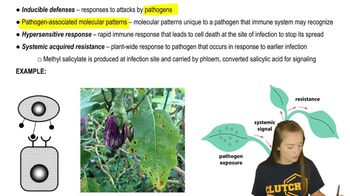
Pathogen Defenses

Symbiosis

Symbiosis refers to the interaction between two different organisms living in close physical proximity, which can be beneficial, neutral, or harmful. In the context of bacteria, symbiotic relationships can be mutualistic, where both organisms benefit, or parasitic, where one organism benefits at the expense of the other. Recognizing these relationships helps in understanding how certain bacteria can be both beneficial and harmful.

Gut Microbiome

The gut microbiome is a complex community of microorganisms residing in the digestive tracts of humans and other animals. It plays a vital role in digestion, metabolism, and immune function. Some gut bacteria are beneficial (mutualists), while others can be pathogenic, highlighting the importance of understanding the balance within this ecosystem to maintain health.
Recommended video:
Guided course
03:25
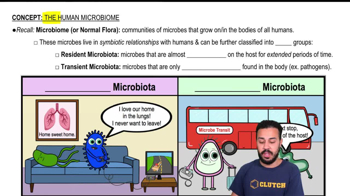
The Human Microbiome