Pearson+ LogoPearson+ Logo
Ch. 22 - Evolution by Natural Selection
Freeman - Biological Science 8th Edition
Freeman8th EditionBiological ScienceISBN: 9780138276263Not the one you use?Change textbook
Chapter 22, Problem 8

The global “One Health” movement fosters collaborations at the intersection of human health, veterinary health, and environmental health. Explain why “One Health” seeks to reduce the use of antibiotics in farm animals to improve human health.

Verified step by step guidance
1
Understand the concept of 'One Health': Recognize that 'One Health' is an approach that links the health of humans, animals, and the environment, emphasizing that health issues in one area can affect the others.
Identify the use of antibiotics in farm animals: Acknowledge that antibiotics are often used in livestock to prevent disease and promote growth, which can lead to the development of antibiotic-resistant bacteria.
Connect antibiotic use in animals to human health: Explain how antibiotic-resistant bacteria from farm animals can transfer to humans through direct contact or through the consumption of animal products and contaminated water or crops.
Discuss the implications of antibiotic resistance: Elaborate on how antibiotic resistance can make bacterial infections in humans more difficult to treat, leading to increased medical costs, prolonged hospital stays, and higher mortality rates.
Highlight the benefits of reducing antibiotic use: Conclude by discussing how decreasing the use of antibiotics in farm animals as part of the 'One Health' approach can reduce the prevalence of antibiotic-resistant bacteria, thereby improving overall health outcomes for humans, animals, and the environment.

Verified video answer for a similar problem:

This video solution was recommended by our tutors as helpful for the problem above.
Video duration:
2m
Was this helpful?

Key Concepts

Here are the essential concepts you must grasp in order to answer the question correctly.

Antibiotic Resistance

Antibiotic resistance occurs when bacteria evolve and become resistant to the effects of medications that once killed them or inhibited their growth. This phenomenon is exacerbated by the overuse of antibiotics in agriculture, particularly in livestock, where they are often used not only to treat infections but also to promote growth. As resistant bacteria proliferate, they can be transmitted to humans, leading to infections that are harder to treat.
Recommended video:
04:25
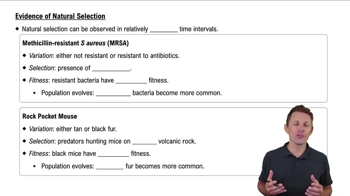
Evidence of Natural Selection

Zoonotic Diseases

Zoonotic diseases are infections that can be transmitted from animals to humans. The use of antibiotics in farm animals can lead to the emergence of resistant strains of bacteria, which may then infect humans through direct contact, consumption of contaminated food, or environmental exposure. Reducing antibiotic use in livestock is crucial to minimizing the risk of these diseases and protecting public health.
Recommended video:
Guided course
07:53
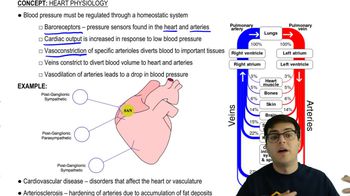
Cardiovascular Disease

Ecosystem Health

Ecosystem health refers to the state of biological communities and their interactions with the environment, including the balance of species and the presence of pollutants. The One Health approach emphasizes that human health is interconnected with animal and environmental health. By reducing antibiotic use in agriculture, we can help maintain healthier ecosystems, which in turn supports the overall health of human populations by reducing the spread of resistant pathogens.
Recommended video:
Guided course
04:07
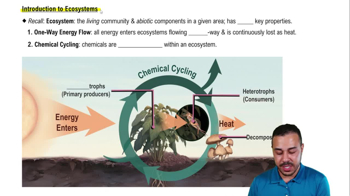
Introduction to Ecosystems
Related Practice
Textbook Question

According to data presented in this chapter, which of the following are correct? Select True or False for each statement. T/F When individuals change in response to challenges from the environment, their altered traits are passed on to offspring. T/F Species are created independently of each other and do not change over time. T/F Populations—not individuals—change when natural selection occurs. T/F The traits of populations become more perfect over time.

695
views
Textbook Question

Some biologists summarize evolution by natural selection with the phrase "mutation proposes, selection disposes." Mutation is a process that creates heritable variation. Explain what the phrase means.

897
views

Textbook Question

Why don't the biggest and strongest individuals in a population always produce the most offspring?

a. The biggest and strongest individuals always have higher fitness.

b. In some environments, being big and strong lowers fitness.

c. Sometimes the biggest and strongest individuals may choose to have fewer offspring.

d. Sometimes the number of offspring is not related to fitness.

1007
views
Textbook Question

Coral reefs are biodiverse ecosystems that provide food, income, coastal protection, and many other services to millions of people. Yet coral reefs are under threat from human impacts such as climate change—many corals cannot tolerate the warming ocean water and have suffered massive 'bleaching' events, which can be fatal. Researchers have discovered that some corals have the capacity to acclimatize to warmer water, while other corals do not. The researchers fear that because corals are long-lived colonial animals and thus evolve slowly, they may not be able to adapt to global warming fast enough to avoid extinction. Explain how the difference between acclimatize and adapt is important to the fate of corals.

899
views
Textbook Question

The geneticist James Crow wrote that successful scientific theories have the following characteristics: (1) They explain otherwise puzzling observations; (2) they provide connections between otherwise disparate observations; (3) they make predictions that can be tested; and (4) they are heuristic, meaning that they open up new avenues of theory and experimentation. Crow added two other elements of scientific theories that he considered important on a personal, emotional level: (5) They should be elegant, in the sense of being simple and powerful; and (6) they should have an element of surprise. How well does the theory of evolution by natural selection fulfill these six criteria?

678
views