Pearson+ LogoPearson+ Logo
Ch. 41 - Animal Nutrition
Freeman - Biological Science 8th Edition
Freeman8th EditionBiological ScienceISBN: 9780138276263Not the one you use?Change textbook
Chapter 41, Problem 12a

Minnows are mainly carnivorous, eating insects and other small animals. However, herbivory has evolved independently in minnows several times.
What changes in digestive structure and function are associated with the evolution of herbivory?
Which of the following is true of the digestive tracts of minnows?
a. They are incomplete but have both a mouth and an anus.
b. They are complete, facilitating compartmentalization of digestion in different organs.
c. They are incomplete, with no accessory organs.
d. They are complete and include a large gastrovascular cavity.

Verified step by step guidance
1
Understand the difference between carnivorous and herbivorous diets: Carnivorous animals primarily consume meat, which is generally easier to digest, while herbivorous animals consume plant material, which often requires more complex digestion due to cellulose.
Consider the digestive adaptations for herbivory: Herbivorous animals often have longer digestive tracts to allow more time for the breakdown of plant materials, and they may have specialized structures like a cecum or rumen to aid in the digestion of cellulose.
Analyze the structure of a complete digestive tract: A complete digestive tract has two openings, a mouth and an anus, and allows for the compartmentalization of digestion, meaning different parts of the digestive tract can specialize in different functions.
Evaluate the options given in the problem: Option b states that the digestive tracts are complete, facilitating compartmentalization of digestion in different organs. This is consistent with the adaptations seen in herbivorous animals, which require specialized regions for different digestive processes.
Conclude which option is true: Based on the understanding of digestive adaptations for herbivory and the structure of a complete digestive tract, option b is the most accurate description of the digestive tracts of minnows that have evolved herbivory.

Verified video answer for a similar problem:

This video solution was recommended by our tutors as helpful for the problem above.
Video duration:
30s
Was this helpful?

Key Concepts

Here are the essential concepts you must grasp in order to answer the question correctly.

Herbivory Evolution in Minnows

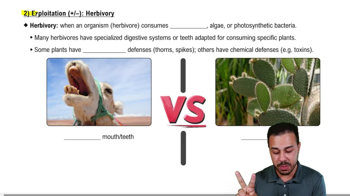
Herbivory in minnows involves adaptations in their digestive systems to process plant material, which is typically harder to digest than animal matter. This evolution may include changes in gut length, enzyme production, and the presence of specialized structures to break down cellulose and other plant components, allowing minnows to extract necessary nutrients from a herbivorous diet.
Recommended video:
Guided course
01:44
2) Exploitation (+/-): Herbivory

Complete Digestive Tract

A complete digestive tract is characterized by having both a mouth and an anus, allowing for a one-way flow of food and efficient digestion. This system facilitates compartmentalization, where different organs specialize in various stages of digestion, such as mechanical breakdown, enzymatic digestion, and nutrient absorption, enhancing the digestive efficiency in organisms like minnows.
Recommended video:
Guided course
05:11
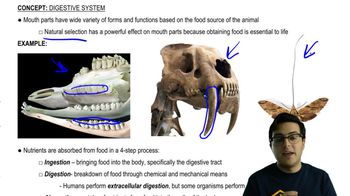
Digestion and Digestive Tracts

Digestive Compartmentalization

Digestive compartmentalization refers to the division of the digestive process into distinct stages, each occurring in specialized organs. In minnows, this allows for the separation of mechanical digestion, chemical digestion, and absorption, optimizing the breakdown and assimilation of nutrients. This is crucial for adapting to different diets, including herbivory, by enabling specific modifications in digestive function and structure.
Recommended video:
Guided course
05:11
Digestion and Digestive Tracts
Related Practice
Textbook Question

When food is plentiful, animals tend to store most of what they eat as fat. Why is this?

850
views
Textbook Question

Among vertebrates, the large intestine exists only in lineages that are primarily terrestrial (amphibians, reptiles, and mammals). Propose a hypothesis to explain this observation.

789
views
Textbook Question

Minnows are mainly carnivorous, eating insects and other small animals. However, herbivory has evolved independently in minnows several times.

What changes in digestive structure and function are associated with the evolution of herbivory?

Like cichlids, minnows use their pharyngeal jaws to process food. Suggest some possible structural differences between the teeth on the pharyngeal jaws of carnivorous and herbivorous minnows.

751
views
Textbook Question

Minnows are mainly carnivorous, eating insects and other small animals. However, herbivory has evolved independently in minnows several times.

What changes in digestive structure and function are associated with the evolution of herbivory?

Researchers compared the relative gut length—the length of the digestive tract divided by body length—in four species of herbivorous minnows and four species of carnivorous minnows. The results are shown in the graph provided here. Based on these data, what conclusion can you draw about the relationship between diet and gut length?

715
views
Textbook Question

Minnows are mainly carnivorous, eating insects and other small animals. However, herbivory has evolved independently in minnows several times.

What changes in digestive structure and function are associated with the evolution of herbivory?

Suggest a function of the difference in relative gut lengths of herbivorous and carnivorous minnows.

775
views
Textbook Question

Minnows are mainly carnivorous, eating insects and other small animals. However, herbivory has evolved independently in minnows several times.

What changes in digestive structure and function are associated with the evolution of herbivory?

Which minnows, herbivorous or carnivorous, should exhibit higher cellulase activity in the gut? Explain.

867
views