
Pearson+ LogoPearson+ Logo
Ch. 52 - Community Ecology
Freeman - Biological Science 8th Edition
Freeman8th EditionBiological ScienceISBN: 9780138276263Not the one you use?Change textbook
Chapter 52, Problem 17f

The carnivorous plant Nepenthes bicalcarata ('fanged pitcher plant') has a unique relationship with a species of ant—Camponotus schmitzi ('diving ant'). The diving ants are not digested by the pitcher plants but instead live on the plants and consume nectar. Diving ants also dive into the digestive juices in the pitcher, swim to the bottom, and capture and consume trapped insects, leaving uneaten body parts and ant feces behind.
What nutritional impact do the ants have on fanged pitcher plants?
Do the pitcher plants derive any nutritional benefit from this relationship?

Verified step by step guidance
1
Understand the mutualistic relationship: The fanged pitcher plant and diving ants have a mutualistic relationship where both parties benefit. The ants consume nectar from the plant and help in capturing and processing trapped insects.
Consider the role of ants in nutrient acquisition: The ants dive into the digestive juices of the pitcher plant, capture trapped insects, and consume them. This process leaves behind uneaten body parts and ant feces, which can contribute to the nutrient pool available to the plant.
Analyze the decomposition process: The uneaten body parts and ant feces left by the ants decompose in the pitcher plant's digestive juices. This decomposition releases nutrients such as nitrogen and phosphorus, which are essential for the plant's growth.
Evaluate the nutritional benefits: The pitcher plant benefits from the nutrients released during the decomposition of insect remains and ant feces. These nutrients are absorbed by the plant, enhancing its ability to thrive in nutrient-poor environments.
Conclude the impact of the relationship: The diving ants play a crucial role in increasing the nutrient availability for the fanged pitcher plant, thereby providing a significant nutritional benefit to the plant through their activities.

Verified video answer for a similar problem:

This video solution was recommended by our tutors as helpful for the problem above.
Video duration:
2m
Was this helpful?

Key Concepts

Here are the essential concepts you must grasp in order to answer the question correctly.

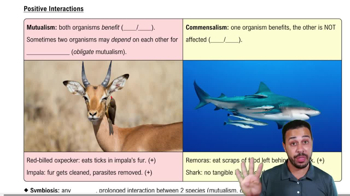
Mutualism

Mutualism is a type of symbiotic relationship where both parties benefit from the interaction. In the case of Nepenthes bicalcarata and Camponotus schmitzi, the ants provide a cleaning service by removing excess prey, which prevents decay and potential harm to the plant, while the plant offers nectar as a food source for the ants. This mutualistic relationship enhances the survival and growth of both species.
Recommended video:
Guided course
02:56
Positive Interactions

Nutrient Recycling

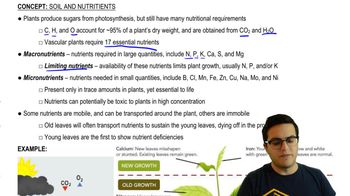
Nutrient recycling refers to the process of breaking down organic matter to release nutrients back into the environment. The diving ants contribute to nutrient recycling by consuming trapped insects and leaving behind uneaten parts and feces, which decompose and release nutrients. These nutrients can be absorbed by the pitcher plant, enhancing its nutrient intake and supporting its growth in nutrient-poor environments.
Recommended video:
Guided course
03:25
Soil Nutrients

Carnivorous Plant Adaptations

Carnivorous plants have evolved unique adaptations to capture and digest prey, allowing them to thrive in nutrient-deficient soils. Nepenthes bicalcarata uses its pitcher structure to trap insects, but its relationship with diving ants adds an additional layer of adaptation. The ants help manage the prey load, preventing overflow and decay, while their waste products provide supplementary nutrients, showcasing a complex adaptation strategy for nutrient acquisition.
Recommended video:
05:24
Adaptive Radiation
Related Practice
Textbook Question

Lyme disease is caused by infections of the bacterium Borrelia burgdorferi (stained blue in the inset, among red blood cells), which is transferred to humans via blood-sucking bites from the tick, Ixodes scapularis. Lyme disease can cause flu-like symptoms in the short term and more serious illnesses in the long term if not treated.

Why is Lyme disease on the rise in eastern North America?

Researchers have measured a positive correlation between forest fragmentation and incidence of Lyme disease. According to the theory of island biogeography, how do you predict fragmentation will affect species richness?

1161
views
Textbook Question

Lyme disease is caused by infections of the bacterium Borrelia burgdorferi (stained blue in the inset, among red blood cells), which is transferred to humans via blood-sucking bites from the tick, Ixodes scapularis. Lyme disease can cause flu-like symptoms in the short term and more serious illnesses in the long term if not treated.

Why is Lyme disease on the rise in eastern North America?

White-footed mice occupy a broad ecological niche—they occur in most communities regardless of habitat quality. Many other species, like the opossum, are absent from low-quality forest fragments. Based on this information and the data in Question 12, propose a hypothesis to explain the observed relationship between increased forest fragmentation and increased incidence of Lyme disease.

1166
views
Textbook Question

Lyme disease is caused by infections of the bacterium Borrelia burgdorferi (stained blue in the inset, among red blood cells), which is transferred to humans via blood-sucking bites from the tick, Ixodes scapularis. Lyme disease can cause flu-like symptoms in the short term and more serious illnesses in the long term if not treated.

Why is Lyme disease on the rise in eastern North America?

A letter to the editor in a local newspaper asserts that 'we cannot afford to preserve natural forests, because we need to use these resources to help humans.' How could you respond to this comment in terms of Lyme disease?

858
views