
Pearson+ LogoPearson+ Logo
Ch. 54 - Biodiversity and Conservation Ecology
Freeman - Biological Science 8th Edition
Freeman8th EditionBiological ScienceISBN: 9780138276263Not the one you use?Change textbook
Chapter 54, Problem 15

This study suggests a form of sentience (the capacity to experience feelings and sensations) in bumble bees. How might these findings impact conservation policies?

Verified step by step guidance
1
Identify the key findings of the study that suggest sentience in bumble bees, such as their ability to experience pain, pleasure, or emotional states.
Discuss the ethical implications of bee sentience, emphasizing how recognizing sentience in insects could shift public and scientific perspectives on their treatment and welfare.
Explore how these findings could influence existing conservation policies, particularly those related to habitat protection, pesticide use, and pollinator support systems.
Propose potential amendments or new policies that could be developed in response to these findings, aiming to enhance the protection and preservation of bumble bee populations.
Highlight the importance of further research to validate these findings and explore their broader implications for other insect species and overall biodiversity conservation.

Key Concepts

Here are the essential concepts you must grasp in order to answer the question correctly.

Sentience in Animals

Sentience refers to the ability of an organism to have subjective experiences, including feelings and sensations. In the context of bumble bees, recognizing their sentience implies they can experience pain, pleasure, and emotional states, which challenges traditional views of insect behavior and welfare.
Recommended video:
Guided course
05:58
Overview of Animals - 1

Conservation Policies

Conservation policies are guidelines and regulations aimed at protecting biodiversity and ecosystems. These policies often consider the ecological roles of species, and if bumble bees are recognized as sentient, it may lead to more humane treatment and specific protections that account for their welfare in conservation efforts.
Recommended video:
Guided course
03:56
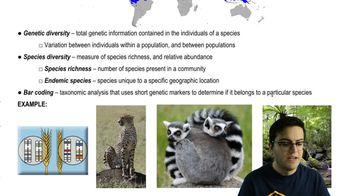
Conservation Biology and Biodiversity

Ecosystem Services

Ecosystem services are the benefits that humans derive from ecosystems, including pollination, which is crucial for food production. Bumble bees play a significant role in pollination, and acknowledging their sentience could enhance efforts to protect their populations, thereby ensuring the sustainability of these vital services.
Recommended video:
Guided course
04:07
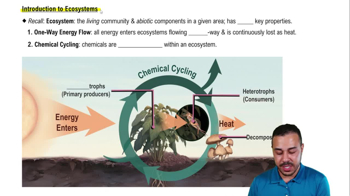
Introduction to Ecosystems
Related Practice
Textbook Question

Do you drink coffee? A lot of people do—coffee is a major tropical crop, valued at over \$100 billion per year. The most popular species of coffee, Coffea arabica, originated in Africa and is now planted extensively in Central and South America. The pest called the coffee berry borer beetle (Hypothenemus hampeii) moved along with the coffee and is a major problem for coffee farmers, sometimes destroying half of the coffee crop in mature plantations.

Pesticides are generally ineffective in killing coffee berry borers. Ecologist Daniel Karp and colleagues conducted a study in Costa Rica to determine if natural predators like birds reduce the beetle population. The researchers selected 12 control plots and used nets to exclude birds from 12 similar treatment plots. What is the take-home message of the graph? (Remember, * means P < 6 0.05)

526
views
Textbook Question

Do you drink coffee? A lot of people do—coffee is a major tropical crop, valued at over \$100 billion per year. The most popular species of coffee, Coffea arabica, originated in Africa and is now planted extensively in Central and South America. The pest called the coffee berry borer beetle (Hypothenemus hampeii) moved along with the coffee and is a major problem for coffee farmers, sometimes destroying half of the coffee crop in mature plantations.

Look at the graph. Why did the researchers bother to collect data from the coffee shrubs before adding the nets to treatment plots to exclude birds?

590
views
Textbook Question

Do you drink coffee? A lot of people do—coffee is a major tropical crop, valued at over \$100 billion per year. The most popular species of coffee, Coffea arabica, originated in Africa and is now planted extensively in Central and South America. The pest called the coffee berry borer beetle (Hypothenemus hampeii) moved along with the coffee and is a major problem for coffee farmers, sometimes destroying half of the coffee crop in mature plantations. The abundance of birds and other predators of borer beetles depends on how much natural forest is left within and around the coffee plantations. What is the approximate percentage increase in borer predators per hectare if forest cover is doubled from 15 to 30 percent?

500
views
Textbook Question

Do you drink coffee? A lot of people do—coffee is a major tropical crop, valued at over \$100 billion per year. The most popular species of coffee, Coffea arabica, originated in Africa and is now planted extensively in Central and South America. The pest called the coffee berry borer beetle (Hypothenemus hampeii) moved along with the coffee and is a major problem for coffee farmers, sometimes destroying half of the coffee crop in mature plantations. Draw a simple model to compare the relative species richness and species diversity of these two coffee plantations: one is clear-cut and planted with only coffee shrubs, the other retains some natural forest. For symbols, use a few letters to represent different species of plants and a few numbers to represent different species of animals in a square 1-ha plot.

563
views
Textbook Question

Do you drink coffee? A lot of people do—coffee is a major tropical crop, valued at over \$100 billion per year. The most popular species of coffee, Coffea arabica, originated in Africa and is now planted extensively in Central and South America. The pest called the coffee berry borer beetle (Hypothenemus hampeii) moved along with the coffee and is a major problem for coffee farmers, sometimes destroying half of the coffee crop in mature plantations. Evaluate this statement: Leaving some natural forest in and around coffee plantations is a 'win-win' situation—a win for ecosystems and a win for farmers.

711
views