
Pearson+ LogoPearson+ Logo
Ch. 54 - Biodiversity and Conservation Ecology
Freeman - Biological Science 8th Edition
Freeman8th EditionBiological ScienceISBN: 9780138276263Not the one you use?Change textbook
Chapter 54, Problem 15e

Do you drink coffee? A lot of people do—coffee is a major tropical crop, valued at over \$100 billion per year. The most popular species of coffee, Coffea arabica, originated in Africa and is now planted extensively in Central and South America. The pest called the coffee berry borer beetle (Hypothenemus hampeii) moved along with the coffee and is a major problem for coffee farmers, sometimes destroying half of the coffee crop in mature plantations. Draw a simple model to compare the relative species richness and species diversity of these two coffee plantations: one is clear-cut and planted with only coffee shrubs, the other retains some natural forest. For symbols, use a few letters to represent different species of plants and a few numbers to represent different species of animals in a square 1-ha plot.

Verified step by step guidance
1
Understand the problem: The task is to create a simple model comparing species richness and species diversity in two different coffee plantation scenarios: (1) a clear-cut plantation with only coffee shrubs and (2) a plantation that retains some natural forest. Species richness refers to the number of different species present, while species diversity considers both the number of species and their relative abundance.
Define symbols: Use letters (e.g., A, B, C) to represent different plant species and numbers (e.g., 1, 2, 3) to represent different animal species. For example, 'A' could represent coffee shrubs, 'B' could represent a native tree species, and '1' could represent a bird species.
Model the clear-cut plantation: In this scenario, only coffee shrubs (A) are present, and the lack of habitat diversity limits the number of animal species. For example, you might represent this as: A, A, A, A, 1, 1 (indicating a monoculture of coffee shrubs and a single animal species).
Model the plantation with natural forest: In this scenario, there is a mix of coffee shrubs (A) and native plants (e.g., B, C), which provide habitat for a greater variety of animal species. For example, you might represent this as: A, A, B, C, 1, 2, 3, 4 (indicating a mix of plant species and a higher number of animal species).
Compare the models: The clear-cut plantation has lower species richness (fewer types of plants and animals) and lower species diversity (dominated by coffee shrubs and one animal species). The plantation with natural forest has higher species richness (more types of plants and animals) and higher species diversity (a more balanced distribution of species).

Verified video answer for a similar problem:

This video solution was recommended by our tutors as helpful for the problem above.
Video duration:
1m
Was this helpful?

Key Concepts

Here are the essential concepts you must grasp in order to answer the question correctly.

Species Richness

Species richness refers to the number of different species present in a given area. It is a key measure of biodiversity, indicating the variety of life forms in an ecosystem. In the context of the coffee plantations, comparing species richness will help illustrate how clear-cutting affects the variety of plant and animal species compared to a plantation that retains natural forest.
Recommended video:
03:24
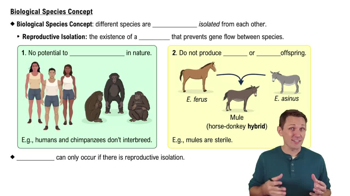
Biological Species Concept

Species Diversity

Species diversity encompasses both species richness and the evenness of species' abundances within an ecosystem. It provides a more comprehensive understanding of biodiversity by considering not just how many species are present, but also how evenly individuals are distributed among those species. This concept is crucial for analyzing the ecological impact of different plantation management practices.
Recommended video:
03:24
Biological Species Concept

Ecosystem Services

Ecosystem services are the benefits that humans derive from ecosystems, including provisioning, regulating, cultural, and supporting services. In the context of coffee plantations, retaining natural forest can enhance ecosystem services such as pest control, pollination, and soil health, which are vital for sustainable coffee production. Understanding these services helps in evaluating the long-term viability of different agricultural practices.
Recommended video:
Guided course
04:07
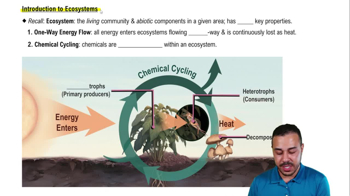
Introduction to Ecosystems
Related Practice
Textbook Question

Do you drink coffee? A lot of people do—coffee is a major tropical crop, valued at over \$100 billion per year. The most popular species of coffee, Coffea arabica, originated in Africa and is now planted extensively in Central and South America. The pest called the coffee berry borer beetle (Hypothenemus hampeii) moved along with the coffee and is a major problem for coffee farmers, sometimes destroying half of the coffee crop in mature plantations.

Look at the graph. Why did the researchers bother to collect data from the coffee shrubs before adding the nets to treatment plots to exclude birds?

590
views
Textbook Question

Do you drink coffee? A lot of people do—coffee is a major tropical crop, valued at over \$100 billion per year. The most popular species of coffee, Coffea arabica, originated in Africa and is now planted extensively in Central and South America. The pest called the coffee berry borer beetle (Hypothenemus hampeii) moved along with the coffee and is a major problem for coffee farmers, sometimes destroying half of the coffee crop in mature plantations. The abundance of birds and other predators of borer beetles depends on how much natural forest is left within and around the coffee plantations. What is the approximate percentage increase in borer predators per hectare if forest cover is doubled from 15 to 30 percent?

500
views
Textbook Question

Do you drink coffee? A lot of people do—coffee is a major tropical crop, valued at over \$100 billion per year. The most popular species of coffee, Coffea arabica, originated in Africa and is now planted extensively in Central and South America. The pest called the coffee berry borer beetle (Hypothenemus hampeii) moved along with the coffee and is a major problem for coffee farmers, sometimes destroying half of the coffee crop in mature plantations. Evaluate this statement: Leaving some natural forest in and around coffee plantations is a 'win-win' situation—a win for ecosystems and a win for farmers.

711
views