Determine whether the given functions are inverses.
Verified step by step guidance
1
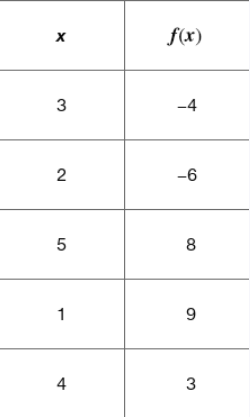
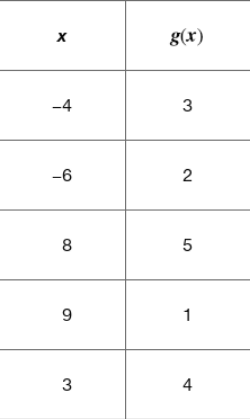
Identify the two functions given in the problem. Let's call them \(f(x)\) and \(g(x)\).
Recall that two functions \(f\) and \(g\) are inverses if and only if \(f(g(x)) = x\) and \(g(f(x)) = x\) for all \(x\) in the domains of the compositions.
Compute the composition \(f(g(x))\) by substituting \(g(x)\) into \(f(x)\) and simplify the expression as much as possible.
Compute the composition \(g(f(x))\) by substituting \(f(x)\) into \(g(x)\) and simplify the expression as much as possible.
Check if both compositions simplify to \(x\). If they do, then \(f\) and \(g\) are inverses; if not, they are not inverses.
Verified video answer for a similar problem:
This video solution was recommended by our tutors as helpful for the problem above
Video duration:
2m
Play a video:
Was this helpful?
Key Concepts
Here are the essential concepts you must grasp in order to answer the question correctly.
Definition of Inverse Functions
Inverse functions are pairs of functions where one 'undoes' the action of the other. Formally, if f and g are inverses, then f(g(x)) = x and g(f(x)) = x for all x in their domains. Understanding this definition is essential to verify if two functions are inverses.
Function composition involves applying one function to the result of another, denoted as (f ∘ g)(x) = f(g(x)). To check if two functions are inverses, you compose them in both orders and verify if the result simplifies to the identity function x.
When determining if functions are inverses, it's important to consider their domains and ranges. The output of one function must lie within the domain of the other for composition to be valid. Ignoring domain restrictions can lead to incorrect conclusions about inverses.