Pearson+ LogoPearson+ Logo
Ch.16 Amino Acids, Proteins, and Enzymes
Timberlake - Chemistry: An Introduction to General, Organic, and Biological Chemistry 13th Edition
Timberlake13th EditionChemistry: An Introduction to General, Organic, and Biological ChemistryISBN: 9780134421353Not the one you use?Change textbook
Chapter 16, Problem 1a

Classify each of the following proteins according to its function:
a. hemoglobin, oxygen carrier in the blood

Verified step by step guidance
1
Step 1: Understand the role of hemoglobin in the body. Hemoglobin is a protein found in red blood cells that binds to oxygen in the lungs and transports it to tissues throughout the body.
Step 2: Recall the classification of proteins based on their function. Proteins can be categorized into several functional groups, such as structural, enzymatic, transport, hormonal, defensive, and storage proteins.
Step 3: Identify the specific function of hemoglobin. Since hemoglobin is responsible for carrying oxygen, it falls under the category of transport proteins.
Step 4: Confirm the classification by comparing hemoglobin's function to other transport proteins. Transport proteins are involved in moving substances like gases, ions, or molecules across biological systems, which aligns with hemoglobin's role.
Step 5: Conclude that hemoglobin is classified as a transport protein due to its function as an oxygen carrier in the blood.

Verified video answer for a similar problem:

This video solution was recommended by our tutors as helpful for the problem above.
Video duration:
1m
Was this helpful?

Key Concepts

Here are the essential concepts you must grasp in order to answer the question correctly.

Protein Function Classification

Proteins can be classified based on their functions, which include structural support, transport, enzymes, and signaling. Understanding the specific role a protein plays in biological processes is essential for categorizing it correctly. For instance, transport proteins facilitate the movement of substances across cell membranes or within the bloodstream.
Recommended video:
Guided course
02:16
Logarithmic Functions

Hemoglobin

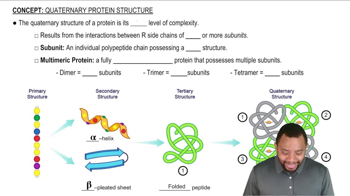
Hemoglobin is a globular protein found in red blood cells, primarily responsible for transporting oxygen from the lungs to tissues and returning carbon dioxide from tissues to the lungs. Its structure allows it to bind oxygen efficiently, making it crucial for cellular respiration and overall metabolic function. Hemoglobin's ability to change shape in response to oxygen levels is key to its function.
Recommended video:
Guided course
3:26
Quaternary Protein Structure Concept 1

Oxygen Transport

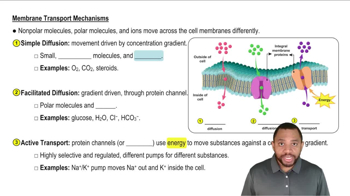
Oxygen transport refers to the mechanism by which oxygen is carried from the respiratory system to the body's tissues. In vertebrates, this is primarily achieved through hemoglobin in the blood. The efficiency of oxygen transport is vital for maintaining cellular metabolism and energy production, highlighting the importance of proteins like hemoglobin in physiological processes.
Recommended video:
Guided course
3:01
Membrane Transport Concept 2