
Pearson+ LogoPearson+ Logo
Ch.10 Acids and Bases and Equilibrium
Timberlake - Chemistry: An Introduction to General, Organic, and Biological Chemistry 13th Edition
Timberlake13th EditionChemistry: An Introduction to General, Organic, and Biological ChemistryISBN: 9780134421353Not the one you use?Change textbook
Chapter 10, Problem 93a

Solution A has a pH of 4.0, and solution B has a pH of 6.0.
a. Which solution is more acidic?

Verified step by step guidance
1
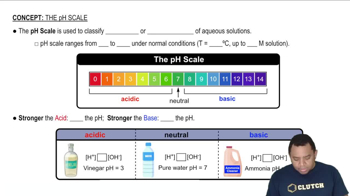
Understand the concept of pH: The pH scale measures the acidity or basicity of a solution. A lower pH value indicates a more acidic solution, while a higher pH value indicates a less acidic (or more basic) solution. The scale typically ranges from 0 to 14.
Compare the pH values of the two solutions: Solution A has a pH of 4.0, and Solution B has a pH of 6.0. Since 4.0 is lower than 6.0, Solution A is more acidic than Solution B.
Explain the relationship between pH and hydrogen ion concentration: The pH is inversely related to the concentration of hydrogen ions [H+] . A decrease in pH corresponds to an increase in hydrogen ion concentration, making the solution more acidic.
Highlight the logarithmic nature of the pH scale: The pH scale is logarithmic, meaning that each unit change in pH represents a tenfold change in hydrogen ion concentration. For example, a solution with a pH of 4.0 has 10 times more hydrogen ions than a solution with a pH of 5.0, and 100 times more hydrogen ions than a solution with a pH of 6.0.
Conclude the comparison: Based on the pH values and the relationship between pH and acidity, Solution A (pH 4.0) is more acidic than Solution B (pH 6.0).

Verified video answer for a similar problem:

This video solution was recommended by our tutors as helpful for the problem above.
Video duration:
1m
Was this helpful?

Key Concepts

Here are the essential concepts you must grasp in order to answer the question correctly.

pH Scale

The pH scale measures the acidity or basicity of a solution, ranging from 0 to 14. A pH of 7 is considered neutral, while values below 7 indicate acidity and values above 7 indicate alkalinity. Each whole number change on the pH scale represents a tenfold change in hydrogen ion concentration, making it crucial for understanding the relative acidity of solutions.
Recommended video:

Acidity

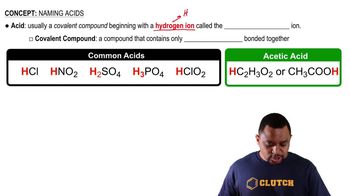
Acidity refers to the concentration of hydrogen ions (H+) in a solution. A higher concentration of H+ ions corresponds to a lower pH value, indicating a more acidic solution. Therefore, when comparing solutions, the one with the lower pH value is more acidic, which is essential for determining the relative acidity of solutions A and B.
Recommended video:

Comparative Analysis

Comparative analysis involves evaluating two or more items to identify differences and similarities. In this context, it requires comparing the pH values of solutions A and B to determine which is more acidic. This method is fundamental in chemistry for making informed conclusions based on quantitative data.
Recommended video:
Guided course
06:11
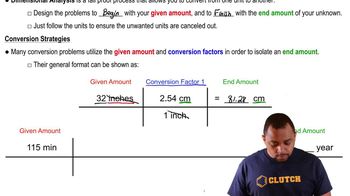
Dimensional Analysis