Pearson+ LogoPearson+ Logo
Ch.16 Amino Acids, Proteins, and Enzymes
Timberlake - Chemistry: An Introduction to General, Organic, and Biological Chemistry 13th Edition
Timberlake13th EditionChemistry: An Introduction to General, Organic, and Biological ChemistryISBN: 9780134421353Not the one you use?Change textbook
Chapter 16, Problem 74a

 Indicate whether each of the following would be a substrate (S) or an enzyme (E):
a. glucose

Verified step by step guidance
1
Understand the difference between a substrate and an enzyme: A substrate is a molecule upon which an enzyme acts, typically a reactant in a biochemical reaction. An enzyme is a biological catalyst, usually a protein, that speeds up the reaction involving the substrate.
Identify the role of glucose in biochemical reactions: Glucose is a simple sugar (monosaccharide) that serves as a primary energy source in many organisms. It is often a reactant in metabolic pathways such as glycolysis.
Determine whether glucose is a substrate or an enzyme: Since glucose is a reactant in enzymatic reactions (e.g., it is broken down by enzymes like hexokinase in glycolysis), it functions as a substrate.
Recall that enzymes are proteins with specific active sites that bind to substrates. Glucose does not have the structural or functional characteristics of an enzyme.
Conclude that glucose is classified as a substrate (S) in this context because it is acted upon by enzymes during metabolic processes.

Verified video answer for a similar problem:

This video solution was recommended by our tutors as helpful for the problem above.
Video duration:
1m
Was this helpful?

Key Concepts

Here are the essential concepts you must grasp in order to answer the question correctly.

Substrate

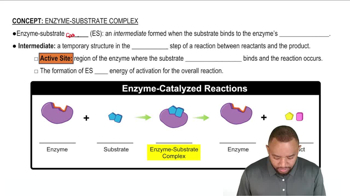
A substrate is a molecule upon which an enzyme acts. In biochemical reactions, substrates bind to the active site of enzymes, facilitating the conversion of substrates into products. For example, glucose can serve as a substrate for enzymes involved in glycolysis, where it is broken down to produce energy.
Recommended video:
Guided course
2:32
Enzyme-Substrate Complex Concept 1

Enzyme

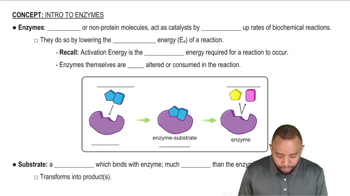
An enzyme is a biological catalyst that accelerates chemical reactions in living organisms. Enzymes are typically proteins that lower the activation energy required for a reaction, allowing it to proceed more quickly. Each enzyme is specific to a particular substrate, which determines its function in metabolic pathways.
Recommended video:
Guided course
2:14
Intro to Enzymes Concept 1

Biochemical Reaction

A biochemical reaction is a chemical process that occurs within living organisms, involving the transformation of substrates into products. These reactions are essential for various biological functions, including metabolism, signaling, and cellular repair. Understanding the roles of substrates and enzymes is crucial for grasping how these reactions are regulated and occur efficiently.
Recommended video:
Guided course
1:08
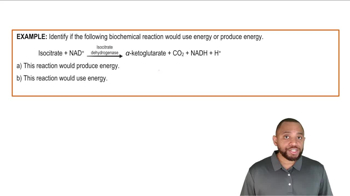
Energy Production In Biochemical Pathways Example 1