Ch. 13 - Viruses, Viroids, and Prions
Tortora - Microbiology: An Introduction 14th Edition
Tortora14th EditionMicrobiology: An IntroductionISBN: 9780138200398Not the one you use?Change textbook
Chapter 13, Problem 1

Why do we classify viruses as obligatory intracellular parasites?

Verified step by step guidance
1
Understand the term 'obligatory intracellular parasite': it refers to an organism that must live and reproduce inside the cells of a host because it cannot carry out essential life processes on its own.
Recognize that viruses lack the cellular machinery necessary for independent metabolism and reproduction, such as ribosomes for protein synthesis and enzymes for energy production.
Note that viruses rely entirely on the host cell's machinery to replicate their genetic material and produce new viral particles.
Consider that because viruses cannot generate energy or synthesize proteins independently, they must enter a host cell to hijack its systems for replication.
Conclude that this dependence on living host cells for reproduction and survival is why viruses are classified as obligatory intracellular parasites.

Verified video answer for a similar problem:

This video solution was recommended by our tutors as helpful for the problem above.
Video duration:
1m
Was this helpful?

Key Concepts

Here are the essential concepts you must grasp in order to answer the question correctly.

Obligate Intracellular Parasites

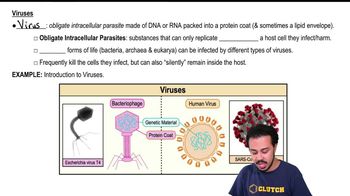
Obligate intracellular parasites are organisms that can only reproduce and carry out metabolic processes inside the living cells of a host. Viruses lack the cellular machinery needed for independent life, making them dependent on host cells for replication.
Recommended video:

Virus Structure and Replication

Viruses consist of genetic material (DNA or RNA) enclosed in a protein coat and sometimes a lipid envelope. They replicate by injecting their genetic material into host cells, hijacking the host's machinery to produce new viral particles.
Recommended video:
Guided course
01:30
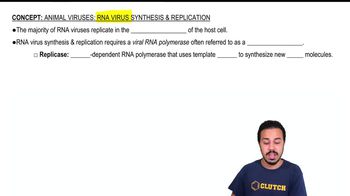
Animal Viruses: RNA Virus Synthesis & Replication

Host Dependency for Metabolism

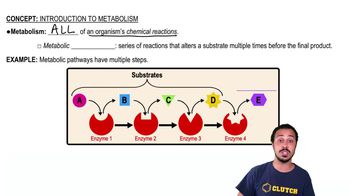
Unlike cellular organisms, viruses do not have metabolic pathways or energy production systems. They rely entirely on the host cell's metabolic processes to synthesize proteins and nucleic acids necessary for their propagation.
Recommended video:
Guided course
02:17
Introduction to Metabolism