Ch. 1 - A Brief History of Microbiology
Chapter 1, Problem MC9

A scientist who studies the role of microorganisms in the environment is a(n) __________ .
a. genetic technologist
b. earth microbiologist
c. epidemiologist
d. environmental microbiologist

Verified step by step guidance
1
Step 1: Understand the key term in the question, which is 'the role of microorganisms in the environment.' This refers to how microbes interact with and affect natural ecosystems.
Step 2: Review the definitions of each option: a) Genetic technologist focuses on genetic manipulation, b) Earth microbiologist is not a standard term, c) Epidemiologist studies disease spread in populations, d) Environmental microbiologist studies microorganisms in natural environments.
Step 3: Identify which option best matches the study of microorganisms in environmental contexts. This involves microbes' roles in soil, water, air, and their ecological impact.
Step 4: Recognize that 'environmental microbiologist' is the correct term for a scientist studying microorganisms in the environment.
Step 5: Conclude that the answer is option d, environmental microbiologist, based on the definitions and context provided.

Verified video answer for a similar problem:

This video solution was recommended by our tutors as helpful for the problem above.
Video duration:
1m
Was this helpful?

Key Concepts

Here are the essential concepts you must grasp in order to answer the question correctly.

Environmental Microbiology

Environmental microbiology is the study of microorganisms in natural environments such as soil, water, and air. It focuses on how microbes interact with their surroundings and affect ecological processes like nutrient cycling and pollution degradation.
Recommended video:
Guided course
07:27
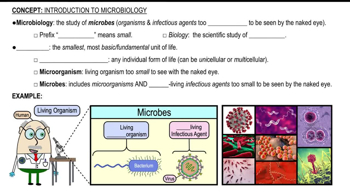
Introduction to Microbiology

Role of Microorganisms in the Environment

Microorganisms play essential roles in ecosystems by decomposing organic matter, recycling nutrients, and influencing the health of plants and animals. Understanding these roles helps explain their impact on environmental balance and sustainability.
Recommended video:
Guided course
01:25
Importance of Microorganisms

Distinction Between Microbiology Specializations

Microbiology has various branches, including genetic technology, epidemiology, and environmental microbiology. Recognizing these distinctions helps identify the correct field of study based on the focus, such as genetics, disease spread, or environmental impact.
Recommended video:
Guided course
07:27
Introduction to Microbiology