Students blog

Explore the latest trends, tips, and experiences in college life in this blog written by fellow students.

Explore posts in other areas.

PreK-12Higher EducationProfessional

  • Graphic showing the silhouette of seven people walking in line in a campus setting.

    A College Student's Guide to Leadership

    Elanah Hassan

    Leadership is a key skill in industry. It shows you can think innovatively, express your ideas, and inspire others to execute them.

    Leadership has been central to my college experience, and this year, I am holding three executive positions while being a full-time student and working part-time. So, what have I learned on this journey?

    First, always pour into your own cup before pouring into others. Second, give people the resources to do their job well. Third, respect and welcome everyone's ideas, because nothing great can be done by one person alone.

    Fill Your Cup First: The Foundation of Leadership

    Being a student leader requires patience, time, and energy. Balancing multiple responsibilities can feel overwhelming, sometimes to the point of not delivering. To prevent burnout, you must prioritize taking care of yourself before you can effectively lead others.

    For me, self-care looks like eating nutritious meals to fuel my body, staying active through yoga or regular gym sessions, and taking daily moments for mental and spiritual grounding through prayer and meditation.

    These practices keep me centered and energized. They allow me to shift my mindset from “I have to do this” to “I get to do this.” When you fill your own cup first, you show up for others with more patience, clarity, and enthusiasm.

    Equip for Success: Empowering Your Team to Thrive

    A key part of leadership is ensuring your team has the tools and information necessary to succeed. When delegating tasks, be clear about your expectations and provide a structured path for execution. Encourage questions and create space for dialogue so everyone understands their responsibilities.

    Equally important is setting clear deadlines. This allows team members to build their own work timelines and deliver high-quality results without unnecessary stress. A well-informed team is a confident team, and confident teams deliver.

    Embrace All Ideas: Leadership is a Collective Effort

    In group settings, it is common to see one person take on the bulk of the work. During my first year, that person was me. At the time, I hadn’t learned how to connect with my team, foster innovation, or delegate effectively.

    Through practice and experience, I learned that true leadership isn’t about doing everything yourself. It’s about creating an environment where everyone’s perspective can shine. Today, I prefer working in teams because incredible ideas emerge when creative people work toward a shared goal.

    The key to unlocking that collective potential is strategic delegation: identifying each person’s strengths and aligning them with meaningful tasks. When you welcome diverse perspectives, you elevate the final product and the team's sense of shared ownership and pride.

    Being a great leader is a process of continual growth. The more experience you gain, the more comfortable you will become with aligning people to a common goal and leading with confidence.

    Do you have a compelling story or student success tips you’d like to see published on the Pearson Students blog?  If you are a college student and interested in writing for us – click here to pitch your idea and get started! 

     

  • Picture shows a stage with three acrylic stools and a brightly lit sign with the words “user conference” on it.

    Nerves to Networking: My First Live Panel

    Linda Roman

    Approaching the Stage

    There’s something surreal about stepping into a room full of people, knowing all eyes will soon be on you. That was me at my very first live panel with Modern Campus: heart racing, palms slightly clammy, but my mind was sharp and ready.

    As I walked up to the stage, I could feel the quiet vibration of anticipation in the air. The lights were bright, the microphones were live, and the audience was a mix of professionals, students, and changemakers. They all gathered to hear about the student perspective and our college journeys.

    I wasn’t just representing myself; I was representing the voice of students, the power of inclusive programming, and the impact of authentic communication. I spoke about being a nontraditional college student who’s completed most of her education online. I also shared how my journey as a communications student led me to become a Pearson ambassador.

    It was more than a panel. It was a moment of clarity as I realized that the work I’ve been doing behind the scenes is part of a much larger movement, and I was right there in the middle of it.

    Moment of Truth

    At first, I felt calm and confident. I had prepared all week; I knew my talking points, and I was excited to share my perspective. But when I turned and saw the room packed with attendees, the nerves crept in. It wasn’t fear, exactly; it was more like a wave of realization: This is really happening!

    I started strong, but as the conversation unfolded, the butterflies fluttered a little harder. Still, I pushed through. I reminded myself why I was there: to grow, to learn, and to show up fully so others could understand the obstacles I’ve overcome. I wanted them to see that I’m still succeeding, still working toward my bachelor’s degree, and still finding my place in the higher education community.

    By the end, I was a little shaky, but I walked away with zero regrets. In fact, I walked away with so much more. I’d participated in panel to a live audience, and I’d met incredible people: fellow panelists, attendees, and even a senior-level associate from Pearson. Those connections alone made the experience worth it.

    Growth through Challenge

    This panel reminded me that growth doesn’t happen in comfort zones. It happens when we lean into the unknown, when we say yes even if our voice shakes, even if our inner critic whispers doubts. That moment, standing in front of a live audience, sharing my story and insights, was a stretch beyond what felt familiar.

    But it was also a powerful reminder that discomfort is often the doorway to transformation. The real value lies in those moments of vulnerability, when we choose courage over certainty.

    That’s where life teaches us the most. It’s not through perfection but through presence: through showing up, speaking up, and trusting that our experiences matter.

    I’m deeply grateful for the opportunity to be part of the conversation and for the connections sparked in that room. I’m also thankful for the quiet realization that I’m capable of more than I often give myself credit for.

    This experience didn’t just challenge me; it affirmed me. It reminded me that my voice belongs in these spaces and that the work I’ve been doing behind the scenes is already making an impact.

    Do you have a compelling story or student success tips you’d like to see published on the Pearson Students blog?  If you are a college student and interested in writing for us – click here to pitch your idea and get started! 

     

  • A photo collage of blog author Aissa in four different involvement events.

    Home Away From Home

    Aissatou Bah

    Hi, I'm Aissa! I’m currently studying business administration with a concentration in accounting at Tuskegee University. I’ve always had a love for numbers and organization, which is what drew me to accounting. However, my passion doesn't stop my college experience; there has been a balance of academic rigor and active involvement in campus life, helping me grow in ways I never imagined.

    Since starting at Tuskegee, I’ve engaged with clubs and organizations that have shaped my college experience and made the transition from being far away from home so much easier. One of my proudest achievements so far has been becoming the National Business Manager for UNCF (United Negro College Fund). This role allows me to contribute to an incredible cause by helping to raise funds and awareness for scholarships that support all college students.

    In addition to being on a national board, I serve as the treasurer for several organizations on campus: the NAACP, the Pre-Alumni Council, and the Ohio Club. Managing finances for these groups has given me real-world experience and allowed me to give back to the community that’s supported me. I also hold the position of Social Media Chair for the Entrepreneurial and Leadership Club, where I get to combine my love for organization with my interest in digital communication.

    I became a Pearson Campus Ambassador last Fall, and it’s been a fantastic opportunity to engage with other students, promote educational resources, and connect with a broader network. As if all that wasn’t enough, I’m also a Dean's List scholar, which keeps me focused on maintaining high academic standards while juggling my extracurricular responsibilities.

    Despite all the commitments, I’ve managed to keep a healthy balance by making time for my friends and family, especially when I need a break from the hustle of daily life. Being so far from home can be tough, but getting involved in campus activities has helped me feel connected, not just to my university, but also to the community I’m building here.

    Being active on campus has not only helped me grow personally and professionally but also made adjusting to life away from home a little easier. No matter where life takes me, I am thankful for the opportunities I’ve had to make a positive impact at Tuskegee University, and I’m excited to continue on this journey of growth, leadership, and success.

    Do you have a compelling story or student success tips you’d like to see published on the Pearson Students blog?  If you are a college student and interested in writing for us – click here to pitch your idea and get started! 
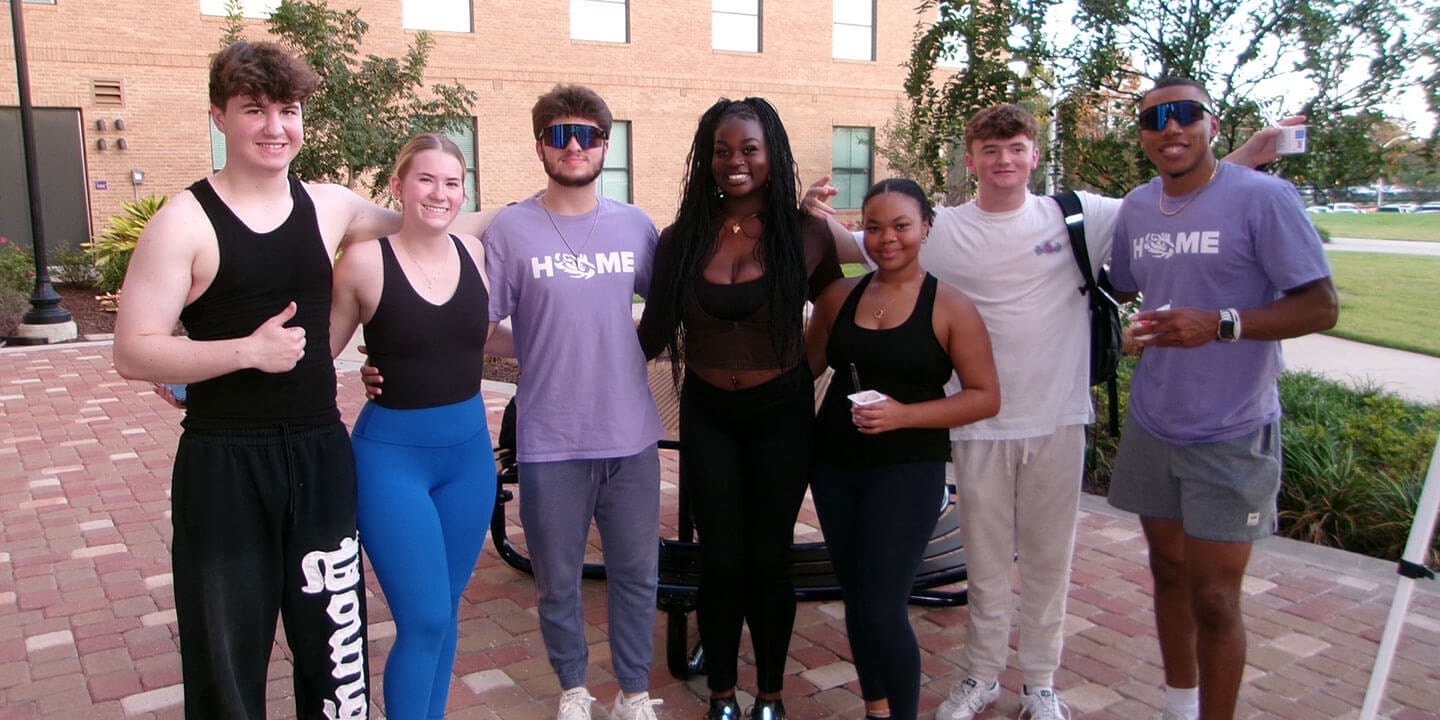
     

  • A group of seven college students standing outside of a residence hall.

    Why Become a RA for your Campus?

    Royale Bey

    As I navigate my third year as a Resident Assistant (RA), I realize the role is more than simply a job. Rather, it’s a chance to grow myself, serve my community, and lay the foundation of who I want to become personally and professionally. I would be lying if I said the road has been easy; the role demands time and dedication. However, in my three years of experience, the benefits have far outweighed the challenges, making it one of the most rewarding endeavors I have taken on while in college.

    One of the immediate and tangible benefits of being an RA is the financial relief it offers. Most institutions offer free housing and meal plans to RAs, which significantly reduces the financial burden of college expenses, especially for out-of-state students. At my campus in particular, a bi-weekly stipend is provided in addition to the free housing and meal plan. Not to mention, the unique merch provided to all RAs on my campus at the start of each school year for move-in season. These perks have allowed me to focus on my education and academic responsibilities without the stress of juggling off-campus part-time jobs.

    While the tangible perks of being a RAs are great, the skills I have acquired in the role are invaluable. Whether resolving conflicts, organizing events, or providing guidance to residents, being a RA gives you the opportunity to serve as a mentor and role model daily. Though this may be intimidating to some, it’s a great opportunity to practice leading by example. The skills you can learn in this leadership role – communication, problem-solving, and conflict resolution – are highly sought out by employers because they are transferable to many careers.

    Balancing on-call duties, weekly meetings, and planning events while managing academic responsibilities can be demanding. However, I have found this challenge is also a valuable opportunity. It has led to tremendous personal development. Learning to navigate a packed schedule and meet deadlines under pressure prepares you for the real world, which usually requires similar demands. Furthermore, this unique position has allowed me to make a lasting impact, not only on residents but on my peers and friends. One of the most rewarding experiences in my time as a RA was mentoring one of my former residents through the RA application process. Not only did she get hired, but we now work on the same staff where I can watch her blossom into an amazing RA.

    Becoming a RA is an unparalleled opportunity to grow as an overall leader, gain financial benefits, and develop critical life skills. While the role requires hard work and commitment, in my humble opinion, the personal and professional rewards are well worth the effort. For those seeking a transformative college experience, I believe the RA position is a powerful investment in your growth today and a stepping stone for yourself tomorrow.

    Do you have a compelling story or student success tips you’d like to see published on the Pearson Students blog?  If you are a college student and interested in writing for us – click here to pitch your idea and get started! 
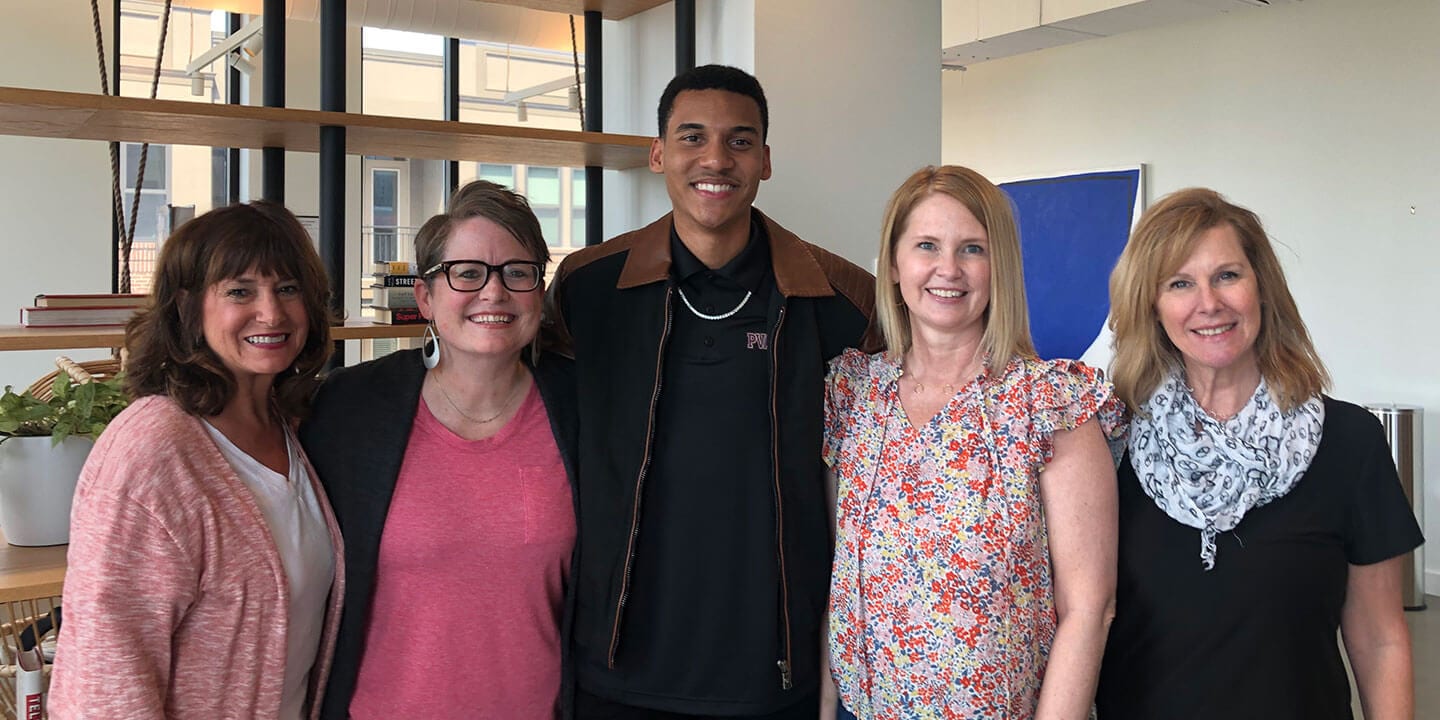
     

  • Blog author Ryan standing with 4 Pearson Campus Ambassador program managers, 2 on each side.

    My Pearson Campus Ambassador Journey

    Ryan Celestine

    Being a Pearson Campus Ambassador (PCA) has truly been an amazing journey, and when I started as a PCA I had no idea all the amazing things that would be in store for me. I am excited to get the opportunity to share some of that journey as I conclude my time at Pearson as I graduate.

    Opportunities and Experience

    One of the best things about the PCA Program is that you get out what you put in. If you are willing to put in the work, the opportunities will find you. As you get more opportunities in the program, you will gain some great experience that will help set you apart from other candidates when applying for jobs and other external opportunities. In addition to summer internships, Pearson also offers micro-internships which allow you to complete short-term internship experiences during the school year. In my 2.5 years with Pearson, I worked two summer internships and one micro-internship in addition to my job as a Pearson Campus Ambassador and Regional Coordinator. These opportunities helped strengthen my resume and gave me a wealth of experience to pull from when interviewing and working different jobs. These opportunities also allowed me to get a better understanding of what I wanted to do for work following graduation.

    Traveling

    Being a part of the PCA Program also allowed me to travel to different parts of the country. In my time as a PCA, I was able to travel to Dallas, Ohio, New York, New Jersey, and Austin. Whether I was traveling for a special project, an internship, or a leadership summit, each trip was special, and I had a great time. Pearson takes great care of its employees, and that was made evident on these trips. During these trips, I got to visit different Pearson offices, including our corporate U.S. headquarters. I also got to meet many Pearson professionals as well as some of my fellow PCAs whom I had only met virtually up until that point.

    Connections and Camaraderie

    The connections I’ve made and the camaraderie that exists at Pearson and within the PCA Program are something that I will never forget. I had the opportunity to work with some of the best and brightest students across the country. I had the chance to lead and mentor some of the most amazing students across Texas and Louisiana as the Regional Coordinator of the Central Region. I got to see so many friendships and people blossom and grow because of the PCA Program. It allows you have a connection in almost every state and city in this program. Our managers, sales reps, and various Pearson employees helped promote this camaraderie and sense of community. Everyone, from the CEO and the Presidents to our respective managers, were easily accessible. In my time at Pearson, I had multiple sit-downs with the CEO, as well as meetings with the former President of Higher Ed and the Chief Human Resources Officer.

    As you can see, I had a great experience as a Pearson Campus Ambassador. I’ve had the opportunity to do some things that most other 22-year-old college graduates can’t say they have done. I have learned so many transferable skills that I will take with me into my next role. Pearson was one of the best things that could have happened to me in my college career, and it is the best job you can have as a college student.

    Do you have a compelling story or student success tips you’d like to see published on the Pearson Students blog?  If you are a college student and interested in writing for us – click here to pitch your idea and get started! 

     

  • A group of college students at the University of Houston that are members of the Asian Student Business Association.

    How Leadership in College Can Change Your Life

    Tristan Deveyra

    Unlocking leadership opportunities can be daunting if you lack the credentials you think are necessary. I've experienced this firsthand; lacking a vast network of friends or professional experience, I missed out on leadership roles in high school. However, when I embraced leadership within the Asian Business Student Association an incredible transformation occurred. I discovered a world brimming with social, mental health, and professional benefits.

    College Leadership Opportunities

    As a leader, I forged deep connections and lifelong friendships, finding a community that supported me and allowed me to create cherished memories. It opened doors to a support system I never knew I needed. Here’s a picture of me and my leadership team in the thumbnail! (That’s me in the top right!) Furthermore, being a leader enhanced my college experience economically by maximizing internship opportunities and valuable connections with companies. Employers highly value leadership and soft skills in candidates, recognizing their importance alongside technical knowledge.

    Zooming out, leadership offers a broader perspective and the chance to leave a lasting impact on those you lead. It extends beyond the workplace, influencing all aspects of life, from sports teams to family dynamics and friendships.

    How to Find Leadership Positions

    Leadership positions are everywhere in college! Your first step is to research and find an organization or club that you can join. Strive to find a community you’re truly passionate about and want to develop, and make sure it aligns with your interests, values, and goals. Indulge in its culture, and you’re set! Most colleges have websites with a catalog of all the organizations and also hold club fairs in the beginning of each semester. Make a point to attend and be sure to talk to recruiting personalities during these fairs.

    Leadership Positions and Corporate Recruiters

    As most college students progress through their careers, they tend to begin their search for internships. For Corporate Recruiters, students who have leadership experience become more appealing as they hold many qualities that make them a valuable candidate. Holding a leadership position in college showcases your ability to take on responsibilities and manage a team or an organization. Recruiters value candidates who can demonstrate their commitment, reliability, and capacity to handle complex tasks.

    Overall, leadership positions in college offer a platform for personal growth, skill development, and the cultivation of valuable soft skills that can benefit you in various aspects of your life, including your future careers.

    Do you have a compelling story or student success tips you’d like to see published on the Pearson Students blog?  If you are a college student and interested in writing for us – click here to pitch your idea and get started! 
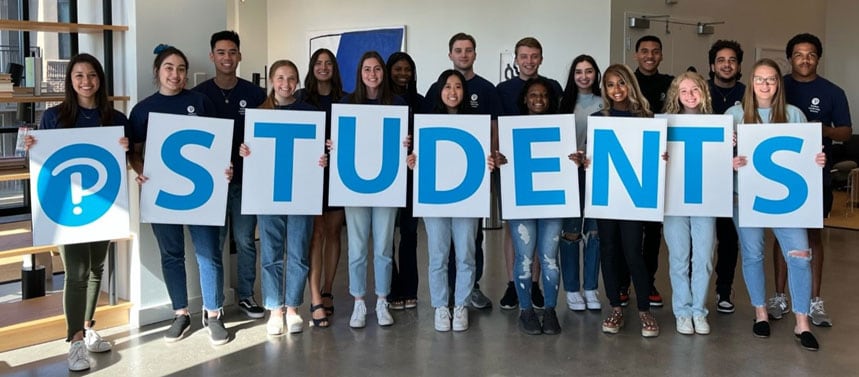
  • A group of 18 students standing in two rows. The students in the front row hold large placards with the Pearson logo and letters spelling ‘STUDENTS’.

    Pearson Student Leadership Summit 2022

    Ryan Celestine

    What a weekend.

    The first ever Pearson Campus Ambassador (PCA) Leadership Summit was held in Columbus, Ohio in April 2022. The goal of this meeting was to continue to build a top ambassador program that reshapes Pearson’s brand in the minds of students nationwide. The meeting also aimed to capitalize on the success of four outgoing student Regional Coordinators (RCs) by imparting their knowledge to the incoming leadership team.

    Graduating PCAs Delaney Henson and Noah Myers made it their mission, beginning in November 2021, to demonstrate the impact an in-person meeting could have on the future success of the PCA program. They turned the once abstract idea into a set of concrete deliverables. Once final approval came through, the Student Programs team enlisted leaders from both Sales and Marketing teams to create sessions focused on sales growth in the Higher Education market.

    Experience

    The final product was truly an amazing experience. This summit allowed Pearson to bring together the heart of the PCA Program, which is composed of some of the best and brightest students from all over the country. It was a great opportunity to meet everyone in person. These are people I have worked with virtually for some time, so it was truly amazing getting to work in the same office as them and share meals together. The memories, laughs, and conversations I had with my fellow Pearson colleagues are something I will always remember.

    The pandemic taught us that a lot can get done virtually, but the virtual work environment is not the same as meeting in person. The feeling is just different. There is a certain level of heartfelt sincerity that comes with being physically present. You can interact with your colleagues in a way that you can’t behind a screen. The connections made, the relationships created, and the friendships formed during this Leadership Summit were truly special.

    I couldn’t think of a better way to share this experience than by having the voices of the other PCA attendees tell you.

    “My favorite part of the Summit was getting to meet everyone for the first time. I felt so lucky to have the opportunity to form not only work relationships but real friendships with my fellow PCAs who I now look forward to working with even more.” – Rachel Schachter, California State University, Northridge

    “This summit was truly a dream come true! I think my favorite part had to be the panel with the graduating RCs. I was able to learn so much from them in such a short period of time and the lessons I learned are ones that I will carry with me for the rest of my time at Pearson and beyond.” – Camryn Enloe, Oklahoma State University

    “I've been working virtually at Pearson for two years and while I was looking forward to meeting everyone in person, I didn't think it would impact me SO much. We had so many incredible conversations, and I learned so many things about the other regions that will help me SO much as the RC Trainer. I think that we'll be able to make an even bigger impact moving forward.” – Laura Avellaneda, Kennesaw State University

    “BEST TRIP EVER!! Getting to meet with my fellow RCs and Student Directors was so amazing. I learned so much from them professionally and personally, and it was truly an experience I will never forget. I left feeling so inspired, and I am so excited to implement everything that I learned.” – Ambyr Dack, Florida State University

    “Every single individual at the Leadership Summit was super friendly and incredibly brilliant. I feel like I grew so much from talking to them in person.” – Saleem Abu-Tayeh, University of Virginia

    “Nothing has been more impactful to me than having the opportunity to attend the Summit. The event allowed me not only to heighten my leadership and professional skills, but it allowed me to finally connect with so many of my peers that I have been working with virtually for months now.” – Taylor Falls, University of Alabama

  • A computer generated graphic with 3 playing cards – an ace, queen, and king – and the words ‘You Can Be a Leader’. The word ‘leader’ is spelled out in Scrabble tiles.

    Leadership is Not Just a Position: You Can Be a Leader, Too!

    Gina Condit

    A question I was recently asked in my Leadership and Learning lecture was, “if you are potentially a role model for someone, wouldn’t you want to be the best role model you can be?” This got me asking myself, “am I a leader to someone? Am I being the best leader I can be? How can I become a better leader?” This class has encouraged me to be the leader I hope to be, and I hope this encourages you to be the leader you are meant to be.

    Leadership Is a Process

    Being a leader is not just about holding a position. You lead every day and you do not even realize it. I have learned that some people are born to be leaders, and some learn to be leaders. Either way, leadership is a process, an influence, a common goal, and most importantly a relationship; a relationship that is built on human connection and credibility. Being a leader means something different to everyone. It is a multi-dimensional concept but no matter who you are, with the right mindset, you can be a leader. Research has shown that people are drawn to those with these top characteristics:

    • Honesty
    • Forward-looking
    • Competent
    • Inspiring
    • Intelligent

    Who Do You Consider a Leader?

    Do you have these qualities? Leadership is an earned role by how you can consistently portray and behave yourself in a positive light. Think about who you consider a leader. This person probably has consistently shown you that you can rely on them, learn from them, and grow through them.

    Leaders Do Not Always Have Titles

    A leader creates a movement and an emotional impact. So, as you go on with your daily life, try to think about the influence you can have on your roommates, classmates, siblings, and the strangers you encounter. To be a leader you do not need a title.

    So, start taking baby steps. Engage in your roommates’ aspirations, be there for the classmate struggling to understand that week, and most importantly, focus on developing your capacity to mobilize others. There are all types of leaders and styles to become, so try out different techniques to influence others around you. There is someone out there waiting for you to take the lead.

    Recommended Read: Everyday People, Extraordinary Leadership by James M. Kouzes and Barry Z. Posner.

    Do you have a compelling story or student success tips you’d like to see published on the Pearson Students blog?  If you are a college student and interested in writing for us – click here to pitch your idea and get started! 

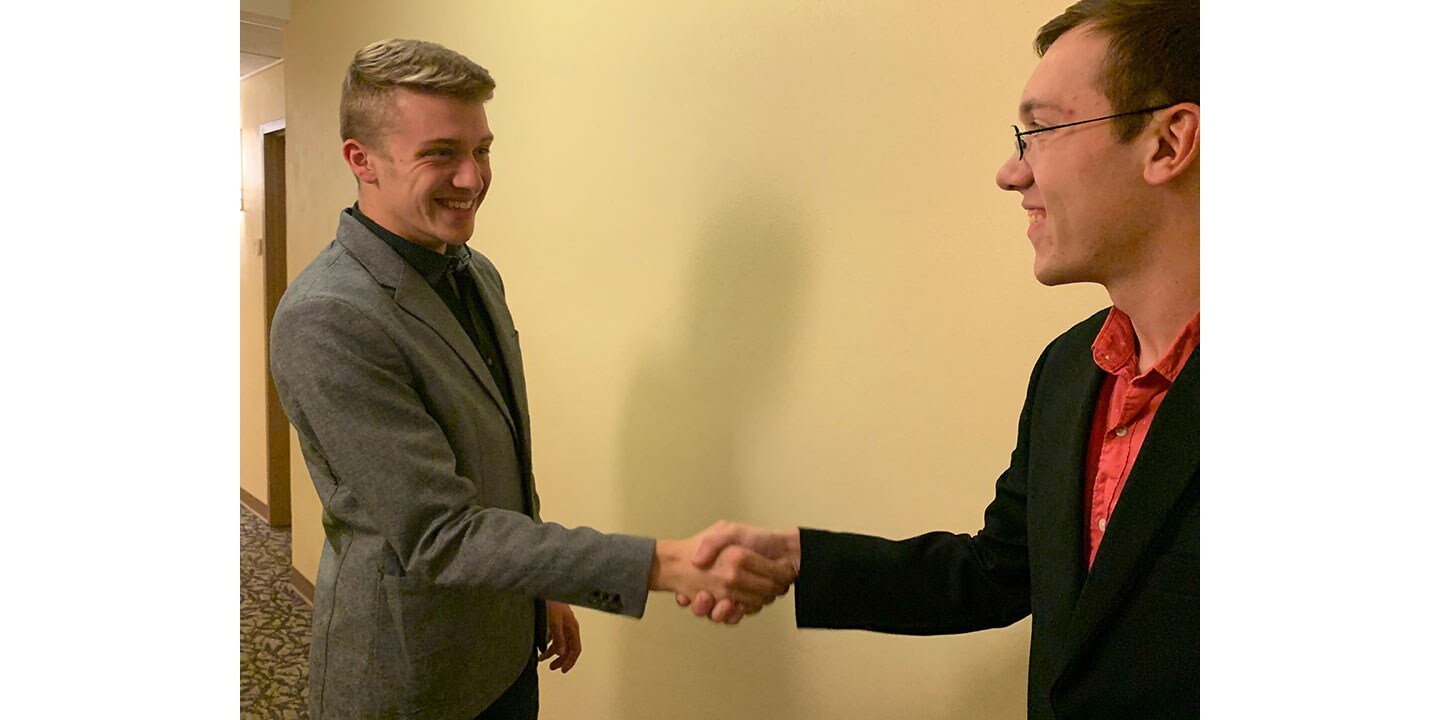
  • Two male college students are standing in a hallway shaking hands. They are both dressed in business attire with suit jackets and ties.

    How New Leaders Can Help Their Teams Achieve Success

    Zachary Suozzo

    Being a good leader can be a major challenge. Successful teams are collaborative, communicative, and available. The pace of the pack is determined by the leader. New student leaders who have never had the opportunity to lead a team may wonder where to even begin. Focusing on three areas can help set new leaders up for success: identifying a leadership style, developing a community, and establishing good relationships with individual team members.

    Find your style

    Every leader, every team, and every individual on a team is different. There are 7 major styles of leadership: Autocratic, Authoritarian, Pacesetting, Democratic, Coaching, Laissez-Faire, and Affiliative. There is no cookie-cutter one-size-fits-all leadership style that works for every team, and that’s okay! Leaders have to figure out what leadership style their team responds best to. Leaders also must figure out which style best fits their own goals and ambitions. If one of those styles works with the leader’s goals and is responded to by the team, amazing things can happen, and serious productivity can begin.

    Build a community

    Individuals need to be comfortable with the leader and with their teammates for productivity to take place. Good leaders look for ways to foster a sense of community on the team. Many times, community building opportunities take place outside of working together on a project. Whether in-person or virtual, any environment where people are interacting with each other and not talking about work can bond a team together well. Common interests can improve team morale, leading to engagement that improves team productivity and allows for team members to be more approachable to each other.

    Cultivate relationships

    If the team trusts each other and communicates with each other well, their uniting force will be the leader. Having a solid individual relationship with each team member is extremely important for continuously elevating the team to the next level of performance and camaraderie. Taking the time to get to know each individual is time intensive, especially considering the potential size of a team, but is so important when it comes to morale, accountability, and communication. Individuals should feel as though they can come to their leader for anything and having a line of communication that’s always open is very important for that.

    Leading a team can be extremely time consuming and challenging, on top of all the work that comes with the task at hand. For a long-lasting relationship with success, teams need to be a cohesive unit. Effective team leaders carry out their work with a solid leadership style, help team members establish relationships with one another, and have an open line of communication at all times. Leaders can evolve; if one solution doesn’t work, keep trying to achieve that desired outcome!

    Do you have a compelling story or student success tips you’d like to see published on the Pearson Students blog?  If you are a college student and interested in writing for us – click here to pitch your idea and get started!