Solve each polynomial inequality. Give the solution set in interval notation. x5 + x2 + 2 ≥ x4 + x3 + 2x
Verified step by step guidance
1
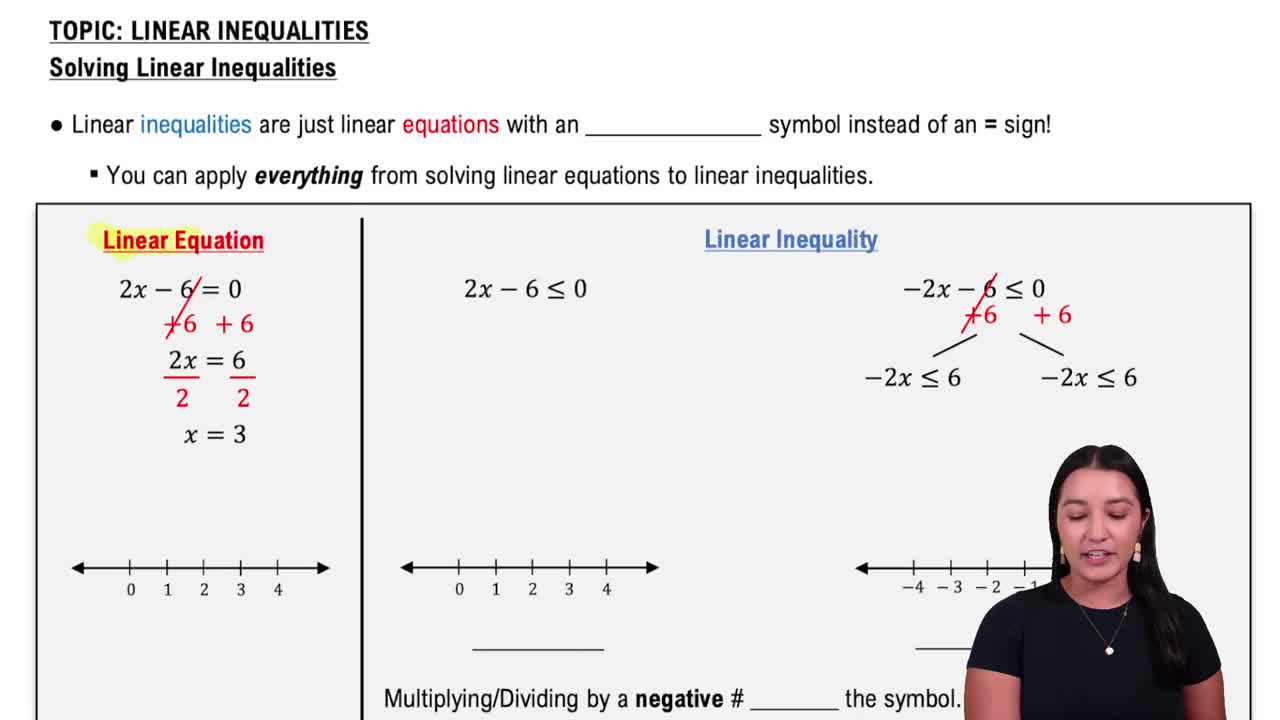
Rewrite the inequality by bringing all terms to one side to set the inequality to zero: \(x^{5} + x^{2} + 2 - (x^{4} + x^{3} + 2x) \geq 0\).
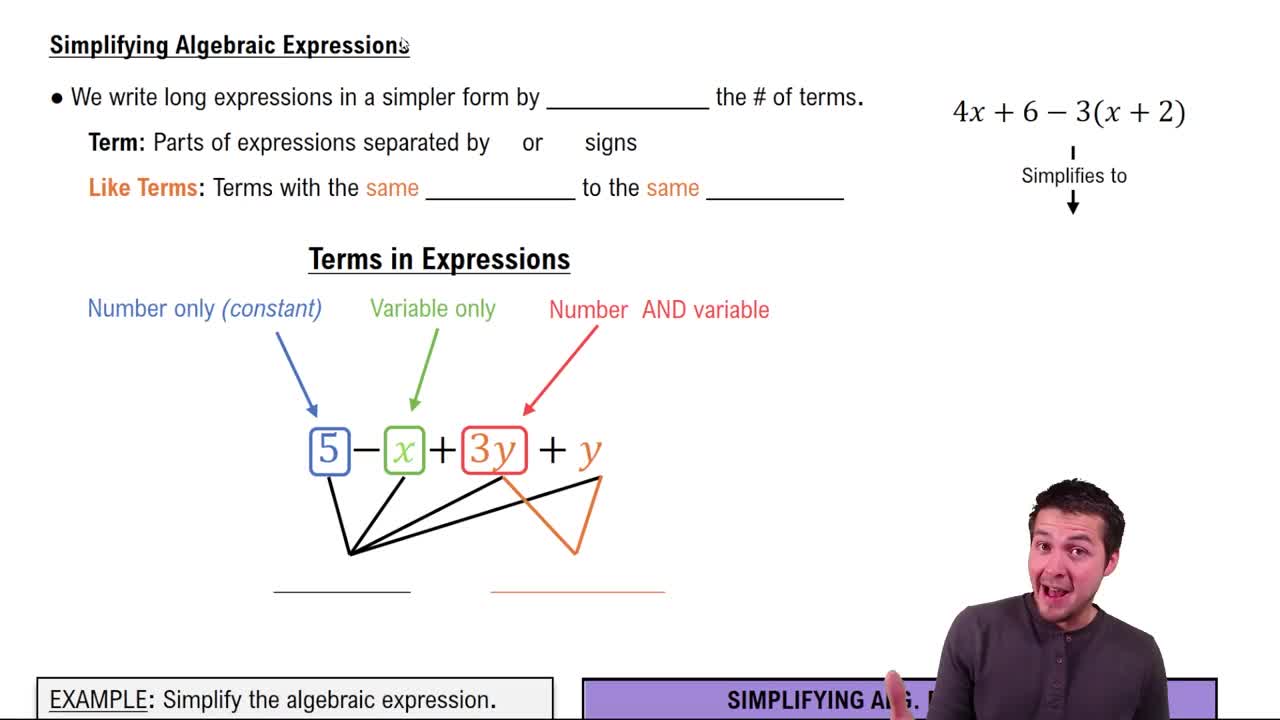
Simplify the expression by combining like terms: \(x^{5} - x^{4} - x^{3} + x^{2} - 2x + 2 \geq 0\).
Factor the polynomial expression if possible. Start by looking for common factors or use polynomial division or synthetic division to factor the polynomial into simpler factors.
Determine the critical points by setting each factor equal to zero and solving for \(x\). These points divide the number line into intervals.
Test each interval by choosing a test point and substituting it into the factored inequality to check if the expression is positive or negative. Use this to determine which intervals satisfy the inequality and write the solution set in interval notation.
Verified video answer for a similar problem:
This video solution was recommended by our tutors as helpful for the problem above
Video duration:
16m
Play a video:
Was this helpful?
Key Concepts
Here are the essential concepts you must grasp in order to answer the question correctly.
Polynomial Inequalities
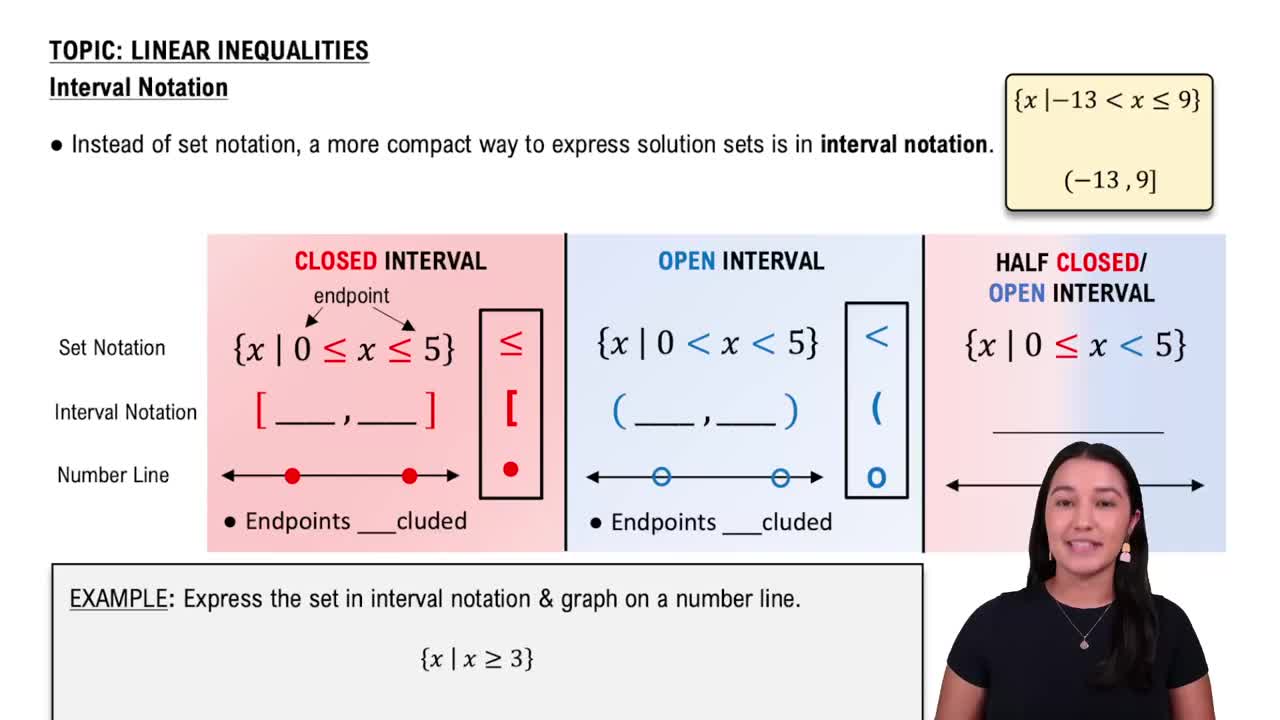
Polynomial inequalities involve expressions where a polynomial is compared to another using inequality symbols (>, <, ≥, ≤). Solving them requires finding all values of the variable that make the inequality true, often by rearranging terms and analyzing the sign of the resulting polynomial.
Rearranging and Simplifying Polynomial Expressions
To solve polynomial inequalities, first bring all terms to one side to set the inequality to zero. This simplification helps identify critical points by factoring or using other methods, making it easier to analyze where the polynomial is positive or negative.
After finding critical points (roots), use sign analysis to determine where the polynomial is positive or negative by testing values in each interval. The solution set is then expressed in interval notation, which concisely represents all values satisfying the inequality.