
Ch. 1 - The Microbial World and You
Tortora - Microbiology: An Introduction 14th Edition
Tortora14th EditionMicrobiology: An IntroductionISBN: 9780138200398Not the one you use?Change textbook
Chapter 1, Problem 4

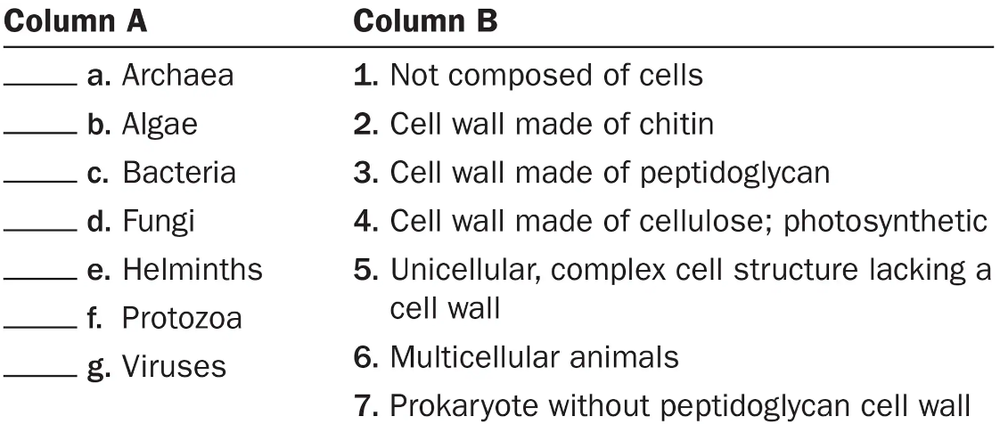
Match the microorganisms in column A to their descriptions in column B.
Matching exercise with two columns listing microorganisms and their corresponding descriptions to be paired.

Verified step by step guidance
1
Step 1: Carefully examine the list of microorganisms provided in column A. Identify each microorganism by recalling its key characteristics, such as shape, metabolism, habitat, or pathogenicity.
Step 2: Review the descriptions in column B. Look for keywords or phrases that describe specific features like oxygen requirements, cell wall structure, mode of reproduction, or disease association.
Step 3: For each microorganism in column A, match it to the description in column B that best fits its known biological or clinical traits. Use your knowledge of microbiology to link characteristics to the correct organism.
Step 4: Cross-check your matches by considering if any descriptions could apply to more than one microorganism and use process of elimination to refine your answers.
Step 5: Confirm all matches are consistent with microbiological principles, such as Gram staining results, metabolic capabilities, or typical environments where the microorganisms are found.

Verified video answer for a similar problem:

This video solution was recommended by our tutors as helpful for the problem above.
Video duration:
2m
Was this helpful?

Key Concepts

Here are the essential concepts you must grasp in order to answer the question correctly.

Microbial Classification

Microbial classification involves grouping microorganisms based on shared characteristics such as cell structure, metabolism, and genetic relationships. Understanding the major groups like bacteria, viruses, fungi, and protozoa helps in identifying and matching microbes to their descriptions.
Recommended video:
Guided course
04:56
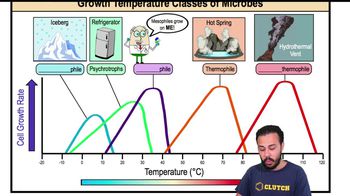
Classification of Microbes by Growth Temperature

Morphological and Physiological Traits

Microorganisms are often identified by their shape, size, staining properties, and metabolic capabilities. Recognizing traits like Gram staining results, spore formation, or oxygen requirements aids in distinguishing different microbes and linking them to their descriptions.
Recommended video:
Guided course
02:44
Types of Bacterial Cell Morphology

Microbial Ecology and Pathogenicity

Knowing where microorganisms live and their roles, including whether they are harmless, beneficial, or pathogenic, is essential. This context helps match microbes to descriptions related to their habitat, disease-causing potential, or ecological function.
Recommended video:
Guided course
03:40
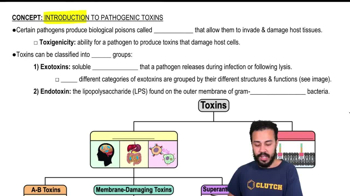
Introduction to Pathogenic Toxins