
Ch. 15 - Innate Immunity
Bauman - Microbiology with Diseases by Taxonomy 6th Edition
Bauman6th EditionMicrobiology with Diseases by TaxonomyISBN: 9780134832302Not the one you use?Change textbook
Chapter 15, Problem 2

Indicate which statements are true. Correct all false statements by changing the underlined words.
__________ The surface cells of mucous membranes are alive.

Verified step by step guidance
1
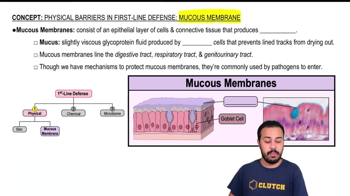
Understand the structure of mucous membranes: Mucous membranes consist of an epithelial layer that covers body cavities and passages exposed to the external environment, such as the respiratory, digestive, and urogenital tracts.
Recall that the surface cells of mucous membranes are typically epithelial cells, which are alive because they perform active functions like secretion and absorption.
Identify that the statement 'The surface cells of mucous membranes are alive' is true because unlike the outermost layer of skin (stratum corneum), mucous membrane surface cells remain living to maintain their protective and secretory roles.
If the statement were false, a common misconception might be that the surface cells are dead, similar to the skin's outer layer; however, this is incorrect for mucous membranes.
Therefore, no correction is needed for the underlined words in this statement since it accurately reflects the biology of mucous membranes.

Verified video answer for a similar problem:

This video solution was recommended by our tutors as helpful for the problem above.
Video duration:
2m
Was this helpful?

Key Concepts

Here are the essential concepts you must grasp in order to answer the question correctly.

Structure and Function of Mucous Membranes

Mucous membranes line body cavities and canals exposed to the external environment, such as the respiratory and digestive tracts. They consist of epithelial cells that are typically alive and actively involved in secretion and protection, supported by underlying connective tissue.
Recommended video:
Guided course
02:34
Mucous Membranes

Cell Viability in Epithelial Layers

The surface cells of mucous membranes are generally alive, unlike the outermost cells of the skin's epidermis, which are dead and keratinized. This viability allows mucous membranes to perform functions like secretion and absorption effectively.
Recommended video:
Guided course
01:53
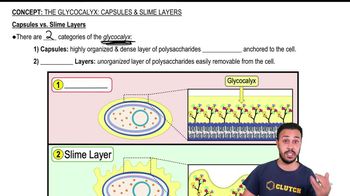
Capsules vs. Slime Layers

Differences Between Mucous Membranes and Skin

Unlike the skin's outer layer, which is composed of dead keratinized cells providing a protective barrier, mucous membranes have living epithelial cells on their surface. This distinction is crucial for understanding their different protective and functional roles.
Recommended video:
Guided course
02:34
Mucous Membranes
Related Practice
Textbook Question

Write the letter of the description that applies to each of the following terms:

1. ___ Goblet cell

2. ___ Lysozyme

3. ___ Stem cell

4. ___ Dendritic cell

5. ___ Cell from sebaceous gland

6. ___ Bone marrow stem cell

7. ___ Eosinophil

8. ___ Alveolar macrophage

9. ___ Microglia

10. ___ Wandering macrophage

A. Leukocyte that primarily attacks parasitic worms

B. Phagocytic cell in lungs

C. Secretes sebum

D. Devours pathogens in epidermis

E. Breaks bonds in bacterial cell wall

F. Phagocytic cell in central nervous system

G. Generative cell with many types of offspring

H. Develops into formed elements of blood

I. Intercellular scavenger

J. Secretes mucus

1350
views
Textbook Question

Which line of defense first applies to each term?

1. ___ Inflammation

2. ___ Monocytes

3. ___ Lactoferrin

4. ___ Fever

5. ___ Dendritic cells

6. ___ Alpha interferon

7. ___ Mucous membrane of the digestive tract

8. ___ Neutrophils

9. ___ Epidermis

10. ___ Lysozyme

11. ___ Goblet cells

12. ___ Phagocytes

13. ___ Sebum

14. ___ T lymphocytes

15. ___ Antimicrobial peptides


A. First line of defense

B. Second line of defense

C. Third line of defense

1568
views
Textbook Question

Identify the type of hypersensitivity reaction in each photo.

<IMAGE>

1903
views
Textbook Question

How does a phagocyte “know” it is in contact with a pathogen instead of another body cell?

1496
views
Textbook Question

Mucus-secreting membranes are found in:

a. The urinary system

b. The digestive cavity

c. The respiratory passages

d. All of the above

830
views
Textbook Question

Indicate which statements are true. Correct all false statements by changing the underlined words.

__________ Wandering macrophages experience diapedesis.

772
views