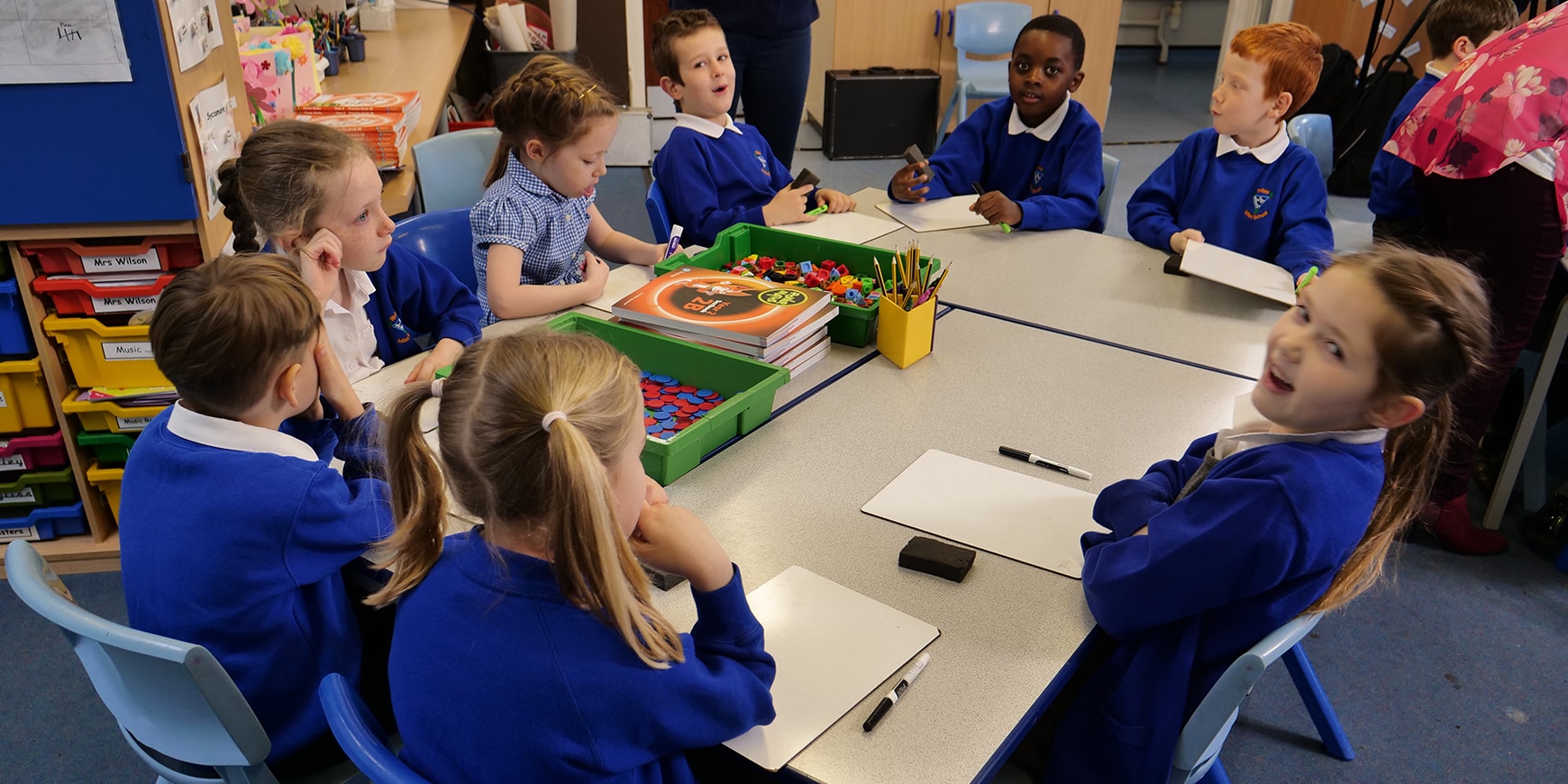
Using Power Maths flexibly in KS1
This blog provides some tips for KS1 teachers, although a lot of the ideas can be applied throughout Y1-6.
Read our dedicated maths blogs written by maths influencers, experts and teachers.
This blog provides some tips for KS1 teachers, although a lot of the ideas can be applied throughout Y1-6.
As we come up to half term, will you be assessing children using the half-termly Power Maths Progress Tests? Don’t forget that you can enter scores into the online Markbook to track and analyse results against age-related expectations.
If you were asked to quickly picture a mathematician in your mind, what would that person look like? How old would they be? What gender? And what about the colour of their skin?
To mark this year’s Black History Month, we consider how to best achieve Maths diversity, with the wisdom of Susan Okereke.
Your October Primary Update
This Primary Update special brings you our informative Back-to-School toolkit and looks at the power behind reading for pleasure. We look at supporting your CPD with the Professional Development Academy, explore what's new in Bug Club Phonics, Power Maths and more!
Welcome to our new style Power Maths update. This month we will be talking about the updates to the Reception resources, highlighting our advice for Autumn 2021 and advice for Mixed Age Classes.
Welcome to our special end of term Primary Update. Here we take a look at Bug Club Phonics DfE revalidation, newly revised Power Maths Reception resources and our free downloadable Summer Fun Activities pack. We also see what the DfE’s new Early Reading Framework document means for you and explore the key challenges and priorities of almost 3,000 teachers.
If a student believes they are not good at maths it can have a negative impact on their attitude and confidence, not to mention their achievement in the subject and interest in future maths careers.
Maths has the power to open a world of new doors and possibilities for students, but it’s also a subject where children and adults alike can lack confidence. This lack of confidence can go on to act as a barrier to engagement and progress in the subject, not to mention shape what careers young people choose to enter, or avoid.
Pearson Maths Advisers, Mark and Nicola, combine their 28 years of teaching experience to offer 10 tips and considerations for secondary teachers when it comes to teaching maths remotely.
Simon Holden-White, Senior Product Manager in the Primary Maths team at Pearson, reflects on new research into teachers' views on maths education amidst COVID-19 and shares some top tips for primary schools when teaching maths remotely this lockdown and beyond.
Here the NRICH Primary Team, one of our Power of Maths partners, share their top tips for primary teachers when it comes to remote maths teaching and learning.
With as many as 650,000 students off school and a growing number of schools facing closures in the new year due to Covid-19, digital learning has a significant role to play in education. And yet new research reveals the need for schools to receive greater support so that teachers can confidently and effectively deliver core subjects like maths remotely.
The results of the TIMSS 2019 study have been announced, as you may have seen, with Year 5 children in England scoring 10 points higher in maths than in 2015. This feels like a moment to say a big ‘congratulations!’ to all our Primary teachers, as well as the children themselves.
As you may already know, all Power Maths users have access to the Markbook within the online materials (just click the Markbook tile when you log in). This allows you to enter scores from the Power Maths Progress Tests and analyse results against age-related expectations.
‘The use of well-designed and tested textbooks is critical for the successful implementation of teaching for mastery. A good textbook is an aid both for the teacher in planning lessons, and for the pupil during lessons and working on their own.’ NCETM 2018
With schools across the country closed in the wake of COVID-19, increased pressure has fallen on parents and carers to support children’s at-home learning. Here, Eleanor Dix outlines five simple maths games that are not only fun, but will improve numeracy skills too.
At Pearson, we believe in helping everyone engage with the #PowerofMaths and how it can unlock opportunities. Every day, we help people of all ages build their confidence and skills with numbers – be it ourselves, those who use our products and services, or loved ones. And now, we’re taking that mission even further by becoming a Lead Supporter of National Numeracy Day.
We asked two leading parental engagement experts some questions about the role parents and carers have to play when it comes to preventing and tackling maths anxiety among children. And, here’s what we learned…
If you’re one of the many teachers who’s recently started using Power Maths, then this article is for you! Here, Power Maths Series Editor, Tony Staneff, gives some practical help and support for teachers who are taking this exciting and game-changing step. It’s a step that will help build real confidence, competence and curiosity in maths for teachers and learners alike.