Students blog

Explore the latest trends, tips, and experiences in college life in this blog written by fellow students.

Explore posts in other areas.

PreK-12Higher EducationProfessional

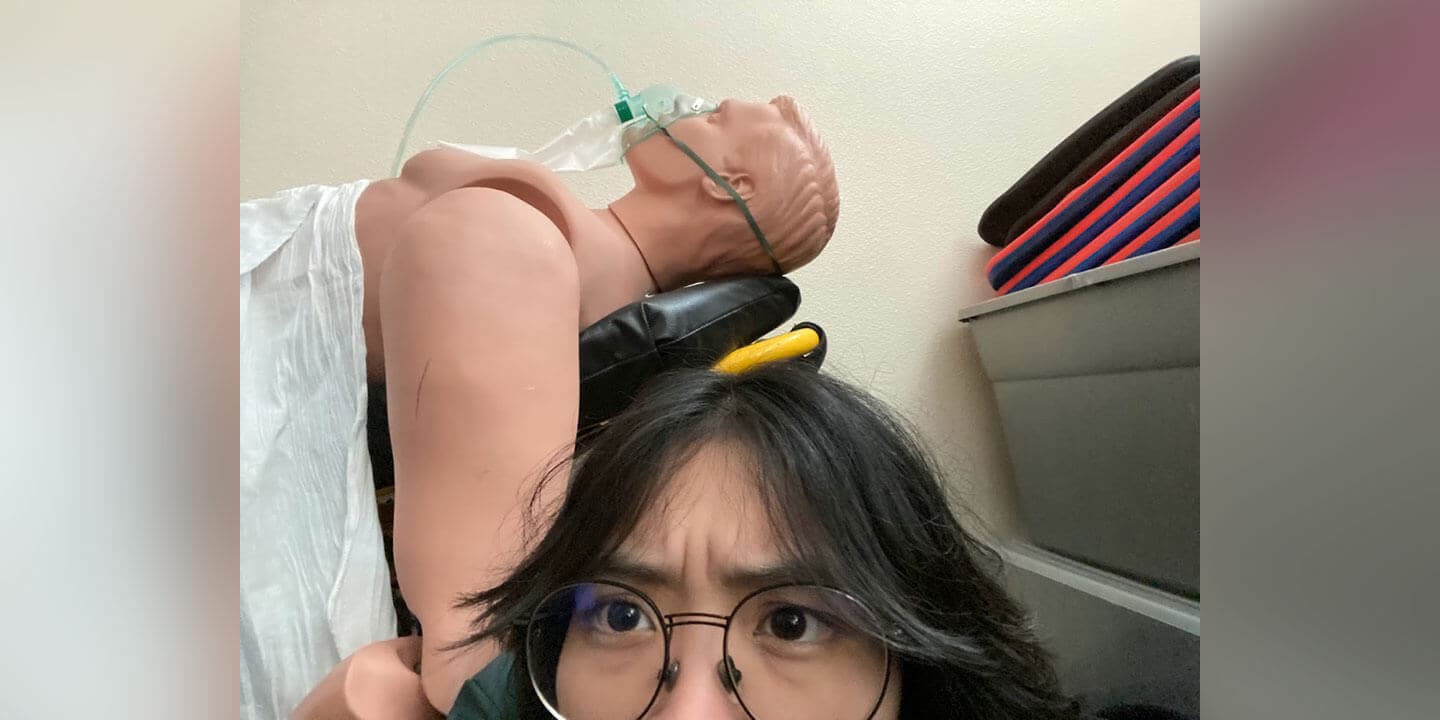
  • Image shows a medical mannequin in front of a wide-eyed student.

    The Anatomy and Physiology Grind Guide for Pre-Nursing Students

    Alexis Ele

    I recently finished Anatomy and Physiology (A&P) II, the hardest semester of my pre-nursing journey, during which I also juggled pathophysiology and my psychology major.

    Even as a student used to juggling multiple commitments, I found myself on the borderline between grades for the first time. I relied on my professor's generous rounding to get me through the semester.

    Based on this experience, here are my best tips to help you get through the A&P slump.

    Spaced Repetition

    A&P involves a lot of memorization, and studying the day before often isn’t enough. If you’re working toward a healthcare career, A&P contains information you need to recall easily. For the benefit of my present and future self, I learned to space my studying for long-term retention.

    This was especially helpful for Anatomy Lab. I had one week to memorize 100 to 200 terms, and I didn’t want to cram the day before. Spaced repetition is perfect for anything you need to strictly memorize. The more often you can actively recall information, the more it “compounds” over time.

    By the time my Anatomy Lab test came around, I could recall any part of the body. The catch is that you have to commit to this consistently; daily is best, even if it’s just a little. Though it sounds tedious, you’ll thank yourself later.

    Interleaving Your Classes

    One of the best pieces of advice I’ve received for studying A&P is to stop studying it! This might make you think, “What?” That’s exactly what I thought when I learned about this technique, termed “interleaving.” You might have felt fatigued studying just one subject for hours, which is why you shouldn’t do it.

    Instead, try jumping between subjects rather than hyperfocusing on one. The benefit is that you can prevent mental fatigue from studying one subject for too long. This also provides the opportunity to draw connections between subjects, since you’re forced to differentiate each one.

    This method is also reminiscent of spaced repetition, but with subjects rather than timing. Instead of focusing on one subject for one day, you’re able to cover a little of each subject each day, which is helpful for long-term retention.

    Using the Resources That Work for You

    Imagine a 3D model that lets you see how and where the different organ systems relate to one another. There’s a good chance one exists! My A&P class used textbooks provided by Pearson.

    Pearson’s study tools included many programs, but the most beneficial to me was their Practice Anatomy Lab (PAL). PAL provided a 3D model of all the anatomy I needed: digestive, reproductive, urinary, and more systems. It also provided photos of cadavers I wasn’t able to see during my once-a-week lab, which was helpful for reinforcing my learning.

    I am a visual learner, so I benefited from seeing models and manipulating spatial relationships. I learned best when I could rotate a human body, recognize that the median cubital vein looked like a “cube,” and then move on to another body part. Bonus tip: Knowing medical terminology can also be very helpful!

    What Mattered Most

    Even though A&P was my toughest subject, I’m glad I learned effective study techniques to get over the slump. If you’re a pre-nursing student, remember to use research-backed study techniques. Also, remember to care for yourself throughout this long, rewarding journey to becoming a nurse!

    Do you have a compelling story or student success tips you’d like to see published on the Pearson Students blog?  If you are a college student and interested in writing for us – click here to pitch your idea and get started! 

     

  • The photo shows a student inside a University Writing & Speaking Center. A display behind them promotes support for résumés, personal statements, research, brainstorming, and English conversation practice.

    How to Get the Most Out of Your University's Writing Center

    Alexis Ele

    As an English Consultant at my university's Writing and Speaking Center, I've noticed something: students don’t utilize us enough!

    I’ve helped dozens of students with their class essays, whether it’s planning them or editing them in the finest detail. I’ve also had students come in to stay accountable while they work or to ask for my perspective on the personal stories they’ve written. I enjoy these appointments and love building a schedule of regulars.

    This makes me wonder: why don’t more students use this resource? Here are some ways you can get your tuition’s worth and use your university’s Writing and Speaking Center.

    Accountability Partner

    Surprisingly, I’ve had quite a few students come in simply to get some work done. This is a technique called “body doubling,” also known as working alongside someone else to stay focused and accountable.

    If you know anyone who might get you a little too distracted, or you just need a surefire way to sit down and get your work done, my Writing and Speaking Center is a safe space to do so! You can ask the consultant questions at any point, which makes them an even better accountability partner.

    Brainstorming

    It’s a common misconception that students need to come into our center with a full plan or draft for their essays. This couldn’t be further from the truth. Many of my university’s consultants are trained to help students brainstorm, even without anything written on the page.

    The very ideas for the blogs I write for Pearson go through a consultant before anything is written. Sometimes, all you need is someone to bounce ideas off!

    Scholarship and Application Essays

    Scholarship and application essays are common appointments in our university’s Writing and Speaking Center, and it’s no surprise why. Many scholarships are reviewed by an audience that will make judgments about your character, values, and alignment with their program.

    Having a fresh set of eyes on your essay provides unbiased, objective feedback from someone you don’t know. Many of my scholarship applications went through our center so I could understand the first impression my essays made. After making the recommended edits to perfect my applications, I’ve never been disappointed!

    Lab Reports

    Lab reports are a little less common, but they really should be more common. When I wrote my first microbiology lab report, I was unfamiliar with the type of language that many lab reports expect.

    Given my preference for eloquent, sensory, and detailed language, I was taken aback by how objective and straightforward my lab report had to be. I immediately went to my university’s Writing and Speaking Center to learn about the genre expectations for a lab report, and I eventually received a good grade on that paper.

    Interview Practice

    Last but not least, our university’s writing center also often helps students practice for interviews. If your university’s career studio is full, you might be able to rely on your Writing and Speaking Center.

    In addition to writing, these consultants are also trained in speaking, such as with presentations and speeches; interviews fall under the “speaking” umbrella. As with scholarship applications, consultants can give you feedback on your first impression, which may be important to a future employer.

    Use Your University’s Resources

    Haven't used your university's Writing and Speaking Center yet? I hope this article has shown you the unique ways you can use it. Get your tuition money’s worth, and use your student centers!

    Do you have a compelling story or student success tips you’d like to see published on the Pearson Students blog?  If you are a college student and interested in writing for us – click here to pitch your idea and get started! 
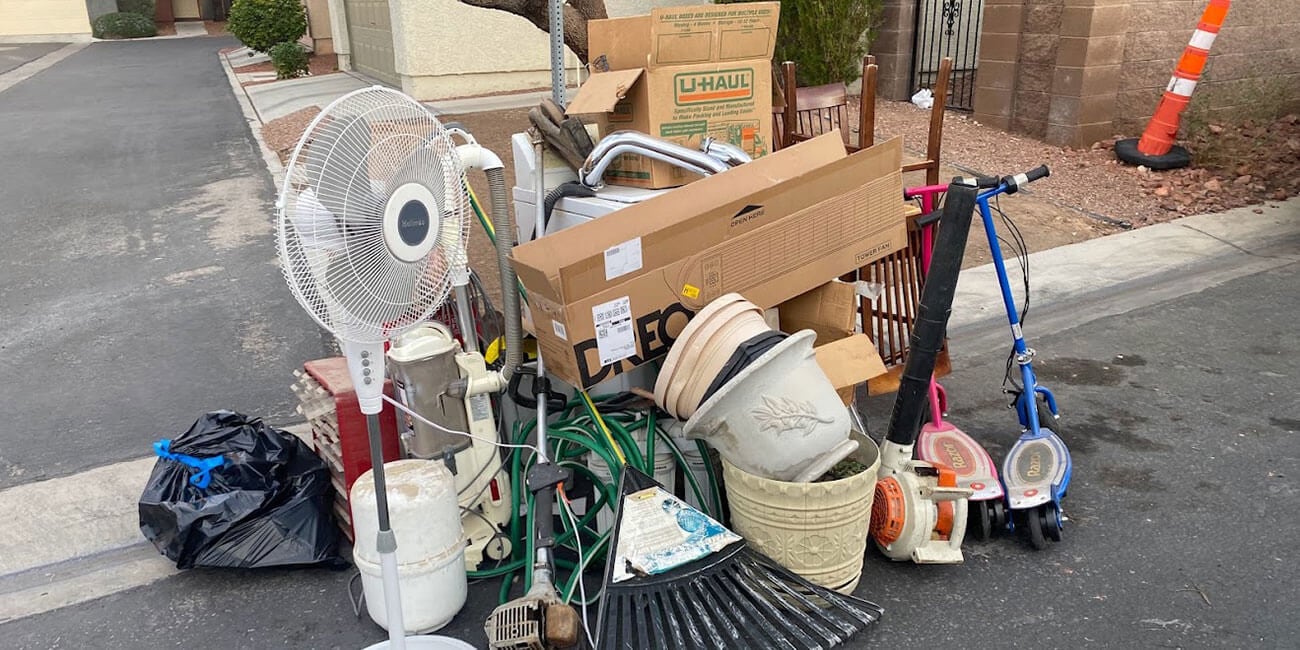
     

  • Image shows a pile of items left at a curb likely trash day for garbage pickup including boxes, a standing, a rake, a leaf blower, two toy scooters, and a trash bag among other items.

    Finding Free Stuff: A College Student’s Guide

    Alexis Ele

    Your college is a gold mine for free things. Believe it or not, I’ve gotten free guitars, scooters, furniture, and even a Roomba. Every time I share these stories, people tell me I’m lucky. The truth is, I’m not lucky; I’m courageous.

    Here are my tips for finding free things to take advantage of on your campus and during your college career.

    1. Capitalize on Move-Out Season

    College students often have a bunch of leftover items after the semester ends. Between people moving in, moving out, and moving away, there is a golden opportunity to take stuff off people’s hands. This can happen through dumpster diving or snooping around the dorms.

    It’s a win-win situation: they want to get rid of things they don’t need, and you want free things. I used this method during dorm move-outs and was able to snag a cowboy hat, tons of organizers, a new Snoopy bed sheet, and a vacuum. My friend even got a mini fridge!

    2. Attend Off-Campus Apartment Events

    One way I get tons of free food is by following the Instagram accounts of apartment complexes around my campus. Off-campus apartments often host free food events or have promotional events to get students to sign leases with them. Some will even offer gift cards if you take a tour of their property.

    Because of this, I went to a rooftop party hosted by a nearby apartment complex. They were giving out free food and holding hourly giveaways. One of these giveaways was for a Roomba. Although I initially came for the food, I ended up leaving with a Roomba as well.

    Take advantage of your college’s local apartment complexes. See if your campus even hosts an off-campus apartment fair.

    3. Shop Secondhand

    When all else fails, shop secondhand. Buying new ensures high-quality, long-lasting items, but sometimes you don’t need them for very long and don’t necessarily need them to be new. This is exactly when buying secondhand is helpful because you can often get items at a discounted price.

    Check out local marketplaces, thrift stores, and yard sales. I got my bass guitar, electric guitar, and amp through Facebook Marketplace. I also got a few computer accessories, including my monitor and webcam. Most items were only used a few times, but they worked as if they were new. Sometimes buying secondhand is all you need.

    Be careful of potential scammers, though; if a deal sounds too good to be true, it probably is. Make sure to verify the seller. Don’t give any personal information unless you’re sure it’s legitimate.

    4. My Top Tip: Just Ask

    Opportunities for free things don’t come if you never ask. Sometimes sellers are very willing to negotiate, and doing so can land you an even lower price on the items you want. Don’t be afraid to get your foot in the door and simply ask.

    Since starting college, I have been able to secure furniture, clothes, and even electronics to decorate my campus apartment, all at much lower prices. Keep an eye out for opportunities and don’t be afraid to ask around. A little courage goes a long way.

    Do you have a compelling story or student success tips you’d like to see published on the Pearson Students blog?  If you are a college student and interested in writing for us – click here to pitch your idea and get started! 
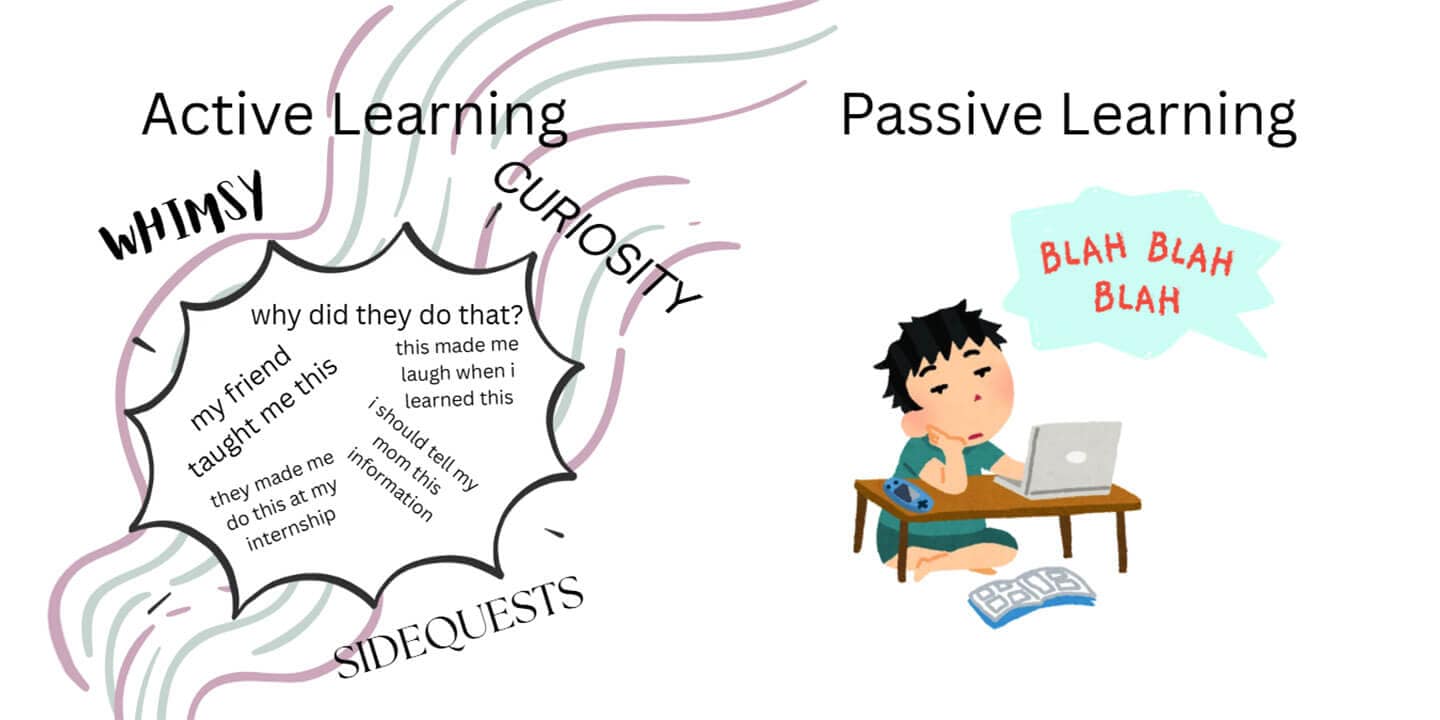
     

  • Graphic showing Active versus Passive Learning. Active Learning is characterized by words and phrases, and Passive Learning shows a bored cartoon boy sitting at a computer.

    The Power of Whimsy, Curiosity, and Side Quests

    Alexis Ele

    Many college students know that intrinsic motivation boosts productivity, but how does it work? And why is it so hard to have intrinsic motivation for classes when all we want to do is get the grade and pass?

    In this blog, I’ll discuss ways to revive our inner child’s excitement for learning. These methods can help transform that excitement into natural productivity. Behold: the power of whimsy, curiosity, and side quests!

    Whimsy vs. Curiosity

    What’s the difference between whimsy and curiosity? Many think of curiosity as figuring out the “why” of things. I like to think of whimsy, on the other hand, as figuring out the “why not?” of things.

    I’ve found that combining these two qualities makes for a fun day-to-day experience, even when I’m stuck on campus all day.

    Taking Side Quests

    You’ve probably heard the term “side quests” before. It’s pretty much as it sounds: missions you go on that stray from your “main quest,” or your typical routine.

    These side quests help me realize that my days are more than just wake up, school, and sleep. They are what motivate me to keep living life apart from academics.

    Harnessing the Power of Whimsy

    As I said, whimsy is my “why not.” It’s what gets me up and going for my side quests.

    Why shouldn’t I accompany my friend on their grocery shopping day? Why shouldn’t I go to the park and watch the sunset? Why shouldn’t I apply for this public speaking competition?

    Many times, you’ll find yourself asking why you should do certain things. Sometimes, it might also be helpful to ask yourself: why not?

    Engaging Your Curiosity

    At the heart of research and innovation is curiosity. Anything you’ve ever wondered has likely been pondered by someone else. They might have even spent their entire lives researching it.

    Curiosity also exists on a smaller scale. It can be as simple as wondering how our bodies react to certain bacteria or how to apply classical conditioning in real life. The more you wonder, the more you learn.

    How It All Connects

    Active learning involves directly engaging with problems, while passive learning, like listening to a lecture, may not have an immediate application. Active learning is often preferred because it helps the brain create and strengthen connections, which improves memory retention.

    According to neuroscientific research, this active engagement enhances synaptic plasticity, a key component of learning.1 This process allows you to engage directly with the material.

    It’s almost like being a little kid figuring out how the world works for the first time. This is where curiosity comes in, prompting you to ask the questions you need to find the right answer.

    Whimsy allows you to engage with the world on a deeper level, which can lead to new side quests. Once you've learned a subject in school, you will likely run into it in real life.

    For example, I had a full-circle moment with my information systems class. Because I chose to apply for an internship with a "why not?" attitude, I was able to apply my knowledge in a real-life opportunity, helping the company improve how they collected survey information.

    Final Thoughts

    These three values—whimsy, curiosity, and side quests—have carried me through my academic career and kept me from burning out. How much curiosity and whimsy are in your life?

    My final advice? Take more side quests!


    1 Janet M. Dubinsky and Arif A. Hamid, "The Neuroscience of Active Learning and Direct Instruction," Neuroscience and Biobehavioral Reviews 163 (August 2024): 105737, https://doi.org/10.1016/j.neubiorev.2024.105737.

    Do you have a compelling story or student success tips you’d like to see published on the Pearson Students blog?  If you are a college student and interested in writing for us – click here to pitch your idea and get started! 
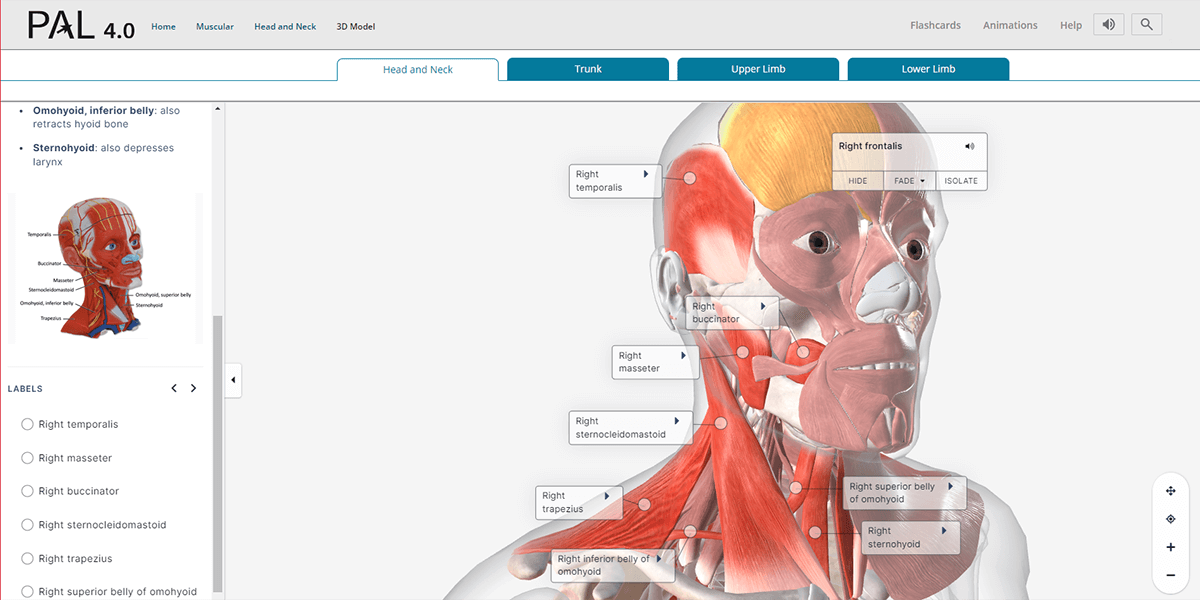
     

  • A screenshot of Pearson’s PAL 4.0 that shows a labeled diagram of the muscles of the human face.

    My Best PAL for Anatomy: Pearson’s Practice Anatomy Lab

    Alexis Ele

    Anyone who has ever taken Anatomy knows it can be a memorization-heavy course. This is especially true if the lab portion only occurs once a week, as it did for me. Preparing for practicals was a nightmare; we only had one minute per station to recall hundreds of terms and physiological concepts.

    Then I dug through the Pearson website that hosted our textbook and found my best buddy for the next two semesters: PAL.

    Meet PAL: Your Virtual Anatomy Lab

    Practice Anatomy Lab (PAL) 4.0 is a virtual study and practice tool, giving students 24/7 access to the most widely used lab specimens. These include human cadavers, anatomical models, histology slides, cats, fetal pigs, and dissections of sheep brains and cow eyes.

    My most-used feature was the anatomical and fully manipulable 3D models. They made it infinitely easier to see where certain anatomical structures were relative to each other.

    A Tool for Every Learning Style

    As a visual learner, I found that PAL was one of my best friends during my time in Anatomy. It can be yours, too, no matter what type of learner you are.

    PAL includes built-in audio pronunciations in addition to 3D animations, mobile-friendly flashcards, practice quizzes, and practice fill-in-the-blank lab practical questions. This means any type of learner—visual, auditory, reading, or writing—can use PAL to their advantage.

    Study Anytime, Anywhere

    While anatomy labs tend to meet once a week for a few hours, PAL is available to you 24/7 and is included with MasteringA&P. In addition to the manipulable 3D models, I found it convenient that I could access it and still have a similar experience away from the lab.

    It is also common practice for photography of certain cadavers to be prohibited, but PAL provides virtual cadavers that you can view at any time. Constantly refreshing my memory of models and cadavers was much more helpful than trying to recall them from a single lab session.

    Find What Works for You

    If you’re a student using Pearson materials for your anatomy class, I encourage you to explore the platform and discover what makes learning easier for you. While the 3D models were my key to success as a visual learner, PAL is packed with features designed to help every type of learner master the material.

    Do you have a compelling story or student success tips you’d like to see published on the Pearson Students blog?  If you are a college student and interested in writing for us – click here to pitch your idea and get started! 

     

  • A table full of party food including various snacks and festive cupcakes.

    Igniting Connection: Hosting Events in Your Dorm or Apartment

    Alexis Ele

    Friendship and connection are precious, especially when settling into college life. With good friends, even the most challenging things can feel possible.

    My first year of college was socially challenging: asking people to hang out, making friends, and introducing myself in different spaces. However, by my sophomore year, I had more friends than I could count with both hands.

    How did I do it? Instead of being a guest, I became the host. Below are my ideas for filling your evenings with friends and community, along with tips for hosting, what to expect, and what you might need to buy.

    Hosting Logistics

    Planning prevents mishaps and ensures everyone has a good time. Depending on the event, you may need to prepare food, decorate, and more.

    Here is a list of things to prepare:

    • Food: Grocery shopping, thawing ingredients, prepping, cooking, and plating.
    • Guests: Ask about dietary restrictions, know the parking options, and plan food based on your guest count.
    • Space: Buy decorations, get disposable plates, and designate a drop-off spot for guests' belongings.
    • Cleaning: Tidy the living room, kitchen, bathroom, and other guest spaces.

    A helpful tip: set the temperature cooler than usual. A room full of people heats up quickly, so use the AC or fans. Early arrivals often want to help, so don’t be afraid to delegate!

    Fun Event Ideas

    For my birthday, I wanted a unique activity to help my friends get along. A central activity gives guests something to look forward to and a reason to come.

    Here are some events I’ve hosted (or plan to host):

    • Wig-Snatching Party: Buy some wigs (or have everyone bring their own wig: BYOW) and create a tournament bracket. The name says it all: whoever snatches a wig first wins!
    • Arts & Crafts Night: Gather friends for a calm, quiet night of arts, crafts, or hobbies. It's a perfect creative outlet to unwind and stay motivated together.
    • Bring a Stranger: Ask friends to bring someone no one else knows to the party. It's a great way to meet new people and expand your circle.
    • Murder Mystery Party: Buy a murder mystery party kit and solve a fictional crime together. It’s perfect for team building.
    • Mafia Party: Host a real-life “Mafia” or “Among Us” party. It requires planning, but you can use smart devices for creative lighting and sound effects or simply download an app and play digitally together in the same space.

    Additional Tips

    • Have a dress code: People love a reason to dress up, and it makes for great photos!
    • Create a photo booth: A designated photo area makes for fun keepsakes. You can use a Polaroid camera (my preference) for an instant physical memento.
    • Start a shared playlist: A shared Spotify playlist lets everyone be the DJ.
    • Use disposable plates: Disposable cups, plates, and utensils make cleanup easier.

    The Joy of Hosting

    Hosting is work, but it creates rewarding memories—and isn't college all about making memories?

    Don’t just wait to be invited to things; host them yourself. You’ll be surprised how many new friends you’ll make and how much closer you’ll become to your current ones.

    Do you have a compelling story or student success tips you’d like to see published on the Pearson Students blog?  If you are a college student and interested in writing for us – click here to pitch your idea and get started! 

     

  • Image shows a view from a small plane's cockpit on a clear day with blue skies.

    My Winding Path: From Pilot to Psychologist

    Alexis Ele

    According to the National Center for Education Statistics, about one-third of all undergraduate students change their major. I have many interests and have considered being a chemist, a pilot, a video game developer, an animator, a psychologist, and a nurse. This blog will share my journey of changing career paths and why we, as college students, should normalize this winding path.

    The Pilot Dream

    In high school, I decided that being a pilot was my dream. I loved the logistics of an airport and figured that piloting might be a good career for me. With my parents' support, I enrolled in a local magnet high school with a private pilot program and went full force. For four years, I studied FAA regulations and prepared for my private pilot written test.

    After passing the test, I took to the skies and realized it was stressful. I practiced takeoffs, landings, and talking to air traffic control, but my heart was not in this profession. The charts I had to read, the pilot language I had to learn, and the weather I needed to plan for were all cool, but not personally fulfilling. And that’s okay!

    After an emotional discussion with my parents, who drove me to the airport and school, both forty minutes away, I felt regretful about switching paths. However, they said something that stuck with me: They’d rather I change paths than be unhappy. Suddenly, all the hesitation about dropping the profession went away.

    A Change of Heart

    When I went to college, I initially wanted to be a clinical psychologist. However, I wasn't sure if I wanted to stay in higher education for that long. I wanted to finish college as soon as possible and travel while I was young. To stick to that value, I decided to pursue psychiatric nursing and to double major in psychology and nursing.

    While taking my prerequisites for nursing school, I realized I had a passion for psychotherapy. Everything about mental wellness and human connection stuck with me. Even if I took time to travel while I was young, I also wanted to grow old doing something I loved—helping and connecting with others.

    So, what did I decide? Well, both! I still love the security and stability that nursing provides, but I also want the opportunity to connect with patients well into the future. Hopefully, I’ll get to pursue graduate school and research while I work as a nurse.

    Embracing Your Own Journey

    Why is there so much shame associated with changing careers? Many students feel they must commit to one thing due to societal norms or familial expectations. While feeling ashamed or embarrassed about changing paths is normal, it should not stop you from pursuing your passions.

    My last piece of advice is not to get too carried away with worrying about the future. It’s important to plan for the future, but it’s also important to take care of yourself and stay in the present. Both can absolutely be true. Good luck with your journey in college, no matter where you end up!

    Do you have a compelling story or student success tips you’d like to see published on the Pearson Students blog?  If you are a college student and interested in writing for us – click here to pitch your idea and get started! 

     

  • The image shows a sign with the words "Counseling Services" in light blue and an arrow pointing the way posted on a wall.

    Navigating Social Anxiety with Campus Counseling

    Alexis Ele

    I don’t know about you, but my first-year experience didn’t look like what orientation presented. Sure, I made a few friends here and there, but we never stuck together. And I get it; people say I ought to be more outgoing and reach out, but for me, nothing compared to the amalgamation of judgments I was convinced everyone held about me.

    At the end of my first year, I was socially and academically burned out. I was yearning for a space to belong and a group of friends to just talk with. However, making that happen felt uncertain, risky, and scary.

    But I knew I had to find this place for myself. To do so, I had to overcome one of my biggest fears: talking to people.

    Knowing When to Reach Out

    At first, I tried to reach out to classmates. However, the idea of doing so made me very nervous, and I would imagine our future interactions before the first one even happened. I became excessively nervous about my words and body language, which led to social isolation during my first year.

    At this point, I realized my anxiety was largely affecting my social life, so I sought help at my university’s counseling center. Everyone’s reasons for pursuing counseling are different; in my case, they greatly influenced the way I made friends. I strongly wanted a place to belong on campus and was willing to go to counseling to do so.

    Exploring My Counseling Center's Options

    My counseling center at the University of Nevada, Reno, had two buildings: an annex and the main office. The annex offered quick drop-in sessions titled “Let’s Talk,” where a student could come in at any time to discuss anything they wished. This annex provided a safe listening space for students and helped me significantly with social distress on difficult days.

    I also took advantage of the main office to treat my social anxiety. I actively participated in group therapy, including an interpersonal therapy group. These sessions helped me challenge the cognitive distortions I had related to social anxiety.

    I was able not only to come out of it more socially confident but also to make more friends who experienced the same struggles as I did. Group therapy can foster a sense of community and belonging, helping students feel less isolated.

    The Life-Changing Impact

    My journey with my university’s counseling services was transformative. It provided a dedicated space to unpack common college struggles, which made me feel less alone. More importantly, I grew confident in my ability to reach out to people without my old habit of overthinking the outcome.

    Beyond simply treating social anxiety, counseling taught me invaluable life lessons in self-compassion and communication. My college experience today looks nothing like that isolating first year. I learned that seeking help is not a weakness but a courageous first step toward building the life you want.

    I will always be the number one advocate for taking advantage of campus counseling centers, especially if they are included in your tuition. If you feel like you're on the outside looking in, it might just be the key to finding the community you’ve been searching for.

    Do you have a compelling story or student success tips you’d like to see published on the Pearson Students blog?  If you are a college student and interested in writing for us – click here to pitch your idea and get started! 

     

  • Black and white collage of an open book, a drum set, and a singer.

    How to Keep Your Hobbies Alive in College

    Alexis Ele

    My hobbies “live” in my living room. When life gets hectic, I find myself walking sullenly past my two guitars and piano every day. The strings waiting patiently to be tuned, and the piano keys missing the gentle pressure of my fingers.

    This used to be a normal day after classes for me. I didn’t realize I had forgotten the passions that put me on this track until summer break, when my ears were blessed by live instruments and vocals.

    Soon, I became determined to let my hobbies, which had decayed over time, live again. I just had one problem: the millions of assignments on my to-do list.

    Reignite Your Passion

    With time, we often forget how much our hobbies mattered when they topped our lists, instead of the next fifteen-page essay due at 11:59 p.m. It took a live jazz band performing in a courtyard for me to realize how much music truly meant to me. Seeing the musicians’ chemistry with each other reminded me of how much I loved playing with others.

    It’s easy to say that time management is necessary for balancing hobbies and assignments, but it’s a lot harder to commit to it. It becomes a thousand times easier to practice when you remember why you’re making time for everything.

    I implore you: take a moment to remember what once mattered to you. Why did you like to draw? What about swimming makes you feel good?

    Make the Commitment

    Realizing I had to get my hands on my guitar strings again, I sought out a club on campus. I chose the Musical Therapy Club as a lover of both music and therapy. We didn’t just jam together; we volunteered at nursing homes and cafes to increase the community’s quality of life.

    This also aligned with my hobbies and future healthcare career, though my impact differed from that of a nurse. Still, I got to do something I love in tandem with my goals.

    Joining this club also meant commitment. To ensure quality performances, I had to practice every Thursday evening. I couldn’t spontaneously skip out on it, as I often did with my assignments.

    I committed to a mission with other people, and it was my goal to stick with it. Joining a club ties you to your hobby. When you work and socialize with others, your passions feel more fulfilling with that support system around you.

    Turn Hobbies into Rewards

    I used to pity myself for “abandoning” my hobbies for college assignments. Even after studying, I didn’t find picking up my guitar rewarding because I felt ashamed for leaving it alone. Eventually, I changed my mindset.

    Rather than feeling ashamed, I understood that academics were a vital priority. I was only trying to take care of my future.

    I began to see my hobbies as a reward after a good study session. I became more motivated to finish assignments so I could switch from “study sesh” to “jam sesh.”

    If there is one thing to take away, it’s that growing out of hobbies over time is natural. It’s incredibly easy to get lost in jobs, assignments, and daily struggles.

    However, there’s no shame in trying to balance it all. I once pitied those untuned strings, but now I see things more positively. My guitar strings aren’t abandoned; they’re just waiting for my magic touch!

    Do you have a compelling story or student success tips you’d like to see published on the Pearson Students blog?  If you are a college student and interested in writing for us – click here to pitch your idea and get started!