Students blog

Explore the latest trends, tips, and experiences in college life in this blog written by fellow students.

Explore posts in other areas.

PreK-12Higher EducationProfessional

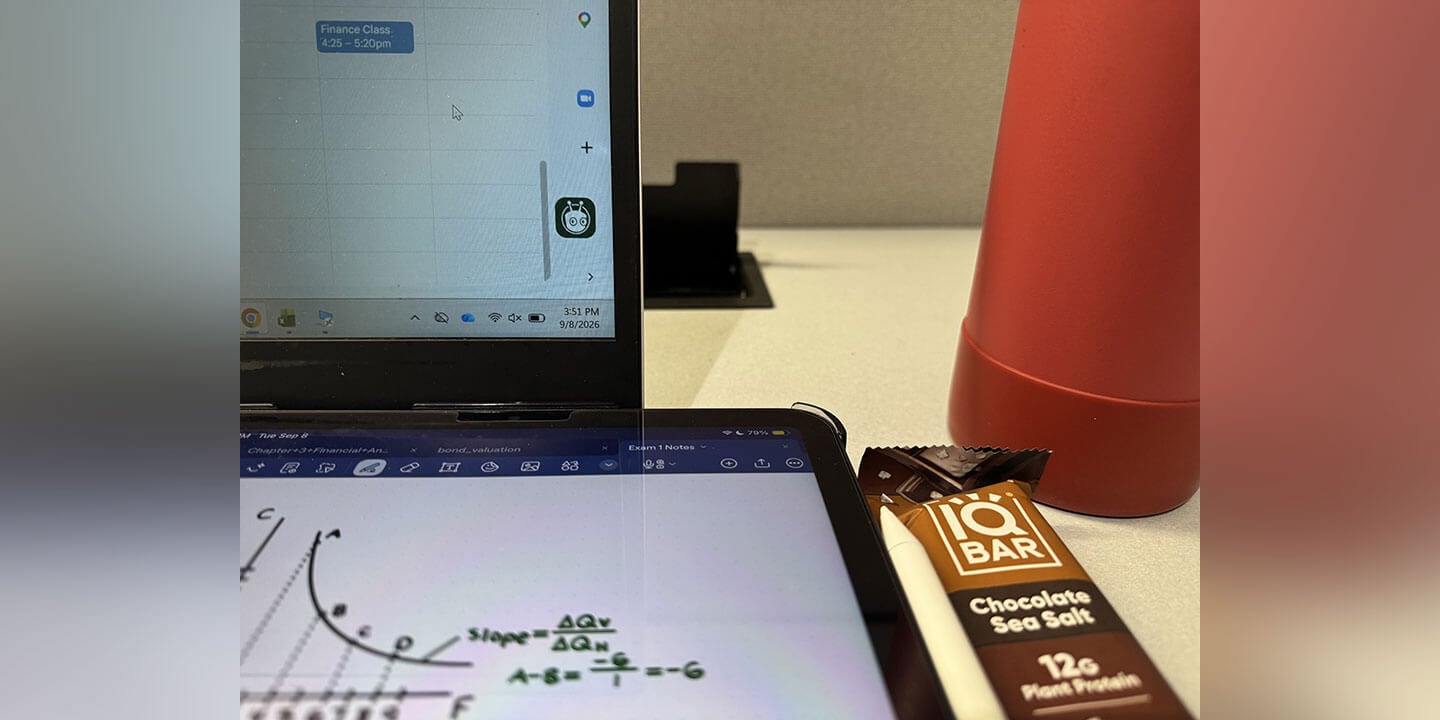
  • Image shows a desk with a computer screen with a schedule pulled up, an iPad with a graph showing, an energy bar, and a water bottle.

    How I Turn Small Gaps into Small Wins

    Sammy Chilet

    As a finance major, I have to say it: time is money. College students often focus on managing major blocks of time, but some of the most useful parts of my day are the thirty-to-sixty-minute gaps between my classes.

    I have these gaps almost every day, and because I usually have nowhere else to go, I spend them in the library or outside my next classroom. I used to fill that time by doomscrolling, talking with friends, or watching an episode of a show. Those activities were entertaining, but they did not help when my assignments began piling up.

    Start with a Plan

    I finally changed my routine after realizing how stressed I felt when several assignments were waiting for me at the end of the day. Thirty minutes may not seem like enough time to accomplish much, but it can make a difficult evening easier. Now, during the first two minutes of a break, I check my calendar and the spreadsheet where I track my assignments, identify the highest-priority task, and begin working on it.

    Chip Away at Assignments

    As a finance student, I often use this time to complete part of a homework assignment. Finance problems can be time-consuming, and starting early makes them feel more manageable.

    I may not finish the entire assignment between classes, but completing even a few problems means I have less work waiting for me later. Otherwise, I know I may regret wasting that gap when it is 10 p.m. and an assignment is due at 11:59 p.m.

    Prioritize Your Well-Being

    Not every gap needs to become an intense study session. Sometimes the most useful choice is to grab a protein bar, pretzel chips, a banana, or an apple. Eating something helps me avoid going into my next class distracted by hunger.

    Before an exam, I also avoid overwhelming myself with heavy studying. I might complete a few practice problems, especially ones similar to questions I previously answered incorrectly.

    Once I feel prepared, I stop, take a few deep breaths, and repeat words of affirmation on my way to the exam. In that situation, resetting is more helpful than trying to learn everything in the final few minutes.

    Overcome Your Biggest Obstacle

    My biggest obstacle is my phone. When friends are scrolling or talking, it is easy to follow their lead without noticing how quickly the gap disappears.

    Sometimes I break that cycle by powering off my phone completely. This might sound extreme, but I remind myself that I do not need to see who posted on Instagram or who texted me immediately. The notifications will still be there when I finish.

    Own the Moment

    An in-between hour is not about forcing yourself to work every second. It is about deciding what would help your future self most. Whether you start an assignment, check your calendar, eat a snack, prepare for an exam, or intentionally rest, one thoughtful decision can turn an empty gap into a meaningful win.

    Do you have a compelling story or student success tips you’d like to see published on the Pearson Students blog?  If you are a college student and interested in writing for us – click here to pitch your idea and get started! 
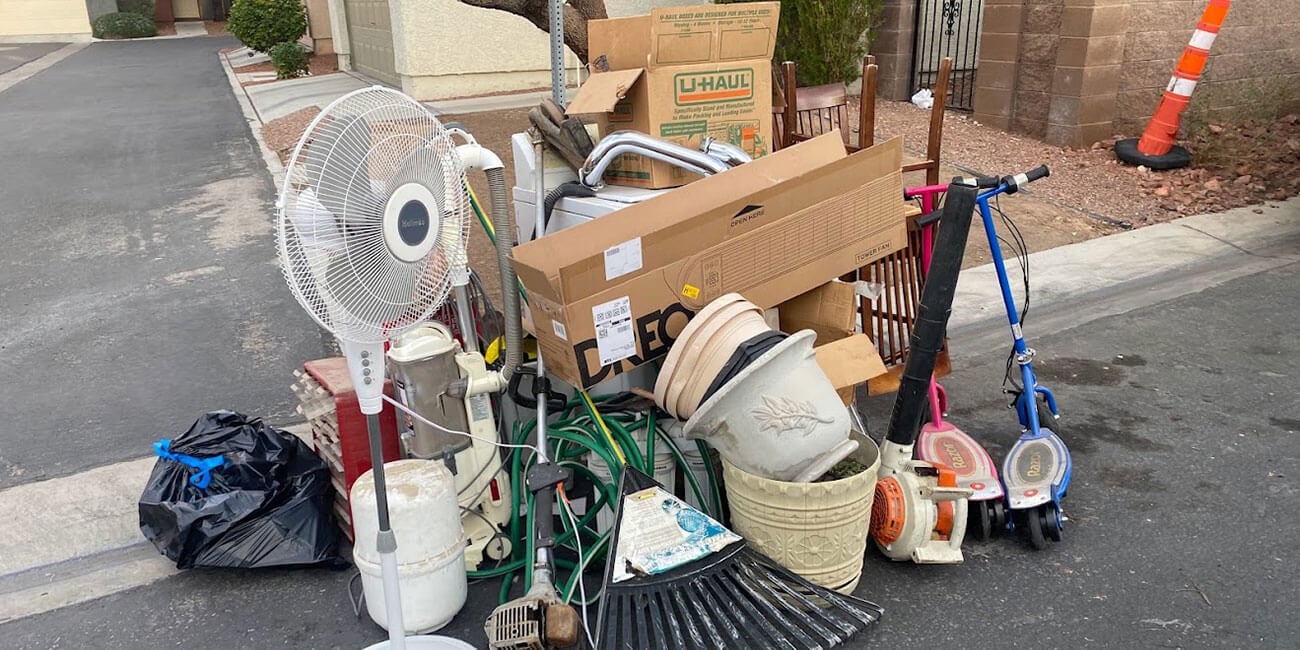
     

  • Image shows a pile of items left at a curb likely trash day for garbage pickup including boxes, a standing, a rake, a leaf blower, two toy scooters, and a trash bag among other items.

    Finding Free Stuff: A College Student’s Guide

    Alexis Ele

    Your college is a gold mine for free things. Believe it or not, I’ve gotten free guitars, scooters, furniture, and even a Roomba. Every time I share these stories, people tell me I’m lucky. The truth is, I’m not lucky; I’m courageous.

    Here are my tips for finding free things to take advantage of on your campus and during your college career.

    1. Capitalize on Move-Out Season

    College students often have a bunch of leftover items after the semester ends. Between people moving in, moving out, and moving away, there is a golden opportunity to take stuff off people’s hands. This can happen through dumpster diving or snooping around the dorms.

    It’s a win-win situation: they want to get rid of things they don’t need, and you want free things. I used this method during dorm move-outs and was able to snag a cowboy hat, tons of organizers, a new Snoopy bed sheet, and a vacuum. My friend even got a mini fridge!

    2. Attend Off-Campus Apartment Events

    One way I get tons of free food is by following the Instagram accounts of apartment complexes around my campus. Off-campus apartments often host free food events or have promotional events to get students to sign leases with them. Some will even offer gift cards if you take a tour of their property.

    Because of this, I went to a rooftop party hosted by a nearby apartment complex. They were giving out free food and holding hourly giveaways. One of these giveaways was for a Roomba. Although I initially came for the food, I ended up leaving with a Roomba as well.

    Take advantage of your college’s local apartment complexes. See if your campus even hosts an off-campus apartment fair.

    3. Shop Secondhand

    When all else fails, shop secondhand. Buying new ensures high-quality, long-lasting items, but sometimes you don’t need them for very long and don’t necessarily need them to be new. This is exactly when buying secondhand is helpful because you can often get items at a discounted price.

    Check out local marketplaces, thrift stores, and yard sales. I got my bass guitar, electric guitar, and amp through Facebook Marketplace. I also got a few computer accessories, including my monitor and webcam. Most items were only used a few times, but they worked as if they were new. Sometimes buying secondhand is all you need.

    Be careful of potential scammers, though; if a deal sounds too good to be true, it probably is. Make sure to verify the seller. Don’t give any personal information unless you’re sure it’s legitimate.

    4. My Top Tip: Just Ask

    Opportunities for free things don’t come if you never ask. Sometimes sellers are very willing to negotiate, and doing so can land you an even lower price on the items you want. Don’t be afraid to get your foot in the door and simply ask.

    Since starting college, I have been able to secure furniture, clothes, and even electronics to decorate my campus apartment, all at much lower prices. Keep an eye out for opportunities and don’t be afraid to ask around. A little courage goes a long way.

    Do you have a compelling story or student success tips you’d like to see published on the Pearson Students blog?  If you are a college student and interested in writing for us – click here to pitch your idea and get started! 
     

  • A pink planner pictured on a table with a pink mechanical pencil and a mint green pen lined up next to it.

    How to Never Miss a Deadline in College

    Olivia Kazak

    No matter what learning platform you use in college, it's easy to have the same fear: forgetting to turn in an assignment. While it may seem possible to remember everything at the beginning of the semester, it’s a lot harder than it seems.

    Between your school's website and the other applications where homework is posted, it's easy to get lost. I was constantly worried I would miss an assignment or an important deadline, but that was before I learned how to maximize my calendar!

    Find the Right Fit

    The first tip to making the most of your calendar is finding what apps or websites work best for you. For me, the apps I like to use most are Apple Calendar and Apple Reminders.

    What I like about them is that they are compatible with each other. This means that when I schedule a reminder, it shows up on my calendar, so I know I won’t miss anything.

    Some other apps that my friends use include Google Calendar and Notion. If you are someone who likes to have a physical schedule, I recommend a paper planner and a wall calendar.

    Color-Coding Your Calendar

    I love to color-code my calendar. I do this by creating a different calendar for each of my classes and extracurriculars.

    In most virtual calendars, there is an option to assign each calendar a color. I give each one a different color, so when I see it on the month view, I can tell what subject it's for. If you are using a physical calendar, you could try using highlighters or different colored pens.

    Study Your Syllabus

    My next piece of advice is to put every single thing from your syllabus onto your calendar. This is the easiest way to ensure that you will never miss a deadline.

    Your professors give you this wonderful document that outlines your entire semester. Use it to your advantage. Doing this as soon as the syllabus is published gives you a head start on a successful semester.

    Keep It Up to Date

    Things change, and deadlines can shift from what they were at the beginning of the year. Remember to regularly update your schedule, so you don’t make decisions based on outdated information. I check my school’s learning platform weekly, making sure to add or delete assignments as they come due.

    It’s also important to add things that aren’t just schoolwork, like clubs, work, or dinner with friends. Having these marked on your schedule gives you a clear view of your upcoming week and what you need to plan for.

    Plan for Future You

    Taking the time to set up your calendar may seem like one more task to manage, but it's the key to a less stressful semester. By finding the right tools for you, color-coding your schedule, and using your syllabus, you can trade that fear of missing a deadline for a sense of control.

    Remember, your calendar is yours. No matter how you set it up, it just needs to work for you!

    Do you have a compelling story or student success tips you’d like to see published on the Pearson Students blog?  If you are a college student and interested in writing for us – click here to pitch your idea and get started! 
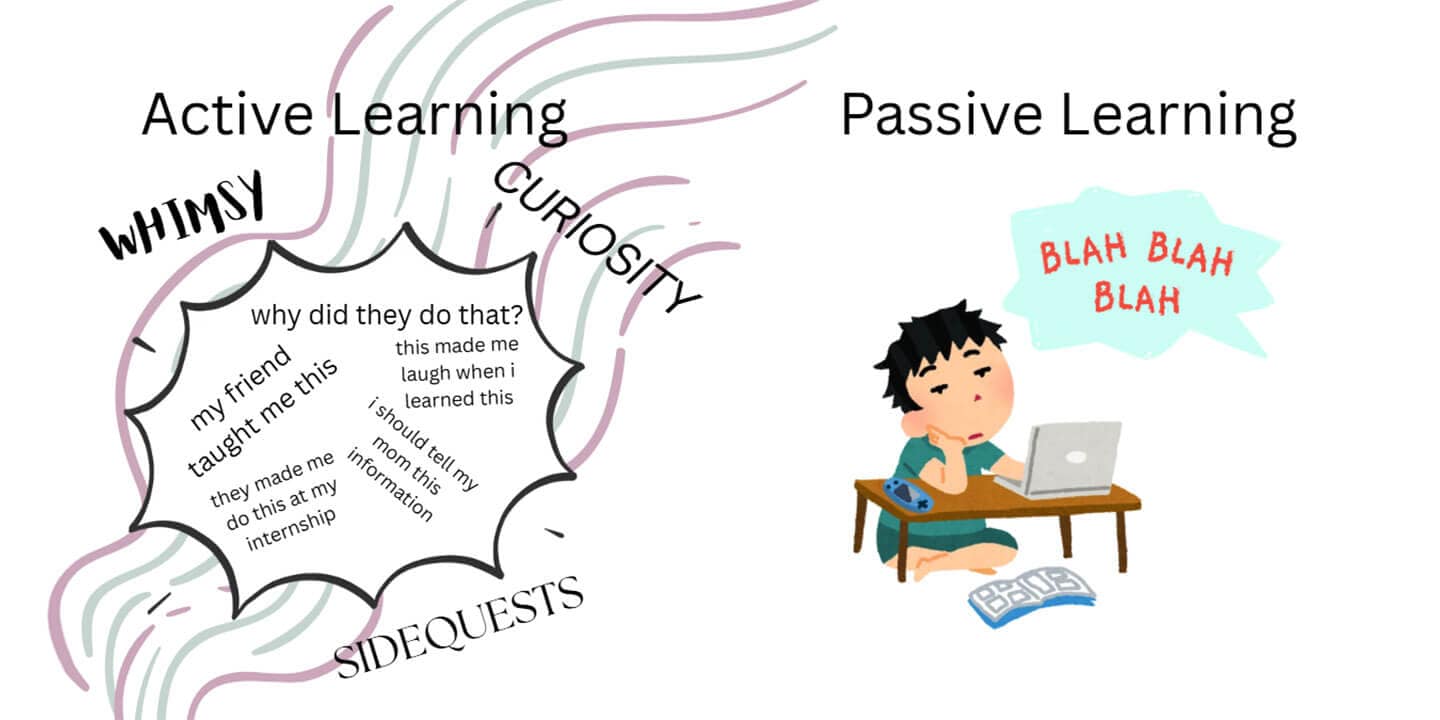
     

  • Graphic showing Active versus Passive Learning. Active Learning is characterized by words and phrases, and Passive Learning shows a bored cartoon boy sitting at a computer.

    The Power of Whimsy, Curiosity, and Side Quests

    Alexis Ele

    Many college students know that intrinsic motivation boosts productivity, but how does it work? And why is it so hard to have intrinsic motivation for classes when all we want to do is get the grade and pass?

    In this blog, I’ll discuss ways to revive our inner child’s excitement for learning. These methods can help transform that excitement into natural productivity. Behold: the power of whimsy, curiosity, and side quests!

    Whimsy vs. Curiosity

    What’s the difference between whimsy and curiosity? Many think of curiosity as figuring out the “why” of things. I like to think of whimsy, on the other hand, as figuring out the “why not?” of things.

    I’ve found that combining these two qualities makes for a fun day-to-day experience, even when I’m stuck on campus all day.

    Taking Side Quests

    You’ve probably heard the term “side quests” before. It’s pretty much as it sounds: missions you go on that stray from your “main quest,” or your typical routine.

    These side quests help me realize that my days are more than just wake up, school, and sleep. They are what motivate me to keep living life apart from academics.

    Harnessing the Power of Whimsy

    As I said, whimsy is my “why not.” It’s what gets me up and going for my side quests.

    Why shouldn’t I accompany my friend on their grocery shopping day? Why shouldn’t I go to the park and watch the sunset? Why shouldn’t I apply for this public speaking competition?

    Many times, you’ll find yourself asking why you should do certain things. Sometimes, it might also be helpful to ask yourself: why not?

    Engaging Your Curiosity

    At the heart of research and innovation is curiosity. Anything you’ve ever wondered has likely been pondered by someone else. They might have even spent their entire lives researching it.

    Curiosity also exists on a smaller scale. It can be as simple as wondering how our bodies react to certain bacteria or how to apply classical conditioning in real life. The more you wonder, the more you learn.

    How It All Connects

    Active learning involves directly engaging with problems, while passive learning, like listening to a lecture, may not have an immediate application. Active learning is often preferred because it helps the brain create and strengthen connections, which improves memory retention.

    According to neuroscientific research, this active engagement enhances synaptic plasticity, a key component of learning.1 This process allows you to engage directly with the material.

    It’s almost like being a little kid figuring out how the world works for the first time. This is where curiosity comes in, prompting you to ask the questions you need to find the right answer.

    Whimsy allows you to engage with the world on a deeper level, which can lead to new side quests. Once you've learned a subject in school, you will likely run into it in real life.

    For example, I had a full-circle moment with my information systems class. Because I chose to apply for an internship with a "why not?" attitude, I was able to apply my knowledge in a real-life opportunity, helping the company improve how they collected survey information.

    Final Thoughts

    These three values—whimsy, curiosity, and side quests—have carried me through my academic career and kept me from burning out. How much curiosity and whimsy are in your life?

    My final advice? Take more side quests!


    1 Janet M. Dubinsky and Arif A. Hamid, "The Neuroscience of Active Learning and Direct Instruction," Neuroscience and Biobehavioral Reviews 163 (August 2024): 105737, https://doi.org/10.1016/j.neubiorev.2024.105737.

    Do you have a compelling story or student success tips you’d like to see published on the Pearson Students blog?  If you are a college student and interested in writing for us – click here to pitch your idea and get started! 

     

  • Image shows a marathon race in progress with runners on the course and spectators lining both sides.

    A College Student's Guide to Marathon Training

    Kathleen List

    Becoming part of the small percentage of people who run a marathon is hard enough. Doing it in college is a completely different challenge.

    Squeezing in long runs before a packed day of classes and feeling hungry 24/7 can be difficult to manage, especially on top of a full course load, club meetings, and all the social opportunities college has to offer. However, with the right support system and unlimited dining hall access, college can be the best time for marathon training.

    Running 26.2 miles may seem daunting, but it was the highlight of my sophomore year. I could not have done it without these tips!

    1. Find a Training Partner or Join a Run Club

    I did all of my long runs with one of my best friends, which made twenty miles feel like nothing. We would spend hours debriefing our weeks and talking about our plans for the future.

    I also participated in my school's running club and did all of my shorter runs and workouts with them. Running with people not only helps the time fly; it is also a great bonding experience.

    2. Take Advantage of Your Dining Hall

    My school required students to be on the unlimited meal plan for at least two years. This was great for marathon training, as I was constantly hungry. I ate four full meals a day plus snacks, all compliments of my dining hall.

    The dining hall also had Rice Krispies Treats, which I always ate on my long runs for quick carbs and sugar. On my way out, I would always grab a couple of them, plus some bananas and oatmeal.

    3. Plan Runs Around Schoolwork

    Instead of letting my training plan rule my life, I made it fit into the life I already had.

    If I knew I would be swamped with studying on a Sunday, I would do my long runs on a Saturday. If I had a club meeting on Tuesday, I would save my longer workout for Wednesday. Marathon training should not take focus away from your other priorities.

    4. Find Running Routes That You Love

    I found a variety of routes that had different distances, elevations, and sights to see. In my opinion, running is one of the best ways to get to know a city. My runs took me to the Capitol, the outskirts of Maryland, the Potomac River, the Virginia suburbs, and even Ronald Reagan National Airport.

    Having a plethora of running options keeps things interesting and helps with motivation.

    5. Have Fun!

    I always tried to remember that no one was forcing me to run this marathon. It was completely my choice.

    So even when I felt awful on a training run or had a bad case of pre-race nerves, I grounded myself with the reminder that I was privileged to even be able to run, and especially to be able to run in my college city with all of my college friends.

    Running a marathon is an incredible opportunity that I cannot recommend highly enough, and college might just be an ideal time to do it. So lace up your shoes, take some Rice Krispies Treats from your dining hall, grab a buddy, and get out there! You will not regret it.

    Do you have a compelling story or student success tips you’d like to see published on the Pearson Students blog?  If you are a college student and interested in writing for us – click here to pitch your idea and get started! 
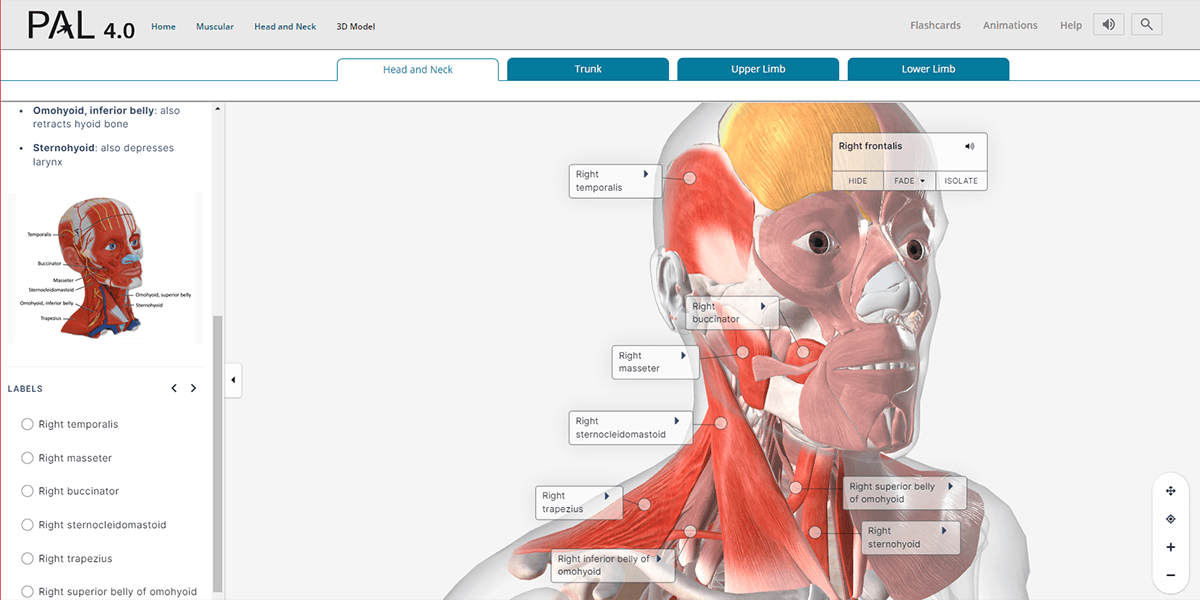
     

  • A screenshot of Pearson’s PAL 4.0 that shows a labeled diagram of the muscles of the human face.

    My Best PAL for Anatomy: Pearson’s Practice Anatomy Lab

    Alexis Ele

    Anyone who has ever taken Anatomy knows it can be a memorization-heavy course. This is especially true if the lab portion only occurs once a week, as it did for me. Preparing for practicals was a nightmare; we only had one minute per station to recall hundreds of terms and physiological concepts.

    Then I dug through the Pearson website that hosted our textbook and found my best buddy for the next two semesters: PAL.

    Meet PAL: Your Virtual Anatomy Lab

    Practice Anatomy Lab (PAL) 4.0 is a virtual study and practice tool, giving students 24/7 access to the most widely used lab specimens. These include human cadavers, anatomical models, histology slides, cats, fetal pigs, and dissections of sheep brains and cow eyes.

    My most-used feature was the anatomical and fully manipulable 3D models. They made it infinitely easier to see where certain anatomical structures were relative to each other.

    A Tool for Every Learning Style

    As a visual learner, I found that PAL was one of my best friends during my time in Anatomy. It can be yours, too, no matter what type of learner you are.

    PAL includes built-in audio pronunciations in addition to 3D animations, mobile-friendly flashcards, practice quizzes, and practice fill-in-the-blank lab practical questions. This means any type of learner—visual, auditory, reading, or writing—can use PAL to their advantage.

    Study Anytime, Anywhere

    While anatomy labs tend to meet once a week for a few hours, PAL is available to you 24/7 and is included with MasteringA&P. In addition to the manipulable 3D models, I found it convenient that I could access it and still have a similar experience away from the lab.

    It is also common practice for photography of certain cadavers to be prohibited, but PAL provides virtual cadavers that you can view at any time. Constantly refreshing my memory of models and cadavers was much more helpful than trying to recall them from a single lab session.

    Find What Works for You

    If you’re a student using Pearson materials for your anatomy class, I encourage you to explore the platform and discover what makes learning easier for you. While the 3D models were my key to success as a visual learner, PAL is packed with features designed to help every type of learner master the material.

    Do you have a compelling story or student success tips you’d like to see published on the Pearson Students blog?  If you are a college student and interested in writing for us – click here to pitch your idea and get started! 
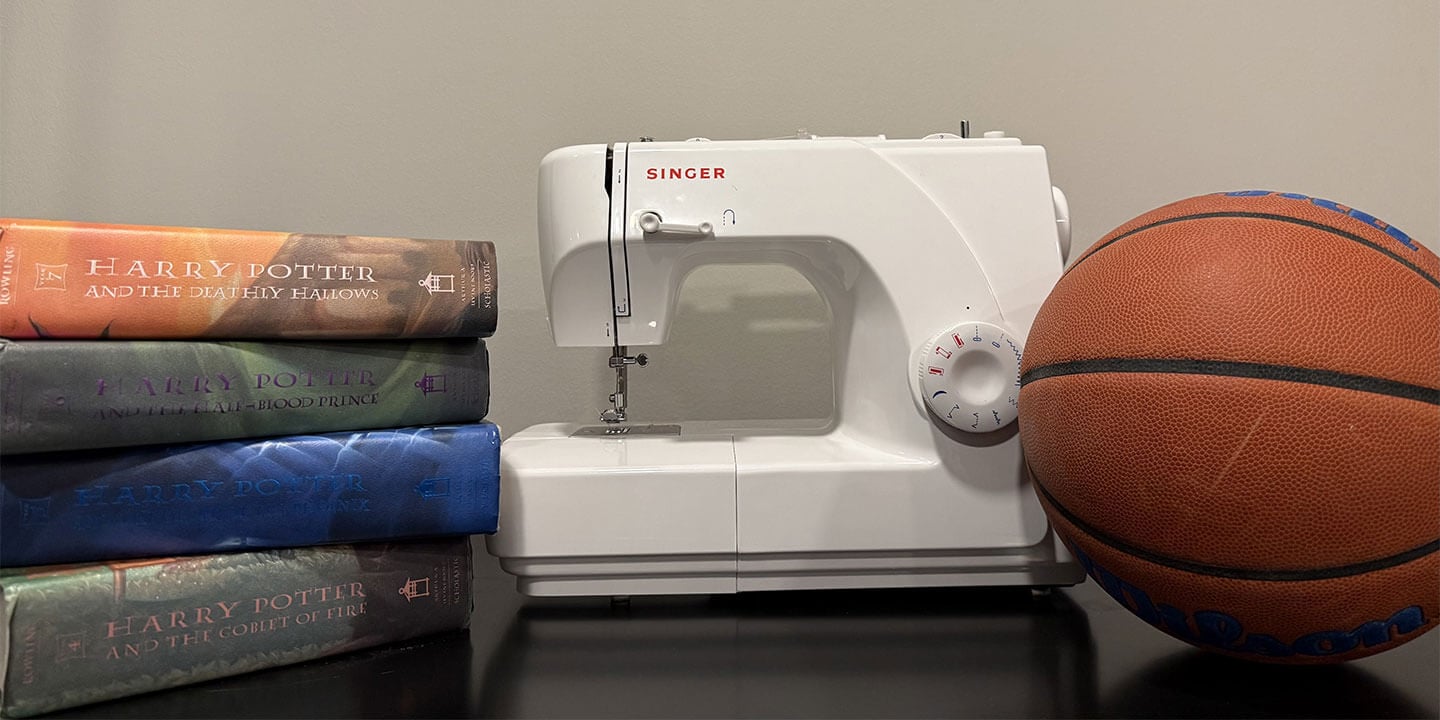
     

  • Image shows a stack of four Harry Potter books, a sewing machine and a basketball sitting on a table.

    A Student’s Guide to Keeping Your Hobbies in College

    Olivia Kazak

    Missing My Hobby

    Moving to college truly changes your life, and in my experience, it’s a pretty hectic change. I was in a new state, living in a dorm with someone I had met on Instagram, and managing a packed schedule with classes scattered all over campus. About a month in, with all the changes, I realized I had neglected something that made me happy: crafting.

    A Mindset Shift

    Crafting is my favorite hobby. When I realized I had lost that part of my life, I was disappointed but also understood why. With all my classes and new friends, I felt I didn't have time for my hobbies.

    Honestly, that wasn't the case! If I wanted to keep my hobbies in my life, I knew I needed to change how I thought about them and how they fit into my day-to-day routine.

    Allocate Time

    One way I brought crafting back into my college life was by treating it like a class. I was lucky enough to have a day of the week when my classes got out early. When I realized this, I marked a two-hour block on my calendar that day as my craft time.

    Placing that "class" on my calendar held me accountable. Every time I started to make plans, I knew that my crafting had its time, and I couldn't reschedule that special part of my life.

    Join a New Group

    Another thing I realized about college is that there is a club for everything. This means your hobby most likely has an entire club dedicated to it! I recommend finding those organizations and getting involved.

    This not only allows you to continue your hobby in college but also lets you meet many new people who already have at least one thing in common with you.

    I also remind myself that hobbies don't have to be done solo. Host a craft night with your roommates or ask people in your class to play basketball later that day.

    Start a movie club that meets in the dorm common room. Do your hobby and create a community around it!

    Enjoy the Little Moments

    My last piece of advice for continuing your hobby in college is to use the small moments of free time you have. Reading is another hobby of mine. I bring a book with me in case I get to class a little early. This may be difficult with some hobbies, but it's still time you can use for yourself.

    These small moments are also opportunities to build community. Use the five minutes after class to text your hobby group and ask them to meet up later that week.

    Most importantly, your hobby should be your happy place. Fit it into your life in a way that makes you the happiest!

    Do you have a compelling story or student success tips you’d like to see published on the Pearson Students blog?  If you are a college student and interested in writing for us – click here to pitch your idea and get started! 

     

  • A table full of party food including various snacks and festive cupcakes.

    Igniting Connection: Hosting Events in Your Dorm or Apartment

    Alexis Ele

    Friendship and connection are precious, especially when settling into college life. With good friends, even the most challenging things can feel possible.

    My first year of college was socially challenging: asking people to hang out, making friends, and introducing myself in different spaces. However, by my sophomore year, I had more friends than I could count with both hands.

    How did I do it? Instead of being a guest, I became the host. Below are my ideas for filling your evenings with friends and community, along with tips for hosting, what to expect, and what you might need to buy.

    Hosting Logistics

    Planning prevents mishaps and ensures everyone has a good time. Depending on the event, you may need to prepare food, decorate, and more.

    Here is a list of things to prepare:

    • Food: Grocery shopping, thawing ingredients, prepping, cooking, and plating.
    • Guests: Ask about dietary restrictions, know the parking options, and plan food based on your guest count.
    • Space: Buy decorations, get disposable plates, and designate a drop-off spot for guests' belongings.
    • Cleaning: Tidy the living room, kitchen, bathroom, and other guest spaces.

    A helpful tip: set the temperature cooler than usual. A room full of people heats up quickly, so use the AC or fans. Early arrivals often want to help, so don’t be afraid to delegate!

    Fun Event Ideas

    For my birthday, I wanted a unique activity to help my friends get along. A central activity gives guests something to look forward to and a reason to come.

    Here are some events I’ve hosted (or plan to host):

    • Wig-Snatching Party: Buy some wigs (or have everyone bring their own wig: BYOW) and create a tournament bracket. The name says it all: whoever snatches a wig first wins!
    • Arts & Crafts Night: Gather friends for a calm, quiet night of arts, crafts, or hobbies. It's a perfect creative outlet to unwind and stay motivated together.
    • Bring a Stranger: Ask friends to bring someone no one else knows to the party. It's a great way to meet new people and expand your circle.
    • Murder Mystery Party: Buy a murder mystery party kit and solve a fictional crime together. It’s perfect for team building.
    • Mafia Party: Host a real-life “Mafia” or “Among Us” party. It requires planning, but you can use smart devices for creative lighting and sound effects or simply download an app and play digitally together in the same space.

    Additional Tips

    • Have a dress code: People love a reason to dress up, and it makes for great photos!
    • Create a photo booth: A designated photo area makes for fun keepsakes. You can use a Polaroid camera (my preference) for an instant physical memento.
    • Start a shared playlist: A shared Spotify playlist lets everyone be the DJ.
    • Use disposable plates: Disposable cups, plates, and utensils make cleanup easier.

    The Joy of Hosting

    Hosting is work, but it creates rewarding memories—and isn't college all about making memories?

    Don’t just wait to be invited to things; host them yourself. You’ll be surprised how many new friends you’ll make and how much closer you’ll become to your current ones.

    Do you have a compelling story or student success tips you’d like to see published on the Pearson Students blog?  If you are a college student and interested in writing for us – click here to pitch your idea and get started! 
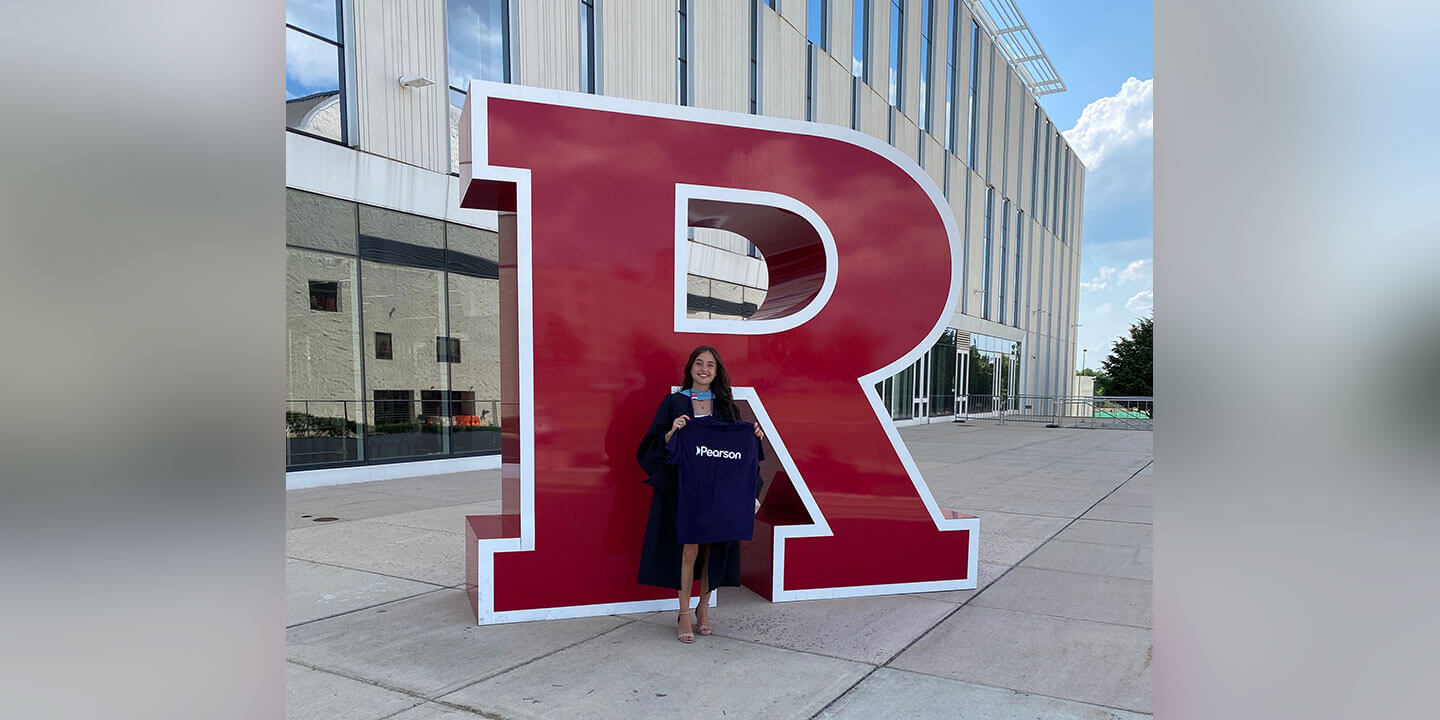
     

  • A graduate holding a purple Pearson shirt is standing in front of a large red sculpture of the letter R.

    My Four Years as a Pearson Campus Ambassador

    Madeline Beavis

    One of the best decisions I made in college was joining the Pearson Campus Ambassador Program. I wasn’t sure what to expect, but it seemed like an opportunity I couldn’t pass up. Little did I know that one application would completely transform my professional and personal development over the next four and a half years.

    Starting as a Campus Ambassador

    I started as a campus ambassador in the Northeast Region alongside about ten other students at schools in surrounding states. I participated in focus groups, completed product surveys, and joined regional challenges. I also collaborated virtually with more than 150 students nationwide and met the sales representative for Rutgers University, helping to connect her with professors on campus.

    The best part was that I could do it all on my own time. It truly felt like the best job ever. My Regional Coordinator supported all of us and was the perfect role model when I was just getting started.

    Growing into a Leader

    About a year into the program, I started to feel confident. I had mastered Teams and Outlook, found a rhythm with monthly projects, and built strong relationships with other PCAs, my managers, and my Regional Coordinator.

    Then, in March 2023, I received an invitation from the management team. They wanted me to step into the Northeast Regional Coordinator role when the current coordinator graduated. I was incredibly honored to be recognized as an emerging leader and said “yes” to an opportunity that would open the door to so many meaningful experiences.

    As a Regional Coordinator, I attended leadership summits in Austin (2023), Denver (2024), and virtually (2025). Each experience focused on professional development and improving the PCA program. They also gave me the chance to network with other leaders and collaborate with professionals across marketing and sales.

    Exploring through Micro-Internships

    I’ll admit I was hesitant at first to join micro-internships because I wasn’t sure I was “ready.” Pushing past that imposter syndrome was the right decision, as I completed four micro-internships between 2023 and 2026.

    These experiences gave me valuable insight into the fast-evolving world of AI, market research, and sales strategy. I went from exploring technology and its applications in education, to understanding consumers, to contributing to business strategy, with each role building meaningfully on the last.

    The Heart of the Program: Community

    While I look back on my professional growth with appreciation, the people are what I will miss most. The PCA program is truly a community. From Texas to Florida to California, I’ve built not just friendships but also a support system.

    The program brings together people from all walks of life who consistently uplift, challenge, and inspire one another. This connection lasts long after each project or summit ends.

    And of course, a team is only as great as its leaders. The management team (Debbie Miller, Delaney Henson, Dory Thornton, John Howdyshell, Margo McIlroy, and Mary Frances Weatherly) were my role models and mentors. They created an inclusive and genuinely joyful environment.

    It was the kind of place where you felt lucky to belong, not just obligated to participate. Their leadership made the experience inspiring, welcoming, and unforgettable. The Pearson Campus Ambassador Program is not just a program; it is a family. It was my greatest privilege to sit at the table.

    Do you have a compelling story or student success tips you’d like to see published on the Pearson Students blog?  If you are a college student and interested in writing for us – click here to pitch your idea and get started!