
Students blog

Explore the latest trends, tips, and experiences in college life in this blog written by fellow students.

Explore posts in other areas.

PreK-12Higher EducationProfessional

  • Image shows pretty pink and white clouds at sunset pictured over campus buildings.

    Calming the Exam Storm

    John Jung

    It may feel like only yesterday when you started the semester: the awkward class introductions, the confusing walks through the maze we call campus, and the overwhelming list of expectations in each syllabus. However, those days are over, and now a new threat looms over your life: exams.

    While exams can be nerve-wracking, you can take control by focusing on three steps: learning, clarifying, and reviewing. This guide will walk you through each step to help bring a little peace to the dark cloud of exams.

    Learn: A Little Prep Goes a Long Way

    When a professor lectures on complex concepts, it can be hard to absorb everything at once. So how can you truly learn the material?

    In my experience, the simplest strategy is to study in advance. You do not need to understand the concepts completely or read an entire textbook chapter before a long lecture. You just need enough scaffolding to organize the material in your mind.

    Simply reading a paragraph or two or skimming headings before class can help you know what to expect. Once you have a hazy idea of the core concepts, you can enter the classroom prepared to hear the wisdom your professor brings to the material.

    Clarify: Get Help from Your Professor

    Listening with prior knowledge is a great start, but it doesn’t solve college’s next problem: clarity. To improve the clarity of the lecture, write down whatever you don't fully understand while listening, whether it's a concept, a vocabulary term, or an equation.

    Once the lecture ends, you can go to the professor and ask them directly for clarification. If you don’t have the courage or time for a face-to-face, just type out an email.

    Explain what you already know and then ask for help with the part you're stuck on. This approach demonstrates your effort and makes it easier for your professor to give you a targeted explanation.

    Review: The Final Fight

    Lastly, we have the final fight against the storm: the review. But how do you review properly?

    Psychology warns of a concept called the "illusion of competence." It suggests that simply rereading course materials can make us feel like we know the information, even when we don't. A more effective strategy is retrieval practice, or active recall, which helps build stronger retention.

    There are multiple methods to practice active recall. Most people suggest flashcards, but they've never worked for me. What I do instead is find practice problems and test my recall there.

    Finding practice problems is easier than you may think. You can ask your professor for old exams, use an AI to generate questions, or even find them in your textbook’s homework section.

    Your Plan for the Storm

    Exams don't have to feel like a natural disaster. By preparing before class, asking for clarity, and using active recall to review, you will build a solid foundation.

    These steps are your guide through the storm. No matter which strategies you choose, using them consistently will help you walk into that exam with confidence.

    Do you have a compelling story or student success tips you’d like to see published on the Pearson Students blog?  If you are a college student and interested in writing for us – click here to pitch your idea and get started! 

     

  • Image shows a group of five young men crossing the street in a marked crosswalk. They are dressed casually in t-shirts, shorts and athletic pants.

    How to Find Your People in College

    Jose Garcia

    Starting college is a major transition. Suddenly, you’re surrounded by thousands of new faces, opportunities, and more independence than you’ve ever had before.

    Although this is exciting, it can also be overwhelming. With so many people around, each with different goals, interests, and values, it may feel hard to fit in. One of the best ways to overcome this feeling is by finding a community of people who share your passions and goals.

    My First Steps

    When I first started college as a finance major, I knew I wanted to meet other students interested in business and finance. I just wasn’t sure where to begin. Like many first-year students, I was in a completely new world and was looking for ways to find my group.

    I decided to attend a meeting for my university’s Investment Club while also rushing a fraternity. Through the Investment Club’s meetings, discussions, and social events, I met a group of people with the same interests. They motivated me to stay more disciplined and set clearer goals.

    Rushing gave me a different but complementary kind of growth. I learned teamwork through rush events and figured out how to balance my social life and academics.

    These organizations exposed me to new ideas and perspectives while helping me develop skills that aren’t always taught in the classroom. Furthermore, they have given me a group of people who are motivated to learn and grow together.

    Broaden Your Search

    Being around students with interests similar to mine has helped me stay engaged and continue my college career in the best way possible. I’ve also learned that finding a community isn’t just about finding one specific club. Some of my top college connections came from attending campus events, talking to people in class, and saying yes to new opportunities.

    I spent my free time at campus events, career fairs, and playing basketball at the Student Recreation Center. Each experience introduced me to people from diverse backgrounds and with varied interests, which often led to friendships, mentorships, and connections that extended beyond the classroom. I quickly realized that finding your people isn’t about finding the perfect organization; it’s about being willing to show up and get involved.

    The Benefits of Community

    The benefits of surrounding yourself with like-minded people extend far beyond making friends. A community of motivated and supportive people helps you stay accountable, find new interests, and overcome challenges.

    College is demanding, and having a group of people who understand your experiences can make a huge difference. The relationships you build can become some of the most valuable parts of your college experience.

    It’s a Journey

    It’s important to remember that finding your community doesn’t usually happen right away. You might have to attend several events, try different organizations, or step outside your comfort zone before you discover the right fit.

    Every new experience teaches you something about yourself and helps you build connections along the way. Before you know it, that big, overwhelming campus will start to feel like home.

    Do you have a compelling story or student success tips you’d like to see published on the Pearson Students blog?  If you are a college student and interested in writing for us – click here to pitch your idea and get started! 

     

  • Image shows an old European town street filled with hotels and hostels.

    Creating a Home Away from Home During Your Semester Abroad

    Kathleen List

    Studying abroad can be the highlight of one's college experience. However, feelings of homesickness and discombobulation are often overlooked. Adjusting to a new country, a new language, a new time zone, and new courses can be overwhelming.

    A semester abroad is designed to push students out of their comfort zones and help them become more independent. It also challenges you to maintain good grades and a social life in a foreign country. After my first month studying abroad in Florence, Italy, I’ve compiled a list of things I’ve done to combat any negative feelings and make Florence feel like a home away from home.

    Stay True to Your Hobbies

    At home or at school, I love to run—it’s the activity that makes me feel most like myself. Thus, my first priority after arriving in Florence was to find the best running routes and incorporate running into my daily routine after the jet lag wore off.

    I also made sure to leave room in my suitcase for a couple of books and my camera. Reading always brings me a sense of calm, and the books have come in handy on train and bus rides during weekend trips. I also love photography, and the photos I have taken in Italy have been out of this world.

    Prioritize Calling Home

    My friends and family are all in time zones that are six to nine hours behind mine. This means that, occasionally, I sacrifice some sleep for late-night calls home.

    Updating my loved ones on my adventures while hearing what is going on in their lives makes me feel more connected to home. It is always worth losing a couple of hours of sleep.

    Get Out and Explore

    It’s super easy to stay inside between classes or on weekends, especially because my dorm has a TV and a queen-size bed. However, I have found that, without a doubt, I always feel much better if I spend my free time exploring Florence instead of hiding in my room. The more you get to know your city abroad, the more it will feel like home and the more you will come to love it.

    Make Friends in Your Program

    The beginning of a semester abroad can feel like your first year of college all over again. Everyone is in a new environment and clamoring to meet new people. I made sure to stay patient, stay open, and say yes to every invitation to go somewhere.

    Studying abroad is a fantastic opportunity to create new friendships that can last when you are back on campus. Plan trips with them, go to dinner with them, and have fun!

    Remember Why You Chose to Go

    Do not lose sight of why you chose to do a semester abroad. For me, I wanted to take the opportunity to get to know a completely new place and learn all that I can about it.

    I have gone to museums, dined at family-owned restaurants, and played tourist whenever I could. And, of course, I have not forgotten about my coursework… because, after all, it is study abroad.

    A Final Reminder

    Remember that it is okay to struggle while adjusting to life abroad.

    Stay true to yourself and the things that make you happy. Live life to the fullest because studying abroad is truly an amazing opportunity.

    Do you have a compelling story or student success tips you’d like to see published on the Pearson Students blog?  If you are a college student and interested in writing for us – click here to pitch your idea and get started! 
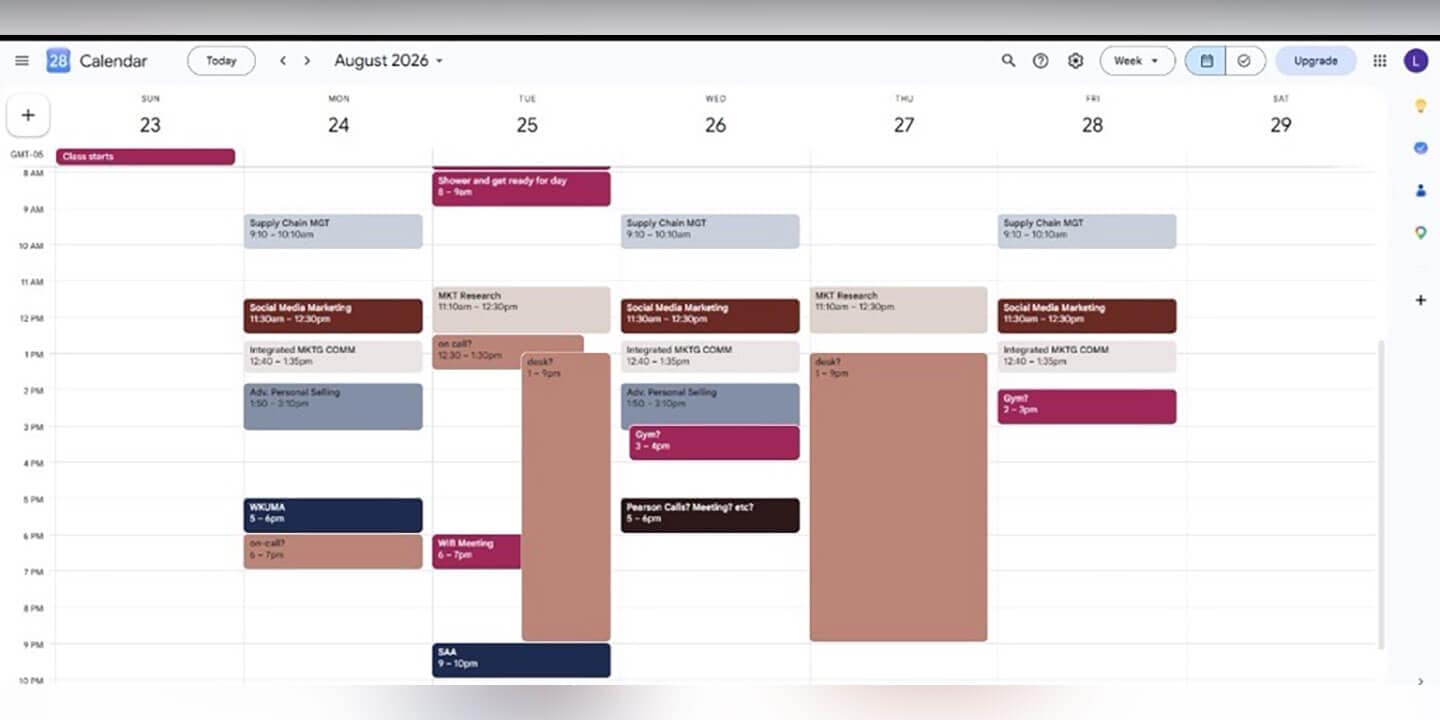
     

  • Image shows a screenshot of a week-long college class schedule with each class listed in a different colored time block.

    How to Beat the Senior Year Scaries

    Lyndsi Marcum

    When you step into college as a first-year student, everything is new. Over your four years, you have time to gain lived experiences and grow into a semi-adult. When you step into your senior year, you are a seasoned college student.

    However, I was surprised to find that, for me, thinking about senior year was more terrifying than my first year.

    As a senior, you’re taking your last undergraduate classes and interviewing for full-time positions. You're moving away from friendships you developed, and reality starts to set in. I get it; it's scary and it can make your chest feel tighter.

    Surviving your senior year starts with strategy and planning. How you plan your senior year truly affects how you feel when you walk across that stage. My plan involved three key steps: learning to breathe, creating a realistic timeline and budget, and finally, making time to enjoy the experience.

    Just Breathe

    When I got settled at the end of my first week of classes, I realized I was extremely overwhelmed. Rightfully so; I work three jobs and am involved in more than five organizations on campus.

    I had to take a step back and relax. I did that with focused breathing to calm my nervous system.

    One breathing technique is to inhale for four seconds and then exhale for eight seconds. I did that until my heart slowed. Breathing techniques are effective, but so is my planner.

    Plan Your Time

    My planner is my lifeline. It helps me through the days that start at 7 a.m. and don’t end until 10 p.m. By breathing and planning, I made senior year less stressful.

    In my planner, I meticulously color-code my schedule: classes, my three jobs, my organizations, remote meetings, and even the gym. While this level of detail might seem extreme, it’s what works for me.

    On the flip side, I knew I needed to be realistic, as there are only twenty-four hours in a day. By being realistic, I build break times into my day to allow for unexpected events. When you know what you’re doing throughout the day, it lessens the stress.

    Plan Your Budget

    Now, let’s talk budgeting. As a first-generation college student, I find it hard to maintain financial stability.

    My biggest tip is to hold off on buying something you want until after the urge passes; don’t make impulse purchases. Second, track what you spend and how much you save.

    If withdrawing cash helps you save, do that. If cutting up your credit card saves you from future debt, consider it a necessary step. The key is to do what works for you.

    Don't Forget to Enjoy It

    Lastly, it’s your senior year. You are so close to walking across that stage, so enjoy it. You deserve to have fun!

    Remember, it’s all about balance. Spend time with your friends, try new foods, and speak to people who have been in your classes for the last three years.

    For some of you, this will be your very last time in college, so embrace the chaos and enjoy your senior year to the fullest!

    Do you have a compelling story or student success tips you’d like to see published on the Pearson Students blog?  If you are a college student and interested in writing for us – click here to pitch your idea and get started! 
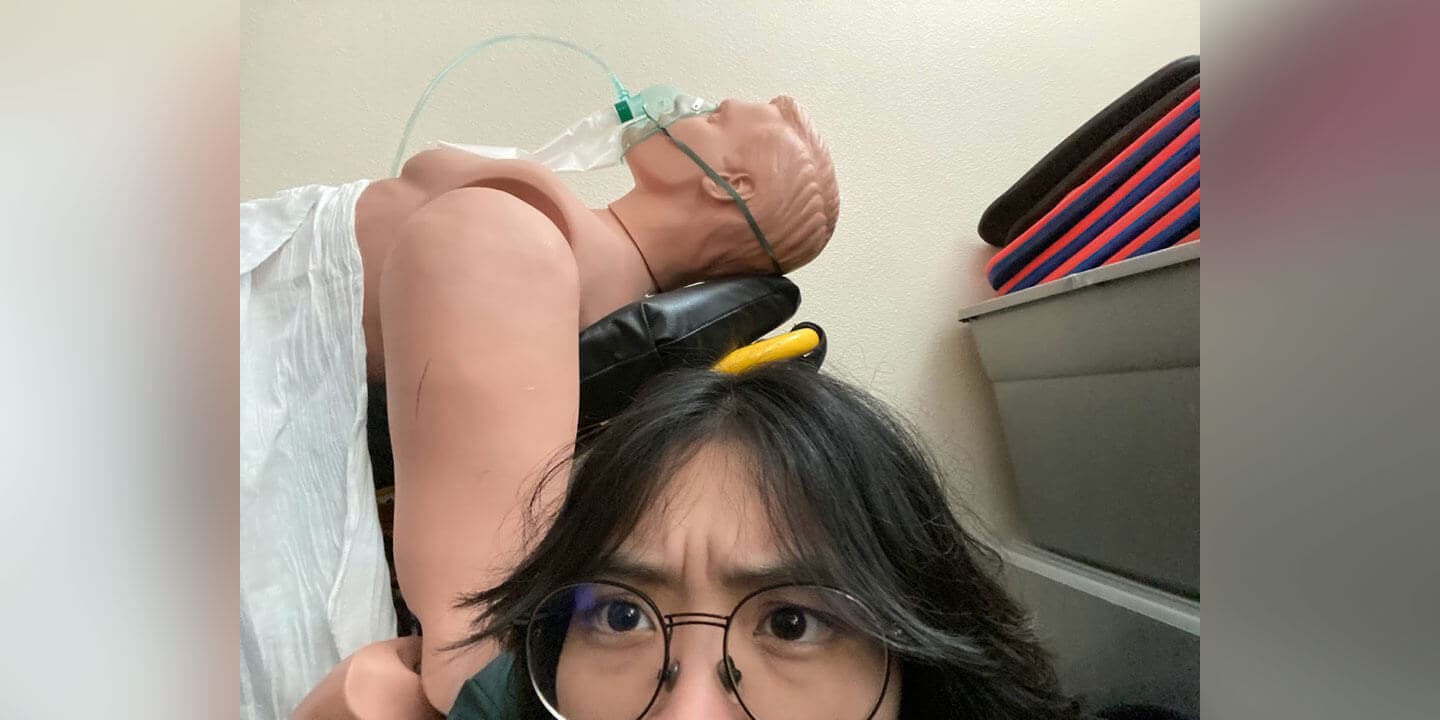
     

  • Image shows a medical mannequin in front of a wide-eyed student.

    The Anatomy and Physiology Grind Guide for Pre-Nursing Students

    Alexis Ele

    I recently finished Anatomy and Physiology (A&P) II, the hardest semester of my pre-nursing journey, during which I also juggled pathophysiology and my psychology major.

    Even as a student used to juggling multiple commitments, I found myself on the borderline between grades for the first time. I relied on my professor's generous rounding to get me through the semester.

    Based on this experience, here are my best tips to help you get through the A&P slump.

    Spaced Repetition

    A&P involves a lot of memorization, and studying the day before often isn’t enough. If you’re working toward a healthcare career, A&P contains information you need to recall easily. For the benefit of my present and future self, I learned to space my studying for long-term retention.

    This was especially helpful for Anatomy Lab. I had one week to memorize 100 to 200 terms, and I didn’t want to cram the day before. Spaced repetition is perfect for anything you need to strictly memorize. The more often you can actively recall information, the more it “compounds” over time.

    By the time my Anatomy Lab test came around, I could recall any part of the body. The catch is that you have to commit to this consistently; daily is best, even if it’s just a little. Though it sounds tedious, you’ll thank yourself later.

    Interleaving Your Classes

    One of the best pieces of advice I’ve received for studying A&P is to stop studying it! This might make you think, “What?” That’s exactly what I thought when I learned about this technique, termed “interleaving.” You might have felt fatigued studying just one subject for hours, which is why you shouldn’t do it.

    Instead, try jumping between subjects rather than hyperfocusing on one. The benefit is that you can prevent mental fatigue from studying one subject for too long. This also provides the opportunity to draw connections between subjects, since you’re forced to differentiate each one.

    This method is also reminiscent of spaced repetition, but with subjects rather than timing. Instead of focusing on one subject for one day, you’re able to cover a little of each subject each day, which is helpful for long-term retention.

    Using the Resources That Work for You

    Imagine a 3D model that lets you see how and where the different organ systems relate to one another. There’s a good chance one exists! My A&P class used textbooks provided by Pearson.

    Pearson’s study tools included many programs, but the most beneficial to me was their Practice Anatomy Lab (PAL). PAL provided a 3D model of all the anatomy I needed: digestive, reproductive, urinary, and more systems. It also provided photos of cadavers I wasn’t able to see during my once-a-week lab, which was helpful for reinforcing my learning.

    I am a visual learner, so I benefited from seeing models and manipulating spatial relationships. I learned best when I could rotate a human body, recognize that the median cubital vein looked like a “cube,” and then move on to another body part. Bonus tip: Knowing medical terminology can also be very helpful!

    What Mattered Most

    Even though A&P was my toughest subject, I’m glad I learned effective study techniques to get over the slump. If you’re a pre-nursing student, remember to use research-backed study techniques. Also, remember to care for yourself throughout this long, rewarding journey to becoming a nurse!

    Do you have a compelling story or student success tips you’d like to see published on the Pearson Students blog?  If you are a college student and interested in writing for us – click here to pitch your idea and get started! 

     

  • Selfie of a winking and smiling person wearing a light blue polo and lanyard.

    How to Land a Sweet Summer Internship

    Nia Hajdukiewicz

    Would you like a sweet summer internship that is more than just something to add to your résumé? What if it could help you discover what you’re capable of, help you build lifelong connections, and give you a taste of the career you’ve been working toward? That’s exactly what I found during my summer internship with Hershey Entertainment and Resorts.

    Importantly, landing the opportunity didn’t happen through luck! It took preparation, persistence, and knowing how to make myself stand out.

    Whether you’re dreaming of working for a global brand or looking for an opportunity closer to home, your ideal internship journey starts long before your first day. Here’s how to make your next internship application process a little sweeter.

    Start Your Search Early

    To stand out and make a good first impression, apply early to the internships you hope to join. If possible, start your search during your fall semester, so you can stay up to date on openings and timelines for specific roles. Pay attention to application opening dates, as most companies hire on a rolling basis.

    Need guidance before the selection process begins? Reach out to the company's recruiters for advice, program details, and more. This helps you stand out and makes your name recognizable when the selection process begins.

    The best way to start your research is by checking your school’s job board and searching on websites like Handshake and LinkedIn. By staying ahead of the game, you’ll learn about more opportunities and have more options for where you could intern.

    Find the Right Opportunity

    Don’t be afraid to think outside the box. Your ideal internship might not include specific keywords like finance or marketing in the title, but it might still be structured to help you develop those skills! The best way to find the right fit is to read the details of the day-to-day responsibilities.

    Don’t be afraid to look beyond big-name companies. Smaller companies can provide just as much hands-on experience, sometimes with even more opportunities to make an impact. They may even extend return offers.

    Finally, investigate turning your interests into opportunities! For me, I love traveling, hospitality, theme parks, and trying new foods. I was able to combine those passions into something I got to do every day with The Hershey Company. By working on something I was passionate about, I was able to give my all and be excited to show up to work every day.

    After You Interview

    Follow up and don’t be afraid to do so. A thoughtful thank-you email can help you stay on someone’s radar and keep your name in the hiring conversation.

    No matter how much you want a specific internship, keep applying to others while you’re waiting for a decision. It’s best to pursue multiple opportunities, so you still have a backup if you don’t get the one you were hoping for. You can also use another offer to negotiate with your top choice.

    Don’t let rejection define you! Not every opportunity is for you, and that’s okay. A “no” can be just as beneficial for understanding what to improve next time. Keep persevering and building your skills.

    Final Thoughts for Sweet Success

    Your internship journey won’t always be a straight path, and that’s okay! Start early, stay persistent, and be open to unexpected opportunities. Every application, conversation, and experience is another step toward discovering your path and landing a sweet summer internship!

    Do you have a compelling story or student success tips you’d like to see published on the Pearson Students blog?  If you are a college student and interested in writing for us – click here to pitch your idea and get started! 

     

  • Image shows a large stone Gothic-style church on a college campus in the fall.  A low stone wall, black fence, and a walkway are pictured in front of the church.

    Struggle Isn't Failure: Adapting to College Life

    Joslyn Ramirez

    When I started college, I thought a successful student had everything figured out. This meant staying organized, always earning good grades, and adjusting to the new college environment smoothly.

    After all, I had spent years developing study habits and social skills that worked for me. Why would college be any different? My first year answered that question.

    Resetting My Expectations

    As a nursing student, I entered a demanding academic environment. I was also learning to navigate a new campus, meet new people, manage my own schedule, and live away from home. I realized that many of the habits that had worked before college did not automatically translate into success at the university level.

    Figuring that out was the most frustrating part. By the end, I learned my most important lesson: struggling to adjust does not mean you are failing. Sometimes, it means you just need to adapt.

    Rethinking My Time Management

    Even though I was confident in my time management, college gave that skill an entirely new meaning. There was always a new assignment, exam, meeting, or responsibility waiting. I learned to plan ahead rather than only focusing on what was due the next day.

    Breaking larger assignments into smaller tasks and planning my weeks ahead of time made everything feel more manageable. I also had to remind myself that being productive did not mean filling every hour of my day. Giving myself realistic goals and being self-aware made it easier to stay consistent without feeling behind.

    Building a Support System

    I used to think that asking for help meant I should have tried harder on my own. I saw it as a last resort.

    Professors, classmates, advisors, and campus resources became important to my success. Going to office hours allowed me to ask questions after I sat with a topic. It also helped me become more comfortable with my professors beyond the classroom.

    Forming study groups with my classmates reminded me that I was not the only person struggling with a concept or stressed about an upcoming exam. My perspective shifted to seeing the strength in recognizing when I needed support and taking the initiative to seek it.

    Updating My Study Habits

    One of the hardest things to learn was that studying longer did not mean studying better. When a method was not showing the results I wanted, I had to stop repeating it just because it was familiar.

    I visited my nursing advisors, who encouraged me to experiment with different approaches. This depended on the course and where I noticed myself repeating mistakes. These included practice questions, active recall, reviewing material in smaller sections, and forming study groups.

    By the end of the year, I had learned that effective studying requires understanding how you learn, not defining yourself by the hours you spend studying.

    Making Myself a Priority

    My biggest realization at the end of my first year was recognizing that before I am a student, I am a person. Academics are important, but so are eating, sleeping, spending time with friends, calling family, and occasionally doing nothing.

    The first year of college is definitely a canon event. It’s exciting, overwhelming, humbling, and transformative all at once. You may not be the same student you were when you first arrived. That is the point.

    Redefining Success

    Success in college is not about figuring everything out from day one. Success can be learning a new study method and seeing positive results. It can be walking into office hours to form a connection with a professor, creating a schedule you enjoy, or just making it past a difficult week.

    My first year in college taught me that growth isn't a destination but a process. It begins when you accept that old habits no longer work, and it compounds each time you give yourself the chance to discover what does. That is what success in college really looks like.

    Do you have a compelling story or student success tips you’d like to see published on the Pearson Students blog?  If you are a college student and interested in writing for us – click here to pitch your idea and get started! 

     

  • The photo shows a student inside a University Writing & Speaking Center. A display behind them promotes support for résumés, personal statements, research, brainstorming, and English conversation practice.

    How to Get the Most Out of Your University's Writing Center

    Alexis Ele

    As an English Consultant at my university's Writing and Speaking Center, I've noticed something: students don’t utilize us enough!

    I’ve helped dozens of students with their class essays, whether it’s planning them or editing them in the finest detail. I’ve also had students come in to stay accountable while they work or to ask for my perspective on the personal stories they’ve written. I enjoy these appointments and love building a schedule of regulars.

    This makes me wonder: why don’t more students use this resource? Here are some ways you can get your tuition’s worth and use your university’s Writing and Speaking Center.

    Accountability Partner

    Surprisingly, I’ve had quite a few students come in simply to get some work done. This is a technique called “body doubling,” also known as working alongside someone else to stay focused and accountable.

    If you know anyone who might get you a little too distracted, or you just need a surefire way to sit down and get your work done, my Writing and Speaking Center is a safe space to do so! You can ask the consultant questions at any point, which makes them an even better accountability partner.

    Brainstorming

    It’s a common misconception that students need to come into our center with a full plan or draft for their essays. This couldn’t be further from the truth. Many of my university’s consultants are trained to help students brainstorm, even without anything written on the page.

    The very ideas for the blogs I write for Pearson go through a consultant before anything is written. Sometimes, all you need is someone to bounce ideas off!

    Scholarship and Application Essays

    Scholarship and application essays are common appointments in our university’s Writing and Speaking Center, and it’s no surprise why. Many scholarships are reviewed by an audience that will make judgments about your character, values, and alignment with their program.

    Having a fresh set of eyes on your essay provides unbiased, objective feedback from someone you don’t know. Many of my scholarship applications went through our center so I could understand the first impression my essays made. After making the recommended edits to perfect my applications, I’ve never been disappointed!

    Lab Reports

    Lab reports are a little less common, but they really should be more common. When I wrote my first microbiology lab report, I was unfamiliar with the type of language that many lab reports expect.

    Given my preference for eloquent, sensory, and detailed language, I was taken aback by how objective and straightforward my lab report had to be. I immediately went to my university’s Writing and Speaking Center to learn about the genre expectations for a lab report, and I eventually received a good grade on that paper.

    Interview Practice

    Last but not least, our university’s writing center also often helps students practice for interviews. If your university’s career studio is full, you might be able to rely on your Writing and Speaking Center.

    In addition to writing, these consultants are also trained in speaking, such as with presentations and speeches; interviews fall under the “speaking” umbrella. As with scholarship applications, consultants can give you feedback on your first impression, which may be important to a future employer.

    Use Your University’s Resources

    Haven't used your university's Writing and Speaking Center yet? I hope this article has shown you the unique ways you can use it. Get your tuition money’s worth, and use your student centers!

    Do you have a compelling story or student success tips you’d like to see published on the Pearson Students blog?  If you are a college student and interested in writing for us – click here to pitch your idea and get started! 

     

  • The graphic shows the words The Power of Networking with Professors with a graduation cap, two people, two hands shaking, and the words Building Connections, Creating Opportunities.

    The Power of Networking with Professors

    Kohle Nash

    When most college students hear the word "networking," they likely think of career fairs, LinkedIn, or shaking hands at professional events. Networking can feel awkward or forced, especially when you're still figuring out what to do after college. However, one of the easiest places to start networking is right on campus with your professors.

    As college students, we spend a lot of time around our professors, but it’s easy to only think of them as the person teaching the class. Professors are people with their own careers, experiences, and connections. Taking the time to get to know them can be extremely helpful, both during college and after graduation.

    How to Start the Conversation

    One of the simplest ways to start is by talking to your professors outside of class. This could mean going to office hours, staying after class to ask a question, or even sending them an email. You don't always need a big reason to reach out; maybe you're interested in their career path or want to learn more about an industry.

    Starting a simple conversation can eventually turn into a meaningful professional relationship.

    Unlock Opportunities and Gain Insight

    For example, if you're a marketing student and your professor has worked with different companies, they may be able to give you advice about internships or careers. They might even know someone who is looking to hire an intern or entry-level employee. You never know what opportunities can come from simply making yourself known and showing that you're interested.

    Another major benefit of building relationships with professors is having someone who can give you honest advice. College can be confusing. There are times when students have no idea what they want to do after graduation or whether they are making the right decisions. A professor who knows you and understands your interests can provide a different perspective and help you recognize strengths you didn't realize you had.

    Secure Strong Recommendations

    When you apply for an internship, job, scholarship, or graduate program, you'll likely need references. Having someone who can speak positively about your work can make a big difference. However, it's much easier for a professor to write a meaningful recommendation if they actually know you.

    If you only show up to class, complete your assignments, and leave, your professor won't know you well. They may not have much to say about you beyond your grade.

    Build a Genuine Relationship

    It's also important to remember that networking is not about constantly asking professors for favors. The goal is to build a genuine relationship. Be respectful of their time, ask thoughtful questions, and show appreciation when they help you.

    If a professor gives you advice or connects you with someone, follow up and let them know what happened. That small step can go a long way.

    Recognize Your Untapped Network

    At the end of the day, some of the most valuable connections you make in college may be the people you see every week. Your professors can be more than just the people who grade your papers and give you exams. They can become mentors, references, and connections that help you take the next step in your career.

    So, the next time you're sitting in class thinking about what comes after college, stay for a few extra minutes to talk to your professor. You never know where that one conversation could lead.

    Do you have a compelling story or student success tips you’d like to see published on the Pearson Students blog?  If you are a college student and interested in writing for us – click here to pitch your idea and get started!