Students blog

Explore the latest trends, tips, and experiences in college life in this blog written by fellow students.

Explore posts in other areas.

PreK-12Higher EducationProfessional

  • Image shows a marathon race in progress with runners on the course and spectators lining both sides.

    A College Student's Guide to Marathon Training

    Kathleen List

    Becoming part of the small percentage of people who run a marathon is hard enough. Doing it in college is a completely different challenge.

    Squeezing in long runs before a packed day of classes and feeling hungry 24/7 can be difficult to manage, especially on top of a full course load, club meetings, and all the social opportunities college has to offer. However, with the right support system and unlimited dining hall access, college can be the best time for marathon training.

    Running 26.2 miles may seem daunting, but it was the highlight of my sophomore year. I could not have done it without these tips!

    1. Find a Training Partner or Join a Run Club

    I did all of my long runs with one of my best friends, which made twenty miles feel like nothing. We would spend hours debriefing our weeks and talking about our plans for the future.

    I also participated in my school's running club and did all of my shorter runs and workouts with them. Running with people not only helps the time fly; it is also a great bonding experience.

    2. Take Advantage of Your Dining Hall

    My school required students to be on the unlimited meal plan for at least two years. This was great for marathon training, as I was constantly hungry. I ate four full meals a day plus snacks, all compliments of my dining hall.

    The dining hall also had Rice Krispies Treats, which I always ate on my long runs for quick carbs and sugar. On my way out, I would always grab a couple of them, plus some bananas and oatmeal.

    3. Plan Runs Around Schoolwork

    Instead of letting my training plan rule my life, I made it fit into the life I already had.

    If I knew I would be swamped with studying on a Sunday, I would do my long runs on a Saturday. If I had a club meeting on Tuesday, I would save my longer workout for Wednesday. Marathon training should not take focus away from your other priorities.

    4. Find Running Routes That You Love

    I found a variety of routes that had different distances, elevations, and sights to see. In my opinion, running is one of the best ways to get to know a city. My runs took me to the Capitol, the outskirts of Maryland, the Potomac River, the Virginia suburbs, and even Ronald Reagan National Airport.

    Having a plethora of running options keeps things interesting and helps with motivation.

    5. Have Fun!

    I always tried to remember that no one was forcing me to run this marathon. It was completely my choice.

    So even when I felt awful on a training run or had a bad case of pre-race nerves, I grounded myself with the reminder that I was privileged to even be able to run, and especially to be able to run in my college city with all of my college friends.

    Running a marathon is an incredible opportunity that I cannot recommend highly enough, and college might just be an ideal time to do it. So lace up your shoes, take some Rice Krispies Treats from your dining hall, grab a buddy, and get out there! You will not regret it.

    Do you have a compelling story or student success tips you’d like to see published on the Pearson Students blog?  If you are a college student and interested in writing for us – click here to pitch your idea and get started! 
     

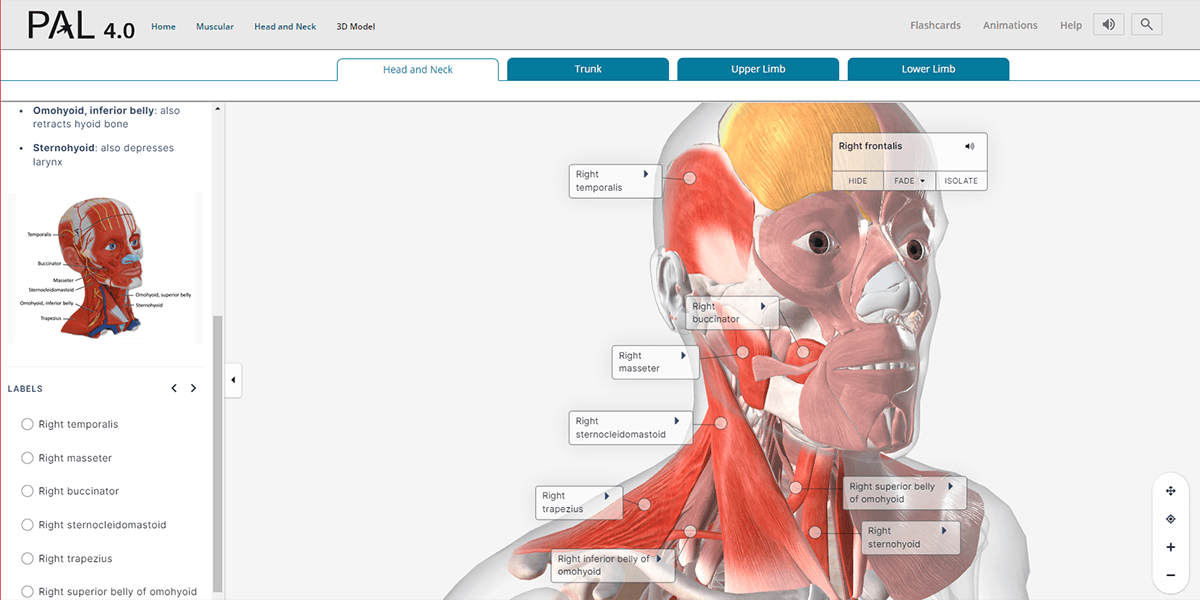
  • A screenshot of Pearson’s PAL 4.0 that shows a labeled diagram of the muscles of the human face.

    My Best PAL for Anatomy: Pearson’s Practice Anatomy Lab

    Alexis Ele

    Anyone who has ever taken Anatomy knows it can be a memorization-heavy course. This is especially true if the lab portion only occurs once a week, as it did for me. Preparing for practicals was a nightmare; we only had one minute per station to recall hundreds of terms and physiological concepts.

    Then I dug through the Pearson website that hosted our textbook and found my best buddy for the next two semesters: PAL.

    Meet PAL: Your Virtual Anatomy Lab

    Practice Anatomy Lab (PAL) 4.0 is a virtual study and practice tool, giving students 24/7 access to the most widely used lab specimens. These include human cadavers, anatomical models, histology slides, cats, fetal pigs, and dissections of sheep brains and cow eyes.

    My most-used feature was the anatomical and fully manipulable 3D models. They made it infinitely easier to see where certain anatomical structures were relative to each other.

    A Tool for Every Learning Style

    As a visual learner, I found that PAL was one of my best friends during my time in Anatomy. It can be yours, too, no matter what type of learner you are.

    PAL includes built-in audio pronunciations in addition to 3D animations, mobile-friendly flashcards, practice quizzes, and practice fill-in-the-blank lab practical questions. This means any type of learner—visual, auditory, reading, or writing—can use PAL to their advantage.

    Study Anytime, Anywhere

    While anatomy labs tend to meet once a week for a few hours, PAL is available to you 24/7 and is included with MasteringA&P. In addition to the manipulable 3D models, I found it convenient that I could access it and still have a similar experience away from the lab.

    It is also common practice for photography of certain cadavers to be prohibited, but PAL provides virtual cadavers that you can view at any time. Constantly refreshing my memory of models and cadavers was much more helpful than trying to recall them from a single lab session.

    Find What Works for You

    If you’re a student using Pearson materials for your anatomy class, I encourage you to explore the platform and discover what makes learning easier for you. While the 3D models were my key to success as a visual learner, PAL is packed with features designed to help every type of learner master the material.

    Do you have a compelling story or student success tips you’d like to see published on the Pearson Students blog?  If you are a college student and interested in writing for us – click here to pitch your idea and get started! 
     

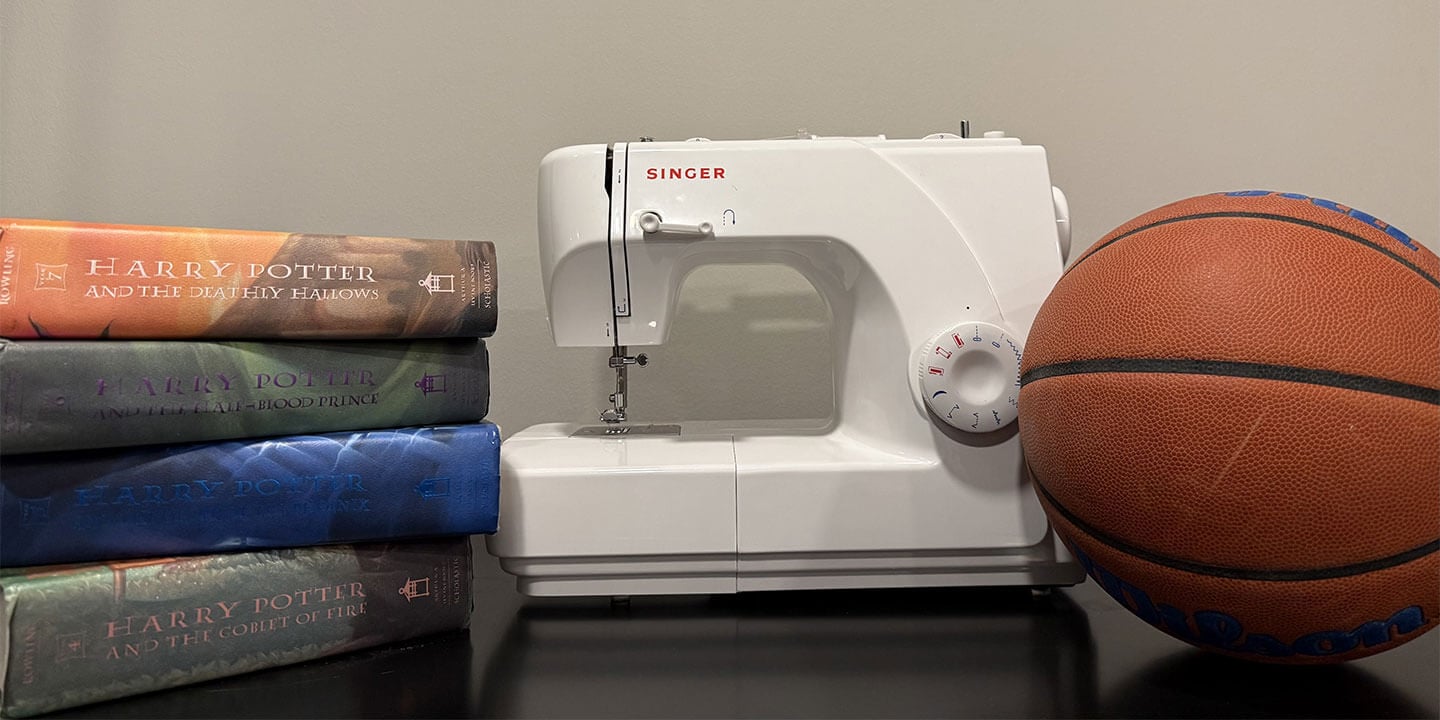
  • Image shows a stack of four Harry Potter books, a sewing machine and a basketball sitting on a table.

    A Student’s Guide to Keeping Your Hobbies in College

    Olivia Kazak

    Missing My Hobby

    Moving to college truly changes your life, and in my experience, it’s a pretty hectic change. I was in a new state, living in a dorm with someone I had met on Instagram, and managing a packed schedule with classes scattered all over campus. About a month in, with all the changes, I realized I had neglected something that made me happy: crafting.

    A Mindset Shift

    Crafting is my favorite hobby. When I realized I had lost that part of my life, I was disappointed but also understood why. With all my classes and new friends, I felt I didn't have time for my hobbies.

    Honestly, that wasn't the case! If I wanted to keep my hobbies in my life, I knew I needed to change how I thought about them and how they fit into my day-to-day routine.

    Allocate Time

    One way I brought crafting back into my college life was by treating it like a class. I was lucky enough to have a day of the week when my classes got out early. When I realized this, I marked a two-hour block on my calendar that day as my craft time.

    Placing that "class" on my calendar held me accountable. Every time I started to make plans, I knew that my crafting had its time, and I couldn't reschedule that special part of my life.

    Join a New Group

    Another thing I realized about college is that there is a club for everything. This means your hobby most likely has an entire club dedicated to it! I recommend finding those organizations and getting involved.

    This not only allows you to continue your hobby in college but also lets you meet many new people who already have at least one thing in common with you.

    I also remind myself that hobbies don't have to be done solo. Host a craft night with your roommates or ask people in your class to play basketball later that day.

    Start a movie club that meets in the dorm common room. Do your hobby and create a community around it!

    Enjoy the Little Moments

    My last piece of advice for continuing your hobby in college is to use the small moments of free time you have. Reading is another hobby of mine. I bring a book with me in case I get to class a little early. This may be difficult with some hobbies, but it's still time you can use for yourself.

    These small moments are also opportunities to build community. Use the five minutes after class to text your hobby group and ask them to meet up later that week.

    Most importantly, your hobby should be your happy place. Fit it into your life in a way that makes you the happiest!

    Do you have a compelling story or student success tips you’d like to see published on the Pearson Students blog?  If you are a college student and interested in writing for us – click here to pitch your idea and get started! 
     

  • A table full of party food including various snacks and festive cupcakes.

    Igniting Connection: Hosting Events in Your Dorm or Apartment

    Alexis Ele

    Friendship and connection are precious, especially when settling into college life. With good friends, even the most challenging things can feel possible.

    My first year of college was socially challenging: asking people to hang out, making friends, and introducing myself in different spaces. However, by my sophomore year, I had more friends than I could count with both hands.

    How did I do it? Instead of being a guest, I became the host. Below are my ideas for filling your evenings with friends and community, along with tips for hosting, what to expect, and what you might need to buy.

    Hosting Logistics

    Planning prevents mishaps and ensures everyone has a good time. Depending on the event, you may need to prepare food, decorate, and more.

    Here is a list of things to prepare:

    • Food: Grocery shopping, thawing ingredients, prepping, cooking, and plating.
    • Guests: Ask about dietary restrictions, know the parking options, and plan food based on your guest count.
    • Space: Buy decorations, get disposable plates, and designate a drop-off spot for guests' belongings.
    • Cleaning: Tidy the living room, kitchen, bathroom, and other guest spaces.

    A helpful tip: set the temperature cooler than usual. A room full of people heats up quickly, so use the AC or fans. Early arrivals often want to help, so don’t be afraid to delegate!

    Fun Event Ideas

    For my birthday, I wanted a unique activity to help my friends get along. A central activity gives guests something to look forward to and a reason to come.

    Here are some events I’ve hosted (or plan to host):

    • Wig-Snatching Party: Buy some wigs (or have everyone bring their own wig: BYOW) and create a tournament bracket. The name says it all: whoever snatches a wig first wins!
    • Arts & Crafts Night: Gather friends for a calm, quiet night of arts, crafts, or hobbies. It's a perfect creative outlet to unwind and stay motivated together.
    • Bring a Stranger: Ask friends to bring someone no one else knows to the party. It's a great way to meet new people and expand your circle.
    • Murder Mystery Party: Buy a murder mystery party kit and solve a fictional crime together. It’s perfect for team building.
    • Mafia Party: Host a real-life “Mafia” or “Among Us” party. It requires planning, but you can use smart devices for creative lighting and sound effects or simply download an app and play digitally together in the same space.

    Additional Tips

    • Have a dress code: People love a reason to dress up, and it makes for great photos!
    • Create a photo booth: A designated photo area makes for fun keepsakes. You can use a Polaroid camera (my preference) for an instant physical memento.
    • Start a shared playlist: A shared Spotify playlist lets everyone be the DJ.
    • Use disposable plates: Disposable cups, plates, and utensils make cleanup easier.

    The Joy of Hosting

    Hosting is work, but it creates rewarding memories—and isn't college all about making memories?

    Don’t just wait to be invited to things; host them yourself. You’ll be surprised how many new friends you’ll make and how much closer you’ll become to your current ones.

    Do you have a compelling story or student success tips you’d like to see published on the Pearson Students blog?  If you are a college student and interested in writing for us – click here to pitch your idea and get started! 

     

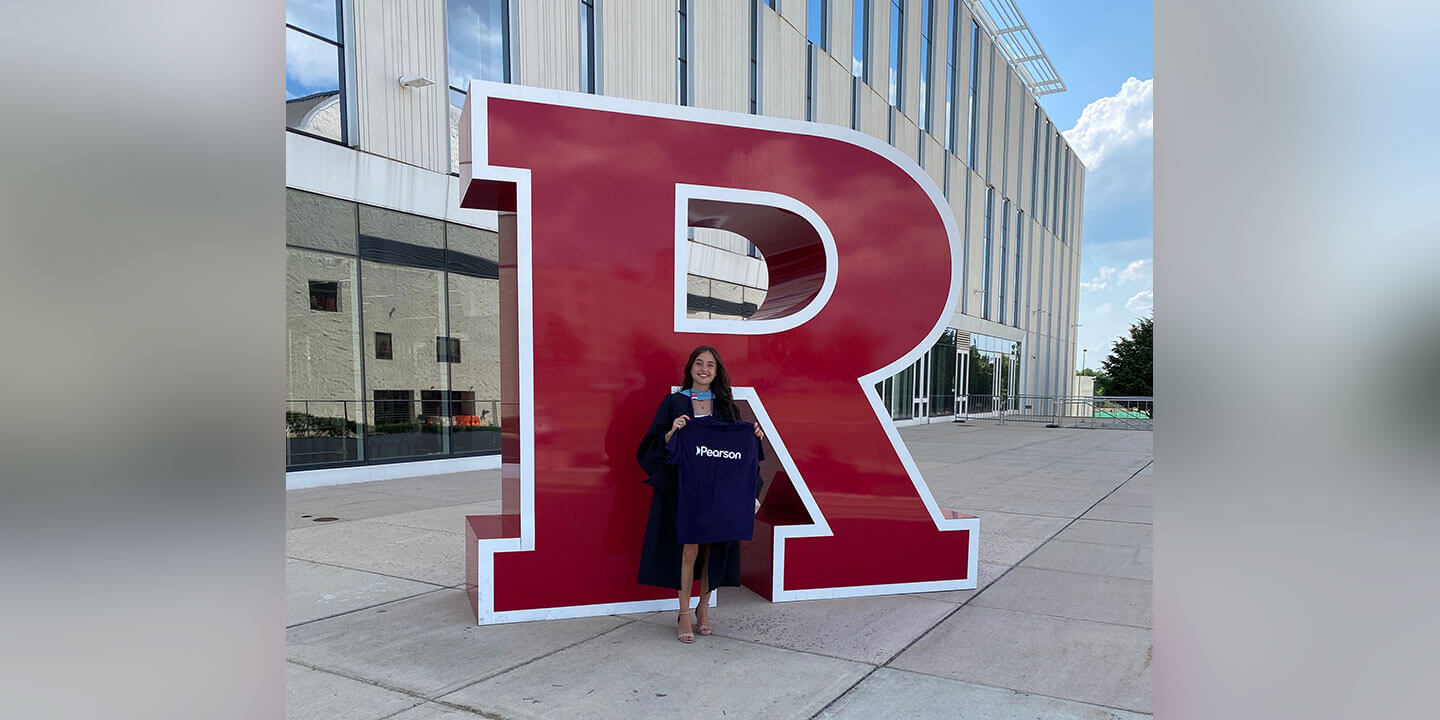
  • A graduate holding a purple Pearson shirt is standing in front of a large red sculpture of the letter R.

    My Four Years as a Pearson Campus Ambassador

    Madeline Beavis

    One of the best decisions I made in college was joining the Pearson Campus Ambassador Program. I wasn’t sure what to expect, but it seemed like an opportunity I couldn’t pass up. Little did I know that one application would completely transform my professional and personal development over the next four and a half years.

    Starting as a Campus Ambassador

    I started as a campus ambassador in the Northeast Region alongside about ten other students at schools in surrounding states. I participated in focus groups, completed product surveys, and joined regional challenges. I also collaborated virtually with more than 150 students nationwide and met the sales representative for Rutgers University, helping to connect her with professors on campus.

    The best part was that I could do it all on my own time. It truly felt like the best job ever. My Regional Coordinator supported all of us and was the perfect role model when I was just getting started.

    Growing into a Leader

    About a year into the program, I started to feel confident. I had mastered Teams and Outlook, found a rhythm with monthly projects, and built strong relationships with other PCAs, my managers, and my Regional Coordinator.

    Then, in March 2023, I received an invitation from the management team. They wanted me to step into the Northeast Regional Coordinator role when the current coordinator graduated. I was incredibly honored to be recognized as an emerging leader and said “yes” to an opportunity that would open the door to so many meaningful experiences.

    As a Regional Coordinator, I attended leadership summits in Austin (2023), Denver (2024), and virtually (2025). Each experience focused on professional development and improving the PCA program. They also gave me the chance to network with other leaders and collaborate with professionals across marketing and sales.

    Exploring through Micro-Internships

    I’ll admit I was hesitant at first to join micro-internships because I wasn’t sure I was “ready.” Pushing past that imposter syndrome was the right decision, as I completed four micro-internships between 2023 and 2026.

    These experiences gave me valuable insight into the fast-evolving world of AI, market research, and sales strategy. I went from exploring technology and its applications in education, to understanding consumers, to contributing to business strategy, with each role building meaningfully on the last.

    The Heart of the Program: Community

    While I look back on my professional growth with appreciation, the people are what I will miss most. The PCA program is truly a community. From Texas to Florida to California, I’ve built not just friendships but also a support system.

    The program brings together people from all walks of life who consistently uplift, challenge, and inspire one another. This connection lasts long after each project or summit ends.

    And of course, a team is only as great as its leaders. The management team (Debbie Miller, Delaney Henson, Dory Thornton, John Howdyshell, Margo McIlroy, and Mary Frances Weatherly) were my role models and mentors. They created an inclusive and genuinely joyful environment.

    It was the kind of place where you felt lucky to belong, not just obligated to participate. Their leadership made the experience inspiring, welcoming, and unforgettable. The Pearson Campus Ambassador Program is not just a program; it is a family. It was my greatest privilege to sit at the table.

    Do you have a compelling story or student success tips you’d like to see published on the Pearson Students blog?  If you are a college student and interested in writing for us – click here to pitch your idea and get started! 
     

  • An open textbook covered in highlights. There are several highlighters, pens, and colorful sticky tabs lying on top of the textbook.

    My Summer Journey through an Analogue Textbook

    Katelyn Stewart

    A Devoted E-Text User

    As someone who grew up with accessible technology, I’ve been an avid E-Text user for my entire college experience. Why wouldn’t I be? E-Texts can be accessed on every device I own and often have additional features for an extended learning experience.

    However, during the summer of 2026, I decided to take four online classes (idle hands and whatnot). One class required a 2011 textbook on persuasion. This niche textbook was unavailable as an E-Text, so I did the unimaginable... I bought the thing.

    An Unexpected Connection

    When the used copy of the book showed up at my door, I flipped through the pages and immediately noticed handwritten notes and highlighted markings throughout. In that moment, I felt like I was holding the Half-Blood Prince’s potions book from Harry Potter. The only difference was the name signed on the front page: some guy named Artie (RIP, maybe).

    As I began reading for the class, I noticed that despite Artie’s best efforts, he had skimped on highlighting details that I felt were important. I ran around my house until I found some highlighters in a drawer and began making my own highlights and penning comments directly into the textbook.

    Suddenly, I felt like I was becoming a part of the textbook in a way I had never experienced with my E-Texts. When I flew down to Texas, my carry-on held my Persuasion textbook and a bag of highlighters. Pretentiously, I sat, flying more than 30,000 feet above the Earth, making wild and free comments in this textbook.

    Unlearning Old Rules

    I wondered to myself why this was the first time in my life I had ever felt the urge to make comments directly into a paper textbook. I remember being young and my mother scolding me for coloring in a picture book my grandma had given me for my birthday.

    A few years later, I would dog-ear my place in a chapter book, and my adoptive mom told me that I was disrespecting the book. I don’t remember picking up many physical books after that. I was afraid I would once again ruin these precious troves of knowledge.

    A Convert to Paper

    I learn fine with E-Texts; they have all served me well enough. As I move into my senior year, I still maintain a 4.0, but never in my entire life have I felt more connected to a text. After finishing the class with a solid ninety-eight percent, Persuasion now sits on my bookshelf as a reminder of something I not only learned from but became a part of.

    I now find myself hungry for my paperback texts. For my fall semester, I ordered every single text I could find in printed form. I have purchased more highlighters in a wide assortment of colors and eagerly await their arrival so that I can begin making comments and highlighting phrases that I find profoundly meaningful.

    Maybe I will write my name on the front covers and sell them back when I am finished. Someone else might find them one day, notice untouched phrases, and feel free enough to mark them on their own.

    Do you have a compelling story or student success tips you’d like to see published on the Pearson Students blog?  If you are a college student and interested in writing for us – click here to pitch your idea and get started! 
     

  • Image shows a view from a small plane's cockpit on a clear day with blue skies.

    My Winding Path: From Pilot to Psychologist

    Alexis Ele

    According to the National Center for Education Statistics, about one-third of all undergraduate students change their major. I have many interests and have considered being a chemist, a pilot, a video game developer, an animator, a psychologist, and a nurse. This blog will share my journey of changing career paths and why we, as college students, should normalize this winding path.

    The Pilot Dream

    In high school, I decided that being a pilot was my dream. I loved the logistics of an airport and figured that piloting might be a good career for me. With my parents' support, I enrolled in a local magnet high school with a private pilot program and went full force. For four years, I studied FAA regulations and prepared for my private pilot written test.

    After passing the test, I took to the skies and realized it was stressful. I practiced takeoffs, landings, and talking to air traffic control, but my heart was not in this profession. The charts I had to read, the pilot language I had to learn, and the weather I needed to plan for were all cool, but not personally fulfilling. And that’s okay!

    After an emotional discussion with my parents, who drove me to the airport and school, both forty minutes away, I felt regretful about switching paths. However, they said something that stuck with me: They’d rather I change paths than be unhappy. Suddenly, all the hesitation about dropping the profession went away.

    A Change of Heart

    When I went to college, I initially wanted to be a clinical psychologist. However, I wasn't sure if I wanted to stay in higher education for that long. I wanted to finish college as soon as possible and travel while I was young. To stick to that value, I decided to pursue psychiatric nursing and to double major in psychology and nursing.

    While taking my prerequisites for nursing school, I realized I had a passion for psychotherapy. Everything about mental wellness and human connection stuck with me. Even if I took time to travel while I was young, I also wanted to grow old doing something I loved—helping and connecting with others.

    So, what did I decide? Well, both! I still love the security and stability that nursing provides, but I also want the opportunity to connect with patients well into the future. Hopefully, I’ll get to pursue graduate school and research while I work as a nurse.

    Embracing Your Own Journey

    Why is there so much shame associated with changing careers? Many students feel they must commit to one thing due to societal norms or familial expectations. While feeling ashamed or embarrassed about changing paths is normal, it should not stop you from pursuing your passions.

    My last piece of advice is not to get too carried away with worrying about the future. It’s important to plan for the future, but it’s also important to take care of yourself and stay in the present. Both can absolutely be true. Good luck with your journey in college, no matter where you end up!

    Do you have a compelling story or student success tips you’d like to see published on the Pearson Students blog?  If you are a college student and interested in writing for us – click here to pitch your idea and get started! 

     

  • A winter scene with snow covered trees and shrubs and a road pictured in the foreground.

    Flip-Flops to Snow Boots: A Guide to Moving North for College

    Meredith White

    Imagine the culture shock I experienced moving from an always-sunny, 110-degree area to one of the snowiest cities in the U.S. Trading flip-flops for snow boots at 7,000 feet was an adjustment I never expected.

    I went from worrying about staying cool to learning how to prepare for freezing temperatures and snow-covered sidewalks. I also learned to anticipate mornings when the weather could completely change my plans.

    Moving to a colder climate for college is a major transition. The first snowfall may feel exciting, but the reality of walking to class in freezing temperatures requires preparation.

    It is easy to focus on just getting through the season. However, when you learn to embrace it, your first winter can become one of the most rewarding parts of your college experience.

    Build Your Winter Wardrobe

    The biggest lesson I learned was that the right winter clothing can completely change your experience. When I first arrived on campus, all I had was a pair of snow boots and a coat. Dressing for winter isn’t just about owning a big coat; it’s about building a wardrobe that allows you to stay comfortable while still enjoying your daily routine.

    A quality winter coat, waterproof and slip-resistant snow boots, a set or two of thermal clothing, warm gloves, a hat or earmuffs, and thick thermal socks are essential when temperatures drop. Your shoes, especially, matter because snow and ice can turn a normal walk to class into a major challenge.

    Master the Art of Layering

    Layering is another winter skill that makes all the difference. Temperatures can change throughout the day, and going from a cold walk outside to a warm classroom means you need clothing that can adapt.

    Wearing a base layer, sweatshirt, and coat allows you to stay warm outside without overheating once you are indoors. Small additions like scarves, thermal leggings, and hand warmers can also make cold days feel much more manageable.

    Even if you think you look silly, I promise that being warm matters more.

    Adjust Your Daily Routine

    Beyond clothing, preparing for winter means adjusting your daily habits. Check the weather before leaving for class, give yourself extra time to walk on snow or ice, and keep winter essentials easily accessible. A few extra minutes of preparation can prevent a stressful morning and help you feel more confident navigating a new environment.

    Embrace the Winter Wonderland

    Winter is about more than just learning how to survive the cold. It is also an opportunity to experience a side of life that may be completely new.

    Take time to appreciate the beauty of snowy mornings, explore winter activities, make a snowman, spend cozy evenings with friends watching a movie, or enjoy a warm drink after being outside. The season that once felt intimidating can become something you genuinely look forward to.

    From Sixty Degrees to Snowstorms

    Coming from a place where winter meant sixty degrees, not snowstorms, taught me that adapting to the cold is about more than just the right gear. It is about being open to change, creating new routines, and finding joy in unfamiliar experiences.

    Your first winter may come with a learning curve, but it can also become one of the most memorable chapters of your college journey. Cozy up with a blanket, a good book or show, and a hot beverage, and enjoy a season that offers so much more than just cold temperatures.

    Do you have a compelling story or student success tips you’d like to see published on the Pearson Students blog?  If you are a college student and interested in writing for us – click here to pitch your idea and get started! 
     

  • A closed beige iPad with a white stylus rests on a pink pad with an iced coffee and yellow straw placed next to it on a wooden table.

    The Power of a Pause

    Meredith White

    What if taking a break is actually one of the most productive things you can do? In college, it feels like there’s always another assignment to finish or an exam to study for. Responsibilities constantly compete for your attention.

    It’s easy to believe that every free moment should be spent being productive, but that mindset can quickly lead to stress and burnout. The truth is, taking a break isn’t something that needs to be earned; it’s an important part of doing your best. Allowing yourself to pause is essential for dealing with everything that comes with being a college student.

    Why Breaks Are Essential

    Breaks improve focus. After studying for a while or working on assignments, your concentration naturally starts to fade. Stepping away for even a few minutes can help you return with a clearer mind, making your study time more effective.

    Pausing helps prevent burnout. Constantly pushing yourself without taking time to relax and recharge can leave you feeling mentally and physically exhausted. Regularly taking breaks helps reduce stress before it becomes overwhelming, which allows you to stay motivated throughout the semester.

    Your mental health deserves attention. College is about more than coming out on top with the best GPA. Activities like spending time with friends, taking a walk, listening to music, or simply relaxing can improve your mood and help you maintain a healthier balance.

    Why We Feel Guilty About Rest

    Some college students associate being busy with being successful. It can be tempting to compare yourself to classmates who seem to be studying constantly, especially on social media. What we don’t see are the moments they spend resting and recharging.

    Productivity isn’t measured by how busy you look; it’s a subjective measurement about what’s most important to you. In college, productivity might be measured by how effectively you learn, grow, and take care of yourself.

    How to Pause Guilt-Free

    • View rest as part of your routine, not a reward. Taking breaks shouldn’t be conditional. Finishing every task first isn’t necessary.
    • Choose breaks that help you feel refreshed. You could go for a walk, grab a snack, stretch, read for fun, spend time outside, or, my favorite, get a coffee. Even a short change of pace can make a difference.
    • Focus on working smarter, not longer. A focused hour of studying after a break can be more productive than several distracted hours without one.
    • Give yourself permission to unplug. You don’t have to be productive every minute. Being productive all day isn’t necessary for success.

    Press Pause to Move Forward

    College will always come with deadlines and responsibilities, but constantly running on empty isn’t the answer. Success isn’t measured by how exhausted you are; it’s measured by how well you care for yourself while working toward your goals.

    Whether you need a ten-minute or an hour-long break, allow yourself to take it. You may have tons of assignments that need to be done, but by taking a break, you can come back refreshed and ready to tackle them.

    The next time you feel guilty about stepping away, remember that the power of a pause might be exactly what helps you move forward.

    Do you have a compelling story or student success tips you’d like to see published on the Pearson Students blog?  If you are a college student and interested in writing for us – click here to pitch your idea and get started!