Ch. 12 Nervous Tissue
Martini - Fundamentals of Anatomy & Physiology 11th Edition
Martini, Nath, Bartholomew11th EditionFundamentals of Anatomy & PhysiologyISBN: 9780136874089Not the one you use?Change textbook
Chapter 12, Problem 15

What is the functional difference among chemically gated (ligand-gated), voltage-gated, and mechanically gated ion channels?

Verified step by step guidance
1
Step 1: Understand that ion channels are proteins embedded in the cell membrane that allow ions to pass through, and their opening or closing is controlled by different stimuli.
Step 2: Chemically gated (ligand-gated) ion channels open or close in response to the binding of a specific chemical messenger (ligand), such as a neurotransmitter, to the channel protein.
Step 3: Voltage-gated ion channels open or close in response to changes in the electrical membrane potential (voltage) across the cell membrane, typically during the generation and propagation of action potentials.
Step 4: Mechanically gated ion channels open or close in response to mechanical forces or physical deformation of the cell membrane, such as stretch or pressure.
Step 5: Summarize the functional difference by noting that chemically gated channels respond to chemical signals, voltage-gated channels respond to electrical changes, and mechanically gated channels respond to physical stimuli.

Verified video answer for a similar problem:

This video solution was recommended by our tutors as helpful for the problem above.
Video duration:
4m
Was this helpful?

Key Concepts

Here are the essential concepts you must grasp in order to answer the question correctly.

Chemically Gated (Ligand-Gated) Ion Channels

These ion channels open or close in response to the binding of a specific chemical messenger, such as a neurotransmitter. When the ligand binds to the channel, it causes a conformational change that allows ions to pass through, playing a key role in synaptic transmission.
Recommended video:
03:58
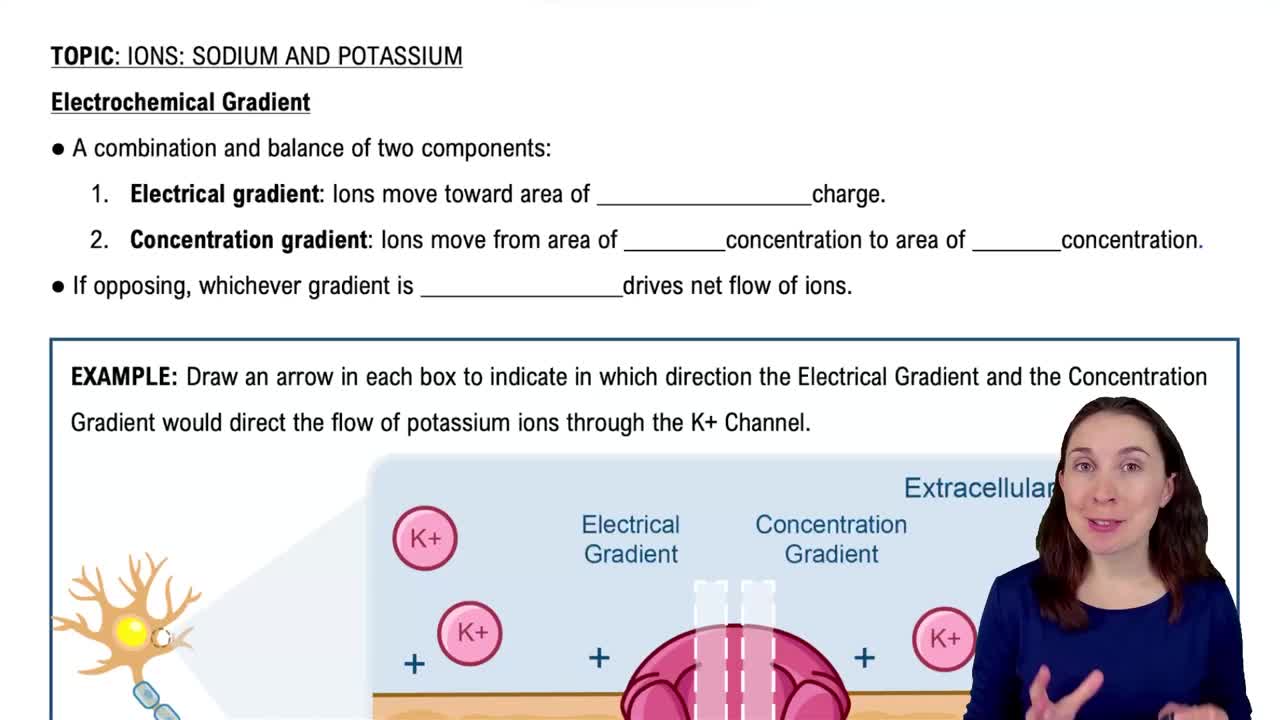
Electrochemical Gradient

Voltage-Gated Ion Channels

Voltage-gated ion channels open or close in response to changes in the electrical membrane potential. They are crucial for generating and propagating action potentials in excitable cells like neurons and muscle fibers by allowing selective ion flow when the membrane voltage reaches a threshold.
Recommended video:
01:55
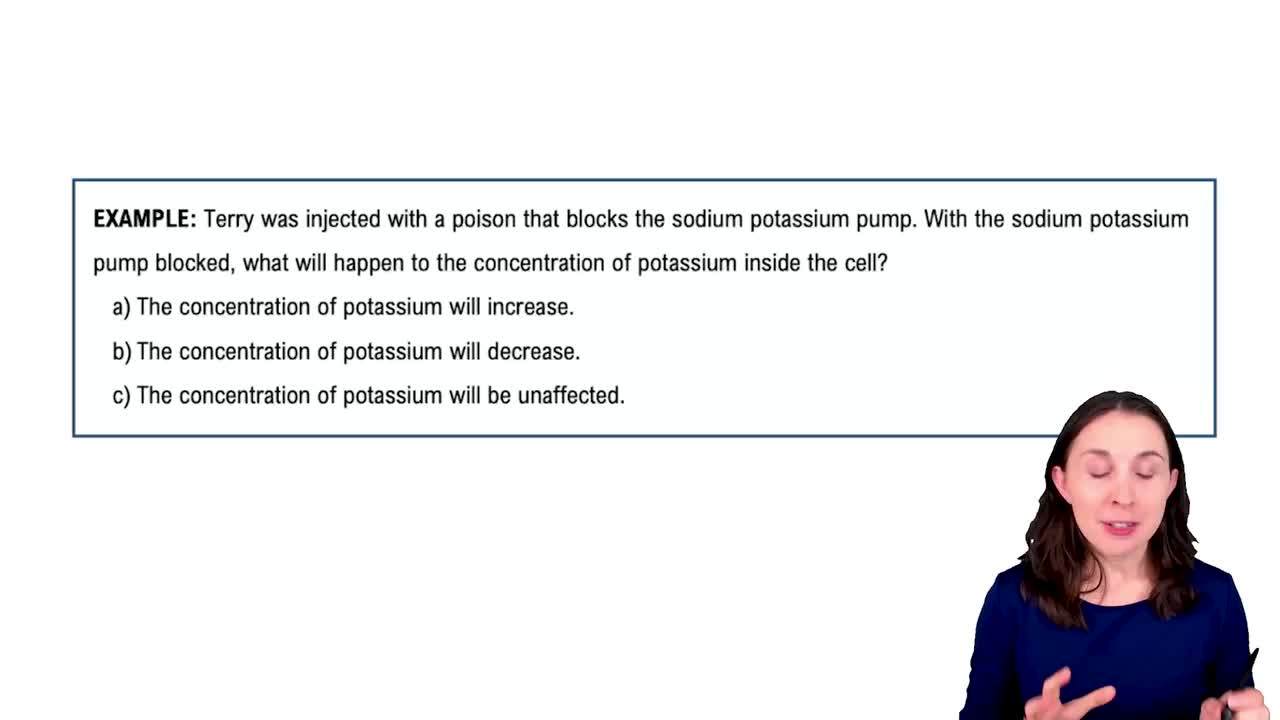
Ions - Sodium and Potassium Example 3

Mechanically Gated Ion Channels

Mechanically gated ion channels respond to physical deformation or mechanical forces such as stretch, pressure, or vibration. These channels convert mechanical stimuli into electrical signals, important in sensory processes like touch, hearing, and proprioception.
Recommended video:
01:55
Ions - Sodium and Potassium Example 3