Distinguish between the following paired terms: (b) heterozygous and homozygous,
Verified step by step guidance
1
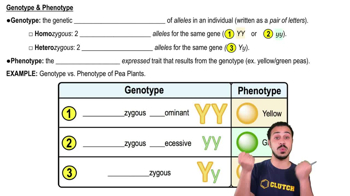
Step 1: Understand that both terms, heterozygous and homozygous, relate to the genetic makeup (genotype) of an organism at a specific gene locus.
Step 2: Define homozygous as having two identical alleles for a particular gene. This means both copies of the gene inherited from each parent are the same (e.g., AA or aa).
Step 3: Define heterozygous as having two different alleles for a particular gene. This means the two gene copies inherited from each parent differ (e.g., Aa).
Step 4: Recognize that these differences in alleles can affect the organism's traits (phenotype), depending on whether the alleles are dominant or recessive.
Step 5: Summarize by contrasting the two: homozygous means identical alleles at a gene locus, while heterozygous means different alleles at that locus.
Verified video answer for a similar problem:
This video solution was recommended by our tutors as helpful for the problem above
Play a video:
Was this helpful?
Key Concepts
Here are the essential concepts you must grasp in order to answer the question correctly.
Homozygous
Homozygous refers to having two identical alleles for a specific gene on both homologous chromosomes. This means the organism inherits the same version of a gene from each parent, resulting in a uniform genetic expression for that trait.
Heterozygous describes having two different alleles for a particular gene on homologous chromosomes. This genetic variation can lead to dominant-recessive interactions, where one allele may mask the expression of the other.
Alleles are different forms of a gene that determine specific traits. Understanding how alleles interact—whether identical or different—is essential to grasping the concepts of homozygosity and heterozygosity, as these interactions influence an organism's phenotype.