Identify the expression to simplify: \(\frac{10}{11} (22\theta)\).
Recognize that multiplication of a fraction by a term means multiplying the numerator by the term and keeping the denominator the same: \(\frac{10}{11} \times 22\theta = \frac{10 \times 22\theta}{11}\).
Multiply the constants in the numerator: \$10 \times 22 = 220\(, so the expression becomes \)\frac{220\theta}{11}$.
Simplify the fraction by dividing the numerator and denominator by their greatest common divisor, which is 11: \(\frac{220\theta}{11} = \frac{220 \div 11 \times \theta}{11 \div 11} = 20\theta\).
Write the simplified expression as \$20\theta$.
Verified video answer for a similar problem:
This video solution was recommended by our tutors as helpful for the problem above
Video duration:
1m
Play a video:
Was this helpful?
Key Concepts
Here are the essential concepts you must grasp in order to answer the question correctly.
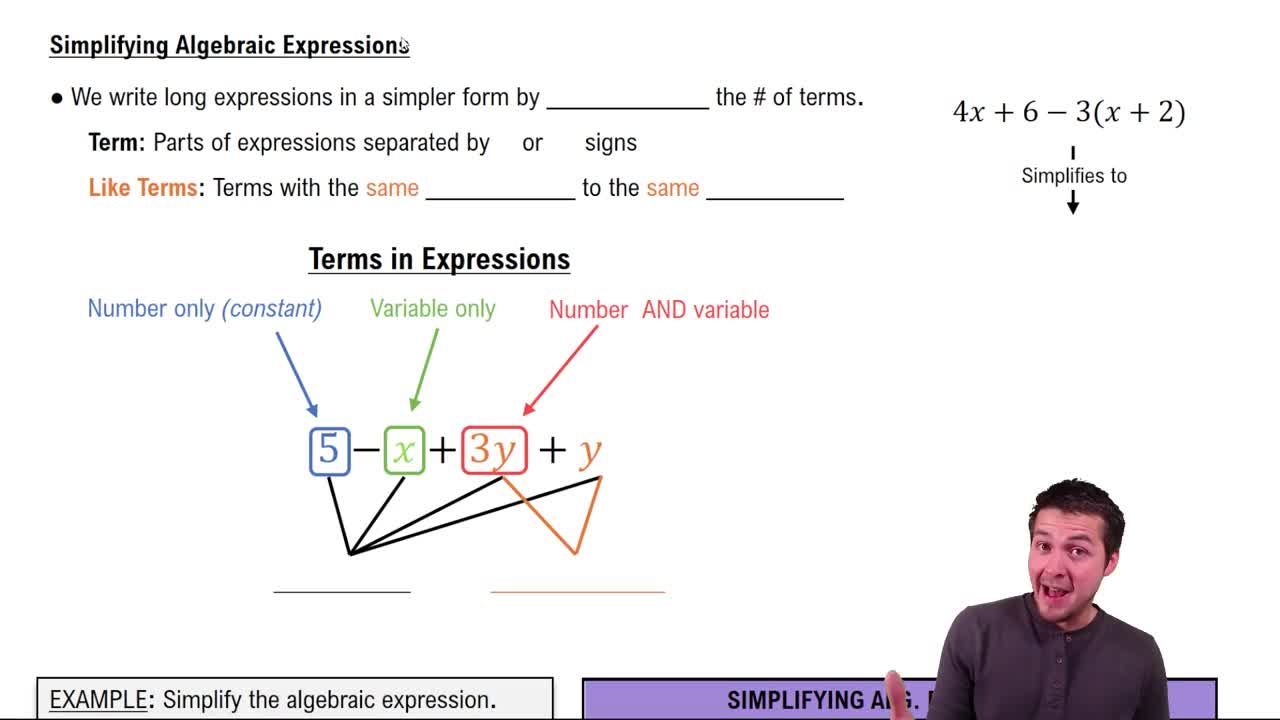
Simplifying Algebraic Expressions
Simplifying algebraic expressions involves combining like terms and reducing fractions to their simplest form. This process makes expressions easier to work with and understand by eliminating unnecessary complexity.
When multiplying fractions, multiply the numerators together and the denominators together. Variables multiply by following the laws of exponents, such as combining powers when the same base is involved.
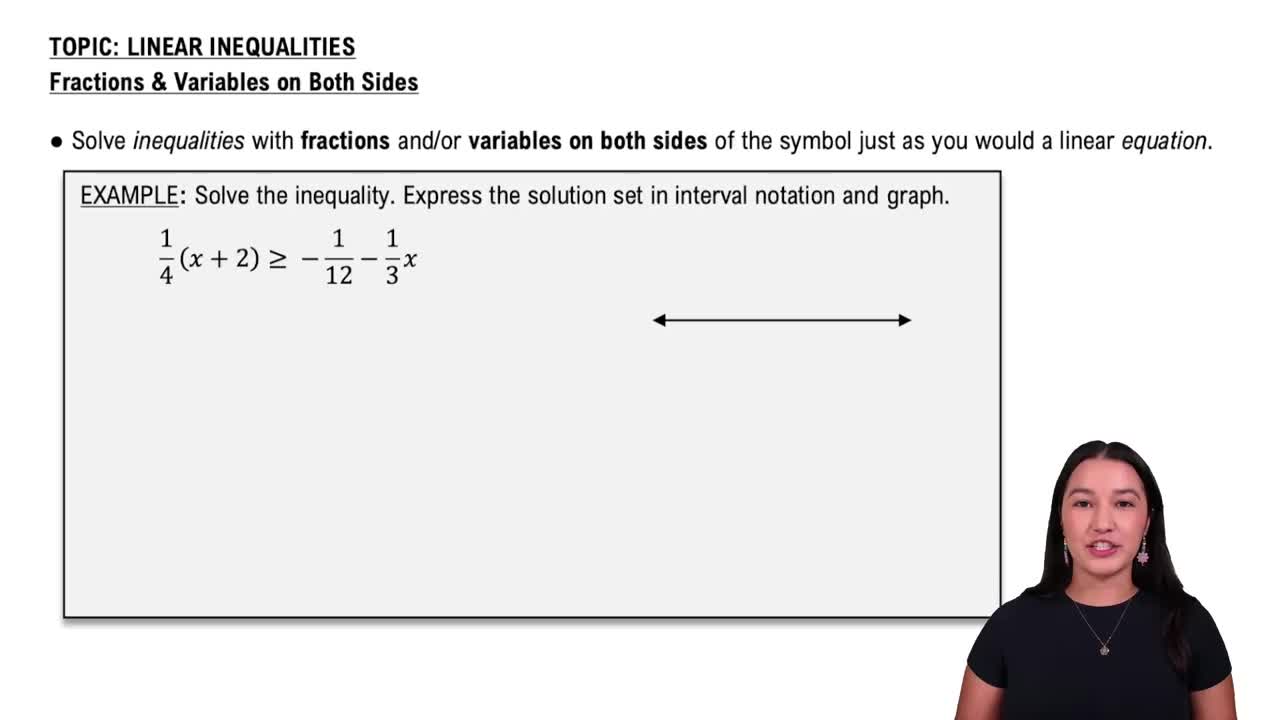
Linear Inequalities with Fractions & Variables on Both Sides
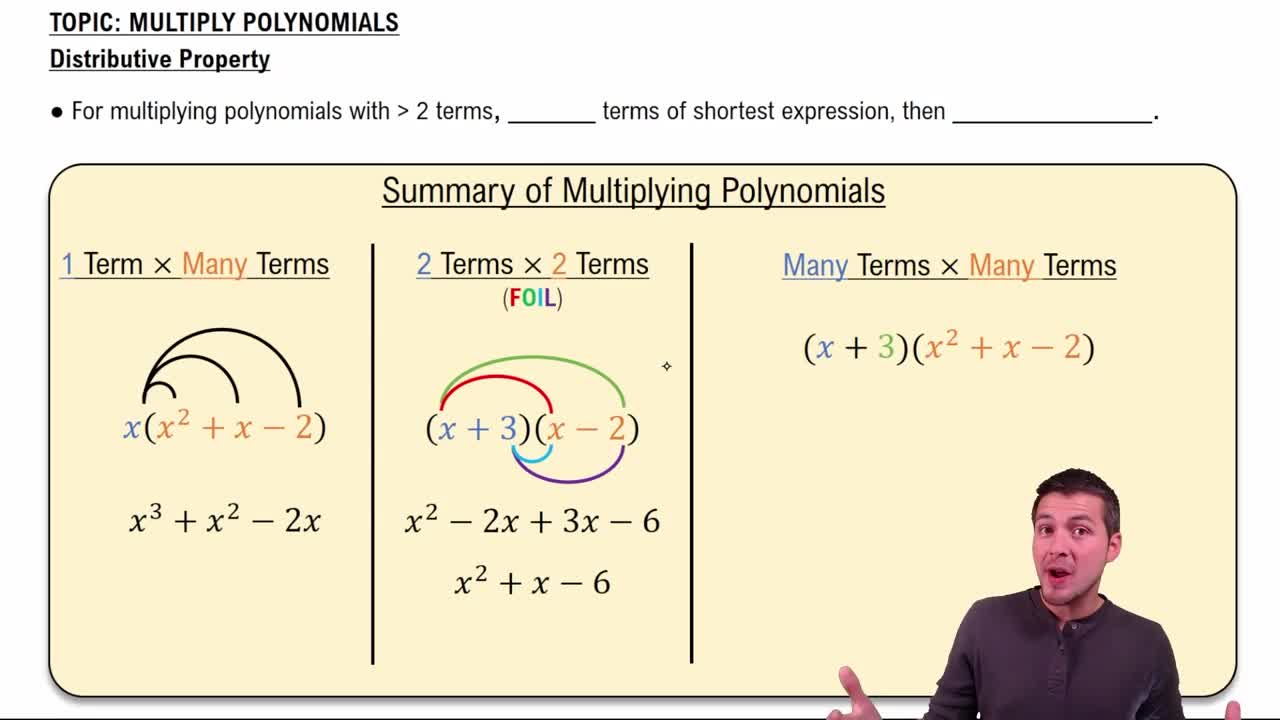
Distributive Property
The distributive property allows you to multiply a single term by each term inside a parenthesis. It is useful for expanding expressions and simplifying products involving sums or differences.