Back
Back
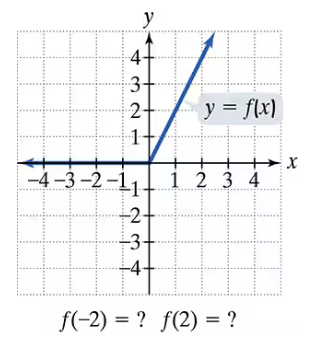
Problem 80
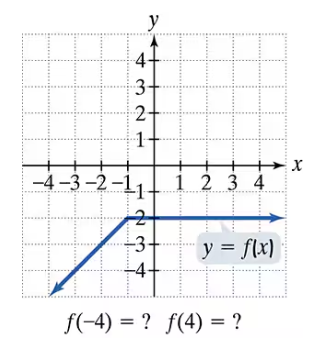
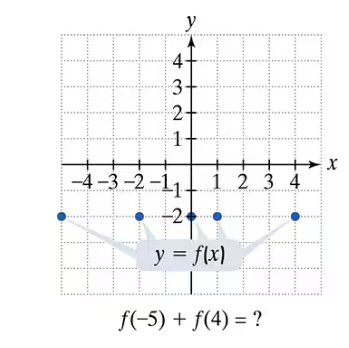
In Exercises 77–92, use the graph to determine a. the function's range; b. the y-intercept, if any; and e. the missing function values, indicated by question marks, below each graph.
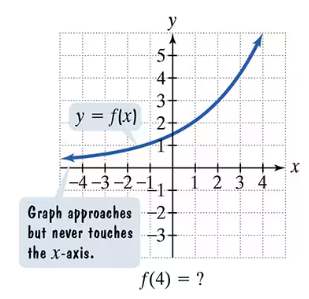
Problem 81
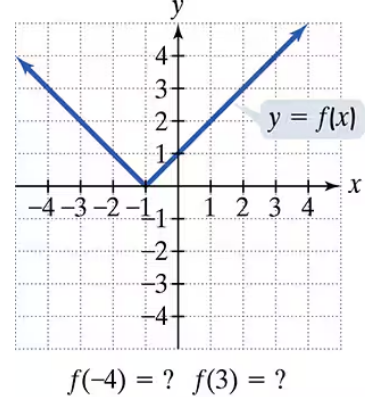
In Exercises 77–92, use the graph to determine a. the function's domain; b. the function's range; c. the x-intercepts, if any; d. the y-intercept, if any; and e. the missing function values, indicated by question marks, below each graph.
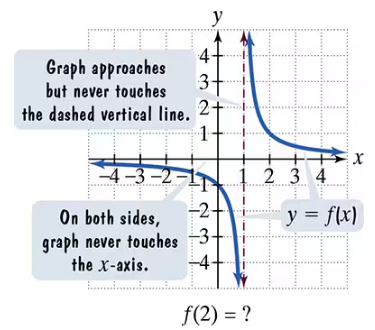
Problem 84
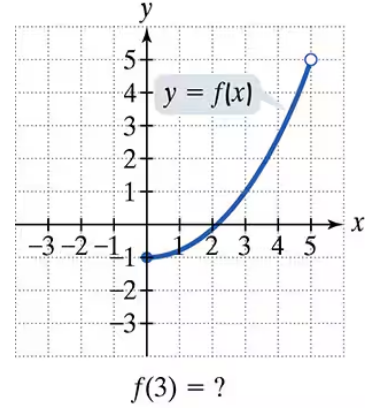
In Exercises 77–92, use the graph to determine a. the function's domain; b. the function's range; c. the x-intercepts, if any; d. the y-intercept, if any; and e. the missing function values, indicated by question marks, below each graph.
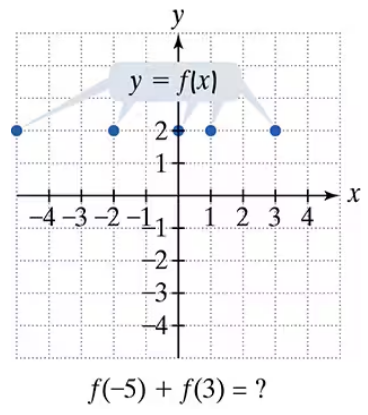
Problem 85
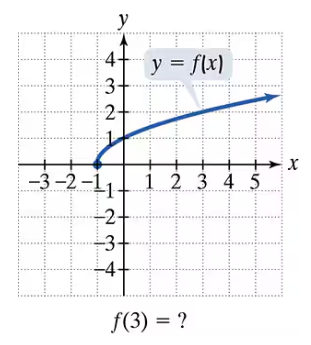
In Exercises 77–92, use the graph to determine a. the function's domain; b. the function's range; c. the x-intercepts, if any; d. the y-intercept, if any; and e. the missing function values, indicated by question marks, below each graph.
Problem 87
In Exercises 77–92, use the graph to determine a. the function's domain; b. the function's range; c. the x-intercepts, if any; d. the y-intercept, if any; and e. the missing function values, indicated by question marks, below each graph.
Problem 88
In Exercises 77–92, use the graph to determine a. the function's domain; b. the function's range; c. the x-intercepts, if any; d. the y-intercept, if any; and e. the missing function values, indicated by question marks, below each graph.
Problem 89
In Exercises 77–92, use the graph to determine a. the function's domain; b. the function's range; c. the x-intercepts, if any; d. the y-intercept, if any; and e. the missing function values, indicated by question marks, below each graph.
Problem 90
In Exercises 77–92, use the graph to determine a. the function's domain; b. the function's range; c. the x-intercepts, if any; d. the y-intercept, if any; and e. the missing function values, indicated by question marks, below each graph.
Problem 91
In Exercises 77–92, use the graph to determine a. the function's domain; b. the function's range; c. the x-intercepts, if any; d. the y-intercept, if any; and e. the missing function values, indicated by question marks, below each graph.
Problem 92
In Exercises 77–92, use the graph to determine a. the function's domain; b. the function's range; c. the x-intercepts, if any; d. the y-intercept, if any; and e. the missing function values, indicated by question marks, below each graph.
Problem 93
Let f(x) = x² − x + 4 and g(x) = 3x – 5. Find g (1) and f(g(1)).
Problem 95
Let f and g be defined by the following table: Find
Problem 134
Simplify: .
Problem 1
Find the slope of the line passing through each pair of points or state that the slope is undefined. Then indicate whether the line through the points rises, falls, is horizontal, or is vertical. (4, 7) and (8, 10)
Problem 3
Find the slope of the line passing through each pair of points or state that the slope is undefined. Then indicate whether the line through the points rises, falls, is horizontal, or is vertical. (-2, 1) and (2, 2)
Problem 6
Find the slope of the line passing through each pair of points or state that the slope is undefined. Then indicate whether the line through the points rises, falls, is horizontal, or is vertical. (4, -1) and (3, −1)
Problem 11
Use the given conditions to write an equation for each line in point-slope form and slope-intercept form. Slope = 2, passing through (3, 5)
Problem 24
Use the given conditions to write an equation for each line in point-slope form and slope-intercept form. Slope = - 3/5, passing through (10, −4)
Problem 28
Use the given conditions to write an equation for each line in point-slope form and slope-intercept form. Passing through (-2, 0) and (0, 2)
Problem 30
Use the given conditions to write an equation for each line in point-slope form and slope-intercept form. Passing through (−2, −4) and (1, −1)
Problem 32
Use the given conditions to write an equation for each line in point-slope form and slope-intercept form. Passing through (−3, 6) and (3, −2)
Problem 37
Use the given conditions to write an equation for each line in point-slope form and slope-intercept form. x-intercept = -1/2 and y-intercept = 4
Problem 41
In Exercises 39–48, give the slope and y-intercept of each line whose equation is given. Then graph the linear function. f(x) = -2x+1
Problem 43
Give the slope and y-intercept of each line whose equation is given. Then graph the linear function. f(x) = (3/4)x-2
Problem 46
Give the slope and y-intercept of each line whose equation is given. Then graph the linear function. y = -2x/5+6
Problem 49
Graph each equation in a rectangular coordinate system. y = -2
Problem 57
Graph each equation in a rectangular coordinate system. 3x -18=0
Problem 60
In Exercises 59-66, a. Rewrite the given equation in slope-intercept form. b. Give the slope and y-intercept. c. Use the slope and y-intercept to graph the linear function. 4x+y-6=0
Problem 63
In Exercises 59-66, a. Rewrite the given equation in slope-intercept form. b. Give the slope and y-intercept. c. Use the slope and y-intercept to graph the linear function. 8x – 4y – 12 =0
Problem 68
Use intercepts to graph each equation. 6x-9y-18 = 0