Ch. 21 - Cardiovascular and Lymphatic Infections
Norman-McKay- Microbiology: Basic and Clinical Principles 2nd Edition
Norman-McKay2nd EditionMicrobiology: Basic and Clinical PrinciplesISBN: 9780137661619Not the one you use?Change textbook
Chapter 21, Problem 1

How are sepsis and septic shock related?

Verified step by step guidance
1
Understand the definition of sepsis: it is a life-threatening organ dysfunction caused by a dysregulated host response to infection.
Recognize that septic shock is a more severe subset of sepsis characterized by profound circulatory, cellular, and metabolic abnormalities that significantly increase mortality risk.
Identify that septic shock occurs when sepsis leads to persistent hypotension requiring vasopressors to maintain mean arterial pressure, despite adequate fluid resuscitation.
Note that both conditions involve an overwhelming immune response to infection, but septic shock represents progression to critical cardiovascular failure.
Summarize the relationship: septic shock is essentially a severe progression of sepsis with additional hemodynamic instability and higher risk of death.

Verified video answer for a similar problem:

This video solution was recommended by our tutors as helpful for the problem above.
Video duration:
4m
Was this helpful?

Key Concepts

Here are the essential concepts you must grasp in order to answer the question correctly.

Sepsis

Sepsis is a life-threatening condition caused by the body's extreme response to an infection. It occurs when the immune system releases chemicals into the bloodstream to fight infection, triggering widespread inflammation that can lead to tissue damage and organ failure.
Recommended video:

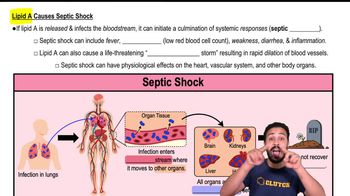
Septic Shock

Septic shock is a severe and advanced stage of sepsis characterized by dangerously low blood pressure that does not respond adequately to fluid replacement. This condition results in impaired blood flow to organs, increasing the risk of multiple organ failure and death.
Recommended video:
Guided course
03:24
Lipid A Causes Septic Shock

Pathophysiological Relationship Between Sepsis and Septic Shock

Septic shock develops as a progression of sepsis when the body's inflammatory response causes profound circulatory and metabolic abnormalities. Understanding this relationship highlights how uncontrolled infection and immune response escalate from sepsis to septic shock, worsening patient outcomes.
Recommended video:
Guided course
03:24
Lipid A Causes Septic Shock