Ch. 20 - Pathogenic Gram-Negative Cocci and Bacilli
Bauman - Microbiology with Diseases by Taxonomy 6th Edition
Bauman6th EditionMicrobiology with Diseases by TaxonomyISBN: 9780134832302Not the one you use?Change textbook
Chapter 20, Problem 13

Describe transovarian transmission of a pathogen.

Verified step by step guidance
1
Understand that transovarian transmission refers to the passage of a pathogen from the parent organism to its offspring through the ovaries, specifically via the eggs.
Recognize that this mode of transmission is common in certain arthropods, such as ticks and insects, where the pathogen infects the female's reproductive tissues and is incorporated into the developing eggs.
Note that this process allows the pathogen to be maintained within the vector population across generations without requiring an external host for transmission.
Explain that transovarian transmission is different from transstadial transmission, where the pathogen passes through different life stages of the vector but not necessarily through the eggs.
Summarize that this mechanism is important in the epidemiology of vector-borne diseases because it ensures the persistence of the pathogen in nature even when vertebrate hosts are not available.

Verified video answer for a similar problem:

This video solution was recommended by our tutors as helpful for the problem above.
Video duration:
2m
Was this helpful?

Key Concepts

Here are the essential concepts you must grasp in order to answer the question correctly.

Transovarian Transmission

Transovarian transmission is the process by which a pathogen is passed from a parent organism to its offspring through the ovaries, infecting the eggs before they are laid. This vertical transmission ensures the pathogen is present in the next generation without requiring external infection.
Recommended video:
Guided course
04:23
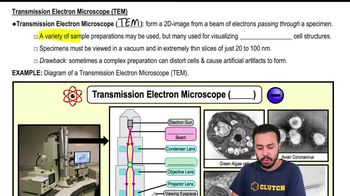
Transmission Electron Microscope (TEM)

Pathogen Life Cycle and Host Interaction

Understanding the pathogen's life cycle and how it interacts with the host's reproductive system is crucial. This includes how the pathogen invades ovarian tissues and survives within eggs, enabling it to persist across generations and potentially affect host population dynamics.
Recommended video:
Guided course
03:40
Introduction to Pathogenic Toxins

Implications for Disease Control

Transovarian transmission complicates disease control because infected offspring are born already carrying the pathogen. This vertical spread can maintain infections in vector populations, making eradication difficult and requiring strategies targeting both adult and immature stages.
Recommended video:
Guided course
04:57
Communicable vs. Noncommunicable Diseases