Higher education blog

Read our blog to explore ideas in teaching and learning.

  • A smiling student writes on a board while conferring with classmates
    Preparing IT Students to Excel in an AI-driven Workplace

    Students have never been more connected to technology. They navigate apps, social media and digital platforms with ease. Yet many information technology educators continue to face a common challenge: students who appear digitally fluent often lack confidence when learning to use workplace technologies effectively.

    For Jason Davidson, Assistant Professor of Business Technology and Analytics at Butler University and Pearson Author of the Exploring Microsoft 365 series, building that confidence is a critical part of preparing students for success.

    "As an educator, what keeps me motivated is watching students grow to be the best versions of themselves," he says. "I really love helping students find the confidence to excel and go into the workplace and immediately make a difference on day one."

    From Digital Comfort to Workforce Readiness

    Davidson sees a challenge many educators will recognize: students often arrive in the classroom comfortable with everyday technology, but less confident using the workplace tools they will need in their careers. This gap becomes especially clear when students begin working with Excel.

    "Excel is not a program that one would use for recreation," Davidson explains. "It's very much a popular business tool."

    For many students, formulas and functions can make Excel feel intimidating, unfamiliar, and overly technical. When that perception takes hold, they may mistake the normal challenges of learning for a lack of ability. For educators, this reframes the issue: early struggles are often less about capability and more about confidence.

    Why Experiential Learning Works

    As AI and data tools become part of everyday work, employers increasingly need graduates who can do more than follow instructions. Experiential learning helps students build the confidence and judgement to interpret results, communicate insights, and apply technology to real-world business problems.

    "What makes the Exploring Series unique is the emphasis on experiential learning," Davidson says. "We really want the students to dig deeper than just a surface level understanding."

    Davidson wants students to "truly master what you can do in Excel to immediately gain actual insights that will help them advance their career, their business, and live their dreams."

    This is where experiential learning becomes a bridge to career readiness. Excel is not the destination. It is a vehicle for teaching students how to analyze information, solve problems, and make informed decisions with data.

    In an AI-driven workplace, those skills matter more than ever. As tools make it easier to generate outputs, the differentiator becomes the human work around those outputs: asking the right questions, confirming results, and communicating insights responsibly.

    A Confidence-First Approach with MyLab

    Davidson uses MyLab IT simulations and grader projects to help students build confidence through practice. He describes the simulations as an “opening confidence booster” because they let students work at their own pace and receive immediate feedback in a supportive environment.

    "What I like about The Sims is it's a simulated environment that is stress free for the students," he says. "It has built-in learning aids. The students can work at their own pace and they get immediate feedback."

    Immediate feedback helps students build momentum and become more comfortable learning through mistakes.

    As students gain confidence, Davidson introduces MyLab grader projects, which requires students to complete work directly in the Excel environment. The progression mirrors what students will encounter outside the classroom, helping them move from guided practice to authentic application.

    Together, MyLab IT simulations and grader projects guide students from confidence-building practice to real-world application, helping them demonstrate their skills in ways that reflect the workplace.

    AI Literacy with Purpose

    As AI reshapes education and the workplace, Davidson believes students need more than access to new tools. They need AI literacy and judgement to use them effectively.

    "AI literacy has become so important in the current academic landscape," he says.

    In his courses, AI is not treated as an answer machine. Students learn to evaluate outputs critically, recognize when AI is useful, and understand where its limitations lie.

    That means using AI ethically, understanding data governance, and validating information rather than accepting AI-generated responses at face value. As the tools become more powerful, Davidson argues, judgement becomes even more important.

    MyLab IT’s AI Literacy Modules and Copilot Pro Simulations support this approach by teaching students how to use AI tools responsibly, validate results, and cite AI ethically and effectively. Each completed module is recognized with a Credly badge, giving students a workforce credential they can carry beyond the classroom.

    For Davidson, the opportunity is not to replace learning, but to help students engage with it more critically and confidently.

    Beyond the Classroom

    Davidson’s approach reminds educators that effective learning is not only about teaching students what to do. It is also about helping them believe they can do it, then giving them meaningful opportunities to apply their skills.

    By combining experiential learning, confidence-building practice, authentic application, and responsible AI literacy, Davidson helps students prepare not just to use Excel, but to work thoughtfully with data in an increasingly AI-driven world.

    The result is simple but powerful: when students build confidence first, they are better prepared to learn, adapt, and contribute from day one and throughout their careers.

  • Students sitting in a university classroom
    MyLab Economics Helps Diverse Learners at King’s College London Succeed at Scale

    At a glance

    Institution: King’s College London, King’s Business School

    Courses: Principles of Economics (Year 1, 250 students) & Intermediate Microeconomics (Year 2,70 students)

    Professor: Denise Hawkes

    Challenge: In a cohort where no two students share the same academic background, the risk of leaving learners behind is real

    Solution: Embedded into lectures, tutorials, and assessment MyLab® Economics provides support beyond the classroom.

    Impact: Improved engagement, stronger confidence among lower attaining students, and significant time savings for staff

    The challenge: Large cohorts, different starting points

    Teaching economics across large cohorts is challenging at the best of times. At King’s College London, Professor Denise Hawkes faced an additional layer of complexity: extreme diversity in student backgrounds.

    Her courses bring together students from mathematics, finance, languages, humanities, and study‑abroad programmes from leading global institutions.

    “I might have a maths‑with‑finance student sitting next to someone doing fashion design. Their strengths are completely different.”

    Some students arrive confident with quantitative skills but struggle to apply economic theory. Others excel in critical thinking but lack mathematical confidence. With limited contact hours, addressing every learner need in class wasn't realistic.

    “I can’t do everything in a two‑hour lecture and a one‑hour tutorial. And everything for everyone is different.”

    Denise needed a way to level the playing field for all learners, support them beyond the classroom, and improve engagement without increasing her workload.

    The solution: embedding MyLab Economics into course design

    Drawing on her experience using MyLab at another institution, Denise proposed integrating MyLab Economics directly into the learning design at King's College not as an optional resource, but as a core component of how students would learn.

    “MyLab is absolutely fundamental to everything we’re doing.”

    Her approach was deliberate and multifaceted. MyLab Economics gave students flexibility in how they engaged with content: auto-graded practice questions with instant feedback, case studies and real-world news analysis, textbook readings, videos, and AI-supported study tools.

    “Some students read, some never read but practise constantly. The lab gives them that choice.”

    This approach allowed students to work at their own pace, revisit challenging topics, and build confidence outside of class.

    With core practice happening in MyLab Economics, contact time transformed. Lectures now focus on application, discussion, and engagement, rather than repetition.

    Graduate Teaching Assistants benefited too. Weekly question sets were selected directly in MyLab, tutorials could be adapted to each group's needs, and they spent more time supporting students and less time planning content.

    “It gave the GTAs certainty, but also flexibility. Different groups could focus on what they actually needed.”

    When it comes to assessment strategy, MyLab Economics proves to be an essential tool. Denise Hawkes’ use of practice tests and mid-term assessments helps students understand expectations and improves results through repetition.

    The robust question bank streamlined assessment creation, and combined with digital marking tools, the time savings were dramatic.

    “I marked 70 exam papers in three hours. It’s saved me so much time.”

    But perhaps most importantly, students were actually using it—and improving.

    “You could see students come back and do significantly better after practising.”

    The impact: stronger engagement and better outcomes

    While multiple factors influence results, Denise observed clear benefits after introducing MyLab Economics to her courses. Many students spent 20+ hours working in MyLab, repeatedly using practice tests to improve performance, and students came to lectures better prepared and ready to interact. Most importantly, MyLab Economics helped support students who needed it most.

    “MyLab has moved the bottom end of the distribution. We’ve had far fewer fails compared to previous years.”

    Educator reflection

    For Denise, MyLab Economics doesn’t replace great teaching, it makes it possible at scale.

    “Without MyLab, all you have is the lecture and a textbook. MyLab gives students real choice in how they learn.”

    With thoughtful integration, MyLab Economics helps institutions support diverse cohorts effectively, improve engagement at scale, reduce staff workload, and build student confidence and independence.

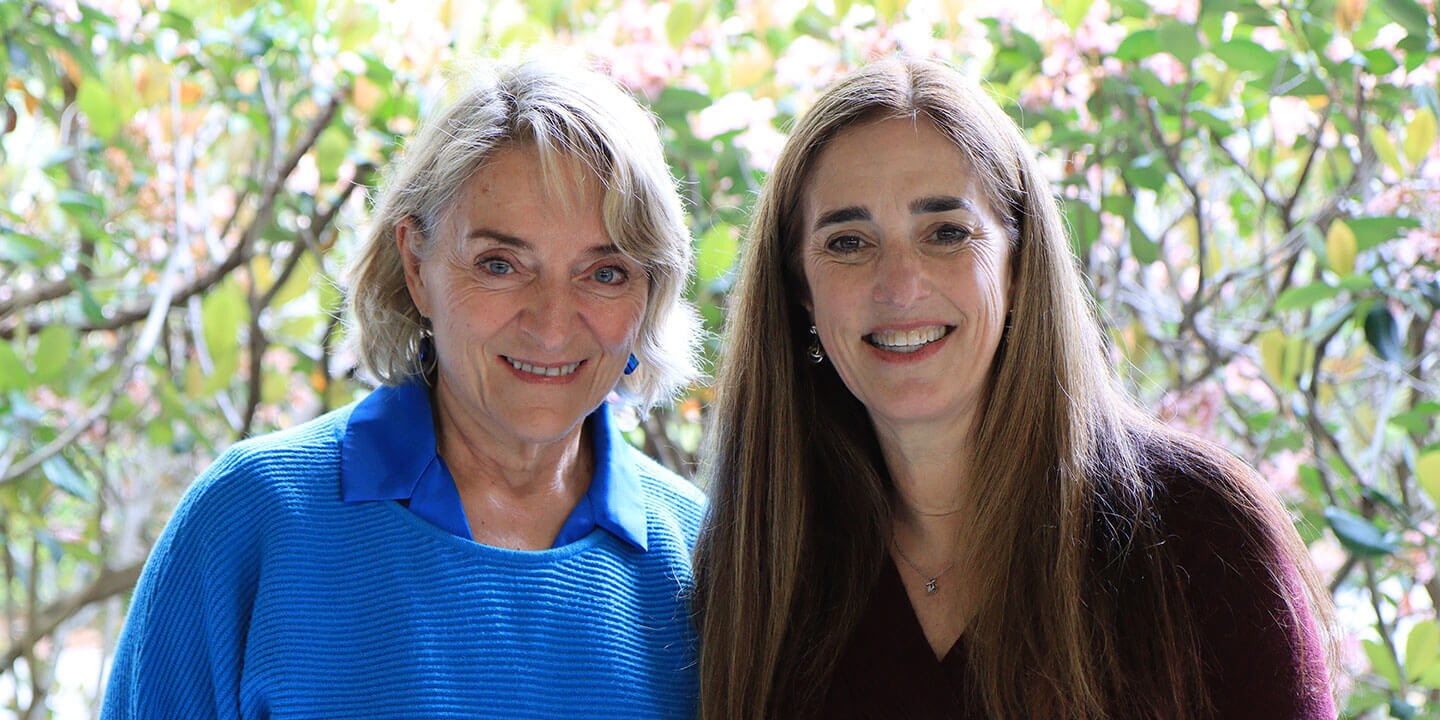
  • Photo of Lisa Urry and Rebecca Orr
    Turning Curiosity into Connection in Biology Classrooms

    For educators like Lisa Urry and Rebecca Orr, biology isn’t just a subject—it’s a gateway to curiosity, discovery, and lifelong learning. Their work on Campbell Biology and Campbell Biology in Focus reflects a shared mission: to move students beyond memorization and into meaningful engagement with the living world.

    A passion for teaching that sparks discovery

    Lisa Urry, a longtime professor at Mills College, and Rebecca Orr, who has been teaching at Collin College since 2007, both bring decades of classroom experience to their work. What drives them is simple but powerful: helping students truly understand biology.

    For Urry, the magic of teaching lies in designing moments where students take ownership of their learning—where they ask questions, explore patterns, and make sense of what they observe. Orr echoes this sentiment, finding fulfillment in watching students grow into who they aspire to be.

    Together, they represent a shift in biology education—from delivering information to creating experiences that inspire transformation.

    Creating a dynamic learning environment

    A major turning point came with the evolution of digital learning. For Urry and Orr, the transition to eTextbooks wasn't simply a change in format—it was an opening of possibility.

    Static pages gave way to something far more engaging. Today's biology students can interact with dynamic visuals and videos, answer questions in real time, and actively test their understanding as they learn. Reading alone is no longer enough. The goal is to read, do, and interact—building deeper understanding through every step of the process.

    This shift reflects a broader philosophy that shapes everything Urry and Orr create: learning should be dynamic.

    They also recognize a very real challenge facing today's students—maintaining attention and focus in an increasingly distracted world. Rather than fighting against this reality, they design with it in mind. Their approach breaks content into short, digestible segments, weaves in frequent low-stakes assessments, and delivers immediate feedback that reinforces learning in the moment.

    The result? Bite-sized interactions that keep students engaged, build confidence, and make even the most complex concepts feel approachable.

    Making biology relevant and exciting in the age of AI

    At the heart of Urry and Orr's approach is a simple but powerful idea: relevance. By intentionally connecting concepts to students' everyday lives, they transform biology from an abstract subject into something immediate, exciting, and worth caring about. The goal was never just comprehension—it was curiosity.

    That same commitment to meaningful engagement extends into how they approach one of education's newest challenges: AI.

    Rather than viewing artificial intelligence as a threat to learning, Urry and Orr see it as an opportunity to teach students how to think more intentionally. Instead of turning to outside tools for quick answers, students are encouraged to stay within the learning environment, using Mastering Biology and AI study tools in the etextbook – drawing from vetted Campbell Biology content. As educators, Urry and Orr want students to use AI to ask deeper questions, sit with complexity, and develop the kind of critical thinking that no shortcut can replace.

    In this way, AI becomes less of a crutch and more of a catalyst, pushing students to engage more deeply rather than simply think less.

    Curiosity: the heart of modern biology education

    If there's one message Urry and Orr want every student and educator to carry with them, it's this: don't just memorize, wonder.

    True learning begins with curiosity. When students pause to study a diagram, ask a question they don't yet know the answer to, or test their understanding just to see how far they've come, something powerful happens. Biology stops being a subject they need to survive and becomes a world they want to explore.

    This is the vision that drives everything Urry and Orr do. By blending innovative tools, intentional teaching strategies, and a genuine passion for student success, they are helping reimagine what biology education can look like.

    For students, that means showing up with an open mind and a willingness to engage. For educators, it means trusting that the right tools and the right approach can make all the difference.

    Together, curiosity and intention can transform the classroom—one eager learner at a time.

  • Teaching Sustainability in the Higher Education Classrooms

    How can sustainability be meaningfully integrated into higher education teaching?
    In this webinar, held on 21 May 2026, Professor Rüdiger Hahn shares practical approaches to help educators introduce sustainability across disciplines, structure key concepts effectively, and embed sustainability into everyday teaching.

  • Global Educator Series: Shape the Future - 2026

    AI is accelerating transformation across higher education—and we’re helping educators lead it. Join our free, four‑part global educator series to explore how AI can strengthen teaching, support fair and human‑centered assessment, and help you and your students love the journey of learning.

    Join AI and education experts in this 4-part global webinar series, as we explore the future of learning, AI ethics, practical AI tools for your classroom, and how to prepare students for an AI-driven workforce. Expect academically grounded guidance, immediately usable practices, and real voices from faculty, students, and experts. 

  • Pearson’s Practice Anatomy Lab 4.0 wins Best Virtual Lab at the 2024 SIIA CODiE Awards

    A hundred years ago, anatomy students would squint from the top row of an oak-paneled lab as their professor dissected a cadaver. They’d hastily make sketches to remember what they saw. Then came the camera, and the ability to snap a photo of an eviscerated mouse to study later in your dorm. And now, cutting-edge technology is reinventing the study of anatomy and physiology (A&P), with virtual labs that provide 3D anatomical models that can be accessed anywhere, anytime.