Students blog

Explore the latest trends, tips, and experiences in college life in this blog written by fellow students.

Explore posts in other areas.

PreK-12Higher EducationProfessional

  • Image shows a lit lamp post at sunset surrounded by campus buildings

    Campus After Dark: The Benefits of Night Classes

    Gia Noorani

    Many college students know the struggle of heading to an 8:00 a.m. lecture, half-asleep after a long night of studying. Years of waking up before sunrise in high school taught me that my best days don’t start with rushing to class.

    I’ve found that taking classes at night has improved my sleep, boosted my productivity, and promoted a healthier learning environment. In this blog, I’ll share my success with evening courses, from improving my sleep and flexibility to enhancing my academic success.

    Scheduling Freedom with Late Classes

    Sleep is a word I had nearly forgotten as a college student. But what if there were a way to make it familiar again?

    College has been a transformative time for me, and the scenery isn't the only thing that has changed. My entire schedule shifted as I learned to juggle lectures, studying, work, clubs, and a social life. With so much to balance while finding my footing in adulthood, prioritizing my sleep has been a challenge.

    For me, night classes have offered a solution to this struggle. When my class starts at 7 p.m. instead of 7 a.m., I can recharge before loading my brain with new knowledge. I’ve found that going to class groggy isn’t ideal for my learning style, so I prefer going at night when I’m more alert.

    During the day, I can eat an energy-packed, nutritious meal, work on homework, attend clubs, and complete my to-do list. By evening, I can focus completely on class, knowing I’ve already accomplished my other daily tasks. Afterward, all that’s left is to get a good night’s sleep, ensuring I’m refreshed for the next day.

    Academic Benefits from Evening Classes

    Not only have night courses improved my sleep, but they have also improved my academic performance. When I’m tired, it’s harder for me to absorb new information or recall what I’ve already learned.

    Instead of cramming for an exam until 3 a.m., I can use my free time during the day to study under optimal conditions. I've found this leads to better overall academic confidence and even performance. Additionally, having time during the day to review assignments has helped prevent me from missing important deadlines that I might otherwise have missed.

    Ultimately, attending night classes has helped me regulate my sleep schedule and boost my academic performance. Getting better rest has helped me use my free time more effectively, creating a healthier and more productive learning environment. When course registration rolls around, you might consider if night classes are the right choice for you, too.

    Do you have a compelling story or student success tips you’d like to see published on the Pearson Students blog?  If you are a college student and interested in writing for us – click here to pitch your idea and get started! 

     

  • Three students seated in a classroom, all three are holding papers; one shows a math diagram on it.

    Finding My Path: The Unexpected Joy of Changing Majors

    Arnold Taylor

    I thought I knew exactly what I wanted to do when I entered college. I was adamant about choosing a degree that would fit my interests and professional objectives. However, as the semesters passed, I realized things weren't going as well as I had hoped.

    I was having trouble keeping up with the requirements of my curriculum, and my grades started to decline. Understanding the subject matter wasn't enough; I was also overburdened and, to be honest, ill-prepared for the time management techniques I would need to be successful.

    I initially tried to persevere, believing things would improve if I put in more effort. However, despite my best efforts, I was unable to strike a balance. I eventually had to acknowledge that this was not the right path for me. I made the difficult decision to switch my major after giving it a lot of thought and having some painful talks with mentors and family.

    Resetting the Clock on Time Management

    It felt like a fresh start when I changed my major. I wasn't sure if I was making the right decision because I was entering a field with which I wasn't familiar. In addition, I had to address the behaviors that had first caused my problems, particularly my ineffective time management. I knew that improving my time management skills, staying on top of homework, and balancing my personal and academic lives were essential to succeed in this new major.

    I began by establishing modest, achievable objectives for myself. I made a plan to prioritize my tasks and divided my responsibilities into smaller, more realistic chunks. When I needed assistance, I learned to ask for it from instructors, fellow students, or campus resources. I eventually discovered a rhythm that suited me.

    Discovering New Passion in a New Major

    What surprised me the most was how much I ended up loving my new major. I initially made the change out of necessity, but as I got deeper into the coursework, I realized that this was where I was meant to be. The subject matter fascinated me more than I expected, and I felt more engaged and motivated than ever before. It was a reminder that, sometimes, the best opportunities come from moments when life doesn’t go as planned.

    Growth Through Self-Awareness and Adaptability

    I learned more from this experience than just the material for a new major. I gained the ability to take charge of my academic path and adjust when things don't go as planned. I also learned how crucial it is to be truthful with myself about my advantages and disadvantages and to make the required adjustments to position myself for success. Most significantly, I came to understand that it is when we venture outside of our comfort zones that we grow.

    One of the most difficult but also the best decisions I've ever made was switching my major. It forced me to become more self-aware, more disciplined, and more confident in my capacity to overcome obstacles. I’m grateful for the challenges because they led me to a field I love, proving that sometimes the path we don’t plan is the best one.

    Do you have a compelling story or student success tips you’d like to see published on the Pearson Students blog?  If you are a college student and interested in writing for us – click here to pitch your idea and get started! 

     

  • Blog author Maddy standing in front of the Graduate School for Education building on her campus.

    Mastering Your Master’s Degree

    Madeline Beavis

    So, you’re thinking about a master’s degree. Or maybe you’ve already started one. Either way, welcome! You’re in good company.

    I entered college knowing I wanted to apply for my school’s five-year Master’s of Education program—but honestly? It was still scary.

    Course planning, advisor meetings, recommendation letters, and essays were all part of the climb. When the long-awaited acceptance finally arrived (yay!), I felt like I’d climbed a mountain.

    But then came the reality check: I still had to complete the program. Cue the overwhelm.

    Master Your Master’s

    Whether you’re at the beginning or somewhere in the middle, you’re probably feeling a mix of excitement, nerves, and questions. The good news? You’re not alone.

    Here are some tips I’ve learned that can help you not just survive but master your master’s.

    Know Your Why

    Before anything else, ask yourself why you’re pursuing this degree. Is it to deepen your expertise? Pivot your career?

    Your “why” will guide you in choosing the right program and opportunities. Importantly, it will also keep you motivated through challenges.

    Make sure your path reflects your goals—not just what seems like the “next step.”

    Adjust Your Mindset

    Grad school isn’t undergrad 2.0. Expectations are higher, and the learning is more self-directed. You’re not just absorbing knowledge anymore—you’re contributing to it.

    You’ll lead discussions, apply theory, and think like a future leader in your field. Passive participation won’t cut it.

    Be your own advocate, seek help when needed, and navigate uncertainty with confidence. The earlier you embrace this shift in mindset, the more empowered you’ll feel.

    Schedule in Structure

    Organization is everything. Grad school assignments are often long-term and not built for last-minute cramming.

    Use your planner, calendar, or apps to break big projects into small tasks. Schedule time for deep focus—and for rest.

    My favorite tip? A “Friday Reset”: spend fifteen minutes reviewing your week and prepping for the next. Small habits like this can keep you grounded and on track.

    Build Relationships

    Grad school can feel isolating, especially if your social circle shifts. I stayed an extra year at my university while friends graduated, and I felt that loneliness. But building connections in my program helped immensely.

    Your peers share your goals (and your fears). Invest in those relationships.

    Take Care of You

    Be gentle with yourself along the way. Despite my preparation, I struggled with imposter syndrome when I started student teaching. I regained confidence by reminding myself that I’m still a student and new challenges are opportunities to learn.

    You might start your program focused on one career path only to discover a new passion. That’s not failure; that’s growth.

    Sustain Your Success

    Pursuing a master’s is a decisive step. Whether you’re still considering it or are already enrolled, remember that you’ve already chosen growth—and that process requires sustainability.

    By knowing your purpose, participating proactively, and planning your time, you can stay ahead of the overwhelm. Building relationships and taking care of yourself will make that success sustainable.

    Now go out there and master your master’s!

    Do you have a compelling story or student success tips you’d like to see published on the Pearson Students blog?  If you are a college student and interested in writing for us – click here to pitch your idea and get started! 

     

  • A computer generated graphic with the text: ‘Medical School: A quick & easy application guide’

    A quick and easy guide to med school applications!

    Melanie Perez

    Hello all my fellow pre-meds! If you’re applying this cycle, you know how close the applications are, and I just wanted to give some words of encouragement since I am also going through the same thing!

    First things first, you must take your MCAT before June to get the most you can out of your application!

    My best advice for the MCAT is do not overthink during the exam. I took a course on how to take the MCAT, and I realized that the exam is not there to trick you. Most of the questions are straightforward, and I learned that I should always go with my first pick. The more you overthink, the more likely you are to change your answer and end up getting it incorrect!

    I strongly recommend taking practice exams! This is a great way to see what approach is best for you in high stress situations. On days that you do take the practice exam, make sure you set up an area that is as close as possible to the actual exam room. Plan out your meals and breaks as well! This ensures that you won’t get blindsided on test day with how fast paced and lengthy the exam is.

    Okay, so you've taken your exam. What happens now?

    Research various medical schools and see which ones are the best fit for you. You can go on the Association of American Medical Colleges (AAMC) website and research different programs. Then, make sure you get your letters of recommendation. These letters are CRUCIAL for your application, since they can make or break it. Every school requires a different amount, so make sure you see how many your med school of choice wants.

    Focus on your application as soon as it opens. Applications are available a month before they need to be turned in. Make sure you start early, so you don't lag then feel stressed by any deadlines. The application may take you a while to complete, but don’t feel discouraged! Take the time to perfect it and make it truly unique. Remember, you are showcasing yourself to a very competitive field, and it is easy to feel imposter syndrome when doing so. Don’t allow your self-doubt to pull you down. Believe in yourself, you got this far, right?

    When you're finally done with the most stressful part, the application, relax! You've done the best you could have done up until now. Congratulate yourself, feel accomplished, you are amazing. Do not find yourself waiting around for emails regarding interviews or acceptances, live your life to its fullest. Don’t feel tied down by the burden you let go the minute you pressed submit.

    To everyone applying, whether it be this cycle, or the next – good luck and congratulations!

    Do you have a compelling story or student success tips you’d like to see published on the Pearson Students blog?  If you are a college student and interested in writing for us – click here to pitch your idea and get started! 

     

  • A young woman wearing a blue cap and gown. exits the stage after receiving her diploma. 

    Grades Aren't the Only Standouts on Your College Apps: Breaking the All-AP Mindset

    Dhwani Adhishesh

    We have all heard of APs, or Advanced Placement courses, and many of us have probably taken a few. In my experience, a majority of my peers in high school took around 2-3 AP classes per year, averaging around 12 total Advanced Placement courses by graduation. Let's be real: most didn't put themselves through this strenuous academic experience for the hope to learn more about riveting microeconomics or DNA strands. They did it for their college resumes, and the glorifying view to include each and every course on their Ivy League applications. But why isn't this enough?

    My High School Experience

    From 2020 to 2024, I went to one of the most academically rigorous high schools in the Bay Area. I performed in the theatre arts program for my high school all four years, on top of being a club officer for three clubs throughout my time. I was infamously known as one of the select few students who would only leave school when it was dark, due to the long rehearsals that were pretty much year-round. I was a classic theatre kid, but I also took my academics seriously. Though my experience was filled with long lasting memories and provided me with the ability to be where I am today, high school was a time of immense stress for everyone around me, especially due to the high levels of competitiveness specifically centered around a GPA craze and the obsession to constantly do more than your peers. I was never someone who wanted to take APs. To this day, I don’t regret taking solely one honors Spanish class and enjoying the rest of my school days. Here's why.

    The AP Appeal

    There’s no question that Advanced Placement courses give students a GPA boost and prepare them for a more difficult college curriculum. Moreso, various AP high school courses can land students credit that can carry on to college. So yes, there is a relatively understandable appeal. The issue isn’t merely taking an AP biology course if one plans to be a nursing major. The real problem is the number of APs students are taking, and the false reality they are sliding into that makes many believe that these classes are all a person needs to get into college. I believe that the issue is often not caused by a single person. As each graduating year goes by, peer pressure grows stronger. A small whisper in the year to take the “easy” AP Psychology class begins spreading the rumors. The phrase “everything is okay in moderation” doesn’t just apply to the number of donuts a person consumes in one morning. Taking a schedule consisting of a majority of AP courses is neither healthy nor enjoyable. Additionally, it doesn’t do as much as one might believe for their college applications.

    College App Curations

    In my opinion, a well-rounded college application includes an academically sound record, various extracurricular activities, and special and additional features like volunteer hours or commitments to specific outside pursuits. In fact, several admission websites state that a 4.0+ GPA and 12-15 APs aren’t primarily nor solely what admission officers look at. The biggest way to achieve this application layout while truly making the most out of one’s high school years is researching by themselves, minus the peer pressure culture. More often than not, the more people search and examine certain classes themselves, the less likely they will be to overload themselves with classes they never wanted in the first place. Doing what is best for one’s academic, intellectual, and recreational aspirations is the most important factor at the end of the day.

    High school is supposed to be a time to savor the last sips of our childhood before launching into the real world, where nothing is measured by a test score of one to five.

    Do you have a compelling story or student success tips you’d like to see published on the Pearson Students blog?  If you are a college student and interested in writing for us – click here to pitch your idea and get started! 

     

  • A desktop with an open book, an iPad with accessibility images on screen, and 4 pens.

    Education Beyond Limitations

    Allie Jamison

    Communication is the foundation of education; furthermore, it is the foundation of society. How many times a day do you ask a question? How about asking a friend to study? Or even something more critical like discussing a grade with a professor? As college students, we use our voices relentlessly, whether in social, academic, or professional settings. Professors communicate their well-known knowledge to eager students ready to jump-start their careers. However, it may not be that simple for every student. Many students face language barriers that create challenges both in and out of the classroom. Whether due to disabilities, language differences, or communication disorders, students who struggle to communicate miss critical opportunities. Thankfully, accessibility services help students work around these barriers and access education.

    Before studying language and communication in my undergraduate courses, I thought accessibility meant extra time on exams or wheelchair ramps. However, accessibility is much broader. Communication tools like augmentative or alternative communication (AAC) devices, interpreters, and assistive technology, support students with visual, auditory, mobility, or cognitive challenges. Recognizing the privilege of effortless communication is essential.

    Communication accessibility is a crucial support in education. Millions of individuals, from young children to those in higher education, face communication challenges. Despite these difficulties, accessibility services provide essential support. One of the most valuable systems is AAC. These tools range from low-tech communication boards to high-tech speech-generating devices. Communication is not limited to spoken words—it includes a variety of methods. AAC devices allow individuals to express their thoughts, engage in classrooms, and interact with peers and educators. For students with conditions such as Autism, Cerebral Palsy, or aphasia, AACs provide alternative communication where traditional speech may be difficult. Implementing these devices in schools fosters inclusivity and supports education.

    Beyond AAC devices, many other accessibility services assist learners. Interpreters are vital in education, helping students who speak different languages or use sign language. Learning about the Deaf community and its history has deepened my understanding of accessibility. Deaf students were once forced to use oral methods despite the challenges, limiting their educational opportunities. The focus was on assimilation rather than individual development. This issue extends beyond Deaf history to broader societal attitudes toward disabilities. Recognizing andadvocating for accessibility services in education is essential.

    Additional assistive tools benefit students with physical and cognitive disabilities. Screen readers and text-to-speech software support visually impaired students, while Braille materials and tactile graphics provide crucial access to information. Adaptive keyboards assist individuals with mobility impairments, and wheelchair-accessible classrooms ensure physical accessibility. While these services exist, more advocacy is needed to raise awareness and ensure implementation. Despite progress, challenges remain in educational accessibility. A lack of awareness and understanding hinders the expansion of essential services.

    Accessibility is not a want—it is a necessity. Breaking down barriers in education requires more than technology; it requires a cultural shift toward inclusion. Supportive services create environments where all students can succeed. As students, we must advocate for our peers and promote accessibility in education. By making education more inclusive, we empower students to become active learners and achievers.

    Do you have a compelling story or student success tips you’d like to see published on the Pearson Students blog?  If you are a college student and interested in writing for us – click here to pitch your idea and get started! 

     

  • A tablet and a laptop open on a student desk with a view of campus out the window.

    Reconnecting to Routines after a Break

    Ariana Santiago Ramos

    Like for most students, the transitions between breaks and school have been anything but fun for me. Somehow three hour-long classes seemed to last days during those weeks in which I was still getting used to school. Over time, and with lots of trial and error, I feel as though I have perfected the art of the back-to school-transition. Especially after Spring Break, which barely feels like a break at all, I make sure to follow a specific routine to get back into my “grind-set” (grind mindset).

    Getting a Head Start

    Arguably the most important part of effectively transitioning back into school after a break is preparing before it even starts. Spring break is short, and it goes by fast, so by a day or so to do nothing helps you come back rested. Additionally, you can use this time to reflect on the semester so far: on what you’d like to continue or stop doing, on moments and people that you appreciated, and anything else you deem notable.

    Sleep Schedule

    The next step is to re-establish a sleep schedule that works with my class schedule. For example, if my first class is at 9 am, and I know it takes me about an hour and a half to get ready in the morning. I start waking up at around 7am and go to bed around 11pm to get the amount of sleep I want. By jumping right back into the habit I had before break limits the shock of a sudden transition once classes reconvene.

    Keeping an Agenda

    Ahead of my first back in class, I review any assignments for classes in the upcoming week. In my physical agenda (although many students also do this either on an online calendar or spreadsheet), I mark the date of all my tests and assignments whose due date is already posted, as well as reminders to study for those tests. This not only saves me time in the future but also saves me the stress of forgetting an upcoming assignment or being unaware of certain class expectations.

    Go With the Flow

    The final, but arguably the most crucial part of my routine, is to not take myself too seriously. Along with the stress of what remains of the current semester comes the joy of knowing that there are countless new opportunities coming your way. Classes are hard and getting back into a routine can be even harder, but trust that you are more than capable of overcoming anything that comes your way.

    Do you have a compelling story or student success tips you’d like to see published on the Pearson Students blog?  If you are a college student and interested in writing for us – click here to pitch your idea and get started! 
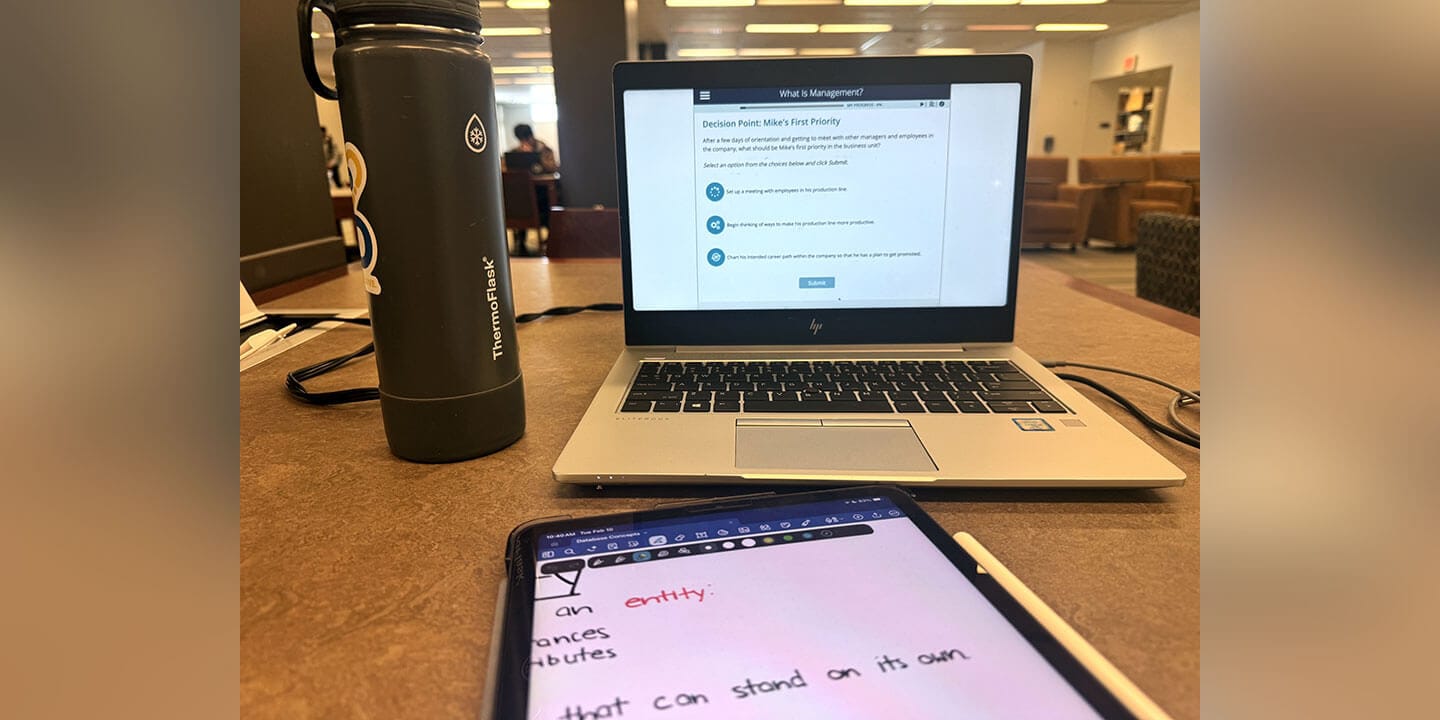
     

  • A computer screen showing a list of coding prompts.

    Bridging the Gap: Why Independent Study is Essential for Success in Tech

    Elanah Hassan

    In today's hyper-competitive job market, especially in tech, students are facing increasing pressure to elevate their technical skills well beyond traditional coursework. As a sophomore in Computer Engineering the standard college curriculum focuses heavily on theoretical concepts, leaving a gap between what we learn in the classroom and the applied skills demanded by the industry. As I navigated this gap, I turned to online coding courses and independent projects, which not only helped me earn certifications but also strengthened my problem-solving abilities and deepened my understanding of the concepts taught in class. Here are three actionable tips and resources that have helped me and can help other students in similar situations develop in-demand technical skills while still in school.

    Tip #1: Utilize Self-Paced Coding Platforms

    Since my senior year of high school, I’ve been using Codecademy to teach myself programming languages like HTML/CSS and Python, and it’s been a game-changer for my growth in tech. The platform offers courses tailored to every skill level, hands-on projects to sharpen your abilities, and clear, step-by-step explanations of complex software concepts. What makes it even better is the flexibility to complete courses on your own time, making it perfect for busy students. Plus, finishing a course earns you a certification to showcase your skills and boost your visibility in the industry. Leveraging my Codecademy experience played a huge role in my recruiting success this past semester, and I highly recommend it to anyone looking to build or refine their programming skills.

    Tip #2: Work on Personal Projects

    Personal projects are an amazing way to develop technical skills while pursuing something you’re passionate about. Currently I’m combining my love for yoga with my technical interests by building a Python-powered web app to help people explore yoga as a wellness tool. As Vice President of my campus Yoga and Meditation group, this project feels deeply meaningful and allows me to merge my passions with my growing skill set. Using resources like YouTube and GitHub, I’m excited to tackle this challenge head-on. Personal projects like these not only sharpen your skills but also show recruiters your initiative and drive to learn. Find something you love or a problem you care about—and start creating!

    Tip #3: Take Advantage of Corporate Tech Resources

    Many top tech companies like Microsoft, Google, IBM, and NVIDIA offer free online learning platforms packed with resources to help you build programming skills, explore real-world applications, and prepare for technical interviews. These platforms give you a unique opportunity to learn directly from the companies shaping the tech industry, providing insights into their projects, technologies, and workflows. For example, Microsoft Learn offers interactive modules and challenges, Google’s Applied Digital Skills covers hands-on programming and AI tools, and IBM SkillsBuild provides access to cloud computing and AI resources. NVIDIA also has a rich catalog focusing on GPU programming and AI development.

    Breaking into tech can feel intimidating, but building a strong foundation of skills is the key to boosting your confidence and unlocking new opportunities! Use your time away from school to dive into independent study and sharpen those marketable skills that will set you apart. If you’ve secured an internship that requires technical programming skills but don’t feel fully prepared yet (like I once did), this is the perfect time to bridge that gap. Learning beforehand will not only help you feel more confident going in but also allow you to make the most of the experience and grow and develop while you work. Remember, every step you take is progress—invest in yourself, and watch the doors open!

    Do you have a compelling story or student success tips you’d like to see published on the Pearson Students blog?  If you are a college student and interested in writing for us – click here to pitch your idea and get started! 

     

  • A computer generated image illustrating ‘Hard choices – Easy Life’ vs ‘Easy choices – Hard Life’.

    How I Balanced My Schedule to Graduate College Early

    Kiahna Seijo

    Graduating college early wasn’t a goal I initially set for myself; in fact, I thought I would take the full four years to get my degree. However, as I progressed through my courses, I realized I was ahead in my major-required classes and the idea of graduating early was possible. My main motivation was to save on college expenses and decrease the time of doing long distance with my significant other. Here are the strategies that helped me balance my schedule and achieve this feat.

    The first step was setting clear goals. Once I decided to graduate early, I mapped out a timeline, identifying the courses I needed to complete. Creating a degree progression plan helped me gain clarity and kept me focused throughout my journey. Analyzing my course load was equally important; I carefully evaluated the required classes and sought opportunities to take summer and online courses to maximize my credit hours. Taking month-long summer courses and 7.5 week courses during the school year really helped me achieve my goals.

    Time management became crucial as I juggled my new school schedule along with extracurriculars and jobs. I prioritized tasks using a detailed weekly planner, breaking down my workload into a visualized to-do list. Creating a routine is essential to maintaining balance and productivity in a busy college schedule. I made it a priority to carve out time for self-care, exercise, and social activities, all of which were key to preventing burnout.

    Leveraging campus resources also made a significant difference in my journey. I utilized tutoring centers, sought guidance from academic advisors, and built a support system of friends and mentors who encouraged me along the way. My academic advisor assisted me with creating a degree progression plan, which helped map out my remaining semesters. She made sure all of the requirements to graduate were fulfilled and set me up for success!

    Of course, the path wasn’t without its challenges. I faced obstacles that tested my resolve, but I learned to adapt and overcome them. At first, my goal was to graduate early so I could pursue a graduate degree, but after exploring my options, that’s no longer my focus. My journey has been anything but straightforward, with many adjustments along the way. Each pivot taught me valuable lessons about resilience and adapting to change.

    In conclusion, balancing my schedule to graduate early was a rewarding challenge that required dedication, planning, and a commitment to personal well-being. I learned valuable time management skills that will serve me well in the future, and I discovered the importance of setting clear goals and prioritizing tasks. This experience not only boosted my academic confidence but also allowed me to pursue other goals outside of school!

    Do you have a compelling story or student success tips you’d like to see published on the Pearson Students blog?  If you are a college student and interested in writing for us – click here to pitch your idea and get started!