Ch. 24 The Digestive System
Martini - Fundamentals of Anatomy & Physiology 11th Edition
Martini, Nath, Bartholomew11th EditionFundamentals of Anatomy & PhysiologyISBN: 9780136874089Not the one you use?Change textbook
Chapter 24, Problem 9

Bile release from the gallbladder into the duodenum occurs only under the stimulation of
(a) Cholecystokinin
(b) Secretin
(c) Gastrin
(d) Enteropeptidase

Verified step by step guidance
1
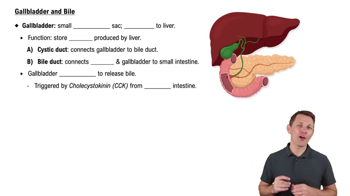
Understand the role of bile in digestion: Bile is produced by the liver and stored in the gallbladder. It helps emulsify fats in the small intestine, making them easier to digest.
Identify the hormone responsible for stimulating bile release: Among the options, cholecystokinin (CCK) is a hormone released by the small intestine in response to fats and proteins entering the duodenum.
Recall the function of cholecystokinin: CCK stimulates the gallbladder to contract and release bile into the duodenum, aiding in fat digestion.
Review the roles of the other hormones listed: Secretin primarily stimulates bicarbonate secretion from the pancreas, gastrin stimulates acid secretion in the stomach, and enteropeptidase activates pancreatic enzymes but does not trigger bile release.
Conclude that bile release from the gallbladder into the duodenum occurs only under the stimulation of cholecystokinin (CCK).

Verified video answer for a similar problem:

This video solution was recommended by our tutors as helpful for the problem above.
Was this helpful?

Key Concepts

Here are the essential concepts you must grasp in order to answer the question correctly.

Cholecystokinin (CCK)

Cholecystokinin is a hormone released by the small intestine in response to fats and proteins in the chyme. It stimulates the gallbladder to contract and release bile into the duodenum, aiding in fat digestion. CCK also promotes pancreatic enzyme secretion.
Recommended video:
Guided course
6:54
Gallbladder and Bile

Bile Function and Release

Bile is a digestive fluid produced by the liver and stored in the gallbladder. Its release into the duodenum emulsifies fats, facilitating their digestion and absorption. Bile release is tightly regulated by hormonal signals, primarily cholecystokinin.
Recommended video:
Guided course
6:54
Gallbladder and Bile

Role of Other Digestive Hormones

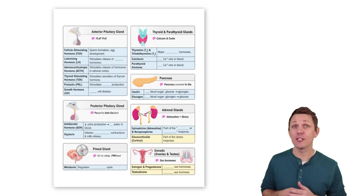
Secretin, gastrin, and enteropeptidase are digestive regulators with distinct functions: secretin stimulates bicarbonate secretion to neutralize stomach acid; gastrin promotes gastric acid secretion; enteropeptidase activates pancreatic enzymes. None directly trigger bile release.
Recommended video:
Guided course
13:06
Review of Major Hormones