Ch. 3 The Cellular Level of Organization
Martini - Fundamentals of Anatomy & Physiology 11th Edition
Martini, Nath, Bartholomew11th EditionFundamentals of Anatomy & PhysiologyISBN: 9780136874089Not the one you use?Change textbook
Chapter 3, Problem 22

The sodium–potassium exchange pump
(a) Is an example of facilitated diffusion
(b) Does not require the input of cellular energy in the form of ATP
(c) Moves the sodium and potassium ions along their concentration gradients
(d) Is composed of a carrier protein located in the plasma membrane
(e) Is not necessary for the maintenance of homeostasis

Verified step by step guidance
1
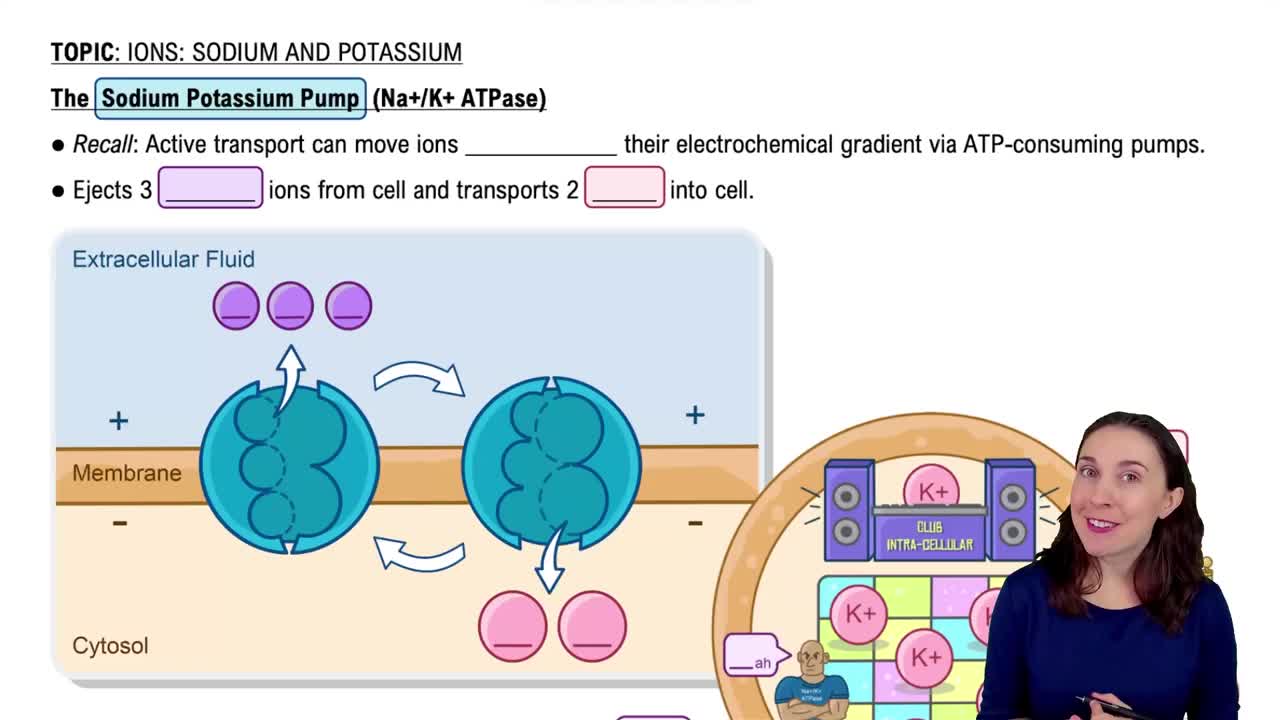
Step 1: Understand the function of the sodium–potassium pump. It is a membrane protein that actively transports sodium (Na\(\textsuperscript{+}\)) and potassium (K\(\textsuperscript{+}\)) ions across the plasma membrane to maintain concentration gradients essential for cell function.
Step 2: Recall that facilitated diffusion is a passive process that moves substances down their concentration gradients without energy input, whereas the sodium–potassium pump moves ions against their gradients and requires energy.
Step 3: Recognize that the pump uses ATP to actively transport 3 sodium ions out of the cell and 2 potassium ions into the cell, which means it requires cellular energy in the form of ATP.
Step 4: Identify that the pump is a carrier protein embedded in the plasma membrane, which changes shape to move ions across the membrane.
Step 5: Understand the importance of the pump in maintaining homeostasis by regulating ion concentrations, cell volume, and resting membrane potential, making it essential for normal cell function.

Verified video answer for a similar problem:

This video solution was recommended by our tutors as helpful for the problem above.
Video duration:
2m
Was this helpful?

Key Concepts

Here are the essential concepts you must grasp in order to answer the question correctly.

Sodium–Potassium Pump Function

The sodium–potassium pump is a membrane protein that actively transports sodium ions out of the cell and potassium ions into the cell, maintaining essential concentration gradients. This process is vital for cell function, including nerve impulse transmission and muscle contraction.
Recommended video:
03:40
The Sodium Potassium Pump

Active Transport and ATP Usage

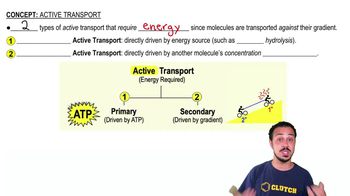
Active transport requires energy to move substances against their concentration gradients. The sodium–potassium pump uses ATP to fuel the movement of ions, distinguishing it from passive processes like facilitated diffusion that do not require energy.
Recommended video:
02:37
Active Transport

Role in Homeostasis

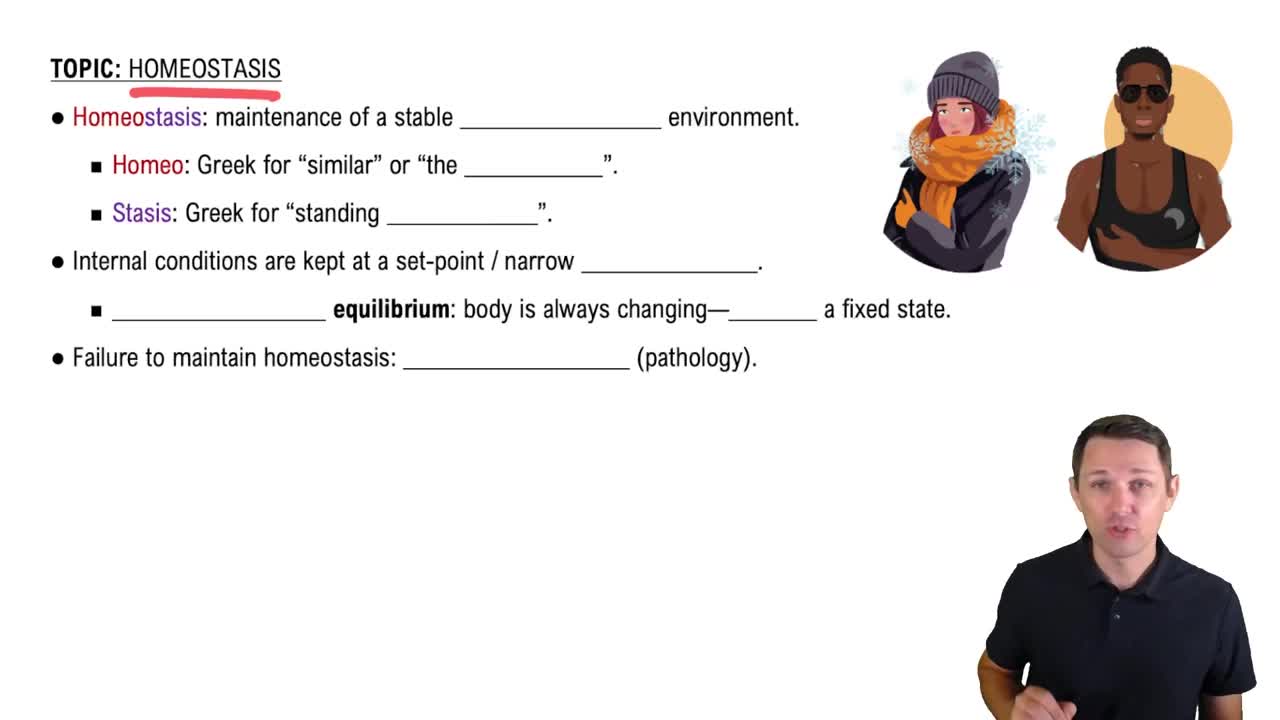
The sodium–potassium pump helps maintain cellular homeostasis by regulating ion concentrations and cell volume. This balance is crucial for normal cell function and overall physiological stability.
Recommended video:
Guided course
01:59
Introduction to Homeostasis