Ch. 12 Nervous Tissue
Martini - Fundamentals of Anatomy & Physiology 11th Edition
Martini, Nath, Bartholomew11th EditionFundamentals of Anatomy & PhysiologyISBN: 9780136874089Not the one you use?Change textbook
Chapter 12, Problem 5

The neural cells responsible for the analysis of sensory inputs and coordination of motor outputs are:
(a) Neuroglia
(b) Interneurons
(c) Sensory neurons
(d) Motor neurons

Verified step by step guidance
1
Step 1: Understand the roles of different neural cells mentioned in the options. Neuroglia are support cells that provide structural and metabolic support to neurons but do not process information directly.
Step 2: Recognize that sensory neurons are responsible for transmitting sensory information from receptors toward the central nervous system (CNS), but they do not analyze or coordinate responses.
Step 3: Identify that motor neurons carry signals away from the CNS to effectors like muscles or glands to produce a response, but they do not perform analysis or integration.
Step 4: Focus on interneurons, which are located entirely within the CNS and serve as connectors between sensory and motor neurons. They are responsible for processing sensory input, integrating information, and coordinating motor output.
Step 5: Conclude that the neural cells responsible for analysis of sensory inputs and coordination of motor outputs are the interneurons.

Verified video answer for a similar problem:

This video solution was recommended by our tutors as helpful for the problem above.
Video duration:
2m
Was this helpful?

Key Concepts

Here are the essential concepts you must grasp in order to answer the question correctly.

Interneurons

Interneurons are neural cells that connect sensory and motor neurons within the central nervous system. They analyze sensory inputs and coordinate appropriate motor outputs, acting as intermediaries in reflexes and complex neural circuits.
Recommended video:
1:03
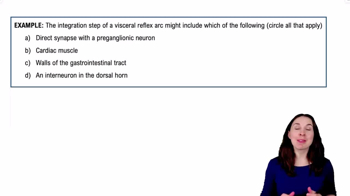
Visceral Reflex Arcs Example 1

Sensory Neurons

Sensory neurons transmit information from sensory receptors to the central nervous system. They detect stimuli such as touch, pain, or temperature but do not process or coordinate responses themselves.
Recommended video:

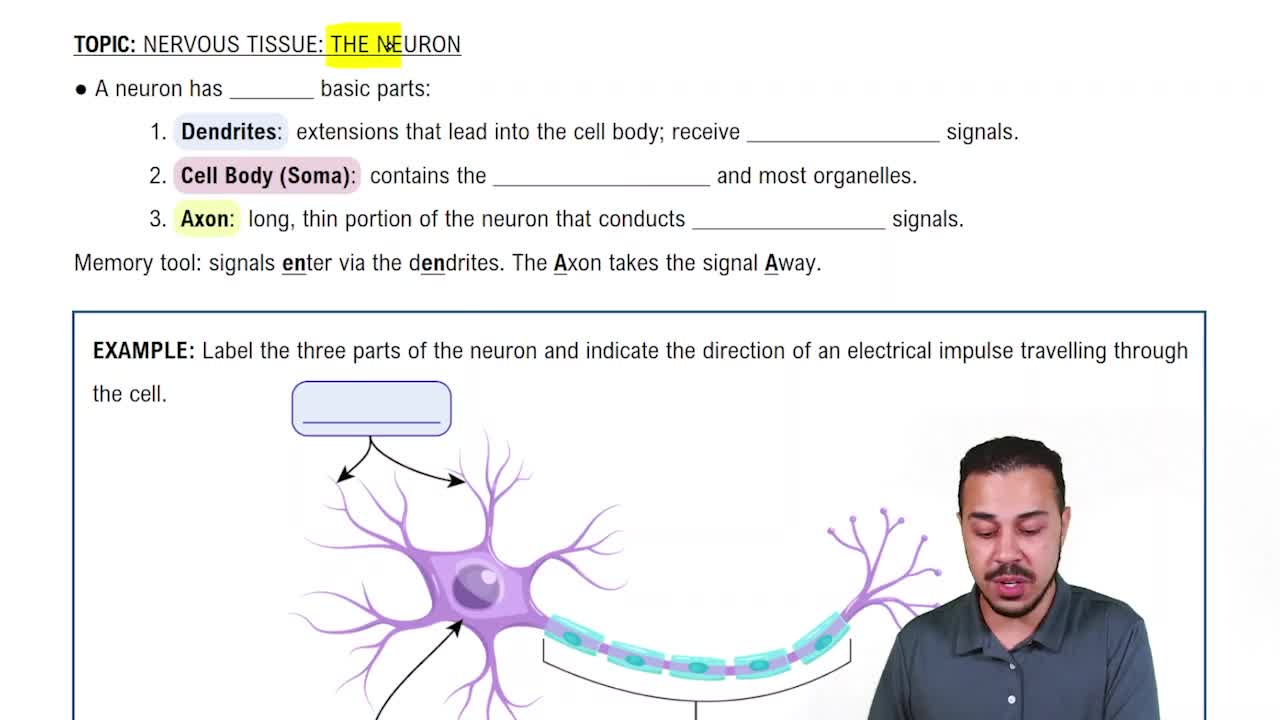
Motor Neurons

Motor neurons carry signals from the central nervous system to muscles or glands to produce movement or responses. They execute commands but do not analyze sensory information.
Recommended video: