
Textbook Question
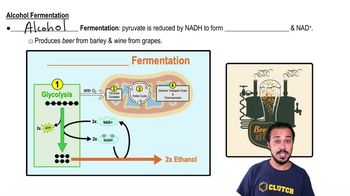
Where specifically does the most significant production of ATP occur in prokaryotic and eukaryotic cells?
1220
views
 Verified step by step guidance
 02:02
02:02
 03:39
03:39 04:19
04:19Where specifically does the most significant production of ATP occur in prokaryotic and eukaryotic cells?
Activation energy ______.
a. Is the amount of energy required during an activity such as flagellar motion
b. Requires the addition of nutrients in the presence of water
c. Is lowered by the action of organic catalysts
d. Results from the movement of molecules
What happens to the carbon atoms in sugar catabolized by Escherichia coli?
Which of the following does not affect the function of enzymes?
a. Ubiquinone
b. Substrate concentration
c. Temperature
d. Competitive inhibitors
Coenzymes are _______.
a. Types of apoenzymes
b. Proteins
c. Inorganic cofactors
d. Organic cofactors
Which of the following statements best describes ribozymes?
a. Ribozymes are proteins that aid in the production of ribosomes.
b. Ribozymes are nucleic acids that produce ribose sugars.
c. Ribozymes store enzymes in ribosomes.
d. Ribozymes process RNA molecules in eukaryotes.