What is opsonization, and which antibodies have opsonizing activity?
Verified step by step guidance
1
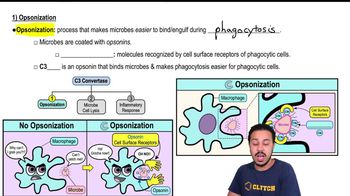
Understand the concept of opsonization: it is a process in the immune system where pathogens are marked for destruction by phagocytes, enhancing their uptake and elimination.
Recognize that opsonization involves molecules called opsonins, which bind to the surface of microbes and facilitate their recognition by phagocytic cells.
Identify the main types of antibodies that act as opsonins; these antibodies bind to antigens on pathogens and promote phagocytosis.
Know that the primary antibodies with opsonizing activity are IgG subclasses, especially IgG1 and IgG3, which interact with Fc receptors on phagocytes.
Summarize that opsonization improves the efficiency of the immune response by tagging pathogens with antibodies (mainly IgG) and complement proteins, making them easier targets for phagocytosis.
Verified video answer for a similar problem:
This video solution was recommended by our tutors as helpful for the problem above
Video duration:
1m
Play a video:
Was this helpful?
Key Concepts
Here are the essential concepts you must grasp in order to answer the question correctly.
Opsonization
Opsonization is a process where pathogens are marked for destruction by the immune system. It involves coating microbes with molecules like antibodies or complement proteins, enhancing their recognition and ingestion by phagocytic cells such as macrophages and neutrophils.
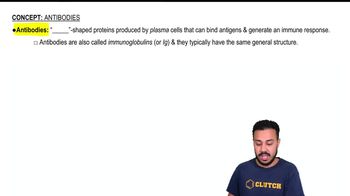
Antibodies are immune proteins that specifically bind to antigens on pathogens. Different classes of antibodies have distinct roles, including neutralization, complement activation, and opsonization, which facilitate pathogen clearance by immune cells.
The primary antibodies with opsonizing activity are IgG subclasses, especially IgG1 and IgG3. These antibodies bind to pathogens and interact with Fc receptors on phagocytes, promoting phagocytosis and enhancing the immune response against infections.