Ch. 1 - A Brief History of Microbiology
Bauman - Microbiology with Diseases by Taxonomy 6th Edition
Bauman6th EditionMicrobiology with Diseases by TaxonomyISBN: 9780134832302Not the one you use?Change textbook
Chapter 1, Problem 5

Why would a macroscopic tapeworm be studied in microbiology?

Verified step by step guidance
1
Understand the scope of microbiology, which includes the study of microorganisms such as bacteria, viruses, fungi, and parasites, including those that affect humans.
Recognize that although tapeworms are macroscopic (visible to the naked eye), they are parasitic helminths, which are studied in medical microbiology due to their role in infectious diseases.
Consider that microbiology often covers the life cycles, transmission, diagnosis, and treatment of parasitic infections, including those caused by tapeworms.
Note that studying tapeworms in microbiology helps understand how these parasites interact with their hosts, cause disease, and how to control or prevent infections.
Conclude that the inclusion of macroscopic parasites like tapeworms in microbiology is essential for a comprehensive understanding of infectious agents and their impact on human health.

Verified video answer for a similar problem:

This video solution was recommended by our tutors as helpful for the problem above.
Video duration:
2m
Was this helpful?

Key Concepts

Here are the essential concepts you must grasp in order to answer the question correctly.

Scope of Microbiology

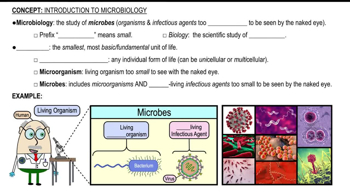
Microbiology studies microorganisms, including bacteria, viruses, fungi, and parasites. Although tapeworms are macroscopic, their larval or microscopic stages and their interactions with microbes make them relevant to microbiology.
Recommended video:
Guided course
07:27
Introduction to Microbiology

Parasitology

Parasitology is a branch of microbiology focusing on parasites, including helminths like tapeworms. Understanding tapeworm biology, life cycle, and host interactions is essential for diagnosing and treating parasitic infections.

Host-Microbe Interactions

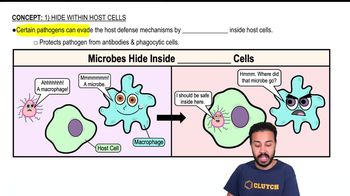
Studying tapeworms involves examining how these parasites affect and interact with the host's microbiota and immune system. This interaction is crucial for understanding disease mechanisms and developing therapeutic strategies.
Recommended video:
Guided course
01:50
Hide Within Host Cells