
Students blog

Explore the latest trends, tips, and experiences in college life in this blog written by fellow students.

Explore posts in other areas.

PreK-12Higher EducationProfessional

  • An open notebook with a clear pocket insert with cash in coins and bills.

    Invest in Yourself: Saving Money in College

    Dawson Wright

    When in college, it may seem impossible to save money. There are countless things you’ll want to spend your cash on, whether it’s a football game, a club membership, or shopping for the next event. On top of that, you still have to account for what you need for both school and life.

    Managing all of this can feel overwhelming, especially if it’s your first time living away from home. That’s why it’s so important to be intentional and find a healthy balance in everything from your schedule to your spending.

    Get Started: Earning an Income

    To manage money effectively, you have to first have some money to work with. Whether it comes from an allowance, a scholarship, or a part-time job, having a reliable source of income is essential.

    The more you can earn, the more you can save. If you keep your savings in an account that earns interest, this money will grow alongside you through college. Figuring out how much you make each month is the critical first step to establishing good spending and saving habits.

    Get Organized: Managing a Budget

    Once you know your monthly income, the next step is to allocate your money wisely. Start by setting aside funds for necessities like food and rent. Then, with the remaining balance, create a realistic budget for your wants and savings.

    For instance, if you have $500 left after covering your essential expenses, decide how much you want to save. If you choose to save $200, you’ll have $300 left to cover all other expenses. The key takeaway is to save before you spend.

    Save Money: Spend Thoughtfully

    It might be difficult to save the same amount every month, because college is full of unique experiences that entice with the promise of memories (and the price of mementos). However, by prioritizing essentials first, then savings, and finally discretionary spending, you can manage your money more effectively and avoid unnecessary debt.

    At the end of the day, we’re still young adults balancing the excitement and responsibility of adulthood. While it’s important to enjoy college life, the most critical aspect of managing money is to plan and prepare for the future.

    Yes, having fun is important, but at the end of the day, a lot of the fun we experience in college is fleeting. Make sure you stay focused on long-term growth without getting (too) distracted by short-term rewards.

    Invest: In Yourself

    As you progress through school, challenge yourself to save as much as possible. The earlier you develop this habit, the more you’ll earn in interest.

    Ultimately, the goal of pursuing a degree is to transition into a successful, self-sufficient adult. Use this time to invest in yourself in every way: academically, professionally, personally, and financially. It will pay off (literally) in the long run.

    Do you have a compelling story or student success tips you’d like to see published on the Pearson Students blog?  If you are a college student and interested in writing for us – click here to pitch your idea and get started! 

     

  • An overhead shot of a desk area with a computer, coffee mug, and notebook. The blog title appears in white letters.

    Building a Legacy: My First Steps in the Financial Industry

    Jasmine Ferrante

    Growing up, I watched my father build a high-end transportation company from the ground up. He didn’t have a college degree or a roadmap, just a relentless work ethic and the drive to succeed.

    As a first-generation college student, that hustle inspired me throughout business school. I knew I wanted a career where I could build something meaningful, help my community, and create a legacy of my own.

    I didn’t enter college with a network in finance, but I was determined to leave with direction, confidence, and a solid foundation. So, I got involved. I joined a sorority, became a part of the Pearson Campus Ambassador program, participated in the Pre-Law Club, and was inducted into my university’s all-Greek honors society. Each space taught me something different: how to lead, how to speak up, and how to navigate unfamiliar rooms with confidence. By the time I earned my degree in Business, I wasn’t just finishing school. I was building something real for myself and laying the groundwork for the career I envisioned.

    Getting My Foot in the Door

    Right after graduation, I became licensed in Life and Health Insurance in my home state and joined Bankers Life and Casualty. I now work with clients across Maine, Virginia, and Florida to help them plan for retirement, navigate Medicare, and protect their families through life insurance and long-term care solutions.

    At the same time, I’m pursuing my MBA and preparing for the LSAT exam, with long-term goals of becoming a financial advisor and eventually a trust and estate attorney. As a current rookie agent, I’m learning that finance isn’t just about numbers; it’s about the people. It’s about listening, earning trust, and empowering others to make informed decisions about their futures.

    If there’s one thing I hope younger women in college take away from my journey, it’s this: you don’t have to wait to start. This is especially true in an industry where women are still underrepresented. The earlier you take action, the more prepared and powerful you’ll be.

    Three Things I’d Tell My First-Year Student Self (Now That I’ve Lived It)

    1. You won’t feel ready, and that’s exactly when you should start. The people who seem confident? They just started before you. Still, that doesn’t mean you’re behind; you are building momentum.

    2. You don’t need to be the loudest to be respected. Listen carefully, speak with purpose, and know that your quiet confidence will grow into leadership over time.

    3. The room might not look like you; go in anyway. You belong, even if you’re the only woman or the youngest in the room. Take a seat, take up space, and keep showing up. That’s how change starts.

    Turning Ambition into Action

    Stepping into the financial industry as a recent graduate hasn’t always been easy, but it’s been worth it. I’ve grown through every awkward client call, every moment of self-doubt, and every challenge that pushed me to improve.

    I didn’t have a roadmap. I had ambition, a support system I built from scratch, and the belief that I could do something meaningful.

    If you’re just starting out, know this: you don’t have to be fearless to move forward. You just have to be willing. Be willing to learn, ask questions, speak up, and keep going even when it’s uncomfortable.

    This industry needs more women. It needs your voice, your perspective, and your ideas. And there’s no rule that says you can’t be the first or the one who changes everything.

    Do you have a compelling story or student success tips you’d like to see published on the Pearson Students blog?  If you are a college student and interested in writing for us – click here to pitch your idea and get started! 
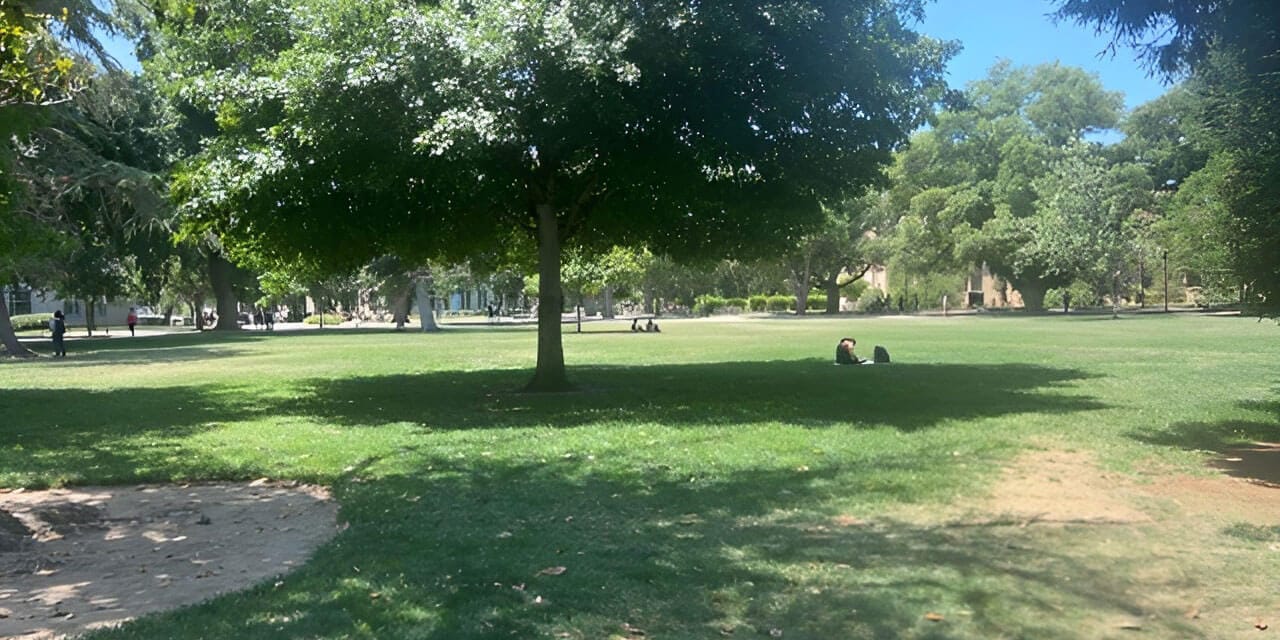
     

  • An outdoor space on the campus of University of California Davis. A student sits under a large shade tree.

    Budgeting Tips for College Students: Managing Money Without Missing Out

    Alissa Ansari

    College is an exciting time full of independence and new experiences, often accompanied by the first real taste of financial responsibility. With expenses like tuition, books, rent, and snacks adding up quickly, it's easy to feel overwhelmed without a plan. But with a few smart habits and simple tools, budgeting in college can be empowering rather than restrictive. You don't need to sacrifice fun to stay financially healthy; you just need a strategy.

    Track Your Spending and Make a Simple Budget

    The first step to gaining control of your finances is knowing where your money goes. Use free apps like Mint, EveryDollar, or a basic spreadsheet to track your spending. Break it down into categories: food, rent, school supplies, transportation, and entertainment.

    Once you have a clear picture of your spending, create a monthly budget with realistic spending limits. Budgeting doesn't mean you can't enjoy your daily coffee; it just helps you choose what's worth spending now and what can wait.

    Remember Student Discounts and Free Resources

    Many businesses offer discounts for college students—think streaming services, restaurants, software, and even travel. Always carry your student ID, and don't hesitate to ask about deals even if they aren't advertised.

    On campus, make the most of free resources: gym memberships, tutoring centers, events with free food, and loaner tech equipment. These perks can help stretch your budget without compromising your experience.

    Plan Ahead and Build a Safety Net

    Unexpected costs are part of life: your laptop breaks, a textbook costs more than expected, or you get hit with a surprise medical bill. Set aside a small amount (even ten or twenty dollars) into a monthly savings or emergency fund. Over time, this cushion will help you handle surprises without added stress or unexpected debt. Apply for scholarships each year to save even more in the long term.

    Learning how to budget in college isn't just about surviving; it's about setting yourself up for success. Track spending, use student resources, and plan ahead to maximize your college experience without financial anxiety. A little discipline now goes a long way in building strong habits that will benefit you well beyond graduation.

    Do you have a compelling story or student success tips you’d like to see published on the Pearson Students blog?  If you are a college student and interested in writing for us – click here to pitch your idea and get started! 

     

  • A computer graphic with the words ‘Budget for Success’

    Budgeting Your Expenses as a College Student Living Off-Campus

    Kylie Guzman

    Managing finances as a college student living off-campus can be daunting, but with careful planning and discipline, you can stretch your dollars and maintain financial stability. Here’s a comprehensive guide to help you budget effectively.

    1. Calculate Your Income

    The first step in budgeting is knowing how much money you have. This includes:

    • Income from Part-Time Jobs: Calculate your monthly earnings.
    • Financial Aid and Scholarships: Include grants, scholarships, and student loans.
    • Support from Family: If applicable, account for regular contributions from family.

    Understanding your total monthly income sets the foundation for creating a realistic budget.

    2. Track Your Expenses

    Keep track of all your expenses to understand where your money is going. Use apps like Mint or YNAB, or maintain a simple spreadsheet. Categorize your expenses into fixed and variable costs.

    • Fixed Costs: Rent, utilities, internet, transportation (car payments or public transit passes), insurance, and tuition fees.
    • Variable Costs: Groceries, dining out, entertainment, clothing, and other personal expenses.

    3. Create a Budget Plan

    Based on your tracked expenses, create a detailed budget. Allocate funds to each category and prioritize essentials.

    • Rent and Utilities: This should be your top priority. Aim to keep rent around 30% of your monthly income.
    • Groceries: Plan meals and shop smart to avoid overspending. Look for sales and use coupons.
    • Transportation: Factor in gas, maintenance, and insurance if you own a car. Consider public transportation as a cost-effective alternative.
    • Miscellaneous: Set aside a fixed amount for entertainment, dining out, and other non-essential expenses.

    4. Cut Unnecessary Costs

    Identify areas where you can cut back. Consider these tips:

    • Cook at Home: Dining out frequently can drain your budget. Cooking at home is healthier and cheaper.
    • Use Student Discounts: Take advantage of student discounts for everything from software to public transportation and entertainment.
    • Limit Subscriptions: Assess your subscriptions (Netflix, Spotify, etc.) and cancel any that you don’t use regularly.

    5. Build an Emergency Fund

    Set aside a small amount each month into a savings account for unexpected expenses. Aim to build an emergency fund that covers at least three months of living expenses. This fund will provide a safety net and reduce financial stress.

    6. Monitor and Adjust Your Budget

    Regularly review your budget and spending habits. Adjust your budget as needed to stay on track. If you notice you’re overspending in one category, compensate by cutting back in another.

    7. Seek Financial Advice

    Many colleges offer financial literacy programs and resources. Don’t hesitate to seek advice
    from financial counselors available through your university.

    Budgeting as a college student living off-campus requires diligence and foresight. By calculating your income, tracking your expenses, creating a budget plan, cutting unnecessary costs, building an emergency fund, and regularly monitoring your budget, you can manage your finances effectively and ensure a stress-free college experience. Remember, the habits you develop now will serve you well into your financial future.

    Do you have a compelling story or student success tips you’d like to see published on the Pearson Students blog?  If you are a college student and interested in writing for us – click here to pitch your idea and get started! 


  • A grocery store with shelving featuring various grocery items and yellow sale price flyers.

    Stretching Your Dollars at the Grocery Store

    Ayden Notaro

    Have you ever felt like every year, your dollars continue to buy less and less at the grocery store? You wouldn’t be alone in this feeling as many consumers across the country are burdened with the lingering effects of higher-than-normal inflation – the increase in overall prices. Even if you haven’t experienced a major increase in your food bill, you may still notice that the amount of goods you receive for the same price has decreased: this is a process dubbed “shrinkflation.” 

    As college students faced with already heightened costs of education, it is important to take every step we can to save money while living on campus. One of the best ways to do this is to take control of one of the main expenses incurred throughout our college experience: groceries and food

    While it may not seem like it, small changes in the way we shop can lead to exponential savings in the long run. If you find yourself feeling the pressure of increasing prices at your local supermarket, here are some ways to potentially trim your grocery bill and save some cash. 

    The first thing I will say is to stay basic. Grocery stores are carefully crafted to lead you through high-margin items into essentials like milk and eggs. So, while the 6 pack of chocolate chip cookies sitting in the bakery section may look tempting, it helps to establish a list of things you need before visiting (if you are craving them, baking them from scratch is way cheaper). 

    Another thing to do is to think cost-per-unit. This is something I noticed not too long ago and has changed my shopping process entirely. Instead of comparing prices, look at the cost-per-unit of the product and decide whether you are willing to pay a premium for one product over the other. Moreover, buying in bulk will often yield savings. Pantry staples like rice and spices can often be bought in seemingly absurd proportions, but making the upfront investment can be way cheaper than buying a bag that will last you two weeks. 

    And finally, never discount private label brands. For those unaware, private labels are products that are manufactured and branded by the retailer you choose to shop at – think Great Value (Walmart), Kirkland Signature (Costco), and everything in Trader Joes. Being made by the retailer means that the company experiences cost savings which they then pass onto you, the end customer, to stay competitive. In my experience, most private labels of essential goods rarely differ in quality from name brands.

    In conclusion, while inflation and shrinkflation are challenging realities, there are practical strategies to manage your grocery expenses. By planning ahead, comparing cost-per-unit, buying in bulk, and swapping to private-label brands, you can stretch your dollars further. As college students, adopting these habits not only eases financial pressure but also instills smart shopping practices that will benefit you long after graduation. Embrace these tips, and you'll find that a little effort can lead to significant savings, making your college experience more affordable and enjoyable.

    Do you have a compelling story or student success tips you’d like to see published on the Pearson Students blog?  If you are a college student and interested in writing for us – click here to pitch your idea and get started! 


  • Two male college students standing at the front of a classroom presenting to a group of students seated at desks.

    Post Secondary Investment Prowess

    Ayden Notaro

    With the steadily rising cost of tuition, it is becoming increasingly vital to understand the financial implications of pursuing a degree after high school. From the year 2000 to 2021, the average cost of tuition for four-year schools was driven up by 69% due to a variety of economic factors. But what does this mean for those currently enrolled in, or applying to pursue, a four-year degree? The bottom line is that when it comes to considering going to college, education is an investment and must be tackled as such – especially if you intend on taking out loans.

    Disclaimer: The information provided on this blog is for general informational purposes only. It does not constitute financial advice and should not be relied upon as such. Before making any financial decisions, you should consult with a qualified financial advisor who can assess your situation.

    The process of funding your college degree will vary drastically depending on your situation. Moving to a university to study will generally be expensive for many; however, scholarships and grants are given based on high school academic performance (GPA, standardized tests), extracurriculars (sports, clubs), and financial need. Beyond these, there are many other ways to support your expenses before relying on debt.

    Applying for a job sounds obvious, but many students shy away from the idea. I have spoken to many college students who are under the impression that working on campus is a threat to their education, consuming time and adding more tension to the already burdensome schedule of a college student. While this may be true in some cases, there are plenty of opportunities out there that offer a flexible work environment while supporting a student in their education.

    “Work Study”, or FWS, is a need-based federal program that aims to support students financially while allowing them to gain valuable work experience. In my experience, I’ve seen work-study students employed in administrative departments, gyms, and other facilities. The program is based on the idea that eligible students are on a full-time schedule which is reflected in the flexibility of scheduling. More information can be found on studentaid.gov.

    Alternative sources of employment can also include remote work or part-time shifts at surrounding campus businesses. It is possible to find remote work through LinkedIn and other career platforms that can support a flexible work schedule. Personally, working as a Campus Ambassador for Pearson gives me a chance to support my college life while working on campus. To explore opportunities that you may be eligible for, it is worth a visit to your university career center for advice on how to apply and prepare for recruitment. Additionally, businesses on or near your campus may be looking for help. It is worth stopping at local companies you are interested in working for or have prior experience with to see if they are looking for part-time employees. Moreover, if you work a summer job, saving most of your income will benefit you during the year as well.

    Another way to look at covering the cost is if you can’t increase your income, decrease your spending. There are many ways to do this, but I would recommend:

    • Tracking your monthly expenses
    • Prioritizing essentials
    • Limiting dining out, entertainment, and shopping
    • Cooking at home

    These are four habits that have allowed me to fund a significant portion of my college experience myself. However, it is also important to create a healthy balance to make the most out of your college experience. Understand that violating your budget in college occasionally is often negligible and sometimes inevitable – it is the habits that stick. Ultimately, that idea goes for both sides of the coin. As I learned in my finance classes, compounding has drastic effects in the long run. Therefore, making consistently wise financial decisions is a key step in obtaining a college degree.

    Do you have a compelling story or student success tips you’d like to see published on the Pearson Students blog?  If you are a college student and interested in writing for us – click here to pitch your idea and get started! 

     

  • A photo collage featuring the text: Finance Hacks: College Edition, and 5 photos highlighting locations mentioned in the blog including campus events and dining locations on campus.

    Finance Hacks: College Students’ Edition

    Lexie Harris

    From tuition and housing to food and entertainment, college is expensive! It seems like everywhere you look is somewhere you have to spend money. To help with expenses, many full-time college students have jobs, which can make it difficult to manage your schedule and maintain academic success. Sometimes you may feel like you’re putting too much time toward one, and not enough time on the other. No matter your situation, we could all benefit from some cost-saving tips. Here are three tips to help save money while in college!

    Attend Events on Campus

    At the beginning of each semester, a lot of colleges hold free on-campus events! These types of events aim to help new freshmen become more comfortable in a new environment. It helps the new students meet other people, get to know the campus, and learn about on-campus groups (i.e. sororities/fraternities and clubs). These events are not only for new students but are often open to returning students. While these events are a great way to get involved with your campus community, there are often free giveaways and swag items up for grabs. From t-shirts to bags to notepads to mechanical pencils, there is a lot of free stuff being given away. As the semester goes on, keep a lookout for more free events on campus. Get involved with on campus events and enjoy the freebies which can help you save money, too!

    Take advantage of the Meal Plan

    Many colleges require students who live on-campus to select a meal plan. Even if you live off-campus, you can take advantage of this! Especially if you are required to pay for it, you might as well use it! This saves you from having to spend extra money on groceries and having to go out to eat. Most colleges also have multiple meal plan options for students to pick from. Starting out it may be difficult to know what meal plan will work best for you, but you will quickly learn how to maximize your plan and can always adjust the next semester. This way you save money and eat the food you want to eat, whether it be on campus restaurants, in the cafeteria, or at home.

    Borrow or Rent Textbooks

    In my experience, many teachers use presentations to teach instead of closely following the textbook. That being said, this doesn’t mean textbooks are useless and never required. There are professors who still rely heavily on their textbooks, and even if the professor doesn’t really use the textbook, it can be a great resource for studying and learning more about a topic. The one drawback to physical textbooks, however, is that they are pretty expensive. Instead of buying all new textbooks, try renting them or using a digital eTextbook format. I have found that eTextbooks are available for less than half what the textbooks cost and have other great features such as audiobooks, study tools, and video for on-the-go learning.

    From tuition and housing to food and entertainment, college is expensive! It may seem like everywhere you look is somewhere you have to spend money. By using these three tips, you can save some money and still get the full college experience!

    Do you have a compelling story or student success tips you’d like to see published on the Pearson Students blog?  If you are a college student and interested in writing for us – click here to pitch your idea and get started! 
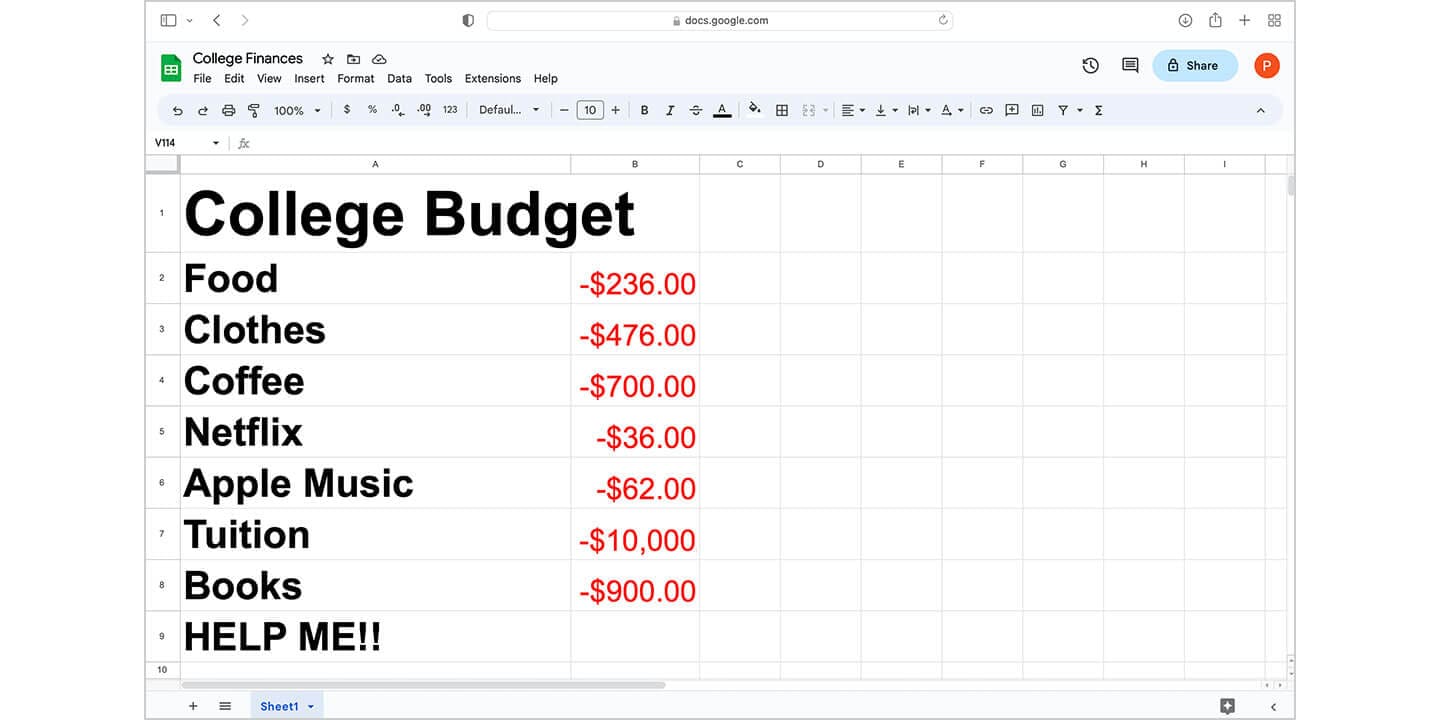
     

  • A screenshot of a Google Sheet listing college expenses and ‘Help Me!!” at the end of the list.

    Five Money Management Tips for College Students

    Peyton Maria

    Budgeting in college can be very hard. With the world at your fingertips, new events every day, and the convenience of fast food, saving money in college almost feels impossible. However, there is hope. With a few quick lifestyle changes, you can easily go from pinching pennies to having enough savings to survive when you graduate.

    Keep Track of Your Spending

    Some bank apps make it really easy to do this, but even if you just need an excel sheet, keeping track of the money you’re spending can be a gamechanger. When you are constantly writing down what you're spending, it causes you to be more cautious of how much you are spending monthly. Suddenly, a $7 coffee every other day doesn’t seem as tempting, and eating in allows you to spend more money in the long run-on things/experiences that will mean more to you than the late-night Canes run. Pick and choose what’s more important and keep track of what your weekend meals add up to.

    Set A STRICT Budget

    And no, this doesn’t mean transferring money out of your savings every time your monthly budget runs dry. In order to save money in college, you have to create a budget and stick to it. My rule of thumb is 40% savings, 60% checking, then dividing that up into gas, groceries, bills, wants, and needs. The important thing is sticking to what you have set at the beginning of the month and not going over it. When you go over, you are already setting yourself up for a bad month to follow. When you go under, you’re able to spend more money where you want to in the coming months.

    Be Intentional

    It is so easy to spend money when you aren’t thinking about it. Small purchases for $5 or $10 can seem like nothing, but then all of a sudden you’ve spent $100 in one weekend, and you didn’t actually enjoy most of it. It’s so important to spend intentionally, buying things only when you need or have money to. Window shopping always turns into real shopping, and “looking around” is always too tempting. It’s easier to just not go to the mall than to convince yourself not to spend the money once you’re there.

    Take advantage of FREE

    People know college kids are struggling. Whenever there’s an event on your campus with free food, take advantage! Eat at the dining hall when you have passed your allotted amount for eating out this month. The food might be less tempting than your favorite take-out place, but this is the one time in your life you will have access to free and made meals, so save that money and suffer through it! Dining hall pizza is always better than being broke.

    Give Yourself Grace

    My final tip is to give yourself grace when you don’t follow all of this perfectly. We are all struggling with finances, and money seems to never be enough, and it’s ok to have a little less in your checking account than you’d prefer. This is also a time where you can fully focus on being a student with few responsibilities. Go out with friends, make memories, and don’t be so hard on yourself when it comes to your money spending. Maybe just opt for the cheaper restaurants every so often and go thrifting for outfits you’re only going to wear once anyways. That dress is so cute for a Taylor Swift concert but won’t be in your calculus class.

    Overall, college is hard enough, and not having enough money to feel comfortable with your spending makes it even harder. Being intentional, limiting your spending, and keeping track of it will make living in college on a small budget easier. But remember that you won’t always do this exactly how you want, and that’s okay. You are doing hard things, and you should celebrate that instead of beating yourself up for spending a little too much on Celsius. Do your best and check your bank account often, and you’ll be okay.

    Do you have a compelling story or student success tips you’d like to see published on the Pearson Students blog?  If you are a college student and interested in writing for us – click here to pitch your idea and get started! 

     

  • A close-up shot of 2 rows of $1 bills.

    College Money Management Hacks

    Madeline Beavis

    “I’m broke!” might just be the most common statement made by college students. College is a major expense, but there are many ways to still have fun and be involved without breaking the bank!

    Take Advantage of Student Discounts

    Did I hear discounts? Yes! There are many businesses that offer discounts for students. From clothes to electronics to movie theaters to theme parks, retailers are happy to support students. Don't be afraid to ask about available student discounts.

    Apply For Scholarships

    I know it can seem daunting to write essay after essay about why you deserve a scholarship, but organizations want to help students with their financial needs! Sitting down for a couple of hours and submitting applications can make all the difference to offset college costs... and some scholarships don’t even require essays! Make sure that you check with your school’s financial aid office for specific scholarships related to academic performance, athletics, or extracurriculars.

    Give Yourself an Allowance

    Learning how to balance your spending is an important life skill. If you have a job, calculate how much money you make per month and allow yourself a maximum amount to spend out of your income. If you do not have a job, allot a specific amount you can spend each month or consider finding a job on campus if you have enough time in your schedule. There are usually many opportunities to work at on-campus coffee shops, the library, or dining halls. Check out your school’s employment opportunities for more information. Be sure to track your spending and progress for motivation!

    Open A Savings Account

    A savings account is a great way to store your money in a secure location, limit spending (remember your allowance!), and earn interest. Keeping your savings in an account ensures access to your funds in case of an emergency, while intentionally separating your spending money from what you are trying to save. Investigate savings accounts without minimum balance amounts and no monthly fees to save even more.

    Investigate E-Textbooks

    It is no secret that college textbooks are expensive! Many college textbooks are available in a more budget-friendly eTextbook format – which are often less than half of the cost of the print version. I’ve had the opportunity to subscribe to my eTextbooks, available in Pearson+. This has been a great way to save money on textbooks. For just $10.99/month you have instant access to your eTextbook, videos, and study tools. With the Pearson+ mobile app, you can access your textbooks from anywhere!

    Your college years can be challenging in many ways and managing finances can top the list at times. Take the time to plan the money management strategies that work best for you. The habits you build will serve you well both throughout your college experience and after graduation.

    Do you have a compelling story or student success tips you’d like to see published on the Pearson Students blog?  If you are a college student and interested in writing for us – click here to pitch your idea and get started!