
Students blog

Explore the latest trends, tips, and experiences in college life in this blog written by fellow students.

Explore posts in other areas.

PreK-12Higher EducationProfessional

  • Three students seated in a classroom, all three are holding papers; one shows a math diagram on it.

    Finding My Path: The Unexpected Joy of Changing Majors

    Arnold Taylor

    I thought I knew exactly what I wanted to do when I entered college. I was adamant about choosing a degree that would fit my interests and professional objectives. However, as the semesters passed, I realized things weren't going as well as I had hoped.

    I was having trouble keeping up with the requirements of my curriculum, and my grades started to decline. Understanding the subject matter wasn't enough; I was also overburdened and, to be honest, ill-prepared for the time management techniques I would need to be successful.

    I initially tried to persevere, believing things would improve if I put in more effort. However, despite my best efforts, I was unable to strike a balance. I eventually had to acknowledge that this was not the right path for me. I made the difficult decision to switch my major after giving it a lot of thought and having some painful talks with mentors and family.

    Resetting the Clock on Time Management

    It felt like a fresh start when I changed my major. I wasn't sure if I was making the right decision because I was entering a field with which I wasn't familiar. In addition, I had to address the behaviors that had first caused my problems, particularly my ineffective time management. I knew that improving my time management skills, staying on top of homework, and balancing my personal and academic lives were essential to succeed in this new major.

    I began by establishing modest, achievable objectives for myself. I made a plan to prioritize my tasks and divided my responsibilities into smaller, more realistic chunks. When I needed assistance, I learned to ask for it from instructors, fellow students, or campus resources. I eventually discovered a rhythm that suited me.

    Discovering New Passion in a New Major

    What surprised me the most was how much I ended up loving my new major. I initially made the change out of necessity, but as I got deeper into the coursework, I realized that this was where I was meant to be. The subject matter fascinated me more than I expected, and I felt more engaged and motivated than ever before. It was a reminder that, sometimes, the best opportunities come from moments when life doesn’t go as planned.

    Growth Through Self-Awareness and Adaptability

    I learned more from this experience than just the material for a new major. I gained the ability to take charge of my academic path and adjust when things don't go as planned. I also learned how crucial it is to be truthful with myself about my advantages and disadvantages and to make the required adjustments to position myself for success. Most significantly, I came to understand that it is when we venture outside of our comfort zones that we grow.

    One of the most difficult but also the best decisions I've ever made was switching my major. It forced me to become more self-aware, more disciplined, and more confident in my capacity to overcome obstacles. I’m grateful for the challenges because they led me to a field I love, proving that sometimes the path we don’t plan is the best one.

    Do you have a compelling story or student success tips you’d like to see published on the Pearson Students blog?  If you are a college student and interested in writing for us – click here to pitch your idea and get started! 

     

  • A view through a window with streamers, party hats, balloons, and a Happy New Year banner at sunrise.

    New Year, New Me? How to Actually Stick to Your Resolutions

    Juanita Shirin Jeyakumar

    January 1: You wake up bright and early. It’s a new year, and you feel like a new person with a fresh set of goals. You plan to spend more time outside, go to the gym every day, and stay on top of all your assignments.

    Then February hits. Your gym sends you a text message saying they miss you. It’s been days since you’ve seen the light of day, and you’re two weeks behind on your lectures.

    If you’re worried this will happen again next year (and the next), use this how-to guide to stick to your New Year's resolutions.

    Step 1: Set Small, Realistic Goals

    It’s easy to get ambitious and set huge goals, but this can be unrealistic, especially when your motivation inevitably dips. Rather than setting a goal to go to the gym every day, set a goal to move your body for thirty minutes instead. Sometimes, a simple walk around your neighborhood is easier to commit to than driving to the gym for a full workout.

    Step 2: Find an Accountability Partner

    I’ll be the first to admit it’s easy to let go of goals when no one else knows about them. If no one is going to question your progress, it makes it much easier to quit.

    That’s where an accountability partner comes in. It could be a family member, roommate, partner, or friend. Their job is to hold you responsible and encourage you to stay on track.

    Didn’t stick to your goal? They’ll motivate you to try again. Plus, embarking on a journey is always easier when you're not alone.

    Step 3: The Two-Month Commitment

    On average, it takes a little more than two months of consistent practice to form a new habit (Lally et al., 2009). If you commit to achieving your goal for two months, these actions can develop into a habit and, eventually, a lifestyle.

    Instead of overwhelming yourself with a year-long commitment, focus on the next two months. It makes the whole thing seem less intimidating. Before you know it, you’ll have created a new routine.

    Step 4: It’s a Privilege

    Eventually, keeping up with your New Year's resolutions will feel as effortless as any other habit. Still, some days will be a lot easier than others.

    On days when motivation seems elusive, try reframing your thoughts about your to-do list. Instead of saying, “I have to,” try saying, “I get to.” For example: “I get to move my body every day,” “I get to have an amazing education,” “I get to fuel my body with good things,” or “I get to enjoy nature.” Every day is a privilege and recognizing this can help you feel more grateful for your life.

    Through it all, remember to love yourself and give yourself grace. Better yet, add that goal to the top of your list.

    Bibliography

    Lally, Phillippa, van Jaarsveld, Cornelia H. M., Potts, Henry W. W., and Wardle, Jane. “How Are Habits Formed: Modelling Habit Formation in the Real World.” European Journal of Social Psychology 40, no. 6 (July 2009): 998–1009. https://doi.org/10.1002/ejsp.674.

    Do you have a compelling story or student success tips you’d like to see published on the Pearson Students blog?  If you are a college student and interested in writing for us – click here to pitch your idea and get started! 
     

  • A black couch with two black and white striped pillows, a ghost pillow, a strawberry throw blanket, and a blue and white throw blanket draped over the back.

    TV Marathons for College Break

    Madeline Beavis

    As fall semester comes to an end and finals begin, college students face endless readings, problem sets, and late-night study sessions. But once the work is finally done, exams are submitted, and essays are written, nothing feels better than sinking into the couch, grabbing a snack, and launching a good old-fashioned, TV marathon. Here are four shows worth lining up to pass the time during winter break... so go relax, you've earned it!

    1. Yellowjackets

    If you haven’t been pulled into the chaos yet, now is the time. Yellowjackets is the perfect mix of psychological thriller, survival horror, and messy coming-of-age drama. The show follows a high school girls’ soccer team stranded in the wilderness after a plane crash. The story bounces between their terrifying fight to survive in the ’90s and the dark fallout in their adult lives. It’s got cult vibes, mystery boxes, and the kind of “I need to know what happens next” cliffhangers that will absolutely ruin your sleep schedule—in the best way possible.

    2. We Were Liars

    Based on the wildly popular YA novel by E. Lockhart, We Were Liars is gearing up to be an experience when it hits Prime Video. Set on a private island off Massachusetts, the story follows a wealthy family hiding dangerous secrets. It’s told through the eyes of Cadence Sinclair, who is struggling to piece together the events of a previous and pivotal summer. Think Pretty Little Liars energy but with more psychological twists and a beach-goth atmosphere. Perfect for curling up and losing track of time.

    3. Timeless

    This recommendation is a personal favorite of mine! It’s not a new show, but it has a timeless plot (no pun intended). This time-travel adventure follows a historian, a soldier, and a scientist as they chase a rogue operative through America’s past, from the Hindenburg disaster to Watergate. Each episode blends action, clever storytelling, and real historical events while weaving in deeper questions about identity, morality, and the power of rewriting history. Suspenseful yet heartfelt, Timeless is perfect for anyone who craves high-stakes drama, fascinating “what ifs,” and a touch of history.

    4. Stranger Things, Season 5

    The long-awaited final chapter of the Hawkins story will arrive in three volumes. The first drops on November 26, with later releases on December 25 and December 31. Expect Eleven, Mike, and the gang to face their darkest, most harrowing threat yet, with all the supernatural scares and nostalgic charm we’ve come to love in the previous seasons.

    Bonus Watch: The Bear

    And if you’re hungry too, check out The Bear. This award-winning dramedy follows “Carmy,” a young chef who takes over his family’s sandwich shop in Chicago. He tries to transform it into something great while barely holding his own life together. It’s chaotic, funny, and unexpectedly heartfelt, with dialogue that moves as fast as the kitchen itself. Just be warned: you’ll probably find yourself craving Italian beef by the second episode.

    Whether you’re in the mood for survival horror, family drama, or supernatural throwdowns, these shows are tailor-made for late-night marathons after long days of school and life. Stock up on snacks, silence the notifications, and let mind wander around new worlds for a while!

    Do you have a compelling story or student success tips you’d like to see published on the Pearson Students blog?  If you are a college student and interested in writing for us – click here to pitch your idea and get started! 

     

  • A computer screen showing coding language.

    Applying AI in a Beneficial Way to Your Education

    David Marquez

    Education is a vital resource for our technical and social interaction with the communities around us. As technology progresses, K-12 and Higher Education find themselves at the behest of new tools and avenues of learning in our contemporary world. Computers, calculators, and mobile devices drastically changed how we learn in the classroom. What used to be bound to a physical location has become available 24/7 through digital technologies. The internet gave us easy, quick access to the expanse of human knowledge at the click of a button. Now, there is a new digital tool sweeping across the world, useful in every point of life: generative AI. 
 

    Having become popular in the past couple of years, generative AI chatbots specifically have taken over the news with their dramatic changes to industries, everyday life, and the classroom. A controversial topic as well by the way it learns and the validity of its output, this new technology has yet again flipped the table concerning certain practices and learning objectives. Within the classroom, generative AIs like Chat GPT, Perplexity, and Claude have found themselves to be useful tools for completing assignments and education. By simply asking the AI chatbot, you are given an answer based on the information bestowed. This technology, however, has also been used for academically dishonest tasks. That doesn’t mean that this new tool is immediately the worst product to come out. Like a calculator, AI is a tool, and like every tool, you use it to better your work. If you rely on it too heavily, you will get nowhere in the end. 
 

    Taking computer science classes in AI allows me to expand my programs beyond an assignment’s basic requirements. With AI, I have been able to understand more deeply the complex concepts I apply to my code, making me a more well-rounded computer scientist and computer programmer. However, when I used this tool, I didn’t ask the chatbot how to do the assignment. If I ran into issues I couldn’t solve or questions I would like to learn more about, I fed information to the AI detailing. In response, you can get not only an answer but detailed feedback that leads up to that answer and possible information beyond.  
     
    Now, this isn’t entirely a computer science tool. As a writing assistant, chatbot AI models can assist with small tasks in your writing. By utilizing the chatbot as a tool and a reference, we can come to understand the interaction as a conversation; you want to balance out the back and forth to not be so one-sided. The more one-sided it becomes, the more you might not find what you want from that AI. Or you might find you’ve taken too much and are coming up with something you do not understand. 
 

    An amazing contemporary technology, generative AI has completely changed the different stages of the world. Like a tool, it is good to start using it early. By understanding AI, you can further develop your skills and become more productive in whatever facet of your life you are working on, remembering that you work alongside it, not for it. 

    Do you have a compelling story or student success tips you’d like to see published on the Pearson Students blog?  If you are a college student and interested in writing for us – click here to pitch your idea and get started! 

     

  • A phone showing ChatGPT at the top of the screen and the words AI Study Tools on the left.

    AI for College: A First-Year Guide to Studying Smarter

    Logan Fulford

    First-Year Overwhelm

    How did you feel during your first year in college? Were you overwhelmed and maybe a little worried that you might fail your classes? That was exactly how I felt.

    I was extremely nervous about starting college because it was intimidating. Reading teacher reviews for courses like Business Calculus only added to my anxiety.

    I was convinced I could fail my exams along with half of the class and began to question whether I was cut out for college at all. I knew that college was a big step up from high school. The fear of falling behind was constantly in the back of my mind.

    Making the Most of Campus Support

    As someone who plans for every situation, I created a strategy to make sure I didn’t fail. First, I took advantage of every resource available to me. I regularly attended Supplemental Instruction sessions, visited my professors’ office hours, and worked through extra practice problems whenever I could.

    These resources helped immensely, but I still struggled to study efficiently, especially before major exams or when study guides weren't provided.

    Expanding to Modern Resources

    With the rise of AI over the past few years, I decided to create my own study resource. I began uploading my lecture notes, textbook chapters, and practice problems into an AI tool (e.g., ChatGPT, Claude, or NotebookLM). I would then ask it to generate a list of key terms and thirty multiple-choice questions, complete with answers and explanations.

    This approach completely changed the way I studied. I no longer had to spend countless hours cramming before exams or feel lost while reviewing material. Instead, I could study a little each day. This helped me develop a deeper understanding of the topics and retain information much better.

    Sharing My Strategy

    This method didn’t just help me. Once I started seeing real results (better grades, less stress, and more confidence), I shared this strategy with friends who were also struggling. Before long, their grades improved, too. Many also told me they felt way less anxious about exams.

    Even now, in our second year of college, my friends and I continue to use this method. It allows us to study consistently during the week while still leaving time to enjoy the activities we love.

    Using AI the Right Way

    While this method is incredibly effective, it’s important to be mindful of its limitations. Generative AI should be used as a study aid, not as a tool for cheating. To use it ethically, rely on it only to reinforce what you’ve learned, not to replace traditional studying.

    Since most AI gathers information from sources across the internet, it’s crucial to double-check that the material is accurate. AI-based studying should complement your learning, not serve as a substitute for it.

    Personalize Your Study Strategy

    While this method was a game-changer for me, it might not work for everyone. Each person has their own unique way of learning. Consider adding AI study guides while continuing to rely on your go-to study methods.

    It's a great daily tool to help you jumpstart a consistent study routine and reinforce details you might otherwise forget. College is challenging, but with commitment and an effective studying strategy, success is well within reach.

    Do you have a compelling story or student success tips you’d like to see published on the Pearson Students blog?  If you are a college student and interested in writing for us – click here to pitch your idea and get started! 
     

  • Group of students holding small signs in front of a campus building at a candlelight vigil. 

    Unity at UNT: Student Response to the Gen-Z Movement in Nepal

    Sarin Mainali

    The Gen-Z Movement in Nepal

    September 8, 2025, marked the beginning of what would soon be known as the “Gen-Z Movement” in Nepal. Thousands, if not millions, of Nepali youth filled the streets of Kathmandu and other cities. They were united under one cause: to reclaim justice, equality, and freedom for Nepali citizens.

    While the protest proved to be successful in igniting change, the victory came at a heartbreaking cost. Many young Nepalis lost their lives fighting for their country’s future during public demonstrations; the exact number is not consistently reported. Their bravery became a symbol of hope, but their loss left a deep scar across the nation.

    Far From Home

    For those of us living abroad, particularly in the U.S., the crisis hit in a completely different way. We all felt the weight of being so far from home while our friends and families were suffering.

    The government's restriction on communication apps like Messenger and WhatsApp made it nearly impossible to reach our loved ones. The silence was deafening, and every minute spent waiting for updates felt like years.

    However, in that silence, something unexpectedly beautiful happened here at the University of North Texas. UNT has one of the largest diasporas of international Nepali students, making the Nepali Student Association a vital organization during this time.

    The Nepali Student Association organized a candlelight vigil to honor the lives lost. Standing there with the soft glow of candles lighting the night, we held a moment of silence that spoke louder than words ever could.

    Surrounded by friends and strangers alike, I felt both grief and strength. Afterward, many of us gathered in the Union. We shared updates, comforted one another, and explained to non-Nepalis what was happening back home.

    More Than a University

    In those moments, UNT became more than just a university; it became a second family. The strength, compassion, and support from students across campus showed me the true meaning of unity in times of crisis. The UNT community gave international Nepali students a sense of belonging and amplified their voices, ensuring the sacrifices made in Nepal weren’t forgotten.

    The “Gen-Z Movement” in Nepal is about courage and hope. Here at UNT, it also became a story of community, showing how we stood together as one, even thousands of miles away.

    Do you have a compelling story or student success tips you’d like to see published on the Pearson Students blog?  If you are a college student and interested in writing for us – click here to pitch your idea and get started! 

     

  • Three hand painted martini glasses in red, yellow, and blue.

    Cheers to Customization: Craft Handmade Glasses This Holiday Season

    Madeline Beavis

    Gift giving is tough! It’s so difficult to find that perfect gift every year around the holidays for those that are important in your life. Personally, I love receiving handmade gifts, and why not add a personalized touch for those that are most important in your life?

    Not only is crafting your own glassware super easy, but it allows you to create a thoughtful one-of-a-kind gift that can be used all year round! Get ready to raise a toast to craftsmanship and creativity this holiday season!

    Materials:

    • Glassware of your choice (ex. mug, cup, wine glass, etc.)
    • Rubbing alcohol
    • Glass paint (non-toxic and oven safe, there are so many options on Amazon or in stores!)
    • Paintbrushes
    • Oven

    Step 1: Clean the Glassware

    • Wash the glasses thoroughly with soap and water, and then dry completely
    • Rub the surface you will be painting with rubbing alcohol to remove any fingerprints or remaining residue

    Step 2: Pick Your Design and Start Painting

    • Tip: Research and sketch out the design you want to make! Try to think of something meaningful to the person you are gifting your glasses to!
    • Tip: Try to leave about 1 inch of empty space around the rim of your glass for more comfortable drinking!

    Step 3: Let It Dry

    • Allow the paint to dry completely! I recommend allowing 24-48 hours for the paint to dry and cure.
    • Tip: Check out the box that your paint came in to see if there are any special instructions!

    Step 4: Cure the Paint in the Oven

    • Place the glasses in a cold oven
    • Then set the oven temperature according to the paint’s instructions (usually around 350°- 400°F)
    • Leave your glasses in the oven for about 30 minutes and then let the glasses cool inside of the oven

    Step 5: Gift Away!

    • Your glasses are now ready for use!
    • Tip: Wrap up your glass set in a cute gift box and add a note that they are handmade and personalized! And don’t forget to remind the recipient that if they want them to last, don’t put them in the dishwasher!

    Happy crafting and Happy Holidays!

    Do you have a compelling story or student success tips you’d like to see published on the Pearson Students blog?  If you are a college student and interested in writing for us – click here to pitch your idea and get started! 
     

  • Athletic field at sunset with overhead lighting.

    No Gym? No Problem! Easy Ways to Stay Active in College

    Nicole Fatovic

    College can get hectic! It’s easy to get lost in the moment and forget to take care of yourself. And since many cognitive and motor processes are interconnected, physical activity helps boost your mental health as well as your overall health.

    Studies show that people experience increased cognitive function after exercising, meaning you will ultimately be helping your studies by taking a break from the books to get up and move. And no, you do not have to exert yourself at your maximum level to see these benefits!

    As a senior in college who prioritizes fitting exercise into my busy schedule, I will share some ways to help get enough activity in your routine without sacrificing your grades to do it.

    Outdoor Recreation: Hiking Near Campus

    Hiking isn’t always the best activity in a time crunch, but it is very rewarding, and spending time away from the hustle and bustle of college is crucial for your mental health. I love to use the All Trails app to find trails near me, as it is free and easy to use. Many universities also have resources accessible online and rentable gear. This information can usually be found using Google, your university’s recreation site, or your student union. You might be surprised by how many trails are hidden near your campus!

    On-Campus Commuting: Walking & Biking

    Depending on how close you live to campus, taking the extra few minutes to walk to your class pays off. I always feel much more refreshed getting to class after taking non-motorized transportation, and it is easy to fit into your schedule!

    Another thing I love to do is walk or bike around campus. I know my campus like the back of my hand, but I still find it beautiful every time I explore it.

    Intramural Sports: Team Fitness & Fun

    Not only are intramural sports great exercise, but they are also a terrific way to make new friends who share the same hobbies as you. This may seem daunting if you are new to it, but there are usually leagues of all skill levels for various sports. I had barely heard of flag football when I started college. Still, I decided to join an intramural league on a whim and absolutely loved it!

    Student Yoga: Finding Zen on Campus

    All you need for a yoga session is either grass or a floor, and a towel or a yoga mat (if you have one). This is a great way to get in some light exercise and de-stress. There are multiple types of yoga, and you can download apps or use YouTube to discover which types are most suited for you.

    Racket Sports: Fun & Fitness on the Court

    Last but certainly not least, racket sports can fit into the intramural sports category or could be something you do at your convenience. Whether you are a tennis enthusiast or have never touched a racket, it is not too difficult once you learn the basics. If you are brand new, I would recommend pickleball, but if you’ve had some experience, badminton or tennis are also great options. These types of sports are a fun way to multitask socializing with aerobic exercise.

    These are some of my favorite ways to stay active, even with a busy schedule. You can try one of these suggestions or explore other options that fit your interests. Finding time for exercise isn't about sacrificing study time; it's about enhancing your overall well-being and academic performance. The next time you’re fatigued from studying, remember that breaks for physical activity can be more beneficial than pushing through the exhaustion.

    Do you have a compelling story or student success tips you’d like to see published on the Pearson Students blog?  If you are a college student and interested in writing for us – click here to pitch your idea and get started! 
     

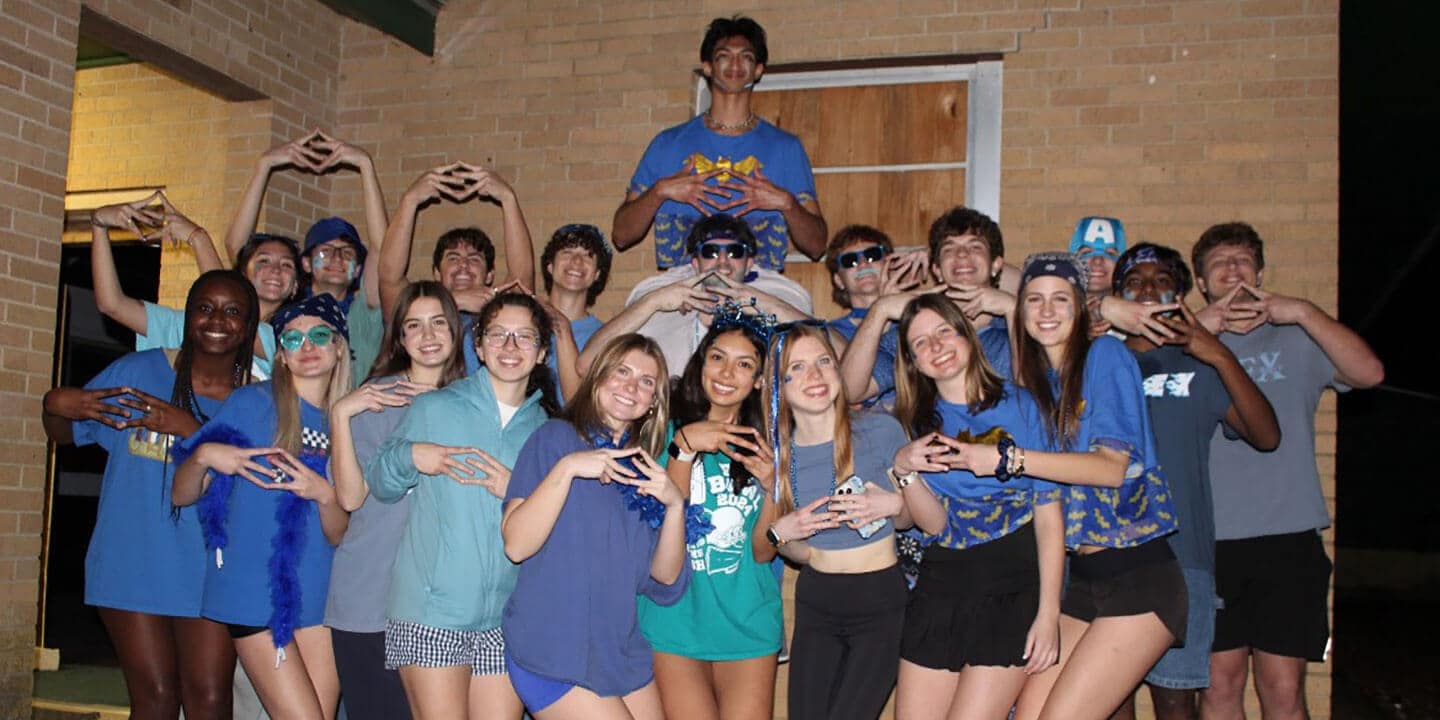
  • Seven girls standing sideways in a row wearing brightly colored dresses outside.

    “Yes Man”: My Experience Saying “Yes” in College

    Cassidy Chinn

    Starting college is an exciting time. New classes, new friends, new clubs, and a world of freedom and opportunities all hitting at once. It’s fresh and fun, but it can also feel overwhelming, like you’re drowning in choices.

    My advice? Say yes. Yes to new experiences. Yes to clubs, sports, or student organizations. Yes to coffee with a professor or chatting with someone in your dorm hallway.

    College is the time to explore, and the more you put in, the more you’ll get out. Saying yes doesn’t mean doing everything or stretching yourself too thin—it means being open to opportunities that could change your life.

    Showing Up at My Sorority

    I learned this firsthand when I joined my sorority. At first, it felt like too much. So many new faces, so many events, so many rules and social constructs I didn’t understand. Honestly, I considered backing out. But I kept showing up, saying yes to as many activities as I could manage.

    Slowly, I found my people. I met a group of girls who now, three years later, are some of my best friends. That one decision to keep showing up, even when it was uncomfortable, completely shaped my college experience.

    Opening New Doors on Campus

    Saying yes opens doors. Joining clubs or attending events isn’t just about padding your resume. These experiences are about discovering new passions, building friendships, networking, and gaining exposure you can’t get anywhere else.

    Even classes or workshops that seem intimidating at first can teach you resilience, creativity, and confidence. Each yes is a step toward growth, and even small ones can lead to unexpectedly meaningful experiences.

    Balance to Avoid Burnout

    Of course, saying yes doesn’t mean sacrificing your mental health. College can be intense, and it’s okay to take breaks. Listen to your body and mind while prioritizing what really matters. Rest, recharge, and return to opportunities with energy.

    Balance is key! You can say yes to life without burning out. The goal is engagement, not exhaustion.

    Becoming a “Yes Man”

    Being a “Yes Man” in college is really about mindset. It’s about curiosity, courage, and being willing to step outside your comfort zone. Don’t let fear or self-doubt stop you from exploring the possibilities in front of you.

    Take that chance to join a club, attend an event, or talk to someone new. Those moments often become the stories, friendships, and memories you’ll treasure for years.

    College is what you make of it. By saying yes, you’ll create a richer, fuller, more meaningful college experience. Don’t wait for opportunities to find you; seek them out.

    Engage, explore, and embrace the adventure. In the end, you’ll look back not just at grades or a transcript but at the friendships, experiences, and stories that shaped who you are.

    Do you have a compelling story or student success tips you’d like to see published on the Pearson Students blog?  If you are a college student and interested in writing for us – click here to pitch your idea and get started!