Ch. 24 The Digestive System
Martini - Fundamentals of Anatomy & Physiology 11th Edition
Martini, Nath, Bartholomew11th EditionFundamentals of Anatomy & PhysiologyISBN: 9780136874089Not the one you use?Change textbook
Chapter 24, Problem 29

Some people with gallstones develop pancreatitis. How could this occur?

Verified step by step guidance
1
Step 1: Understand the anatomy involved. The gallbladder stores bile, which flows through the common bile duct into the duodenum. The pancreas secretes digestive enzymes into the pancreatic duct, which usually joins the common bile duct before entering the duodenum at the ampulla of Vater.
Step 2: Recognize that gallstones can migrate from the gallbladder into the common bile duct, potentially causing a blockage at or near the ampulla of Vater.
Step 3: Explain that if a gallstone blocks the common bile duct or the pancreatic duct, it can prevent pancreatic enzymes from flowing into the duodenum, causing them to back up into the pancreas.
Step 4: Describe how the backup of pancreatic enzymes leads to their premature activation within the pancreas, causing inflammation and damage to pancreatic tissue, which is the basis of pancreatitis.
Step 5: Summarize that gallstone-induced blockage of the ducts can cause pancreatitis by obstructing enzyme flow and triggering pancreatic inflammation.

Verified video answer for a similar problem:

This video solution was recommended by our tutors as helpful for the problem above.
Was this helpful?

Key Concepts

Here are the essential concepts you must grasp in order to answer the question correctly.

Gallstones and Biliary Obstruction

Gallstones are hardened deposits that can block the bile ducts. When a gallstone obstructs the common bile duct or the ampulla of Vater, it can impede the flow of bile and pancreatic secretions, leading to complications.
Recommended video:
7:24
Anastomoses Form Collateral Channels

Pancreatitis Pathophysiology

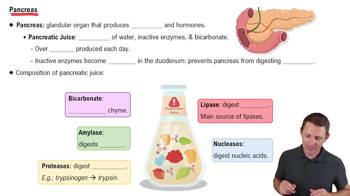
Pancreatitis is inflammation of the pancreas caused by premature activation of digestive enzymes within the pancreas. This leads to autodigestion and tissue damage, often triggered by ductal obstruction or injury.
Recommended video:

Anatomical Relationship Between Bile Duct and Pancreatic Duct

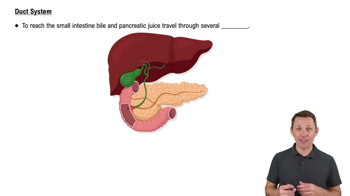
The common bile duct and pancreatic duct join at the ampulla of Vater before emptying into the duodenum. Obstruction at this junction by gallstones can cause pancreatic secretions to back up, triggering pancreatitis.
Recommended video: