
Textbook Question
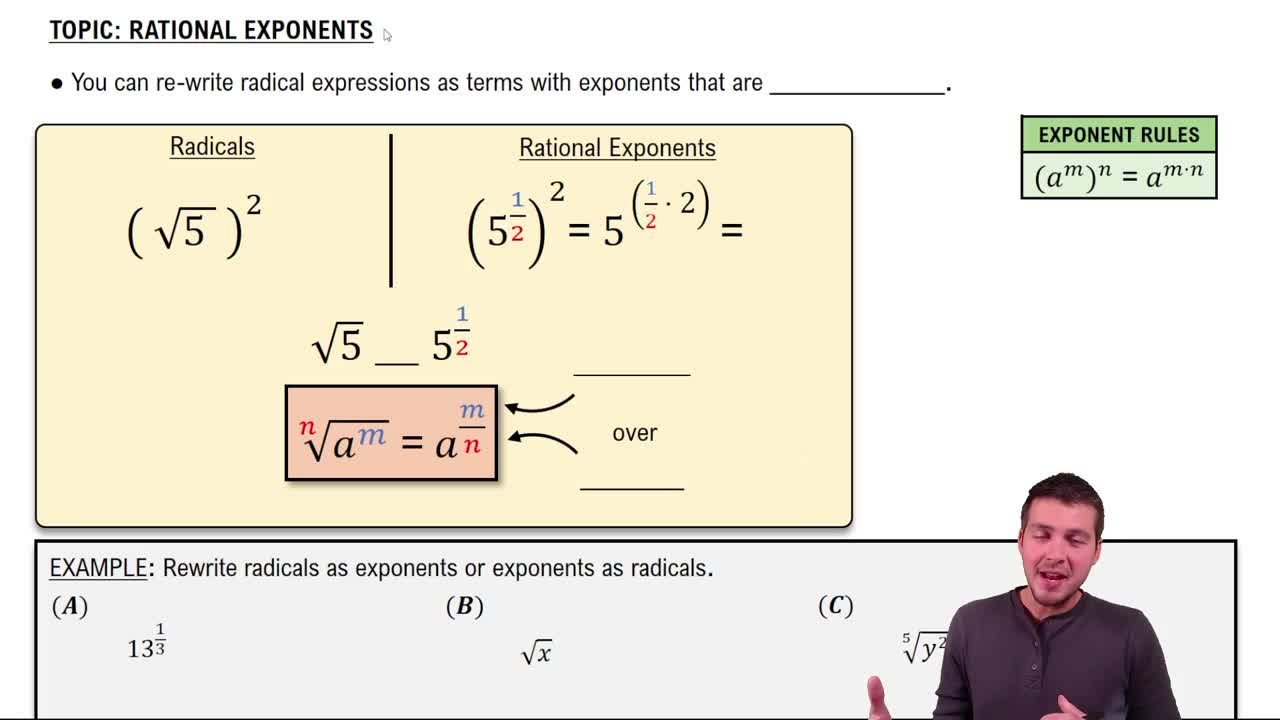
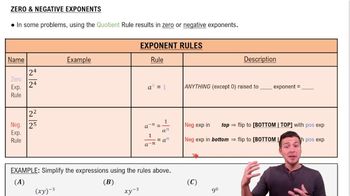
Match the rational exponent expression in Column I with the equivalent radical expression in Column II. Assume that x is not 0. -3x-1/3
577
views

 Verified step by step guidance
 04:06
04:06
 6:37
6:37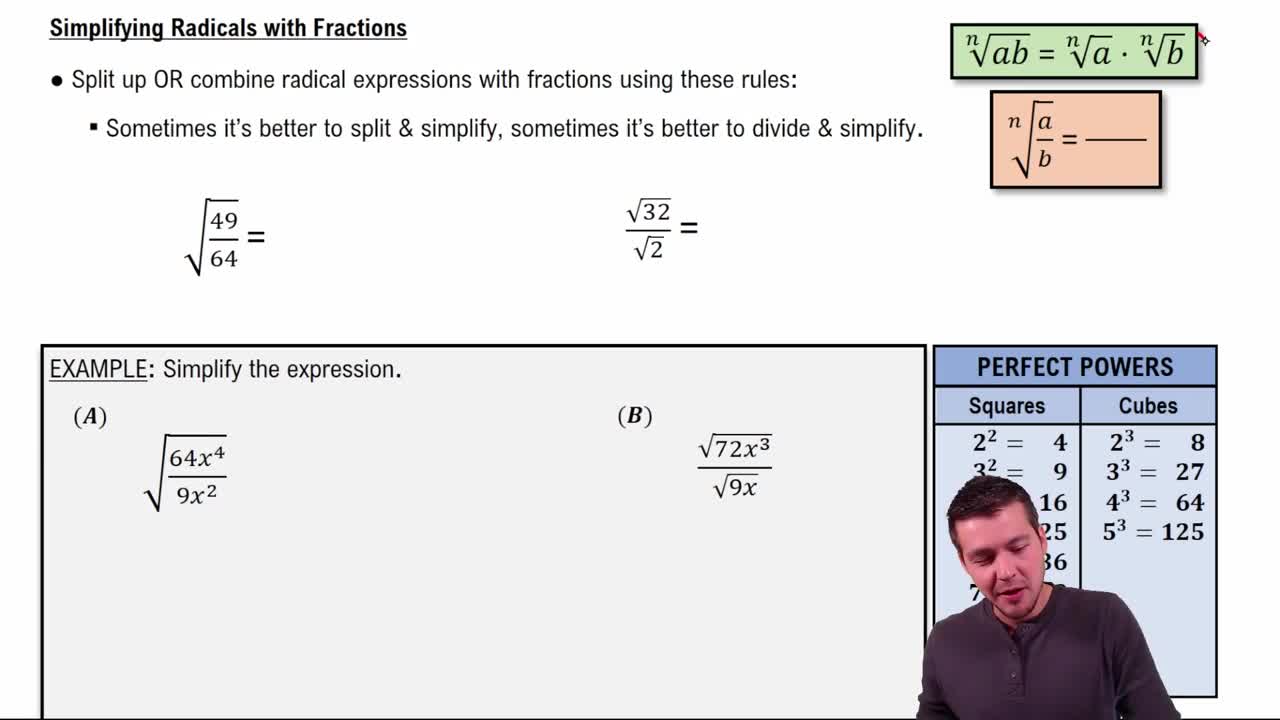 05:45
05:45Match the rational exponent expression in Column I with the equivalent radical expression in Column II. Assume that x is not 0. -3x-1/3
Fill in the blank(s) to correctly complete each sentence. In the expression 63, 6 is the ____ , and 3 is the ____ .
Match the rational exponent expression in Column I with the equivalent radical expression in Column II. Assume that x is not 0. 3x1/3
Identify the set { 1,1/3, 1/9 ,1/27, ....} as finite or infinite.
Match the rational exponent expression in Column I with the equivalent radical expression in Column II. Assume that x is not 0. -3x1/3
Which choice shows the correct way to write in lowest terms?