Students blog

Explore the latest trends, tips, and experiences in college life in this blog written by fellow students.

Explore posts in other areas.

PreK-12Higher EducationProfessional

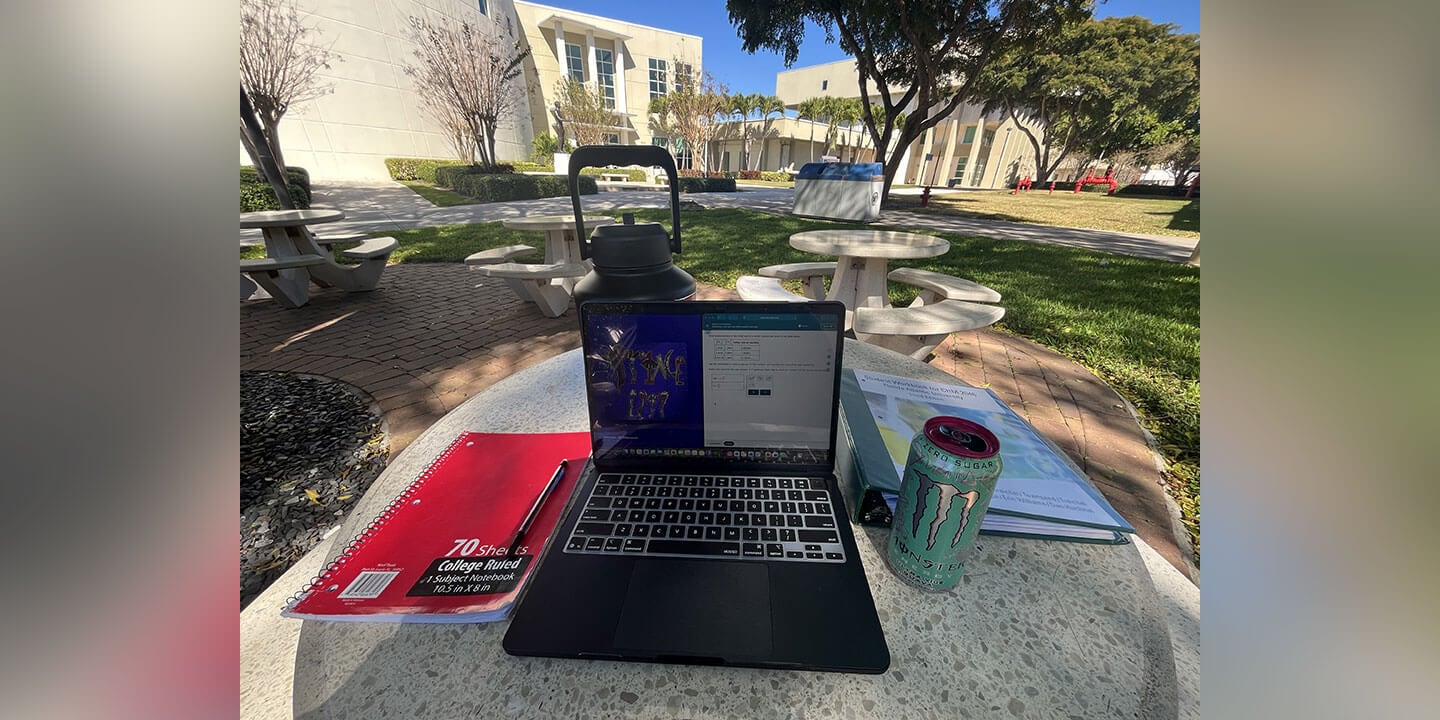
  • An outdoor study scene showing a laptop set up on a cement table surrounded by a notebook, binder, energy drink, and a water bottle on a college campus

    Turning Academic Setbacks into Opportunities for Growth

    Silas King

    College can be one of the most exciting times in life, but it can also be extremely challenging. Students juggle demanding coursework, strict deadlines, high expectations, and life-altering decisions; it’s understandable when a college student faces an academic setback.

    Whether it’s failing an exam, struggling in a difficult class, or feeling overwhelmed, these moments can feel discouraging. However, many students don’t realize that these setbacks are not signs of failure, but opportunities to grow.

    Shift Your Perspective

    Experiencing a poor grade can be frustrating, especially when you’ve put a lot of effort into something. Instead of viewing it as a reflection of your abilities and getting down on yourself, view it as feedback.

    A bad score can highlight areas where your understanding is lacking. It can also show where your study strategies might need adjustment. Reflecting on what went wrong and why can turn a negative experience into a valuable learning moment.

    To bounce back, you must shift your mindset. Avoid being overly critical of yourself. One test, assignment, or class grade does not define your intelligence or future.

    Instead, focus on what you can control. Create an improvement plan. This could mean dedicating more time to studying, seeking a tutor, or trying new learning techniques.

    Prepare Proactively

    Preparation is an important factor when facing challenging coursework. Instead of waiting until you fall behind, take a proactive approach.

    Review course materials regularly, stay organized, and break large tasks into manageable pieces. Developing a consistent study routine can make a significant difference.

    I’ve made the mistake of cramming the night before an exam too many times. Spacing out your studying over several days will improve retention of the material and reduce stress.

    Use Your Resources

    Another way to overcome academic challenges is to use the resources available. Many students, including me, hesitate to ask for assistance, but professors, teaching assistants, and tutoring centers are there for a reason. Attending office hours or joining study groups can provide clarity on difficult concepts and offer different perspectives.

    Adjust Your Study Habits

    Adjusting study habits can also lead to better outcomes. If your current approach to studying isn’t working, trying something new may help.

    For me, it was changing my study setting. Finding new areas to do my work gave me a change of pace, and different settings made studying less boring.

    You can also adjust your study habits with active learning strategies. Try working through problems, writing summaries, or teaching the material to someone else, which is more effective than just rereading notes.

    Build Resilience

    The most important lesson from academic setbacks is resilience. Learning to handle disappointment, adapt, and move forward is a skill that extends beyond the classroom. It allows you to grow as an individual.

    Life will always present challenges, and developing the ability to persevere is essential for long-term success. Maintaining a positive outlook is crucial.

    It’s easy to feel like a single failure is the end of the world, but it’s just a small part of your journey. Every successful person has faced setbacks; their response is what makes the difference. Reframing challenges as opportunities to learn and grow can reduce stress and build confidence in your ability to improve.

    Academic setbacks are not obstacles to success; they are stepping stones. Embrace them, learn from them, and use them to become a better version of yourself.

    Do you have a compelling story or student success tips you’d like to see published on the Pearson Students blog?  If you are a college student and interested in writing for us – click here to pitch your idea and get started! 
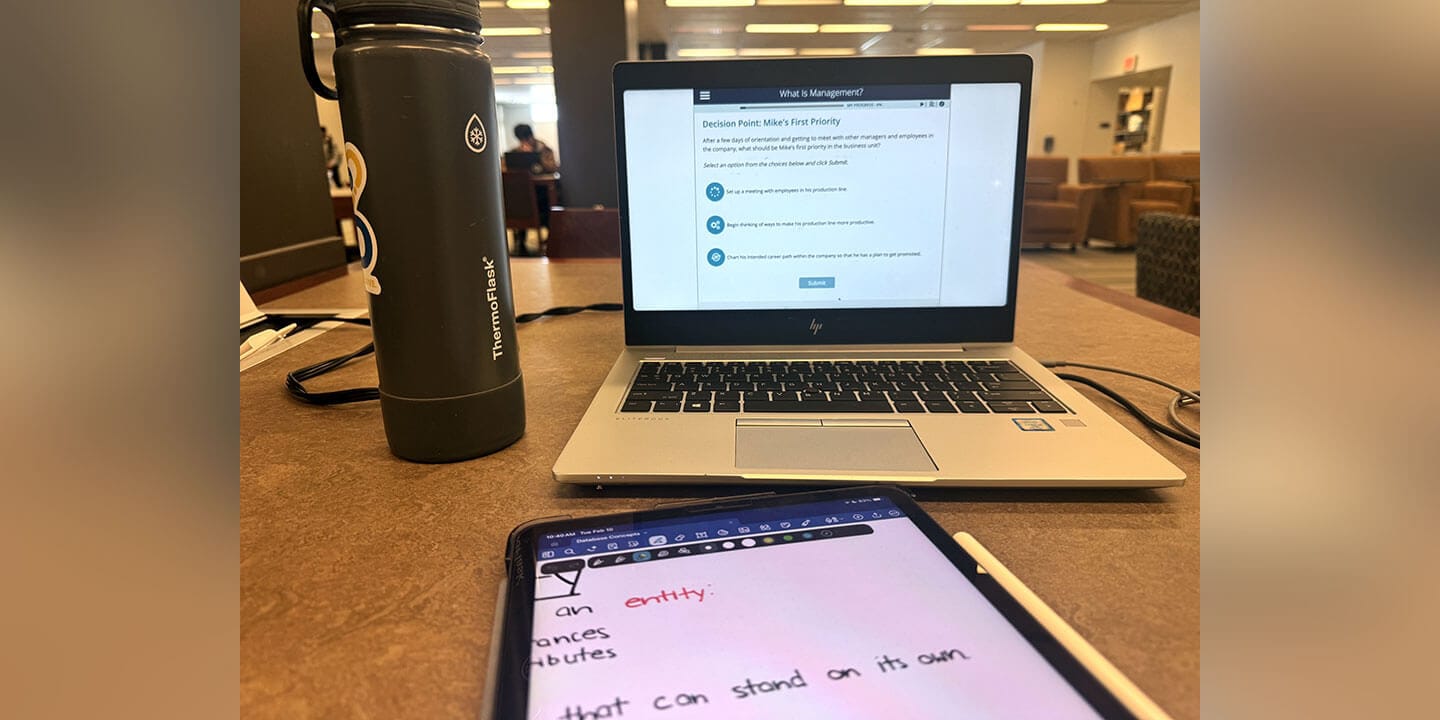
     

  • A water bottle, laptop, and tablet are all shown on a desk.

    It's Not You, It's Your Study Habits

    Sammy Chilet

    A Shift in Perspective

    Three weeks into the semester, I told myself, “Wow, I am not good at this class.” I had never stopped to think about how I learn best, so I was doing what I had always done. I read the textbook, rewrote my notes, highlighted key terms, and stayed up late.

    I convinced myself that the more time I spent studying, the better my chances of getting a decent grade. When my exam grades came back, my heart sank. My grades did not match the effort I had put in. It was frustrating and a bit discouraging.

    Marketing is not a class where memorizing definitions will get you far. You can know every term and still struggle to apply those ideas to real situations. That disconnect made me realize that the issue was not my ability but how I was approaching the class.

    Learning by Doing

    Everything changed when the course shifted from memorizing definitions to working through problems. Tools like MyLab Marketing and Mini Sims forced me to engage with the material rather than just read it. Instead of recognizing concepts, I had to use them, which made a bigger difference than I expected.

    Mini Sims were the most helpful because they felt realistic. I was placed in scenarios where I had to make real-life decisions and see the impact of those choices. At first, I second-guessed myself, but being able to test my reasoning without the pressure of receiving a grade made me feel more confident.

    It helped me understand why the thought process behind choosing a strategy is so important. I was no longer just memorizing the terms. I started thinking like someone making effective marketing decisions.

    A Lesson in Learning

    Marketing ended up being one of the classes that taught me the most about how I learn. It showed me the value of interactive tools, especially in courses where real-world situations matter. I stopped dreading assignments and started to see them as opportunities to test my understanding.

    If there is one thing I could tell other students, it is this: If a class feels impossible, take a moment to reflect before blaming yourself. Sometimes the problem is not you, even when it feels like there’s no one else to blame.

    Sometimes you just need a different approach. Once I figured that out, classes that had seemed impossible stopped feeling overwhelming and started feeling achievable.

    Do you have a compelling story or student success tips you’d like to see published on the Pearson Students blog?  If you are a college student and interested in writing for us – click here to pitch your idea and get started! 

     

  • A to-go cup of iced tea, a laptop, a notebook and a phone placed on a desk.

    Three Study Habits That Saved My Semester

    Tehreen Tashfeen

    Plenty of college students have experienced the panic of realizing they forgot to submit an assignment before the deadline. Staying organized between classes, work, and social commitments can feel overwhelming.

    For a long time, I felt like I was constantly trying to catch up. I eventually concluded that the problem wasn't a lack of motivation. I simply hadn't found the study habits that worked for me.

    1. Consider Your Environment

    One habit that helped me stay focused was being intentional about where I studied. I found that studying at home made me too comfortable. It often led to procrastination since I associated home with relaxation.

    For busy work or easier assignments, I liked going to cafés instead. The relaxed atmosphere made studying feel less overwhelming, especially on days when I wasn’t yet in full panic mode.

    Then, when midterms and finals hit, I switched to the library. The quiet environment made it easier to concentrate and lock in for longer periods of time.

    Being surrounded by other people working also helped me stay accountable and focused. This worked even without interacting with anyone.

    2. Study with Friends

    One of my favorite study habits was studying with friends. We would go café-hopping or do a study crawl, which is similar to a bar crawl but for studying.

    We planned out an entire day dedicated to getting work done, choosing different locations ahead of time. After a couple of hours, we switched spots and tried somewhere new. This made studying feel more enjoyable while also giving us new experiences.

    3. Create an Assignment Tracker

    One of the most effective changes I made was creating an assignment tracker. Instead of relying on memory, I kept all my assignments in one place. I organized them by class, assignment, and due date.

    I like to use Google Sheets for my assignment trackers, but I know people who use other programs like Excel or Notion. Seeing real-time progress made me feel productive and relieved, especially during weeks when I was super busy.

    Dividing larger assignments into smaller steps also made a big difference. Tasks became more manageable, and I stopped putting them off since I knew exactly what to work on next. Plus, every time I checked off a part of a bigger assignment, it felt like a small accomplishment.

    That feeling of control helped reduce stress. It made staying organized feel rewarding instead of exhausting.

    Build Your Own System

    It takes trial and error to find your ideal study habits. What works one semester might not work the next, and that's okay. Once I focused on making consistent progress and giving myself flexibility, my routine felt much more sustainable.

    You don't have to completely change how you do things to stay organized in college. Taking small steps, like using assignment trackers and knowing where to study, can make a big difference.

    College felt less stressful and more manageable once I found systems that worked for me. Finding your own study rhythm can help you keep up with assignments while truly enjoying the college experience.

    Do you have a compelling story or student success tips you’d like to see published on the Pearson Students blog?  If you are a college student and interested in writing for us – click here to pitch your idea and get started! 
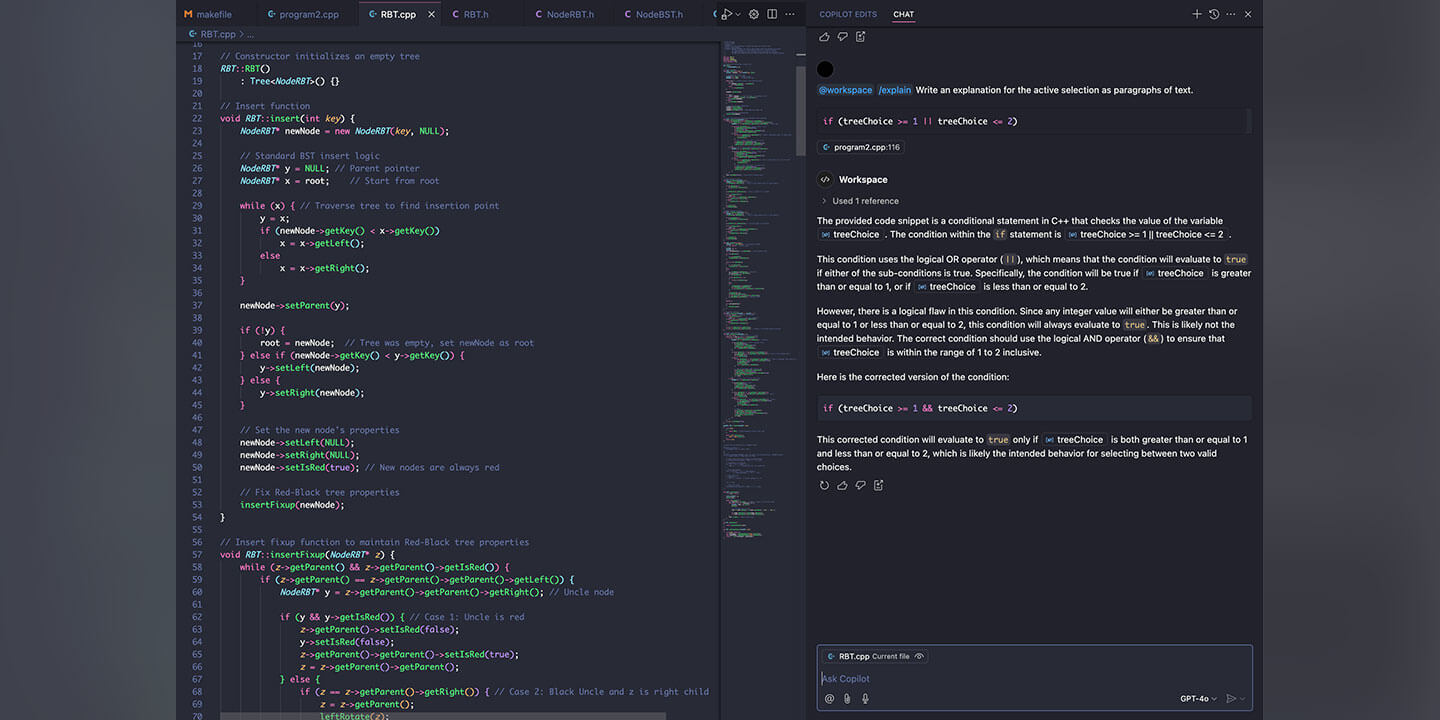
     

  • A computer screen showing coding language.

    Applying AI in a Beneficial Way to Your Education

    David Marquez

    Education is a vital resource for our technical and social interaction with the communities around us. As technology progresses, K-12 and Higher Education find themselves at the behest of new tools and avenues of learning in our contemporary world. Computers, calculators, and mobile devices drastically changed how we learn in the classroom. What used to be bound to a physical location has become available 24/7 through digital technologies. The internet gave us easy, quick access to the expanse of human knowledge at the click of a button. Now, there is a new digital tool sweeping across the world, useful in every point of life: generative AI. 
 

    Having become popular in the past couple of years, generative AI chatbots specifically have taken over the news with their dramatic changes to industries, everyday life, and the classroom. A controversial topic as well by the way it learns and the validity of its output, this new technology has yet again flipped the table concerning certain practices and learning objectives. Within the classroom, generative AIs like Chat GPT, Perplexity, and Claude have found themselves to be useful tools for completing assignments and education. By simply asking the AI chatbot, you are given an answer based on the information bestowed. This technology, however, has also been used for academically dishonest tasks. That doesn’t mean that this new tool is immediately the worst product to come out. Like a calculator, AI is a tool, and like every tool, you use it to better your work. If you rely on it too heavily, you will get nowhere in the end. 
 

    Taking computer science classes in AI allows me to expand my programs beyond an assignment’s basic requirements. With AI, I have been able to understand more deeply the complex concepts I apply to my code, making me a more well-rounded computer scientist and computer programmer. However, when I used this tool, I didn’t ask the chatbot how to do the assignment. If I ran into issues I couldn’t solve or questions I would like to learn more about, I fed information to the AI detailing. In response, you can get not only an answer but detailed feedback that leads up to that answer and possible information beyond.  
     
    Now, this isn’t entirely a computer science tool. As a writing assistant, chatbot AI models can assist with small tasks in your writing. By utilizing the chatbot as a tool and a reference, we can come to understand the interaction as a conversation; you want to balance out the back and forth to not be so one-sided. The more one-sided it becomes, the more you might not find what you want from that AI. Or you might find you’ve taken too much and are coming up with something you do not understand. 
 

    An amazing contemporary technology, generative AI has completely changed the different stages of the world. Like a tool, it is good to start using it early. By understanding AI, you can further develop your skills and become more productive in whatever facet of your life you are working on, remembering that you work alongside it, not for it. 

    Do you have a compelling story or student success tips you’d like to see published on the Pearson Students blog?  If you are a college student and interested in writing for us – click here to pitch your idea and get started! 

     

  • A phone showing ChatGPT at the top of the screen and the words AI Study Tools on the left.

    AI for College: A First-Year Guide to Studying Smarter

    Logan Fulford

    First-Year Overwhelm

    How did you feel during your first year in college? Were you overwhelmed and maybe a little worried that you might fail your classes? That was exactly how I felt.

    I was extremely nervous about starting college because it was intimidating. Reading teacher reviews for courses like Business Calculus only added to my anxiety.

    I was convinced I could fail my exams along with half of the class and began to question whether I was cut out for college at all. I knew that college was a big step up from high school. The fear of falling behind was constantly in the back of my mind.

    Making the Most of Campus Support

    As someone who plans for every situation, I created a strategy to make sure I didn’t fail. First, I took advantage of every resource available to me. I regularly attended Supplemental Instruction sessions, visited my professors’ office hours, and worked through extra practice problems whenever I could.

    These resources helped immensely, but I still struggled to study efficiently, especially before major exams or when study guides weren't provided.

    Expanding to Modern Resources

    With the rise of AI over the past few years, I decided to create my own study resource. I began uploading my lecture notes, textbook chapters, and practice problems into an AI tool (e.g., ChatGPT, Claude, or NotebookLM). I would then ask it to generate a list of key terms and thirty multiple-choice questions, complete with answers and explanations.

    This approach completely changed the way I studied. I no longer had to spend countless hours cramming before exams or feel lost while reviewing material. Instead, I could study a little each day. This helped me develop a deeper understanding of the topics and retain information much better.

    Sharing My Strategy

    This method didn’t just help me. Once I started seeing real results (better grades, less stress, and more confidence), I shared this strategy with friends who were also struggling. Before long, their grades improved, too. Many also told me they felt way less anxious about exams.

    Even now, in our second year of college, my friends and I continue to use this method. It allows us to study consistently during the week while still leaving time to enjoy the activities we love.

    Using AI the Right Way

    While this method is incredibly effective, it’s important to be mindful of its limitations. Generative AI should be used as a study aid, not as a tool for cheating. To use it ethically, rely on it only to reinforce what you’ve learned, not to replace traditional studying.

    Since most AI gathers information from sources across the internet, it’s crucial to double-check that the material is accurate. AI-based studying should complement your learning, not serve as a substitute for it.

    Personalize Your Study Strategy

    While this method was a game-changer for me, it might not work for everyone. Each person has their own unique way of learning. Consider adding AI study guides while continuing to rely on your go-to study methods.

    It's a great daily tool to help you jumpstart a consistent study routine and reinforce details you might otherwise forget. College is challenging, but with commitment and an effective studying strategy, success is well within reach.

    Do you have a compelling story or student success tips you’d like to see published on the Pearson Students blog?  If you are a college student and interested in writing for us – click here to pitch your idea and get started! 

     

  • A computer generated image of a female student in front of a bookcase.

    Study Zones: Improve Focus by Connecting Spaces to Subjects

    Andrea Ramirez

    Ever sit down to study and realize you’re spending more time trying to focus than actually learning? You’re not alone. I used to start study sessions with the best intentions, only to find myself distracted or doom-scrolling within minutes.

    Over time, I discovered a surprisingly effective strategy for improving focus: linking specific subjects to specific places. Simply returning to the same physical location to work on the same subject helped me “get in the zone” faster.

    Assign Your Study Zones

    Pick a different place for each major subject. These spaces don’t have to be fancy or far apart. A corner of your room, a table in the library, or even a favorite café can work.

    For example, I made the science building’s quiet corner my go-to spot for Calculus. I always chose the same section of the library for Chemistry. Physics? That became my Starbucks subject.

    Over time, something clicked. Just walking into one of those spaces would cue my brain into the right mindset, and I’d dive straight into the work.

    I first came across this idea during my sophomore year at Miami Dade College, before transferring to FIU. At the time, I was juggling Organic Chemistry, Physics, Calculus II, and a part-time job. My brain felt scattered, and switching between subjects drained more energy than the assignments themselves.

    That’s when I started experimenting with what I now call “study zones,” assigning each subject its own home base. Over time, it improved both my focus while studying and my retention of the material.

    How Your Brain Links Location to Learning

    The more often you return to the same spot for the same subject, the stronger the connection becomes. This is thanks to the hippocampus, a part of the brain responsible for memory and navigation. It helps us create what neuroscientists call a cognitive map. It’s how we remember not just where we are, but also what we experienced in those places.

    Spatial memory and learning are tightly linked, meaning environments can reinforce what we study (Weiler, 2024). When we consistently review one subject in the same location, our brains strengthen that association. This makes the information easier to recall later.

    Study Blocks and Mini-Goals

    I’ve found this method is most effective when I avoid long study marathons. Instead, I use shorter blocks of time.

    One of the best uses of my study zones has been during my breaks between classes. I go straight to that subject's study spot and use the time to debrief. These shorter study sessions feel focused and productive without leaving me drained.

    It’s also important to set small goals when you arrive at each zone. Before you start studying, tell yourself, “I’ll review two chapters while I’m here.” Clear, realistic goals help you maintain momentum while studying.

    Get creative and think about how you can connect the spaces around you to your course subjects. By building this association, you help cue your brain to focus and make it easier to recall information. Creating study zones won’t give you instant laser focus, but it will remind you why you’re there: to study, not to scroll.

    Reference

    Weiler, Nicolas. “Space and Memory.” From Our Neurons to Yours, Wu Tsai Neurosciences Institute Stanford University, 22 Feb. 2024. https://neuroscience.stanford.edu/news/space-and-memory.

    Do you have a compelling story or student success tips you’d like to see published on the Pearson Students blog?  If you are a college student and interested in writing for us – click here to pitch your idea and get started! 
     

  • A laptop and tablet open to academic coursework for studying.

    Study Noise and Lo-Fi Vibes: My Secret to Stress-Free Focus

    Kohle Nash

    I used to think the only way to study was in total silence. I’d go to the quiet floor of the library, put in earplugs, and try to zone in.

    It didn’t work for me, though. My mind would wander, or I’d get anxious just staring at a blank page.

    Discovering Study Noise

    During a late-night study session, I decided to try listening to lo-fi music, and I found that I really liked it. My study style changed immediately.

    Now, I never study without “study noise.” For me, that’s a mix of lo-fi beats, ambient nature sounds, and sometimes even instrumental movie soundtracks. I’ve created playlists that include everything from soft rain to background coffee shop chatter.

    It might sound unusual, but calming background noise helps me feel less pressured. It puts me at ease while working and keeps my mind focused without making me feel overwhelmed.

    Creating My Own Sound

    What’s cool is that I started making my own mixes using audio software I’d been learning for fun. I’d combine gentle synths, vinyl crackle effects, and recordings to personalize the vibe.

    Creating those sounds became a form of self-care. When I shared them with friends, I discovered that a lot of other students were looking for the same thing.

    Since then, my “study noise” playlists have become just as essential as my textbooks. They help me stay focused during exam season, unwind while reviewing my notes, and even get through long readings when I’m feeling drained.

    Learning What Works

    I encourage every student to explore their focus style. Try different sounds, like lo-fi, classical, or soft jazz, to see what works for you.

    You don’t need fancy gear, just headphones and an open mind. Your grades (and your stress levels) will thank you.

    If silence doesn’t work for you, you’re not alone. The solution might be as simple as pressing play.

    Do you have a compelling story or student success tips you’d like to see published on the Pearson Students blog?  If you are a college student and interested in writing for us – click here to pitch your idea and get started! 
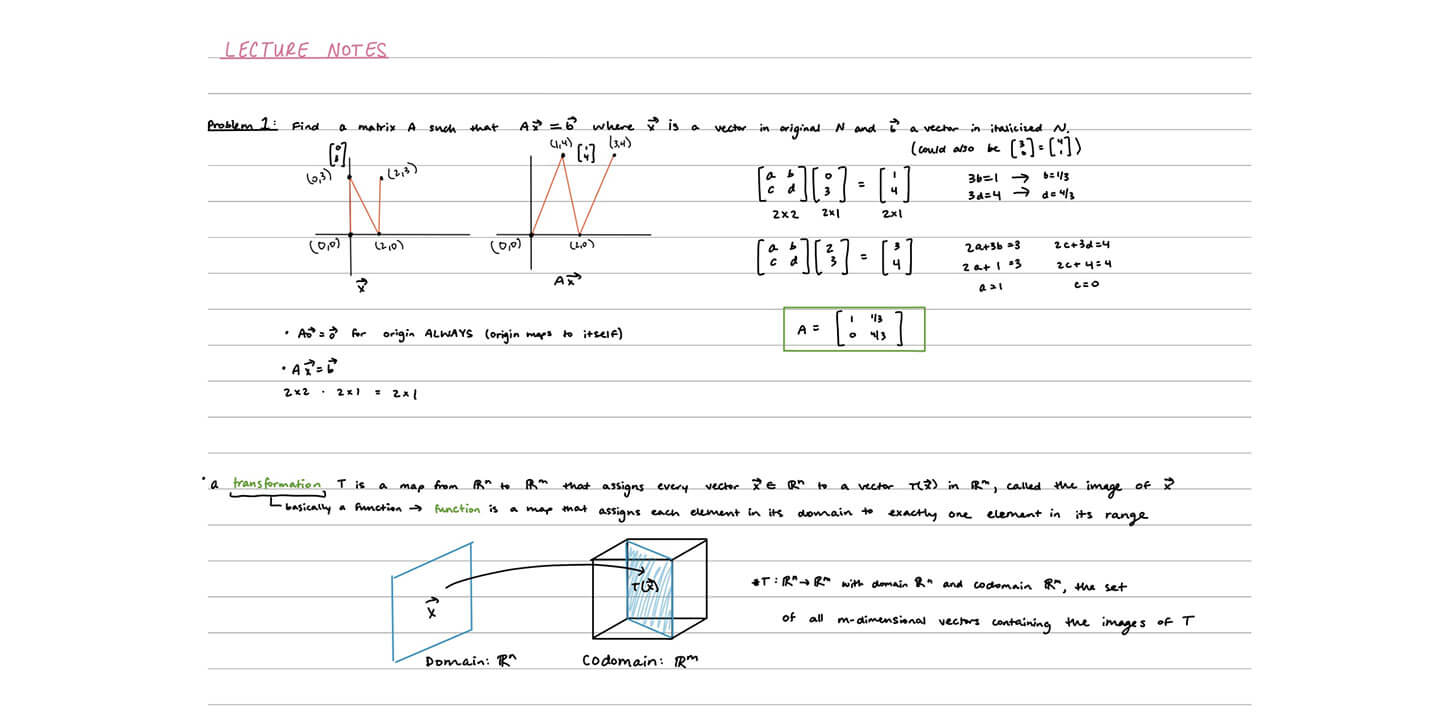
     

  • A screengrab of the blog author’s lecture notes from a math class.

    Ace the Semester: Honest Review of Tablet Note-Taking Apps

    Madeline Beavis

    As the semester kicks off, staying organized and on top of your coursework is more important than ever. Many students- including myself- choose to take notes on a tablet, and finding the right place to organize those notes is crucial for success. With so many options available, it can be overwhelming to choose the one that suits your needs. That’s why I’ve tested some note-taking apps so you don’t have to! Here are some pros and cons of note-taking apps I’ve used in the past to help you find the perfect fit for you!

    Notebook

    This app is perfect for typing notes and is fully compatible with digital pencils, making it easy to take handwritten notes as well. You can enrich your notes by adding text, images, audio recordings, and sketches, offering a versatile way to capture information. Each course can be organized into larger notebooks, keeping everything neatly categorized. While you can’t customize the paper type, you can select unique covers for your notebooks and assign colors to each note, giving your study materials a personalized touch. Best of all, you have access to unlimited notes and notebooks for free, making it an excellent choice for students.

    CollaNote

    This app is my personal favorite for school, and I absolutely love it for all the features you get for free! It allows you to add photos, scan documents, insert links, use a calculator, and even add fun stickers to your notes. Whether you prefer typing or using a digital pencil, this app is perfect for both. One of the coolest features is the built-in translation tool, which is a game-changer for studying in different languages. You can easily organize your notes by creating folders for each course, keeping everything neat and accessible. While you can't change the color of your folders, you can customize each note by choosing different paper types and even changing the color of your pencil. The best part? There's no limit to the number of folders or notes you can create, so you’ll never run out of space for all your ideas and study materials!

    GoodNotes 6

    If you’re looking for something a little bit more sophisticated and are willing to pay $9.99/year (or $29.99 for a one-time purchase), GoodNotes 6 is a great option for you! In the paid version, you have access to unlimited notebooks with lots of customization (max 3 notebooks in the free version). You can choose your paper template, including a variety of grid and lined papers. You can also customize the style and color of your pens, giving you more creative control over your notes. One really cool tool is the search functionality in the paid version, where you can find specific information quickly, even in handwritten notes. You can also import PDFs and annotate them, which is great for reviewing class materials or documents. Both the paid and free versions are compatible with digital pencils. Overall, the paid version unlocks a wealth of additional capabilities that can be incredibly useful for power users, particularly those who need advanced organization, customization, or collaboration tools.

    Test out these options for yourself and see what fits your note-taking habits the best this semester! Happy studying!

    Do you have a compelling story or student success tips you’d like to see published on the Pearson Students blog?  If you are a college student and interested in writing for us – click here to pitch your idea and get started! 
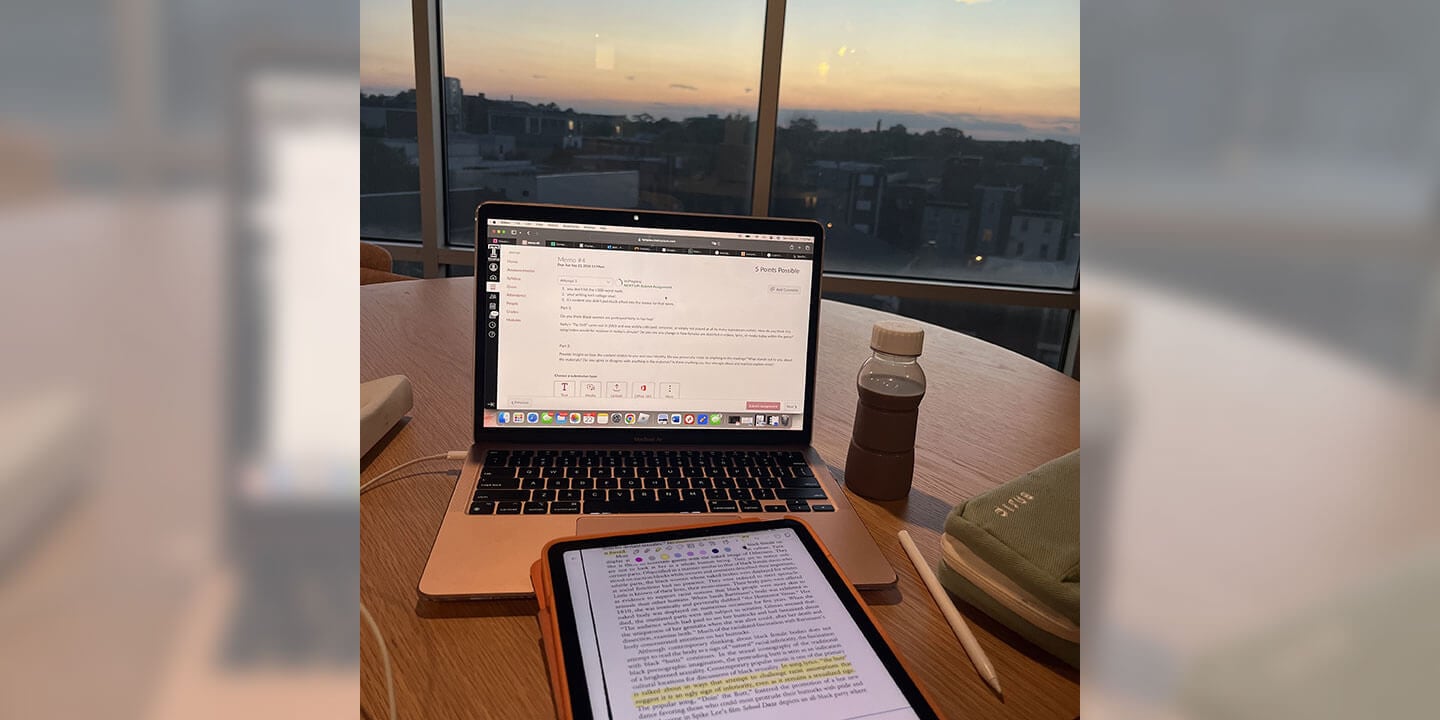
     

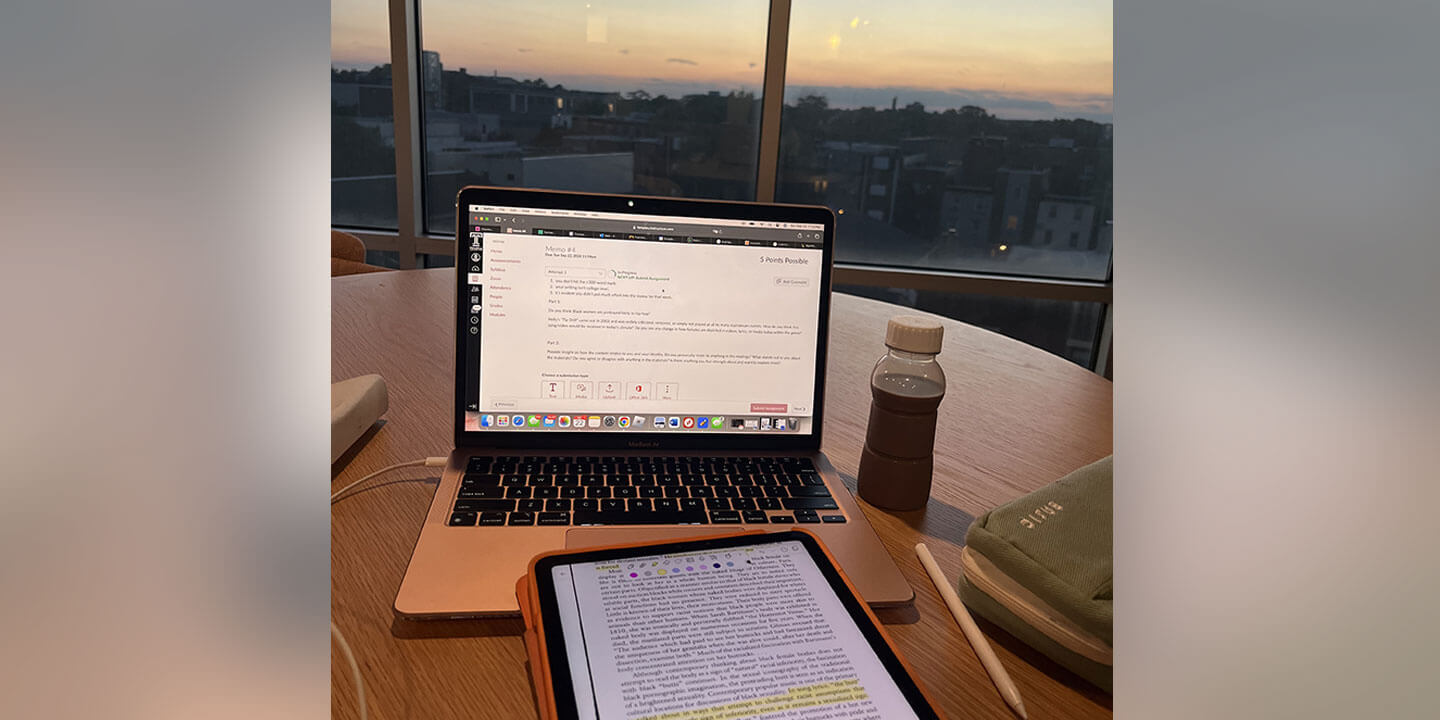
  • A tablet and a laptop open on a student desk with a view of campus out the window.

    Reconnecting to Routines after a Break

    Ariana Santiago Ramos

    Like for most students, the transitions between breaks and school have been anything but fun for me. Somehow three hour-long classes seemed to last days during those weeks in which I was still getting used to school. Over time, and with lots of trial and error, I feel as though I have perfected the art of the back-to school-transition. Especially after Spring Break, which barely feels like a break at all, I make sure to follow a specific routine to get back into my “grind-set” (grind mindset).

    Getting a Head Start

    Arguably the most important part of effectively transitioning back into school after a break is preparing before it even starts. Spring break is short, and it goes by fast, so by a day or so to do nothing helps you come back rested. Additionally, you can use this time to reflect on the semester so far: on what you’d like to continue or stop doing, on moments and people that you appreciated, and anything else you deem notable.

    Sleep Schedule

    The next step is to re-establish a sleep schedule that works with my class schedule. For example, if my first class is at 9 am, and I know it takes me about an hour and a half to get ready in the morning. I start waking up at around 7am and go to bed around 11pm to get the amount of sleep I want. By jumping right back into the habit I had before break limits the shock of a sudden transition once classes reconvene.

    Keeping an Agenda

    Ahead of my first back in class, I review any assignments for classes in the upcoming week. In my physical agenda (although many students also do this either on an online calendar or spreadsheet), I mark the date of all my tests and assignments whose due date is already posted, as well as reminders to study for those tests. This not only saves me time in the future but also saves me the stress of forgetting an upcoming assignment or being unaware of certain class expectations.

    Go With the Flow

    The final, but arguably the most crucial part of my routine, is to not take myself too seriously. Along with the stress of what remains of the current semester comes the joy of knowing that there are countless new opportunities coming your way. Classes are hard and getting back into a routine can be even harder, but trust that you are more than capable of overcoming anything that comes your way.

    Do you have a compelling story or student success tips you’d like to see published on the Pearson Students blog?  If you are a college student and interested in writing for us – click here to pitch your idea and get started!