
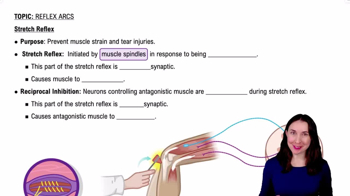
Step 1: Understand that the urine voiding reflex, also known as the micturition reflex, is a neural circuit that controls the process of emptying the bladder.
Step 2: Recognize that as the bladder fills with urine, stretch receptors in the bladder wall are activated when the bladder reaches a certain volume.
Step 3: These stretch receptors send afferent signals via the pelvic nerves to the sacral region of the spinal cord (segments S2-S4).
Step 4: The spinal cord processes this sensory information and sends efferent parasympathetic signals back to the detrusor muscle of the bladder, causing it to contract, while simultaneously inhibiting the somatic motor neurons that keep the external urethral sphincter contracted.
Step 5: This coordinated contraction of the detrusor muscle and relaxation of the urethral sphincters allows urine to be expelled from the bladder through the urethra, completing the voiding process.
Verified video answer for a similar problem:
This video solution was recommended by our tutors as helpful for the problem above
Play a video:
0 Comments
Key Concepts
Here are the essential concepts you must grasp in order to answer the question correctly.
Micturition Reflex
The micturition reflex is a neural circuit that controls the process of urine voiding. It involves sensory signals from the bladder to the spinal cord and brain, triggering coordinated contraction of the detrusor muscle and relaxation of the urethral sphincters to allow urine expulsion.
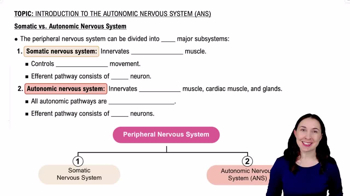
The autonomic nervous system regulates bladder function through sympathetic and parasympathetic pathways. Parasympathetic activation causes detrusor muscle contraction for voiding, while sympathetic activity promotes bladder relaxation and sphincter contraction to store urine.
Higher brain centers, including the pontine micturition center and cerebral cortex, provide voluntary control over urination. They coordinate the timing of voiding by inhibiting or facilitating the reflex, allowing conscious decision-making about when to urinate.